
 Rishay Dinesh
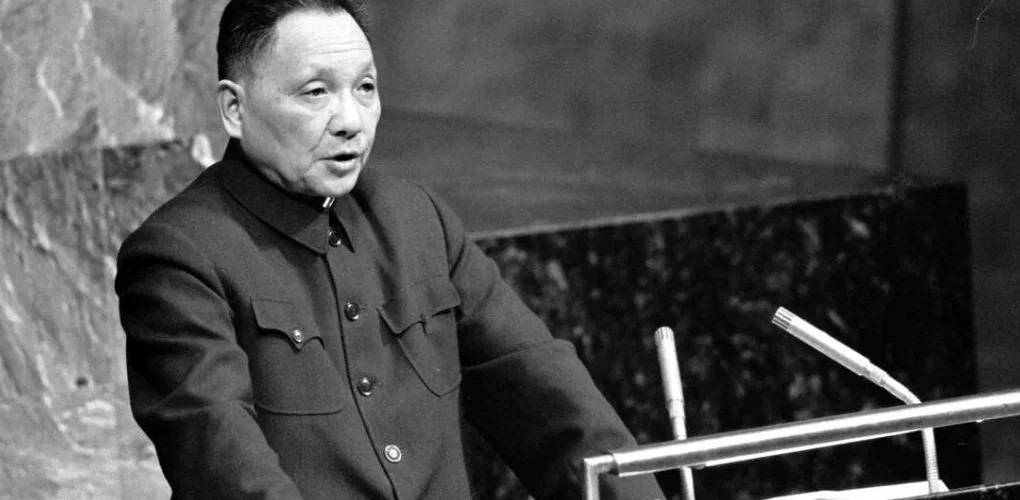
Deng Xiaoping was a transformative leader who played a pivotal role in modernizing China and guiding it from a struggling socialist economy into one of the world’s fastest-growing powers. As the paramount leader of the People’s Republic of China after Mao Zedong’s death, Deng shifted the country’s trajectory through groundbreaking economic reforms and an open-door policy that welcomed foreign trade and investment. His famous phrase, “It doesn’t matter whether a cat is black or white, as long as it catches mice,” reflected his pragmatic approach to governance, favoring results over ideology. Deng’s leadership marked the beginning of China’s rise as a global economic force.
Though Deng was less theatrical in public than Mao, his influence was perhaps even more profound. He was the architect of China’s “Reform and Opening Up,” a series of policies that dramatically reshaped the Chinese economy and society. Under his leadership, hundreds of millions were lifted out of poverty, private enterprise re-emerged, and China rejoined the international community after decades of isolation. Deng’s legacy is complex—he brought prosperity but also maintained strict political control, as seen in events like the 1989 Tiananmen Square protests. Still, many view him as the father of modern China, a leader who balanced tradition and innovation to propel his nation forward.
Early Life and Revolutionary Beginnings
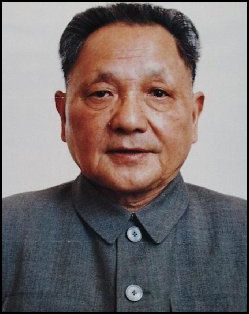
Deng Xiaoping was born on August 22, 1904, in Guang’an, a small town in Sichuan Province, China. He came from a relatively well-off family and received a traditional Confucian education before traveling abroad to France in the 1920s as part of a work-study program. While in Europe, Deng was exposed to Marxist ideology and joined the Communist Party of China. His experiences overseas shaped his worldview and introduced him to the ideas of industrialization and modernization that he would later champion in China.
Upon returning to China, Deng became actively involved in the communist revolution led by Mao Zedong. He participated in the Long March and played important roles during the Chinese Civil War and the fight against Japanese occupation. After the founding of the People’s Republic of China in 1949, Deng held several key administrative and economic posts. He was known for his sharp intellect, organizational ability, and commitment to socialist development. However, his willingness to challenge dogmatic thinking would later put him at odds with Mao during the Cultural Revolution.
Political Struggles and Return to Power
Deng’s rise in the Communist Party was interrupted during the Cultural Revolution (1966–1976), a period of intense political upheaval led by Mao Zedong. Deng was purged twice—first in 1966 and again in 1976—for being perceived as a capitalist-roader and for advocating economic pragmatism over class struggle. During these times, he was stripped of his positions and sent into political exile. Despite the setbacks, Deng remained loyal to the Party and was known for his patience and resilience.
After Mao’s death in 1976, the Party leadership was divided on the direction China should take. With support from reform-minded leaders and public dissatisfaction with radical policies, Deng regained political prominence. By 1978, he had effectively become China’s top leader, though he never held the title of head of state or head of the Party. Instead, he ruled through his influence and strategic placement of allies in key positions. Once in control, Deng quickly moved to reverse the excesses of the Cultural Revolution and begin a new era focused on development and modernization.
Reform and Opening Up
Deng Xiaoping’s most lasting achievement was the implementation of the “Reform and Opening Up” policy starting in 1978. Recognizing that China could not progress under rigid central planning, Deng introduced market-oriented reforms that restructured the economy. He allowed farmers to lease land under the “Household Responsibility System,” which significantly boosted agricultural production. In the cities, he encouraged private businesses and foreign investment, leading to the creation of Special Economic Zones (SEZs) in coastal regions like Shenzhen, which would later become hubs of innovation and economic growth.
These changes marked a dramatic shift from Maoist ideology. While China remained politically communist, its economy became increasingly capitalist in nature. The reforms sparked rapid industrialization and urbanization, lifting hundreds of millions of people out of poverty. Under Deng, China’s GDP grew at an unprecedented pace, and the country began exporting goods to the world. Deng maintained that China was in the “primary stage of socialism,” which justified using capitalist tools to achieve socialist goals. His policies brought prosperity, but also new challenges, including income inequality, corruption, and environmental degradation.
Foreign Policy and Global Integration
Deng Xiaoping also redefined China’s role on the global stage. He believed that economic development required integration into the world economy, and he pursued diplomatic relations with countries that had previously been seen as adversaries. In 1979, China formally established diplomatic ties with the United States, marking a major step in its re-entry into global affairs. Deng visited the U.S. that same year, famously donning a cowboy hat during his trip to Texas—an image that symbolized the new era of openness and cooperation.
In addition to engaging with Western powers, Deng focused on stabilizing relations with neighboring Asian countries and promoting regional peace to create a favorable environment for development. He emphasized a foreign policy of “hiding our strength and biding our time,” encouraging patience and non-interference. Deng also laid the groundwork for the “One Country, Two Systems” policy, which allowed for the peaceful return of Hong Kong in 1997 and later Macau in 1999, maintaining their capitalist systems while officially integrating them into China.
The Tiananmen Square Incident
While Deng Xiaoping was a reformer in economic matters, he maintained a hardline stance on political control. This contradiction became painfully clear during the 1989 Tiananmen Square protests. What began as a student-led movement calling for political reforms, freedom of speech, and anti-corruption measures quickly grew into a nationwide demonstration. The government, under Deng’s authority, declared martial law and sent troops to crush the protest, resulting in a violent crackdown on June 4, 1989, that left hundreds, possibly thousands, dead.
The incident drew global condemnation and temporarily isolated China diplomatically. However, Deng and the leadership viewed the suppression as necessary to preserve national stability and prevent chaos. After the crackdown, Deng doubled down on economic reforms while reinforcing political orthodoxy. He believed that only by maintaining tight control over the political system could China continue its path of modernization. This moment revealed the limits of Deng’s reforms—while he opened up markets and welcomed foreign business, he resisted any moves toward democratization or liberalization of political life.
Deng’s Southern Tour and Lasting Influence
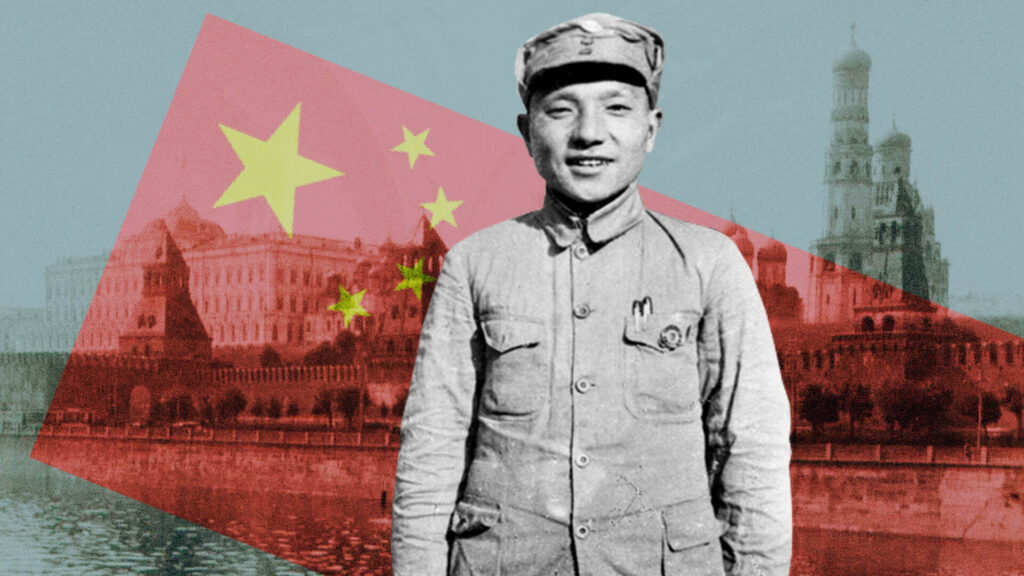
In 1992, at the age of 87 and long after stepping down from formal leadership roles, Deng embarked on his famous “Southern Tour” to re-energize reform efforts. He visited cities like Shenzhen and Guangzhou, using public appearances and speeches to defend economic liberalization against internal Party resistance. The tour was a turning point, reigniting the reform movement and reinforcing the importance of market-based development. His famous quotes from this tour—such as “To get rich is glorious”—encouraged entrepreneurialism and development.
Deng Xiaoping officially retired from politics in the early 1990s, though his influence remained strong until his death in 1997. By that time, China had transformed into a major economic force, and its path toward modernization was firmly established. Deng’s vision set the stage for China’s 21st-century rise, making him one of the most consequential leaders in modern history. Today, his economic reforms continue to shape China’s policies, and his philosophy of “Socialism with Chinese Characteristics” remains a central guiding principle for the Communist Party.
Deng Xiaoping’s Enduring Legacy
Deng Xiaoping is widely regarded as the architect of modern China. Through bold economic reforms and a pragmatic approach to governance, he transformed a poor and isolated nation into an emerging superpower. His leadership brought stability, growth, and international respect to China. Deng’s decisions affected not only the lives of over a billion Chinese citizens but also the global economy and geopolitical landscape. He demonstrated that a communist country could thrive under market-driven policies without abandoning one-party rule.
However, Deng’s legacy is not without controversy. While he improved living standards and global standing, he also presided over human rights abuses and curtailed political freedoms. The Tiananmen Square crackdown remains a dark stain on his record. Even so, many see Deng as a strategic thinker who prioritized national strength and modernization above all. His blend of openness and control continues to influence Chinese leadership today. Deng Xiaoping didn’t just lead China—he reshaped its identity, setting it on a path that continues to define the 21st century.


 Akshay Dinesh


Add comment