 Akshay Dinesh
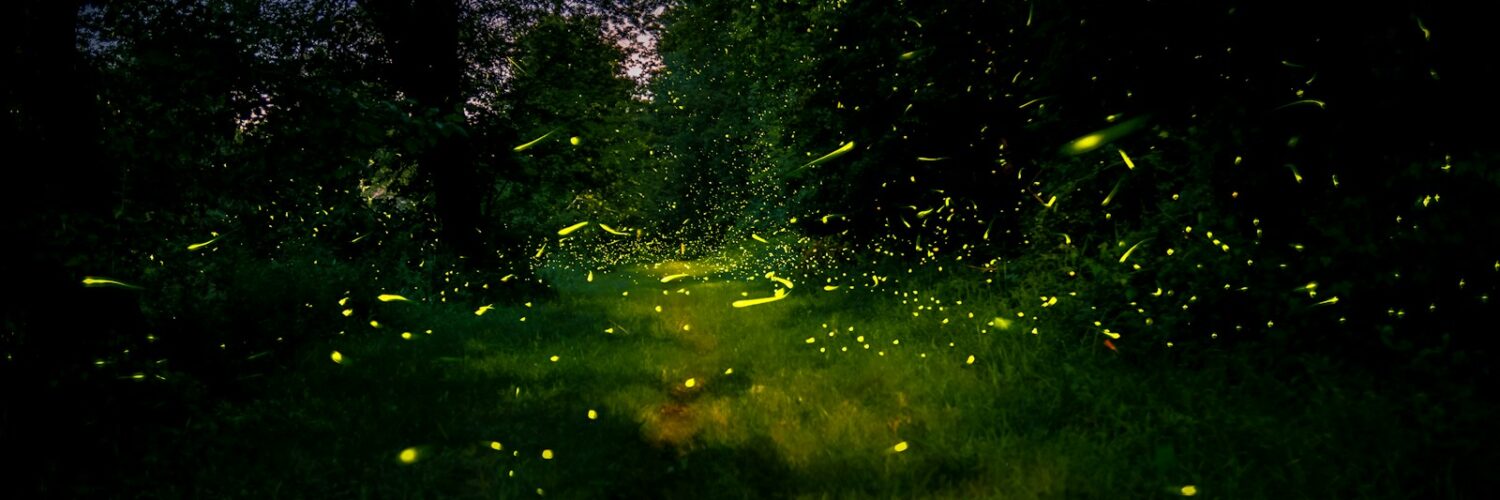
On a warm summer evening, a field can seem to switch on one tiny lamp at a time. A flash rises from the grass, another answers from a shrub, and soon the dark is full of silent signals. Fireflies look magical because they make light with their own bodies, but the glow is not decoration. It is chemistry, communication, warning, courtship, and survival packed into the body of a small beetle.
Fireflies belong to the beetle family Lampyridae, and their light is one of the best-known examples of bioluminescence on land. Many glowing organisms live in the ocean, where sunlight disappears quickly with depth. Fireflies bring a similar idea into meadows, forest edges, wetlands, lawns, and stream banks. Their flashes help them find mates, avoid being eaten, and make use of the damp habitats where their young grow. Once the glow is understood as a signal instead of a trick, a summer field starts to look less like random sparkle and more like a living conversation.
The Chemistry Behind the Glow
A firefly’s light comes from a chemical reaction inside special cells in its abdomen. The key ingredients are luciferin, oxygen, and ATP, the energy-carrying molecule used by living cells. An enzyme called luciferase helps the reaction happen efficiently. When luciferin reacts with oxygen in the presence of ATP and luciferase, energy is released as visible light.
The striking part is how little energy is wasted as heat. A light bulb gets hot because much of its energy becomes thermal energy instead of visible light. Firefly light is often called cold light because the insect produces brightness without heating itself in a dangerous way. That efficiency is one reason scientists have long studied firefly luciferase in biology and medical research, where the glow can help reveal whether certain reactions are happening inside cells.
The light organ is not just a chemical container. Fireflies can control when flashes happen by regulating oxygen flow into the light-producing tissue. When oxygen reaches the reaction site, the glow can turn on. When oxygen is limited, the glow dims or stops. That control lets a firefly turn a chemical reaction into a pattern with timing, spacing, and meaning.
Flashes Are Messages, Not Random Lights
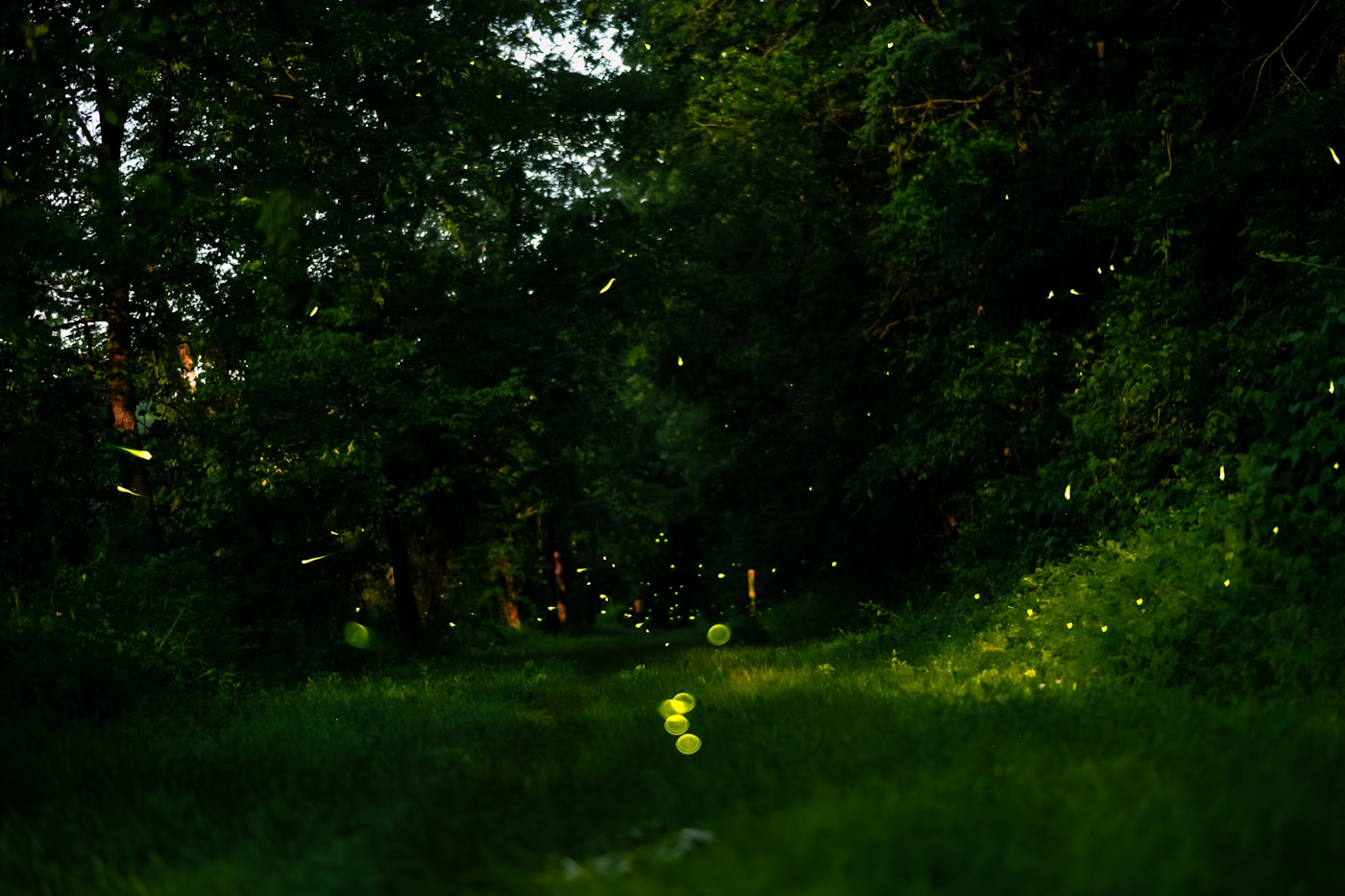
For many familiar firefly species, the flashes are part of courtship. A male flies while flashing a pattern that is typical of his species. A female waits on vegetation or near the ground and answers with her own flash if the signal matches what she is looking for. The timing matters. A reply that comes too early, too late, or in the wrong rhythm may be ignored.
This is why firefly flashes can differ so much from place to place. Some species make single pulses. Others use pairs, quick bursts, slow glows, or synchronized displays where many insects flash in near unison. The pattern helps individuals identify their own species in a crowded summer habitat. Without that code, a firefly might waste energy responding to the wrong signal.
Light can also serve as a warning. Many fireflies contain defensive chemicals that make them unpleasant or harmful for predators to eat. A glow can advertise that risk before a bird, spider, or other predator makes the mistake of trying. In larvae, which often glow before they ever become winged adults, light may work more as a defense signal than as courtship. That is one reason young fireflies are sometimes called glowworms, even though they are beetle larvae rather than worms.
Why Fireflies Need Damp, Dark Places
The adult flashes are the most visible part of a firefly’s life, but most of the story happens close to the ground. Firefly larvae often live in moist soil, leaf litter, stream edges, wet meadows, or marshy areas. Many feed on soft-bodied prey such as snails, slugs, and worms. This hidden stage may last much longer than the brief adult season people notice in early or midsummer.
That life cycle explains why habitat matters. A lawn that is cut extremely short, cleared of leaves, treated heavily with pesticides, and lit all night is not the same place as a damp meadow edge with leaf litter, native plants, and darkness after sunset. The Xerces Society for Invertebrate Conservation identifies habitat loss and degradation, artificial light at night, pesticide use, climate change, poor water quality, and invasive species as threats to fireflies. Those pressures do not affect every species equally, but they show how many parts of the firefly life cycle can be disrupted.
Artificial light is especially important because it interferes directly with communication. A porch light, streetlight, or bright landscape fixture can wash out a male’s signal or make a female’s reply harder to detect. A 2022 review in Frontiers in Ecology and Evolution summarized research showing that artificial light at night can change firefly courtship behavior across several signaling systems. For an insect that depends on timing and contrast, a brighter night is not always a safer or better night.
Not Every Firefly Glows the Same Way
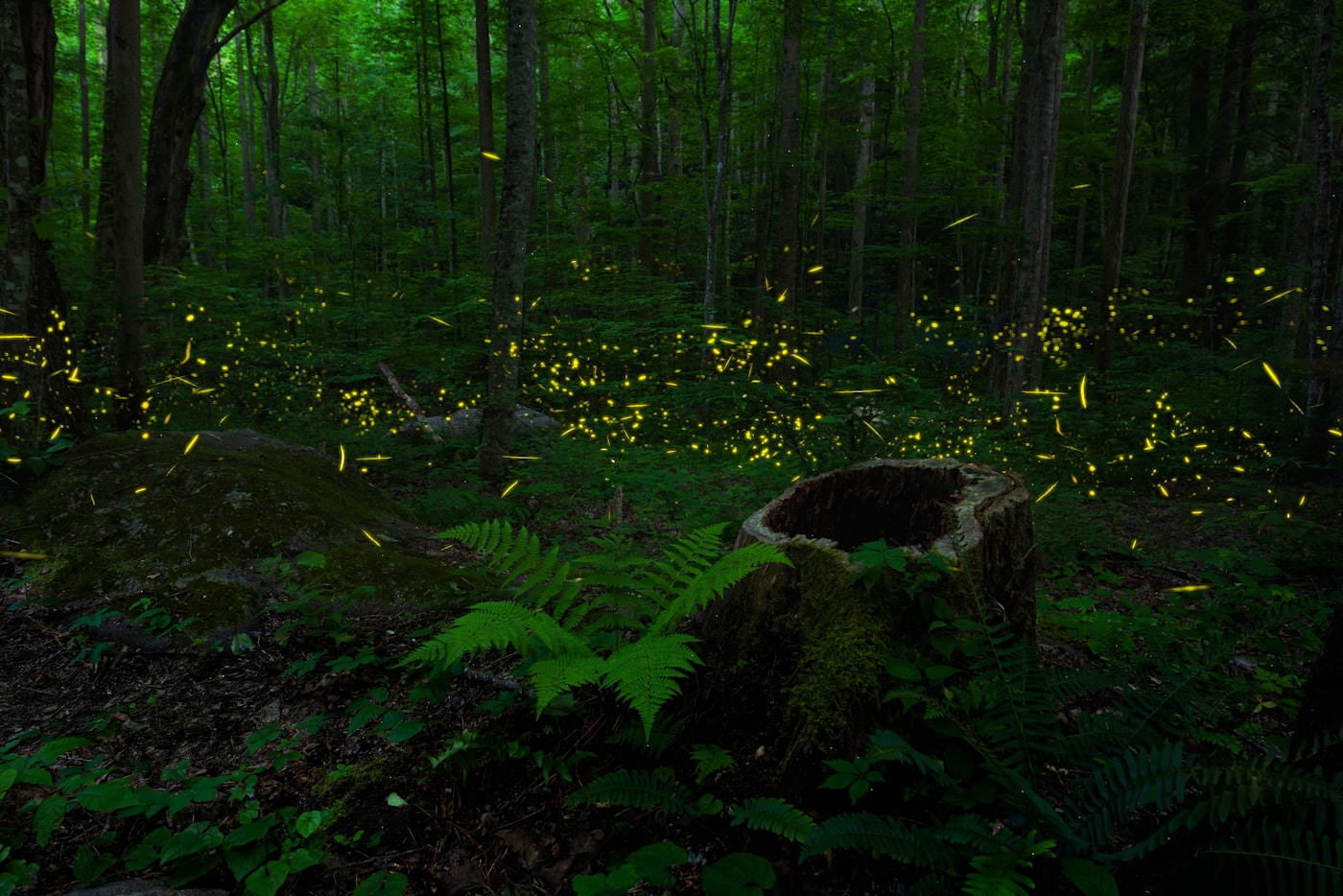
It is easy to imagine all fireflies as blinking insects in a backyard, but the family is more varied than that. Some adult fireflies flash brightly. Some glow more steadily. Some species have females that do not fly. Others have adults that do not produce obvious light at all, relying more on chemical cues called pheromones. The name firefly covers a wide range of beetles with different habitats, signals, and life histories.
This variety makes firefly conservation more complicated than simply saying there are more or fewer fireflies everywhere. A species that lives in common backyard habitat may remain fairly visible, while a species that depends on a particular wetland, coastal area, or streamside condition may be far more vulnerable. In 2020, a BioScience paper based on a survey of firefly specialists identified habitat loss, light pollution, and pesticides as major global concerns. Later conservation summaries have also emphasized that many species lack enough long-term monitoring data, which means some declines may be hard to measure clearly.
The uncertainty matters. When people remember seeing more fireflies in childhood, that memory may reflect real local change, shifting land use, weather differences, or simply where and when they were looking. A wet spring can produce a strong firefly season in one area without proving that every population is healthy. Careful observation over many years is better than one bright or quiet summer.
How Small Choices Can Protect the Glow
Fireflies do not need every yard or park to become wild, but they do benefit when some places stay darker, damper, and less chemically disturbed. Turning off unnecessary outdoor lights during firefly season can make signals easier to see. Shielding lights downward, using motion sensors, closing curtains at night, and choosing warmer, dimmer bulbs can reduce the amount of stray light spilling into habitat.
Ground-level habitat helps too. Leaving some leaf litter under shrubs, allowing a damp corner to grow naturally, planting native vegetation, and reducing pesticide use can support the larvae and the prey they depend on. These choices are not just for fireflies. They also help other insects, soil organisms, and the small food webs that make summer landscapes feel alive.
The glow of a firefly lasts only a moment, but it carries a lot of information. It says that chemistry can become communication. It shows that darkness can be useful, not empty. It reminds us that a familiar summer sight depends on tiny lives unfolding in grass, leaves, soil, and water long before the first flash appears. When the lights begin to blink over a field, they are not just making the night beautiful. They are showing how carefully life can turn energy into meaning.