

 Akshay Dinesh
A melody can feel like a small step, a sudden leap, a question, a sigh, or a bright arrival. Much of that feeling comes from intervals: the distances between one note and another. A song is not only a chain of pitches, just as a sentence is not only a row of words. The space between the notes gives the line its contour, and the ear follows that contour before it has names for anything.
Intervals also explain why harmony works. Two notes played together can sound settled, tense, spacious, narrow, sweet, rough, or unfinished depending on how far apart they are. Learning intervals gives musicians a practical map for reading notation, building chords, singing in tune, picking out melodies by ear, and understanding why some musical moments feel the way they do.
Intervals Are Musical Distance
An interval measures the distance from one note to another. If the notes are played one after the other, the interval is melodic. If they are played at the same time, the interval is harmonic. The same two notes can do both jobs: C moving up to G creates a melodic perfect fifth, while C and G sounded together create a harmonic perfect fifth.
Western music usually measures small pitch distances in half steps, also called semitones. On a piano, a half step is the distance from one key to the very next key, whether that next key is white or black. C to C-sharp is a half step. E to F is also a half step, even though there is no black key between them. Two half steps make a whole step, as in C to D.
The octave is the interval where two notes share the same letter name at a higher or lower pitch, such as middle C and the next C above it. In acoustics, the higher note of an octave vibrates at twice the frequency of the lower note, which is one reason the two notes feel closely related even though they are far apart on the keyboard. Modern Western instruments are commonly tuned in twelve-tone equal temperament, which divides the octave into twelve equal half steps. That system makes it possible to play in many keys without retuning the instrument.
Interval names combine two kinds of information: number and quality. The number comes from letter names. C to E is a third because C, D, and E are counted. C to G is a fifth because C, D, E, F, and G are counted. The quality tells what kind of third or fifth it is: major, minor, perfect, augmented, or diminished.

Why Some Intervals Feel Stable and Others Feel Tense
Some intervals feel easy for the ear to accept. Octaves, perfect fifths, and perfect fourths often sound open and stable, especially when they appear in simple musical settings. A perfect fifth, such as C to G, has long been one of the most important building blocks in tuning systems, string instruments, and harmony. It can sound strong without sounding complete in the same way a full chord does.
Thirds have a different character. A major third, such as C to E, tends to sound brighter in many familiar contexts. A minor third, such as C to E-flat, often sounds darker or more shaded. That difference is small on the keyboard, only one half step, but it changes the emotional color of a chord dramatically. C-E-G forms a C major chord, while C-E-flat-G forms a C minor chord.
Seconds and sevenths often create more tension. A minor second, such as E to F, is only one half step and can sound tight or urgent. A major seventh, such as C to B, reaches almost to the octave but not quite, which can make it feel restless. The tritone, the distance of six half steps, sits halfway across the octave and has a famously unsettled sound. In many styles, that tension is not a problem to avoid. It is energy waiting to move.
Context matters, though. No interval has one fixed meaning in every piece of music. A minor third can sound mournful in one song, playful in another, and bluesy in a third. A dissonant interval can sound harsh when isolated but expressive when it resolves. Musicians learn interval names not to reduce music to labels, but to hear more clearly what the music is doing.
Intervals Shape Melodies Before Chords Appear
Melodies often become memorable because of their interval patterns. A melody made mostly of small steps feels smooth and singable. A melody with wider leaps can sound bold, dramatic, or surprising. When a tune jumps upward and then slowly descends, the listener hears a shape, almost like a line drawn in the air.
Stepwise motion is common because voices and instruments can move through it naturally. If a singer moves from C to D to E, the melody feels connected. Leaps create contrast. A move from C to G opens space immediately, and the ear notices the change. Good melodies often balance both: enough stepwise motion to feel coherent, enough leaps to avoid sounding flat.
Intervals also help musicians remember tunes. A perfect fourth, perfect fifth, minor third, or octave can become a recognizable hook. Ear-training teachers often use familiar songs as reference points because the opening leap of a well-known melody can anchor the sound of an interval in memory. The goal is not to turn every song into a quiz, but to build a reliable sense of distance.
That sense becomes useful when reading music. A student who sees two notes on a staff can count the interval and predict the motion before playing it. Over time, the eye and ear begin to work together. The printed notes stop feeling like isolated dots and start looking like gestures: a step up, a leap down, a return to the starting pitch, a climb toward a high point.
Intervals Build Chords and Harmonic Color
Chords are built from intervals stacked together. A basic triad uses a root, a third, and a fifth. In C major, those notes are C, E, and G. The interval from C to E gives the chord its major quality, while the interval from C to G gives it support. Change E to E-flat, and the chord becomes C minor because the third has changed from major to minor.
More complex chords add more intervals. A seventh chord adds a seventh above the root. A suspended chord may replace the third with a fourth, delaying the clear major or minor identity. An added-sixth chord includes a sixth that gives the harmony a different color. Jazz, classical, pop, film, and folk music all use these interval choices, though they may treat them in different ways.
Intervals also explain why chord progressions move with a sense of direction. A note that forms a tense interval inside one chord may resolve by step into a more stable interval in the next. The ear follows that movement even when the listener does not know the chord names. In a dominant seventh chord, for example, the tritone inside the harmony strongly wants to resolve. That pull is one reason the move from a dominant chord to a tonic chord can feel so satisfying.
For learners, this is where music theory becomes practical. Instead of memorizing chords as unrelated shapes, intervals reveal the structure underneath. A guitarist can move a chord shape and still understand the distances inside it. A pianist can build chords in different keys by counting intervals. A singer can tune a harmony line by listening for the distance from the main melody.
How to Practice Hearing and Using Intervals
Interval practice works best when it connects sound, sight, and physical motion. Start with a few common intervals rather than trying to memorize every name at once. Seconds, thirds, fourths, fifths, and octaves give enough material to hear real musical difference without overwhelming the ear. Play or sing each interval both upward and downward, because the same distance can feel different depending on direction.
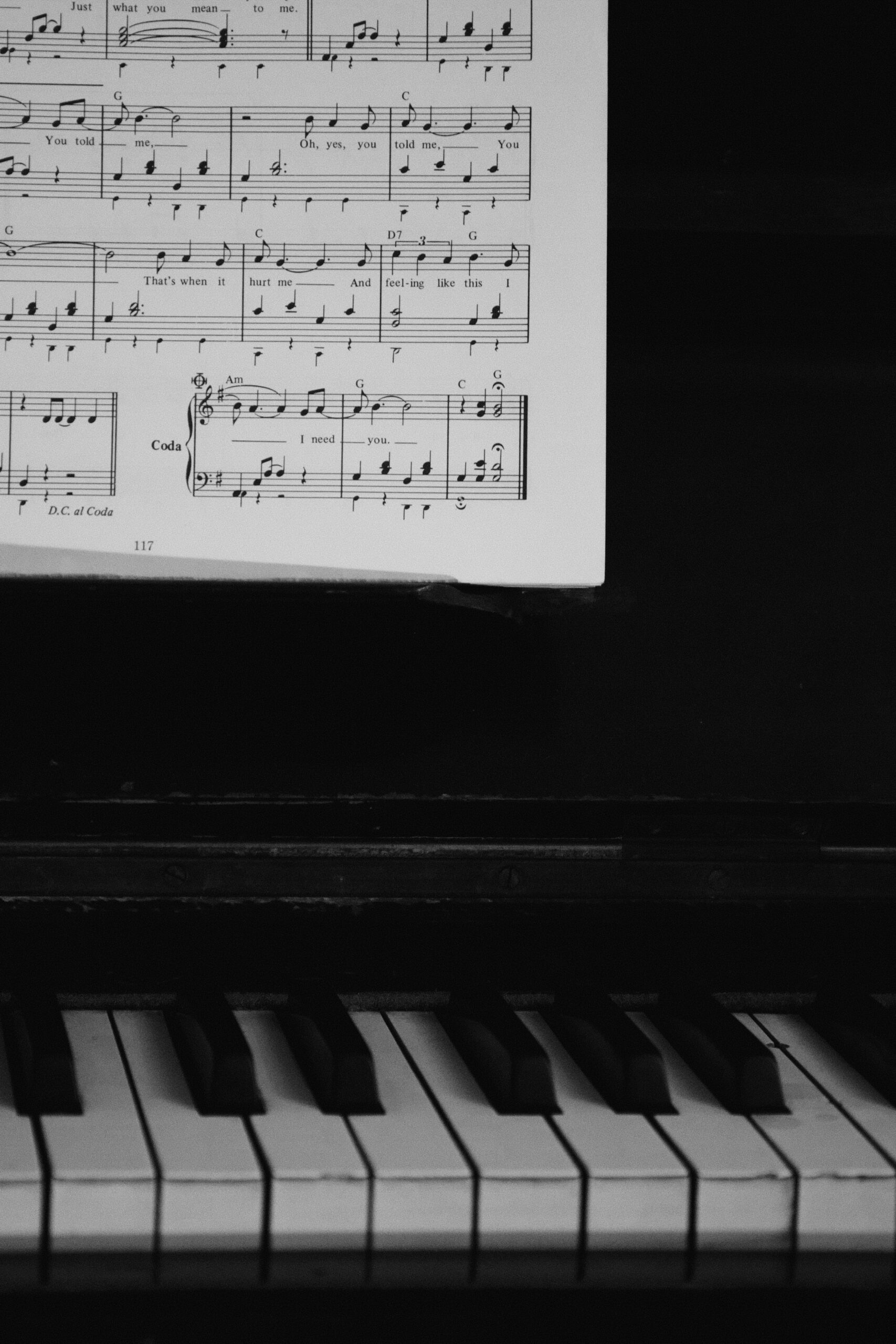
Use an instrument when possible. On a piano, half steps are easy to see because each neighboring key is one step away. On a guitar, intervals can be felt as fret distances and string patterns. Singers can practice by matching a starting pitch, then moving to a target pitch and checking it against an instrument. The point is to make the interval a lived sound, not just a word in a theory chart.
It also helps to separate recognition from production. Recognition means hearing two notes and identifying the interval. Production means being able to sing, play, or write the interval on purpose. A student may recognize a perfect fifth before being able to sing one accurately, or may play a minor third easily before naming it by ear. Both skills improve with steady practice.
Short daily work is usually better than rare marathon sessions. Five minutes spent listening carefully to thirds and fifths can be more useful than a long, unfocused drill. After a while, intervals begin to show up everywhere: in the opening of melodies, the inside of chords, background harmonies, bass lines, and even the way a singer bends a note toward another pitch.
The Real Value Is Hearing Relationships
Intervals matter because music is built from relationships. A single note can be beautiful, but the next note gives it direction. A chord can feel settled or tense because of the distances inside it. A melody can sound plain, graceful, strange, or unforgettable because of the path its intervals trace.
Learning interval names is only the beginning. The deeper skill is hearing how notes lean toward one another, how far a melody has traveled, and how harmony changes color when one pitch shifts. That skill helps a student read music with more confidence, learn songs faster, write more intentionally, and listen with more detail.
Once intervals become familiar, music starts to feel less like a mystery of scattered notes. The ear begins to hear steps, leaps, arrivals, tensions, and releases. Those distances are small pieces of structure, but they are also part of what makes music feel alive.





Add comment