 Akshay Dinesh
A small change in the order of a math problem can change the answer completely. The expression 6 + 4 × 3 does not mean the same thing as (6 + 4) × 3, even though the numbers and signs look almost identical. That is why math needs a shared order for simplifying expressions. Without it, the same line of symbols could give different answers depending on who read it first.
Order of operations is the agreement that tells everyone which parts of an expression to handle first. It is not a trick or a rule invented to make arithmetic harder. It protects the meaning of a calculation, especially when addition, subtraction, multiplication, division, powers, and grouping symbols all appear in one place. Once the order becomes familiar, complicated expressions start to look less like puzzles and more like organized instructions.
The Rule Is Really About Meaning
The common memory aid PEMDAS stands for parentheses, exponents, multiplication and division, addition and subtraction. It is useful, but only if it is read carefully. Parentheses and other grouping symbols come first because they mark a chunk of the expression that should be treated as one unit. Exponents come next because powers describe repeated multiplication before that result joins the rest of the expression.
Multiplication and division share the same level. Addition and subtraction also share the same level. That shared level is where many mistakes happen. PEMDAS does not mean all multiplication must happen before all division, or that all addition must happen before all subtraction. When operations share a level, move from left to right.
That left-to-right rule matters in a problem like 24 ÷ 6 × 2. If you read it properly, divide first because it appears first: 24 ÷ 6 = 4, then 4 × 2 = 8. If someone tries to multiply 6 × 2 first, the answer becomes 2, but that changes the expression. The original line did not group 6 × 2 together.
Start With the Most Protected Part
Grouping symbols are the strongest signal in an expression. Parentheses, brackets, braces, fraction bars, and square root bars all tell the reader, “finish this part before using it in the larger calculation.” In the expression (8 + 4) ÷ 3, the parentheses turn 8 + 4 into one number before division happens. The result is 12 ÷ 3, or 4.
Compare that with 8 + 4 ÷ 3. Now the 4 ÷ 3 happens before addition, so the result is 8 + 4/3, not 4. The expressions use the same numbers, but the grouping changes the job. This is why parentheses are not decoration. They are meaning marks.
Nested grouping works from the inside out. In 2 × [5 + (9 – 3)], the innermost group is 9 – 3. That becomes 6, so the bracket becomes [5 + 6], then 11. Only after the grouped amount is simplified does the expression become 2 × 11. The final answer is 22.

Multiplication and Division Move Together
After grouping and exponents, multiplication and division are handled together from left to right. They are inverse operations, so neither one outranks the other. A helpful way to think about them is that both change the size of a quantity by a factor. Multiplication scales up or repeats groups, while division splits or compares groups.
Try 18 ÷ 3 × 2. Moving left to right gives 18 ÷ 3 = 6, then 6 × 2 = 12. The expression is not asking for 18 divided by 6 unless parentheses say 18 ÷ (3 × 2). That second expression would equal 3, but it is a different expression.
The same idea helps with fractions. A fraction bar acts like grouping because everything above the bar belongs to the numerator, and everything below belongs to the denominator. If the numerator is 5 + 7 and the denominator is 3 × 2, both grouped parts must be simplified before the final division. That structure is one reason written fractions can be clearer than a long line of division symbols.
Addition and Subtraction Also Move Together
Addition and subtraction share the final level. They also move left to right when they appear together. In 20 – 8 + 3, subtract first because it appears first: 20 – 8 = 12, then 12 + 3 = 15. If someone adds 8 + 3 first, the answer becomes 9, but that is the value of 20 – (8 + 3), not the original expression.
Subtraction is especially easy to misread because it can feel like it attaches to the number after it. A safer habit is to read subtraction as adding the opposite. Then 20 – 8 + 3 becomes 20 + (-8) + 3. That makes the left-to-right movement less mysterious, because the signs travel with the terms they belong to.
This habit becomes even more useful in algebra. In 3x – 5 + 2x, the -5 is not just a loose 5; it is a negative term. Keeping the sign with the term helps combine like terms correctly: 3x + 2x – 5 becomes 5x – 5. The order of operations is not separate from algebra. It is one of the habits that keeps algebra readable.
A Worked Example With Every Layer
Consider the expression 4 + 3(10 – 6)^2 ÷ 2. The first move is the grouped subtraction: 10 – 6 = 4. The expression becomes 4 + 3(4)^2 ÷ 2. Next comes the exponent: 4^2 = 16. Now the expression is 4 + 3 × 16 ÷ 2.
Multiplication and division come next from left to right. First 3 × 16 = 48, then 48 ÷ 2 = 24. The expression is now 4 + 24. The final answer is 28.
The most important part of that example is not the arithmetic. It is the discipline of rewriting one cleaned-up line at a time. Students often make mistakes when they try to do several hidden moves at once. Writing the expression after each step makes the structure visible and gives mistakes fewer places to hide.
Common Mistakes Come From Reading Too Fast
One common mistake is treating PEMDAS as a strict left-to-right list of six separate commands. That leads people to multiply before dividing even when division comes first, or to add before subtracting when subtraction comes first. A better version is: grouping, powers, multiplication or division from left to right, addition or subtraction from left to right.
Another mistake is ignoring invisible grouping. A square root bar, absolute value bars, and a numerator over a denominator can all group expressions. So can function notation in later math. If f(x) = x^2 + 1, then f(3 + 2) means the whole input 3 + 2 goes into the rule, not just the 3.
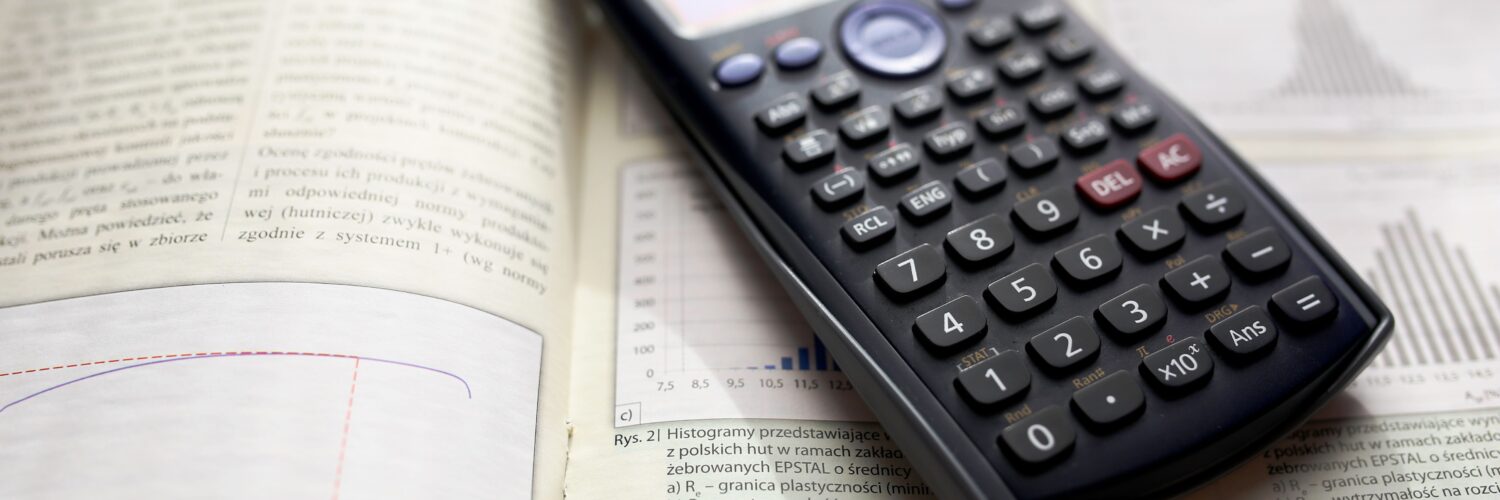
Calculators can also expose order-of-operations confusion. Many scientific calculators follow the standard order, but the screen only knows what was typed. If you mean to divide by the whole quantity 2 + 3, you need parentheses: 18 ÷ (2 + 3). Typing 18 ÷ 2 + 3 gives 12, because the division happens before the final addition.
How to Check Your Work
A good check starts by asking what the expression is doing before calculating. Are there groups that should become single numbers? Are there powers? Are multiplication and division mixed together? Are addition and subtraction mixed together? These questions slow the problem down just enough to prevent the most common slips.
For practice, mark each layer lightly before solving. Circle grouped expressions, underline powers, then handle multiplication and division from left to right. After that, finish addition and subtraction from left to right. The marks are temporary, but they train the eye to see structure.
Order of operations is not about memorizing a slogan perfectly. It is about preserving meaning. Once the order is clear, a line of arithmetic becomes a set of dependable directions. The same habits carry forward into fractions, formulas, graphing, equations, and the longer expressions students meet in algebra and beyond.