
 Akshay Dinesh
Counting in Mandarin Chinese asks learners to notice something English often lets them ignore. In English, a number can usually sit directly in front of a noun: one book, three cars, five people. In Chinese, a number normally needs a small word between the number and the noun. That word is called a measure word or classifier, and it helps show what kind of thing is being counted.
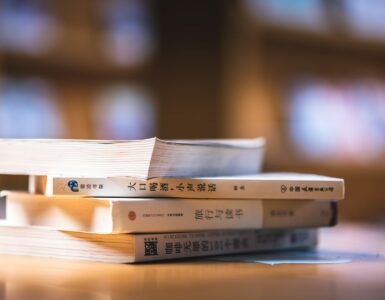
At first, measure words can feel like an extra grammar burden. A learner may know the noun 书 (shū), meaning book, and the number 三 (sān), meaning three, but still need the phrase 三本书 (sān běn shū), not just 三书. The extra word 本 (běn) tells the listener that the noun is a bound object such as a book, notebook, or volume. Once the pattern becomes familiar, measure words stop feeling random and start acting like small clues about shape, purpose, and category.
The Basic Pattern: Number, Measure Word, Noun
The most common counting pattern in Mandarin is simple: number + measure word + noun. 一个人 (yí ge rén) means one person. 两本书 (liǎng běn shū) means two books. 三辆车 (sān liàng chē) means three vehicles. The number gives the amount, the measure word fits the type of noun, and the noun names the thing itself.
This pattern also appears after words such as 这 (zhè), meaning this, and 那 (nà), meaning that. 这本书 (zhè běn shū) means this book. 那辆车 (nà liàng chē) means that vehicle. If both a demonstrative and a number appear, the order is usually demonstrative + number + measure word + noun, as in 这三本书 (zhè sān běn shū), meaning these three books.
Measure words are not usually needed when a noun stands alone. 书 can simply mean book or books depending on context. The measure word becomes important when the speaker counts, points out, or quantifies the noun. That is why a beginner can recognize many nouns before fully mastering the measure words that go with them.
One detail surprises many learners: Mandarin often uses 两 (liǎng), not 二 (èr), before a measure word when saying two of something. Two books is 两本书 (liǎng běn shū). Two vehicles is 两辆车 (liǎng liàng chē). 二 still appears in other places, such as phone numbers, dates, or counting in sequence, but 两 is the everyday choice for many counted nouns.
Why Chinese Uses Measure Words
Measure words make counting more specific. They can point to the shape of an object, the way it is handled, the kind of group it belongs to, or the container that holds it. English has a smaller version of this idea in phrases such as a cup of tea, a piece of paper, a pair of shoes, or a slice of cake. Mandarin extends that habit much more widely, so even common countable nouns usually need a classifier when paired with a number.
Some measure words are close to English container words. 一杯水 (yì bēi shuǐ) means a cup of water. 一碗饭 (yì wǎn fàn) means a bowl of rice or a bowl of food. 一瓶果汁 (yì píng guǒzhī) means a bottle of juice. In these examples, the measure word names a real container, so the logic is easy to see.
Other measure words classify the noun rather than measuring a physical amount. 本 (běn) goes with books and bound reading materials. 张 (zhāng) often goes with flat things such as paper, tickets, tables, beds, and some cards. 条 (tiáo) often goes with long, narrow, flexible things such as fish, rivers, roads, belts, and pants. The connection is not always perfect, but there is usually a pattern worth noticing.
This is why memorizing measure words only as isolated translations can be frustrating. 个 (gè) is often taught as a general measure word, but it does not mean a, an, or one by itself. It works because Chinese grammar needs a classifier in many counted noun phrases, and 个 is the broad, flexible choice used for people and many everyday nouns. It is useful, but relying on it for everything can make speech sound less precise.
Common Measure Words Learners Meet Early
A strong beginner set starts with a few high-frequency measure words instead of a huge chart. 个 (gè) is the most useful general classifier and appears in phrases such as 一个人 (yí ge rén), one person, and 一个问题 (yí ge wèntí), one question. It is common in speech and often works when learners do not yet know the more specific classifier.
本 (běn) is a natural next step because books, notebooks, and textbooks appear often in study conversations. 一本书 (yì běn shū) means one book. 两本词典 (liǎng běn cídiǎn) means two dictionaries. The measure word fits items that feel like bound volumes, which makes it easier to remember than a random label.
张 (zhāng) helps with flat objects. 一张纸 (yì zhāng zhǐ) is one sheet of paper. 一张票 (yì zhāng piào) is one ticket. 一张桌子 (yì zhāng zhuōzi) is one table, which may feel less obvious until the learner notices that a table has a broad flat surface. Measure-word logic often depends on how a noun is imagined in ordinary use, not on a scientific category.
只 (zhī) often appears with many animals and with one item from a natural pair. 一只猫 (yì zhī māo) is one cat. 一只鸟 (yì zhī niǎo) is one bird. 一只手 (yì zhī shǒu) is one hand. 辆 (liàng) is used for many vehicles, as in 一辆车 (yí liàng chē), one car, and 两辆自行车 (liǎng liàng zìxíngchē), two bicycles.
条 (tiáo) is especially helpful because its shape logic is visible. 一条鱼 (yì tiáo yú) is one fish. 一条路 (yì tiáo lù) is one road. 一条裙子 (yì tiáo qúnzi) can mean one skirt in many contexts. The nouns are not identical, but they are imagined as long, narrow, or extended. That kind of mental grouping is one reason classifiers can sharpen vocabulary instead of merely adding work.
How to Choose the Right Measure Word
The safest way to learn measure words is to store them with nouns from the beginning. Instead of learning 书 as only shū, book, learn 一本书 (yì běn shū). Instead of learning 车 as only chē, vehicle or car, learn 一辆车 (yí liàng chē). This turns grammar into part of the vocabulary entry, which is closer to how fluent speakers retrieve the phrase.
It also helps to group nouns by measure word. A learner might make one list for 本: 书, 词典, 杂志, 笔记本. Another list can collect 张: 纸, 票, 地图, 桌子, 照片. A 条 list might include 鱼, 路, 河, 裤子, 裙子. These groups reveal the logic behind the classifier and give the learner several examples to practice at once.
When the specific classifier is unknown, 个 is often understood in casual conversation, especially with common nouns. That does not make it the best long-term habit for every situation. A phrase such as 一个书 may be understandable, but 一本书 is the natural form. The goal is not to panic over every classifier, but to gradually replace the all-purpose choice with more exact patterns.
Listening is just as useful as memorization. Textbooks may introduce measure words in neat tables, but real speech shows which combinations sound ordinary. Short dialogues, graded readers, and example sentences can teach patterns more naturally than a long list copied once and forgotten. Each time a learner sees a phrase such as 三张票 or 两杯茶, the measure word becomes less abstract.
Common Mistakes and How to Fix Them
The most common mistake is leaving the measure word out because English does not need one. A learner may want to say 三书 for three books, but the natural phrase is 三本书. This error is easy to understand because the English phrase is shorter. The fix is to practice complete noun phrases instead of only single nouns.
Another mistake is treating 个 as a universal answer. It is useful, and beginners should not be afraid to use it when stuck, but it can flatten distinctions that Mandarin usually makes. Saying 一个老师 for one teacher is fine. Saying 一个车 for one car is less natural than 一辆车. Over time, a learner should keep 个 for the nouns that normally use it and learn the specific classifiers for common objects.
A third mistake is translating measure words too literally. 张 can go with a sheet of paper, but that does not mean it always translates as sheet. 本 can go with a book, but it does not mean volume in every sentence. Classifiers are part of Chinese noun-phrase grammar, so the English translation may simply be one book, two tickets, or three roads with no separate translated word.
Tone and pronunciation matter too. Measure words are short, so they can disappear in fast speech if the learner does not practice them aloud. Phrases such as yì běn shū, liǎng liàng chē, and sān zhāng piào train the mouth to say the whole pattern smoothly. Speaking the phrase as a unit helps the grammar become automatic.
Measure Words Make Vocabulary More Organized
Chinese measure words can look like small obstacles, but they often make vocabulary more organized once the pattern is clear. They teach learners to notice whether something is flat, bound, long, paired, carried in a container, or counted as an individual item. That habit builds a more Chinese way of grouping words instead of translating every phrase directly from English.
A practical study routine can stay simple: learn each new noun with one natural counting phrase, review nouns in classifier groups, and listen for the same combinations in real sentences. The first goal is not to memorize every classifier in Mandarin. It is to make common phrases such as 一本书, 一张票, 一只猫, 一辆车, and 一杯水 feel normal. From there, measure words become less like a grammar rule to remember and more like a rhythm built into the language.



Add comment