
 Freddie Shen
The Trojan War begins, in Greek myth, with a chain of choices that look small at first and then grow impossible to contain. A slight at a wedding leads to a contest among goddesses. A prince is asked to judge beauty, but each goddess offers him a different kind of power. His decision leads him toward Helen of Sparta, and Helen’s departure for Troy gives the Greek kings a reason to sail east with an army. The story is legendary rather than documented history, but it has shaped how generations have thought about pride, desire, honor, and the cost of a single decision.
Myth and Memory Before the War
The Trojan War belongs to the world of Greek mythology and epic poetry. Ancient audiences knew the story from many songs and local traditions, while later readers met it through works connected with Homer, especially the Iliad, and through later Greek and Roman retellings. The Iliad does not start at the beginning of the war. It opens near the end, during a quarrel between Achilles and Agamemnon, which means the causes of the conflict had to be explained through other myths surrounding the epic cycle.
That matters because the beginning of the Trojan War is not a simple political report. It is a mythic explanation for why so many heroes gathered at Troy and why the gods seemed to take sides in human affairs. The story gives divine arguments, family loyalties, broken hospitality, and personal desire a single dramatic path. Whether or not a historical war helped inspire the legend, the myth presents the conflict as something larger than one stolen person or one angry king.
Paris and the Prophecy About Troy
One thread of the story begins before Paris is old enough to make any choice at all. In the myth, Paris is born into the royal family of Troy, the son of King Priam and Queen Hecuba. A prophecy warns that the child will bring disaster to the city. Trying to escape that future, the royal household sends the baby away, but Paris survives and grows up far from the palace, often described as a shepherd on Mount Ida.
This setup is common in ancient storytelling: a family tries to avoid a prophecy and ends up moving closer to it. Paris is not raised as a prince who understands diplomacy, royal duty, or the dangers of offending powerful families. He enters the central conflict as someone both connected to Troy and separated from its political world. That makes him an ideal judge for a divine quarrel, at least from the goddesses’ point of view.
The Golden Apple and the Judgment of Paris
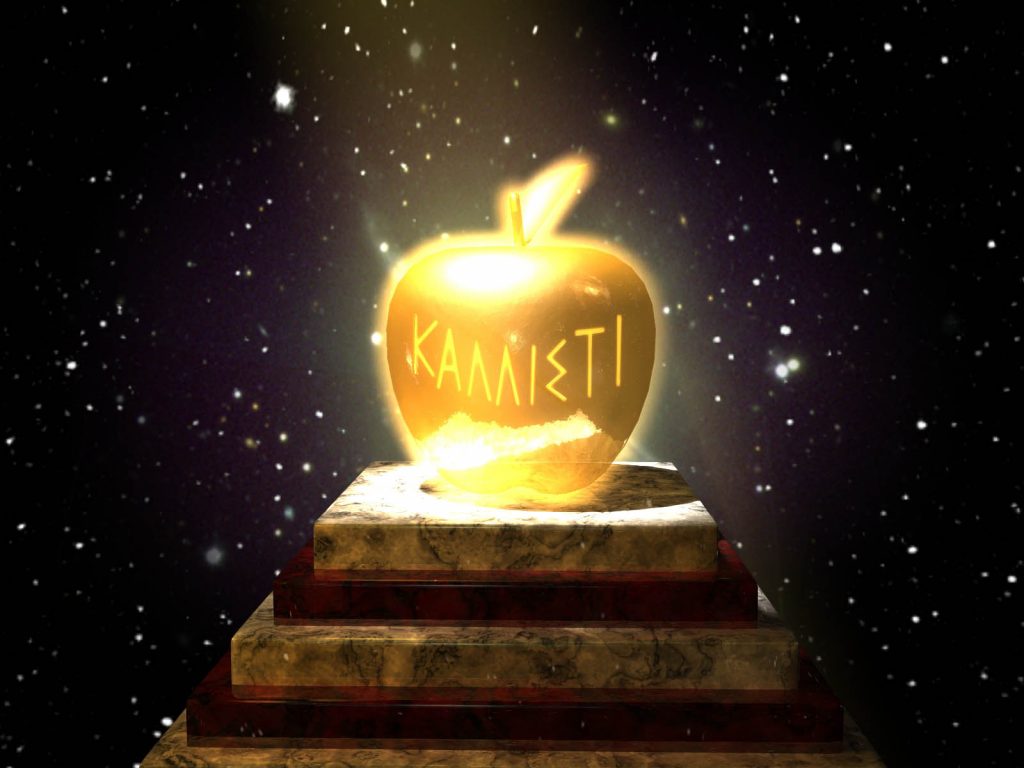
The famous quarrel begins at the wedding of Peleus and Thetis, the future parents of Achilles. Eris, the goddess of discord, is not invited. In revenge, she throws a golden apple among the guests with a message that it is meant for the fairest. Hera, Athena, and Aphrodite each claim it, and none is willing to step aside. Zeus avoids making the decision himself and sends the question to Paris.
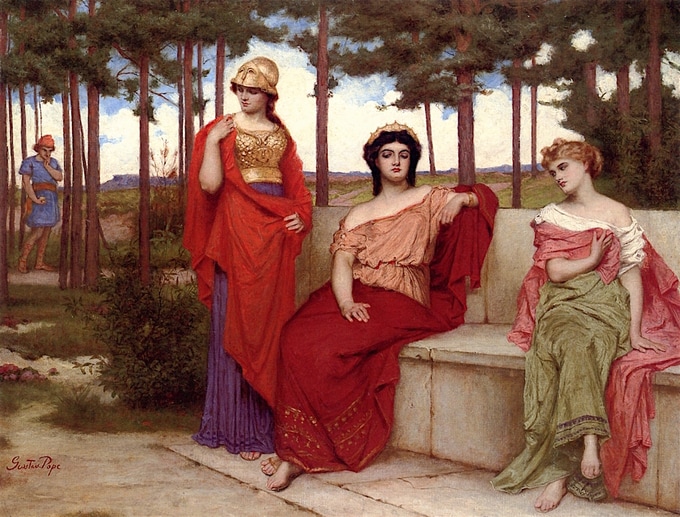
The judgment is not really a beauty contest once the offers begin. Hera promises political power. Athena promises wisdom and victory. Aphrodite promises the love of the most beautiful woman in the world. Paris chooses Aphrodite, a choice that immediately makes Hera and Athena hostile to Troy. In mythic terms, the war begins taking shape before any ship leaves Greece, because divine resentment has already entered the story.
Helen of Sparta and the Broken Guest Bond
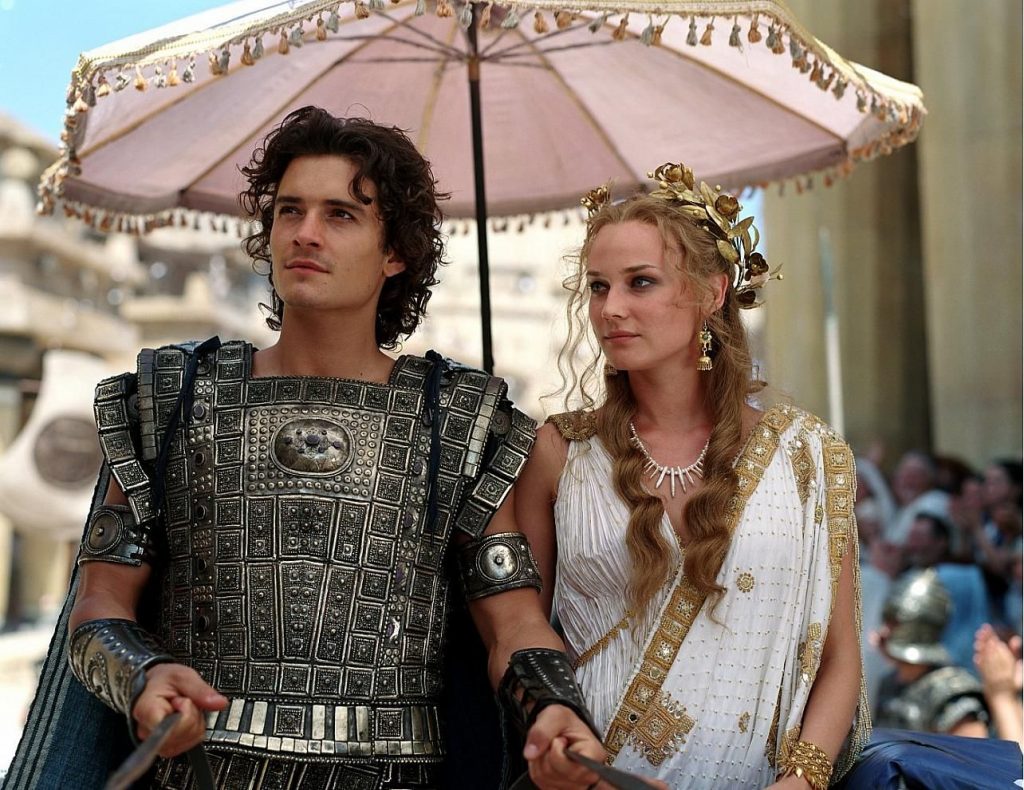
Aphrodite’s reward points Paris toward Helen of Sparta, who is married to Menelaus, king of Sparta. Paris travels to Sparta and is received as a guest. In the ancient Greek world, hospitality was not a casual courtesy. The bond between host and guest carried religious and social weight, and violating it could be treated as a serious offense. When Helen leaves with Paris for Troy, the story becomes more than a private betrayal. It becomes an insult to Menelaus, to his household, and to the network of rulers connected to him.
Different versions of the myth handle Helen’s choice differently. Some emphasize Aphrodite’s power and suggest that divine influence overwhelms ordinary human judgment. Others give Helen more agency and make the situation morally complicated. That uncertainty is part of why the story has lasted. It refuses to make the beginning of the war neat. Desire, coercion, ambition, wounded honor, and divine manipulation all crowd into the same moment.
Why the Greeks Sailed for Troy
Menelaus turns to his brother Agamemnon, king of Mycenae, and to other Greek rulers. In many tellings, Helen’s former suitors had sworn an oath to defend the marriage chosen for her. That oath gives Menelaus a way to call on powerful allies, including figures such as Odysseus, Ajax, and Achilles. The result is a massive expedition against Troy, not just a duel between two men.
The war then becomes a clash between personal grievance and collective duty. Menelaus wants Helen returned. Agamemnon wants command and glory. The Greek kings are bound by oath, reputation, and rivalry. Troy, meanwhile, must decide whether protecting Paris and Helen is worth risking the city. In epic storytelling, these motives do not cancel each other out. They pile up until war feels both avoidable and, within the story’s logic, almost inevitable.
That is why the beginning of the Trojan War remains so memorable. It is not only a tale about Helen’s beauty or Paris’s desire. It is a story about how pride, promises, status, and divine favoritism can turn a personal crisis into a public catastrophe. By the time the Greek ships reach Troy, the legend has already shown its central warning: great conflicts often grow from choices that people understand too late.


 Akshay Dinesh


Great job!
maybe.
Who Do You THink is the most powerful Greek mythology character. I Think that the strongest character in Greek Mythology is Chaos, known as void. From Chaos Gaea was born, so Were Day and Night, the Air, The Sea, and Ouranus. Chaos was Quite literally the power of creation, unmatched by any and all physical beings that existed in the myths.
Hello! That is a good question. I’ll have to agree with you on that one. Chaos was very powerful, and no one would be able to stand a chance against him. Being one of the primordial gods, he quite literally is the most powerful being to have ever existed.
Paris is kinda dumb. He chose a wife over wisdom and power.
LOL! Yeah. He made a really dumb decision. That’s the thing with these types of crazy dramatic stories. The main characters often make bad choices.
I totally agree with you. The character’s make really stupid choices. The God’s are even worse, if I’m being honest.