 Akshay Dinesh
A bill can have majority support in the United States Senate and still fail to reach a final vote. That surprises many people because elections often make lawmaking sound like simple arithmetic: win enough seats, gather more yes votes than no votes, and pass the bill. The Senate usually works differently. Its rules and traditions give debate unusual power, and the filibuster is the most famous example of that power.
The filibuster is not a separate branch of government, a line in the Constitution, or a magic word a senator says to stop a bill forever. It is a procedural tool that can delay or block Senate action by making it hard to end debate. In modern practice, the real question is often not whether 51 senators support a bill, but whether enough senators will vote to bring debate to a close.
Why Debate Has So Much Power in the Senate
The Senate was designed to move more slowly than the House of Representatives. Senators serve six-year terms, represent whole states, and operate in a chamber that traditionally gives individual members more room to speak, object, negotiate, and delay. That slower pace can make the Senate feel frustrating, but it is part of why the chamber has long described itself as a place of extended debate.
Early Senate rules did not include a simple way for a bare majority to cut off debate whenever it wanted. That mattered because debate uses time, and time is one of the Senate’s most valuable resources. If senators can keep debate going, they can prevent a final vote, force leaders to bargain, or draw public attention to an issue that might otherwise move quickly.
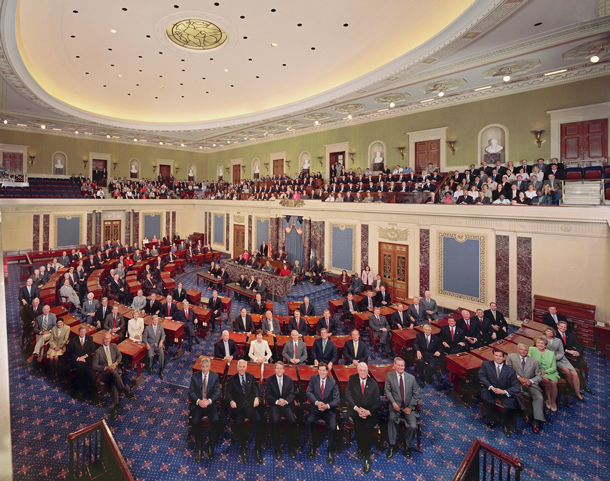
The Senate Historical Office traces the filibuster back to the chamber’s early history, long before television cameras turned marathon speeches into political theater. The word itself entered American legislative language in the 1850s, but the tactic was older: talk long enough, object often enough, and the Senate may run out of patience or time before the bill reaches a vote.
What a Filibuster Actually Does
In everyday speech, people often picture a senator standing for hours, reading from documents, refusing to yield the floor. That kind of speaking filibuster has happened, and some famous examples lasted through the night. Strom Thurmond’s 1957 speech against civil rights legislation lasted more than 24 hours. In April 2025, Senator Cory Booker set a new record for the longest individual Senate floor speech, according to the Senate Historical Office.
Modern filibusters usually look less dramatic. A senator or group of senators may signal that they will not allow debate to end without a cloture vote. Senate leaders then have to decide whether to spend floor time trying to overcome the delay. The public may not see one person talking for days, but the practical effect can be the same: the bill cannot move forward unless supporters clear a higher procedural hurdle.
That is why the filibuster changes political math. A proposal may have 52 supporters and 48 opponents, yet still stall if Senate rules require 60 votes to end debate. The minority does not have to win the final vote to shape the outcome. It can use delay to demand changes, slow the schedule, or make the majority prove that broader support exists.
How Cloture Turns Debate Into a Vote Count
Cloture is the Senate procedure for limiting debate. The Senate adopted its first cloture rule in 1917 after years of pressure to create a formal way to end a filibuster. At first, ending debate required a two-thirds majority. In 1975, the Senate changed the threshold for most matters to three-fifths of all senators duly chosen and sworn. With 100 senators, that usually means 60 votes.
The difference between 51 and 60 votes is enormous. A party may control the Senate with a narrow majority, chair committees, and set much of the agenda, but still need votes from the other party to advance most major legislation. That gives the minority leverage and gives moderate senators unusual importance, especially when the chamber is closely divided.
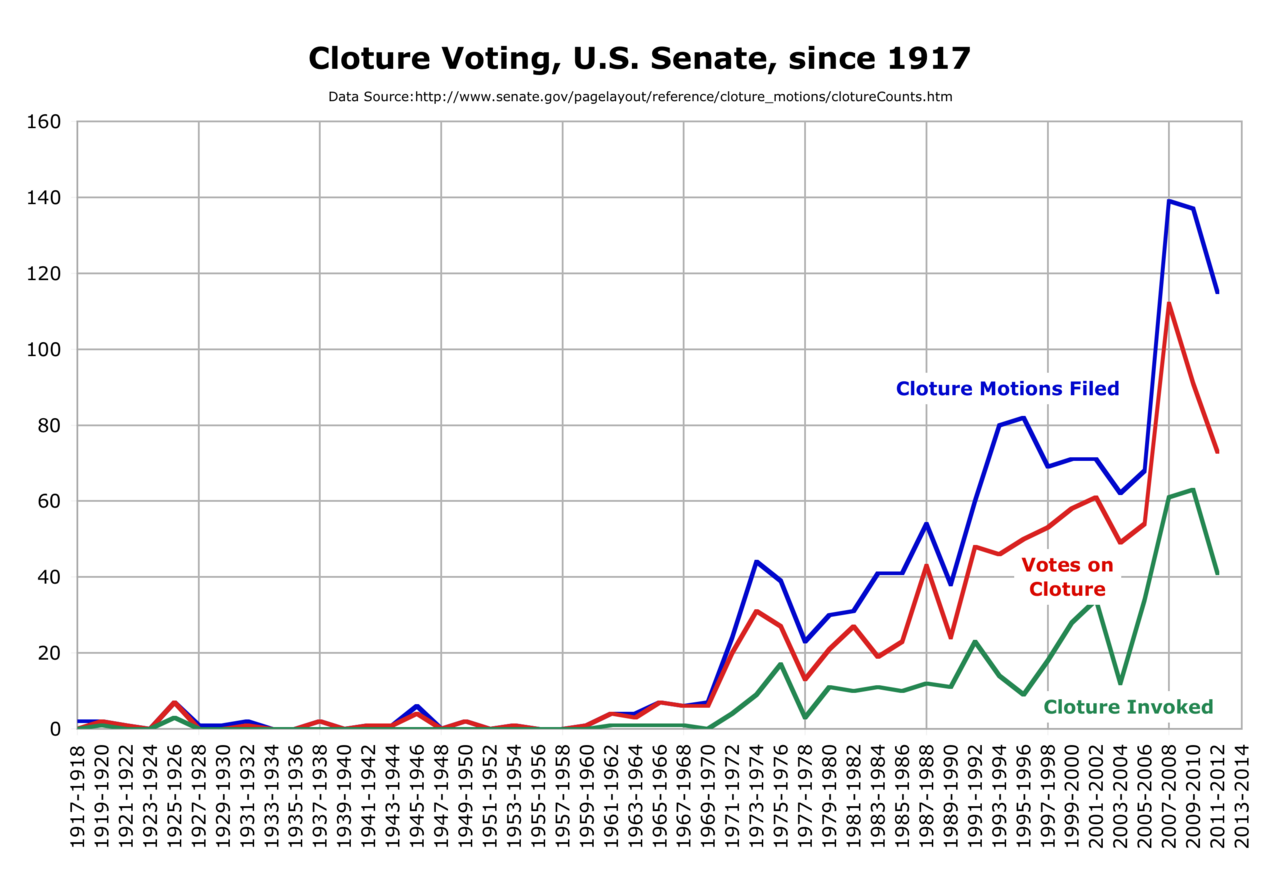
The Senate’s own cloture data show how central the procedure has become. From 1917 through the current Congress, the Senate lists thousands of cloture motions filed, votes held, and cloture votes invoked. In the 1950s, cloture votes were rare. In recent decades, they have become routine enough that many major bills and nominations are planned around them from the start.
Why the Rule Has Such a Complicated History
The filibuster has never had only one meaning. Supporters have often described it as a protection for minority viewpoints, a way to slow majorities that might otherwise pass sweeping laws too quickly. Critics have often described it as a tool of obstruction that lets fewer senators block measures supported by more voters and more elected representatives.
Both views are easier to understand when the history is kept in view. The filibuster has sometimes forced compromise and prevented rushed action. It has also been used to block civil rights legislation, including anti-lynching bills and other measures aimed at protecting Black Americans from violence and discrimination. The Senate Historical Office notes that not until 1964 did the Senate successfully overcome a filibuster to pass a major civil rights bill.
That history is one reason debates over the filibuster can become so intense. The rule is not just a technical detail. It shapes which problems Congress can answer, how quickly it can act, and how much power a determined minority can hold. People who defend the filibuster often worry about what a future majority might do without it. People who oppose it often focus on the costs of making national law so hard to pass.
Why Some Votes Need 60 and Others Do Not
One confusing part of the filibuster is that it does not apply the same way to everything. Most ordinary legislation still faces the 60-vote cloture threshold. But the Senate has created major exceptions. Budget reconciliation can allow certain tax, spending, and debt-limit measures to move with a simple majority, although strict rules limit what can be included. Many nominations also now move under a lower threshold after Senate precedents changed in the 2010s.
Those exceptions explain why some high-profile actions pass with 51 votes while other bills with majority support fail. A tax package might travel through reconciliation. A cabinet nominee may be confirmed by a simple majority. A broad voting-rights, immigration, education, climate, or health bill may still need 60 votes to end debate unless it fits inside a special procedural path.
Because of that, lawmakers think about procedure almost as much as policy. They ask not only what they want a bill to say, but which Senate path can carry it. A proposal that cannot survive a normal cloture vote may be rewritten, split into smaller pieces, attached to a budget measure, delayed, or abandoned. The visible vote at the end is only part of the story; the procedural route often decides whether the vote happens at all.
What the Filibuster Teaches About Lawmaking
The filibuster shows that democratic government is not only about counting preferences. It is also about the rules that decide when preferences can become action. The Senate’s 60-vote threshold can encourage broader coalitions, but it can also make the chamber less responsive when a majority wants change and the minority refuses to move.
For students of government, the key lesson is to separate final votes from procedural votes. A senator may support a bill but vote differently on timing, debate, amendments, or cloture. A bill may fail not because most senators oppose its goal, but because supporters cannot assemble the votes needed to move through the Senate’s procedural gates.
That is why arguments about the filibuster return whenever the Senate faces a narrow majority and a large agenda. The rule can protect the minority, frustrate the majority, force negotiation, preserve delay, and bury proposals before the public ever sees a final up-or-down vote. Understanding it makes Senate news clearer: sometimes the question is not whether a bill has enough supporters to pass, but whether it has enough supporters to be voted on.