 Akshay Dinesh
Mathematics has no Nobel Prize because Alfred Nobel did not include one in the will that created his awards. That simple fact is certain. The reason behind the omission is not. Nobel left instructions for prizes in five areas, but he never recorded a clear explanation for leaving mathematics out, and the familiar tale about a jealous feud does not survive even a basic historical check.
The gap can feel strange because mathematics supports nearly every modern science. It also invites a useful question about how prizes shape public memory: an award can become a symbol of excellence without providing a complete map of human achievement.
Nobel’s will defined the prize categories
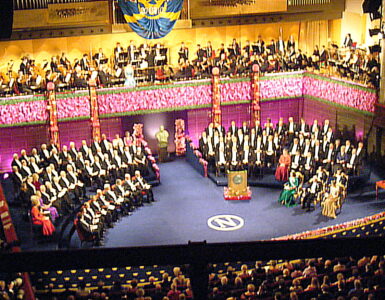
Alfred Nobel signed his final will in Paris on November 27, 1895. He directed most of his estate into a fund whose annual returns would reward work in physics, chemistry, physiology or medicine, literature, and peace. The first awards were presented in 1901. Mathematics was not named, so the institutions that carry out the will have no mathematics category to administer.
That distinction matters. Mathematics was not considered and rejected each year by a committee. It was outside the structure from the beginning, along with many other subjects that Nobel did not list, including astronomy as a separate field, geology, engineering, architecture, and the social sciences. The Nobel Prizes reflect the choices of one benefactor at the end of the nineteenth century, not a universal ranking of disciplines.
The economics award shows how hard the original list is to change. The Sveriges Riksbank Prize in Economic Sciences in Memory of Alfred Nobel was established by Sweden’s central bank in 1968 and first awarded in 1969. It is announced and presented alongside the Nobel Prizes, but Alfred Nobel did not create it and it is not one of the five awards in his will. Calling it the “Nobel Prize in economics” is convenient shorthand, not the formal history.
Its existence sometimes creates the impression that any missing field could be added in the same way. In practice, the economics award required a separate institution, a separate endowment, and a formal agreement with the Nobel Foundation. Nobel committees cannot create a mathematics prize simply because the omission now seems conspicuous. The authority to select laureates is not the authority to rewrite the categories in the will.
The famous jealousy story is not reliable history
A popular story claims that Nobel refused to honor mathematics because his wife had an affair with a mathematician, often identified as the Swedish scholar Gösta Mittag-Leffler. The most obvious problem is that Nobel never married. Versions that substitute a lover or a personal rivalry do not solve the larger problem: historians have found no documentary evidence that such a dispute determined the contents of his will.
Mittag-Leffler was influential. He founded the journal Acta Mathematica, supported international mathematical research, and helped build Swedish mathematics. That prominence may have made him a convenient character for a later rumor. A memorable tale about romance and revenge travels more easily than the honest answer that the surviving record is incomplete.
Other explanations are possible but remain interpretations. Nobel was an inventor and industrialist, and his will emphasized achievements that had brought great benefit to humankind. Perhaps he saw mathematics as too theoretical, believed other awards already served it, or simply chose fields closest to his own interests and concerns. None of those suggestions has been proven as the decisive reason. The most accurate answer stops where the evidence stops: Nobel omitted mathematics and did not leave us a dependable explanation of why.
Mathematical work can still appear around the Nobels
The absence of a mathematics category does not build a wall between mathematicians and Nobel recognition. Mathematical ideas are essential to theoretical physics, chemistry, economics, and many parts of medicine. A researcher trained as a mathematician can receive a Nobel-associated award when the honored contribution falls within one of those categories.
John Nash, for example, was a mathematician whose work on noncooperative games earned a share of the 1994 economics award. Roger Penrose received half of the 2020 physics prize for showing that black-hole formation is a robust prediction of general relativity. Their achievements depended on deep mathematics, but the awards were classified by the fields and contributions specified in the prize system.
That is different from winning a Nobel Prize “for mathematics.” No such category exists, no matter how mathematical a laureate’s methods may be. The label belongs to the award’s institutional rules, not simply to a winner’s academic background.
The Fields Medal and Abel Prize follow different models
Mathematics developed major international honors of its own. The Fields Medal is awarded at the International Congress of Mathematicians, normally held every four years. The first medals were presented in 1936. Today, up to four recipients may be selected for outstanding existing work and the promise of future achievement.
The medal is often described as an award for mathematicians under 40. Its precise rule is slightly more careful: a recipient’s 40th birthday must not occur before January 1 of the congress year. That age condition and four-year rhythm make the Fields Medal unlike a Nobel Prize. It is designed partly to encourage further work, so it does not function as a general lifetime award.
The Abel Prize fills a different role. Established by the Norwegian government in 2002 and first awarded to Jean-Pierre Serre in 2003, it is presented annually by the Norwegian Academy of Science and Letters. It has no comparable age ceiling and can recognize a broad, mature body of mathematical achievement. Plans for an Abel prize had been discussed more than a century earlier, soon after Nobel’s prize categories became known, but political and financial obstacles delayed the modern award.
Neither honor is literally a mathematics Nobel. The Fields Medal and Abel Prize have their own histories, rules, committees, and ideas about what recognition should accomplish. Treating them only as substitutes hides the choices that make each one distinctive.
The comparison also changes depending on what “equivalent” is supposed to mean. The Fields Medal has enormous prestige and can transform a younger researcher’s career, but it excludes many mathematicians by age and is not annual. The Abel Prize is annual, international, and open across a full career, which makes its structure look more like the scientific Nobels. Prestige, timing, eligibility, and purpose do not line up neatly enough for one medal to be a perfect stand-in.
A missing category does not measure mathematics
Prestigious prizes focus attention. They can introduce difficult work to a wide audience, support further research, and place names in history books. They can also make the subjects inside their boundaries seem more important than the subjects left outside. That effect says as much about the power of institutions as it does about the work being honored.
Mathematics does not need a Nobel category to establish its value. It provides the language for physical laws, cryptography, statistics, computing, finance, engineering, and countless forms of everyday reasoning. Its deepest discoveries may begin as abstract questions and find applications decades later, after no committee could have predicted their reach.
So the absence of a mathematics Nobel is best understood as a historical boundary, not a judgment. Nobel named five fields in 1895 and never explained every field he left out. Mathematics built other traditions of recognition, while continuing to run through achievements honored under many different names. The honest story is less dramatic than the rumor, but it reveals something more interesting: prizes preserve the decisions of their founders, while knowledge keeps crossing the lines they drew.