
 Akshay Dinesh
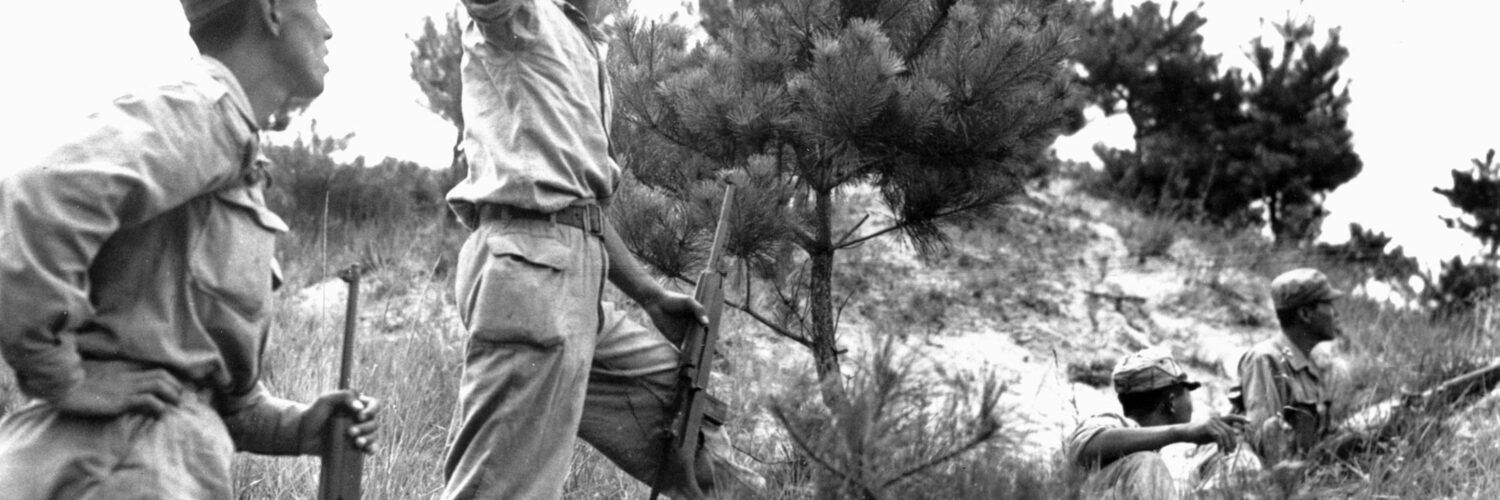
The Korean War began on June 25, 1950, when North Korean forces crossed the 38th parallel and invaded South Korea. It quickly became more than a local conflict. The war drew in the United States, the United Nations Command, China, and the Soviet Union’s support network, turning the Korean Peninsula into one of the first major battlefields of the Cold War.
The fighting lasted just over three years, but its consequences have lasted far longer. Millions of soldiers and civilians were killed, injured, displaced, or separated from family members. The 1953 armistice stopped the large-scale fighting, yet it did not create a peace treaty. North Korea and South Korea remain divided, and the Korean Demilitarized Zone still marks one of the most heavily guarded borders in the world.
Why Korea Was Divided
For much of the first half of the twentieth century, Korea was under Japanese colonial rule. That changed in 1945, when Japan surrendered at the end of World War II. Korea was liberated from Japanese control, but it was not immediately reunited under one independent government. Instead, the peninsula was divided near the 38th parallel, with Soviet forces accepting Japan’s surrender in the north and American forces doing the same in the south.
At first, the division was meant to be temporary. Cold War rivalry made it harder to turn that temporary arrangement into a single Korean state. In 1948, two separate governments were established: the Republic of Korea in the south under Syngman Rhee, and the Democratic People’s Republic of Korea in the north under Kim Il Sung. Each government claimed to be the legitimate authority for all of Korea.
Border clashes became common before the full war began. Both governments wanted reunification, but under very different political systems. North Korea had Soviet support and later encouragement from communist China, while South Korea was backed by the United States. Korea’s division became part of a larger struggle over whether communism or capitalism would shape the postwar order in East Asia.
The Invasion and Early Fighting
On June 25, 1950, the Korean People’s Army moved south across the 38th parallel. North Korean troops advanced quickly, and Seoul fell within days. South Korean and American forces were pushed back toward the southeastern corner of the peninsula, where they held a defensive line known as the Busan Perimeter.
The United Nations Security Council condemned the invasion and authorized military support for South Korea. The United States led the UN Command, with troops and assistance from several countries. Early fighting was difficult for South Korean and American forces because North Korea had prepared tanks, artillery, and experienced units for the opening offensive.
The war shifted dramatically in September 1950, when UN forces launched an amphibious landing at Incheon. The landing threatened North Korean supply lines and helped UN forces break out from the Busan Perimeter. Seoul was retaken, and North Korean forces were pushed back across the 38th parallel.
China Enters the War
After the UN advance moved deep into North Korea, the war entered a new phase. UN forces captured Pyongyang and pushed toward the Yalu River, near China’s border. Chinese leaders saw this as a direct security threat. In late 1950, Chinese forces, officially called the People’s Volunteer Army, entered the war in large numbers.
The Chinese intervention forced UN troops into a major retreat. Seoul changed hands again, and the fighting became more brutal through the winter of 1950-1951. Battles such as the Ch’ongch’on River campaign and the fighting around the Chosin Reservoir showed how quickly the war had expanded beyond Korea’s original border dispute.
By 1951, the front began to stabilize near the 38th parallel. UN forces recaptured Seoul, and both sides fought for hills, ridgelines, and defensive positions rather than sweeping control of the entire peninsula. The war became a grinding conflict of artillery, air power, patrols, and limited offensives.
Stalemate and the Armistice
Armistice talks began in 1951, but the fighting continued for two more years. Negotiators argued over the location of the ceasefire line, prisoner exchanges, and the terms that would stop the fighting without settling the political future of Korea. The talks moved from Kaesong to Panmunjom, a village near the front line.
During this period, neither side gained a decisive victory. The United States and its allies used air power heavily, while Chinese and North Korean forces held strong defensive positions. South Korean forces also fought to prevent a settlement that would permanently accept division. The result was a war in which the battlefield moved only slightly while the human cost kept rising.
The Korean Armistice Agreement was signed on July 27, 1953. It created a ceasefire, a military demarcation line, and the Korean Demilitarized Zone. The agreement was signed by military commanders from the United Nations Command, North Korea, and China. South Korea did not sign the armistice, partly because President Syngman Rhee opposed any agreement that left Korea divided.
The War’s Lasting Legacy
The Korean War reshaped East Asia and the wider Cold War. It strengthened the American military presence in the region, deepened the division between North and South Korea, and made the Korean Peninsula a lasting focus of global security. It also influenced how the United States approached later Cold War conflicts, including the fear that local wars could become tests of global influence.
For Koreans, the war’s legacy was deeply personal. Families were separated across the new border. Cities, villages, farms, roads, and bridges were destroyed. Estimates vary, but the war caused millions of military and civilian casualties, with civilians bearing an especially heavy burden.
North Korea and South Korea developed in sharply different directions after 1953. South Korea eventually became a prosperous democracy, while North Korea became one of the world’s most isolated authoritarian states. The armistice stopped the war’s open battles, but it left the central political question unresolved: how, or whether, Korea could ever be peacefully reunited.
The Korean War is sometimes called the Forgotten War, especially in the United States, because it sits between World War II and the Vietnam War in public memory. That label can hide its importance. The war explains much about modern Korea, Cold War history, American foreign policy, Chinese security concerns, and the continuing tension around the DMZ. Its effects are still present every time the peninsula faces a crisis, a negotiation, or a renewed hope for peace.




Add comment