
 Akshay Dinesh
The French Revolution began as a crisis over taxes, hunger, and political power, but it quickly became something larger: a struggle over who had the right to rule. In 1789, France was still shaped by the Ancien Regime, an old social order that gave special privileges to the clergy and nobility while placing most tax burdens on ordinary people. When the monarchy could no longer manage its debts or answer public anger, a political dispute turned into a revolution. By the time the upheaval ended, France had overthrown absolute monarchy, experimented with republican government, endured mass violence, and opened the way for Napoleon Bonaparte’s rise.
Why France Was Ready for Revolution
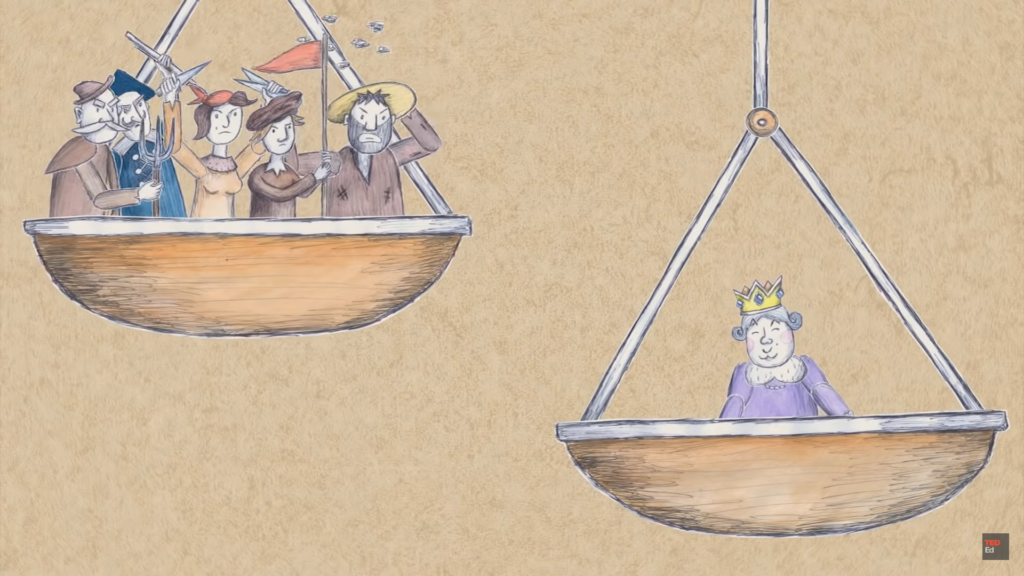
Before the revolution, French society was commonly described through three estates. The First Estate was the clergy, the Second Estate was the nobility, and the Third Estate included everyone else: peasants, urban workers, professionals, merchants, and many members of the educated middle class. The problem was not only that the Third Estate was enormous. It was that it carried much of the tax burden while the privileged estates often kept exemptions, offices, land rights, and social influence.
France’s financial crisis made those inequalities harder to ignore. The monarchy had spent heavily on wars, including support for the American Revolution, and government borrowing became increasingly difficult. Poor harvests in the late 1780s also pushed bread prices upward, making daily life more desperate for many families. At the same time, Enlightenment ideas about natural rights, representative government, and popular sovereignty gave critics a language for challenging inherited privilege.
King Louis XVI called the Estates-General in 1789 for the first time since 1614 because the state needed a solution to its financial emergency. The meeting exposed the deeper political conflict. The Third Estate wanted voting by individual representatives, which would give it more influence. The privileged estates preferred voting by order, which allowed the clergy and nobility to outvote the commoners two to one. When the dispute stalled, representatives of the Third Estate declared themselves the National Assembly and promised to write a constitution for France.
The Bastille and the End of the Old Order
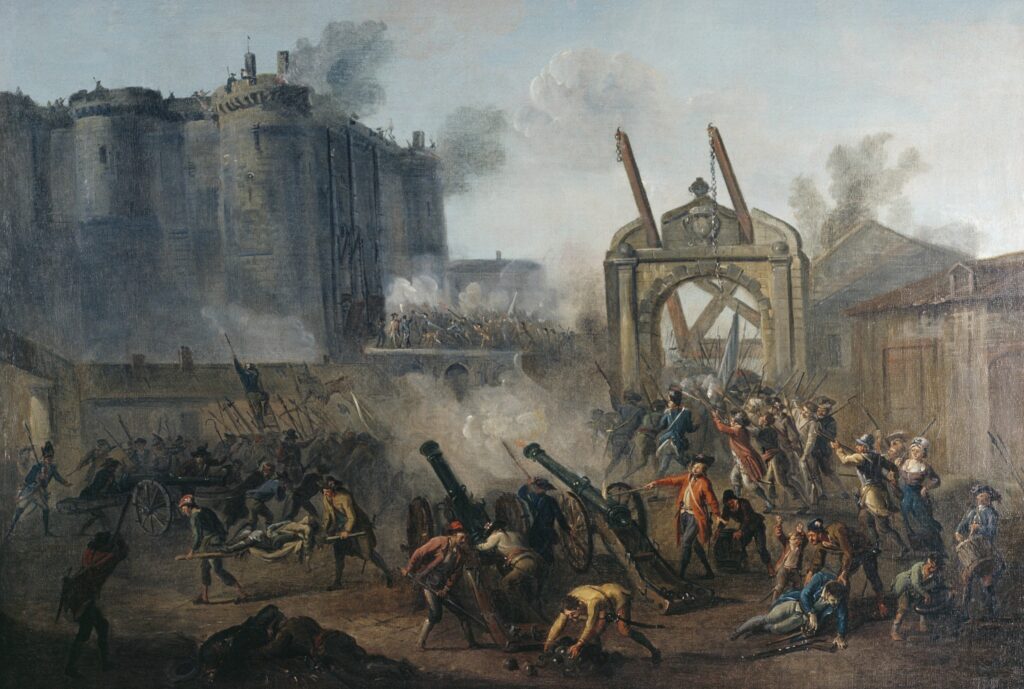
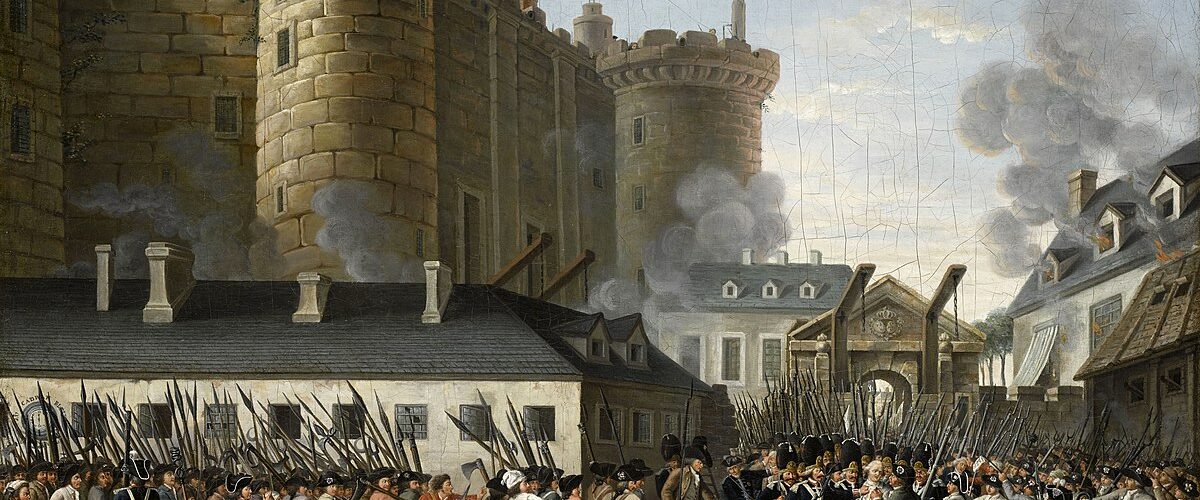
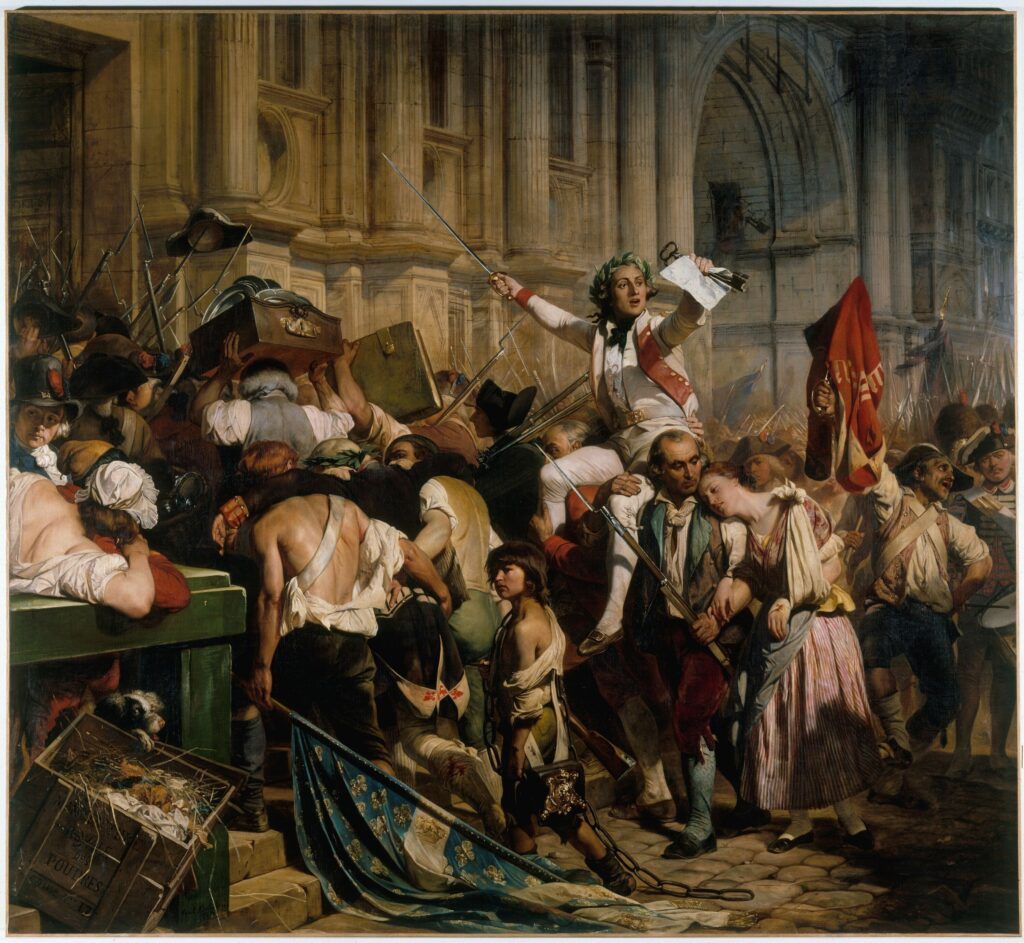
The revolution moved from political argument to open uprising in July 1789. After rumors spread that royal troops might be used against the people of Paris, crowds searched for weapons. On July 14, they stormed the Bastille, a medieval fortress and prison that had become a symbol of royal authority. The Bastille held only a few prisoners at the time, but its capture carried enormous meaning. It showed that ordinary people could force events onto the national stage.
In the countryside, fear and anger spread as peasants attacked manor houses, destroyed records of feudal dues, and challenged noble privileges. The National Assembly responded in August 1789 by abolishing many feudal rights. Soon after, it issued the Declaration of the Rights of Man and of the Citizen, which announced principles such as liberty, equality before the law, freedom of speech, and government based on the nation rather than the personal authority of a king.
Those ideals did not solve France’s problems overnight. The king remained on the throne under a new constitutional system, and many people disagreed about how far the revolution should go. Some wanted a limited monarchy. Others wanted a republic. Still others feared that too much change would destroy religion, property, and public order. The revolution had begun by attacking privilege, but it soon became a fight over the entire shape of French society.
War, Republic, and the Reign of Terror
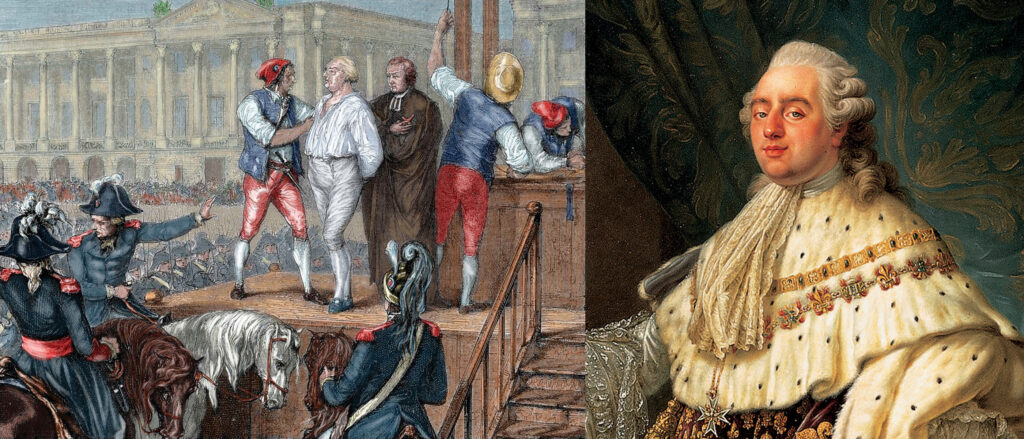
The revolution became more radical after France went to war with Austria in 1792. Many revolutionaries believed foreign monarchies were trying to crush the new France. At home, suspicion of the king grew after his failed attempt to flee the country in 1791. In August 1792, revolutionaries overthrew the monarchy. France became a republic, and Louis XVI was tried for treason and executed by guillotine on January 21, 1793.
The execution shocked Europe and intensified the war. Inside France, the government faced invasion, civil war, food shortages, and political rivalry. The Jacobins, led by figures such as Maximilien Robespierre, argued that the republic could survive only by defeating its enemies quickly and ruthlessly. The Committee of Public Safety gained extraordinary powers, and the period known as the Reign of Terror followed.
During the Terror, revolutionary courts sentenced thousands of people to death, including Queen Marie Antoinette, former nobles, political opponents, and ordinary citizens accused of working against the republic. The government also introduced policies meant to mobilize the whole nation for war. Supporters saw these measures as emergency actions in defense of the revolution. Critics saw them as a betrayal of the liberty the revolution had promised. In July 1794, Robespierre himself was arrested and executed, bringing the most intense phase of the Terror to an end.
Napoleon’s Rise from Revolutionary France
After the Terror, France did not return to stability. A new government called the Directory took power in 1795, but it struggled with corruption, war, economic trouble, and public distrust. The army became one of the few institutions that could still produce national victories. That gave successful generals new political importance, and Napoleon Bonaparte was the most gifted and ambitious of them.
Napoleon first gained fame through military campaigns in Italy and later became a central figure in French politics. In 1799, he helped overthrow the Directory in a coup and became First Consul. This did not restore the old monarchy, but it did concentrate power in the hands of one man. Napoleon preserved some revolutionary achievements, such as equality before the law and careers open to talent, while limiting political freedom and building a strong centralized state.
In 1804, Napoleon crowned himself emperor. That moment showed one of the revolution’s great contradictions. France had destroyed the old system of hereditary privilege, yet it accepted a new ruler with imperial power. Still, Napoleon’s government and wars carried revolutionary ideas across Europe, especially legal reform, nationalism, and the challenge to older aristocratic structures.
Why the French Revolution Still Matters
The French Revolution did not follow a simple path from oppression to freedom. It produced bold declarations of rights, but also censorship, violence, and political repression. It attacked inequality, but it did not create equal rights for everyone. Women played an active role in revolutionary politics, for example, yet they were excluded from full political citizenship. Enslaved people in French colonies also forced the revolution to confront the meaning of liberty beyond Europe, most dramatically in Saint-Domingue, where the Haitian Revolution became a turning point in the history of slavery and colonial rule.
Its legacy is powerful because it raised questions that modern societies still debate. Who should have political power? What rights belong to citizens? When does reform become revolution? How can a government defend itself without destroying the freedoms it claims to protect? The French Revolution did not give easy answers, but it changed the language of politics. After 1789, monarchy, privilege, citizenship, rights, and nationhood could no longer be understood in quite the same way.




Add comment