 Akshay Dinesh
As July 4, 2026 approaches, the Declaration of Independence is drawing fresh attention for a good reason. The United States is nearing 250 years since the Continental Congress adopted the document on July 4, 1776, and the anniversary invites a deeper question than fireworks and familiar phrases can answer: what did the Declaration actually change? It did not win the Revolutionary War, create the Constitution, or instantly make its ideals real for everyone. What it did was turn a colonial rebellion into a public claim of nationhood, explain that claim to the world, and give later generations a language for arguing about rights, consent, and equality.
That makes the Declaration easy to celebrate but harder to understand. It was both a practical political document and a statement of ideals. It spoke for thirteen colonies trying to separate from the British Empire, but it also made claims about government that reached far beyond the immediate crisis. To read it well, it helps to see the pressure of 1776: war had already begun, reconciliation was fading, and Congress needed more than anger to justify independence.
The colonies had already crossed several lines
Independence did not appear suddenly on July 4. By then, the fighting at Lexington and Concord was more than a year old, the Continental Army had been created, and Congress had begun acting like a national government in practice even before it declared independence in words. The National Archives notes that by 1775 and 1776, Congress had created a continental currency, opened American ports to foreign commerce, authorized privateering against British shipping, and encouraged colonies to form new local governments.
Those steps mattered because they made separation less abstract. Colonists were no longer only protesting taxes or asking Parliament to respect colonial rights. They were building institutions that could survive without Britain. At the same time, Britain was treating the conflict as rebellion. King George III declared the colonies to be in open revolt, Parliament restricted American trade, and British authorities moved toward using German troops to fight in North America. Each action made compromise harder to imagine.
On June 7, 1776, Richard Henry Lee of Virginia offered a resolution in Congress declaring that the colonies were, and ought to be, free and independent states. Congress did not vote on independence immediately. Some delegates still lacked clear instructions from their colonies, and others worried about moving too fast. But the direction of the debate was clear enough that Congress appointed a Committee of Five to prepare a formal explanation in case independence was approved.
The Declaration gave independence a public argument
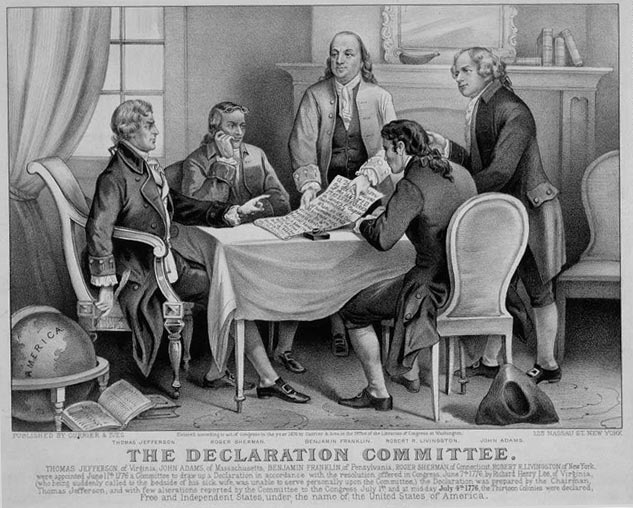
The Committee of Five included Thomas Jefferson, John Adams, Benjamin Franklin, Roger Sherman, and Robert R. Livingston. Jefferson did the main drafting, then Adams and Franklin reviewed the text before it went to Congress. The Library of Congress describes this drafting process as part of a larger effort to present the colonies’ case clearly, not simply to produce a ceremonial document.
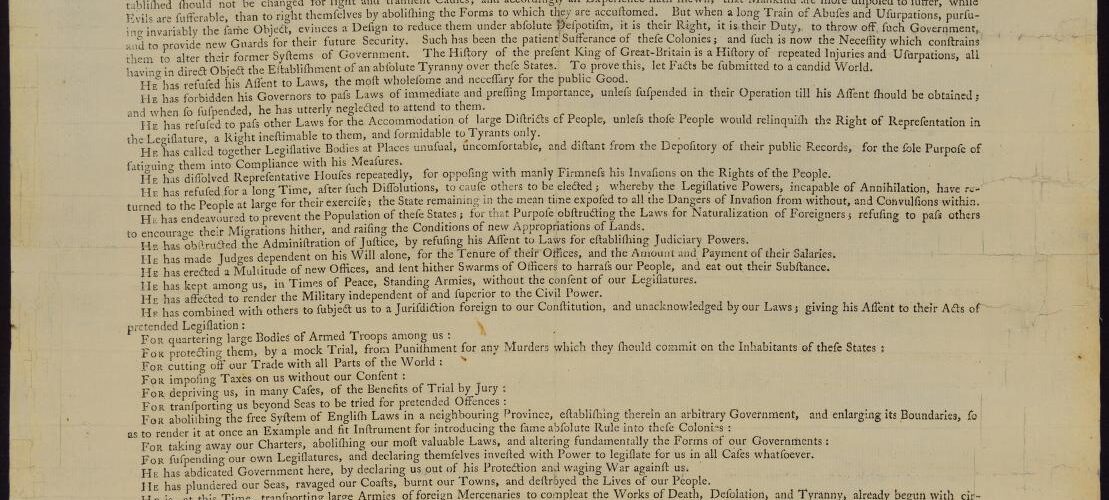
That purpose explains the Declaration’s structure. It begins with a general argument about political authority: people have rights, governments exist to protect those rights, and governments get their legitimate power from the consent of the governed. Then it moves into a long list of grievances against King George III. Finally, it announces that the colonies are free and independent states.
This order was strategic. Congress did not want the break with Britain to look like an emotional outburst or a local dispute over taxes. It wanted to show that independence followed from a pattern of abuses and from a broader principle about government. The Declaration was addressed not only to Americans or to Britain, but to what the text calls a decent respect for the opinions of mankind. In plain terms, Congress was making a case before the world.
July 4 was adoption, not the whole story
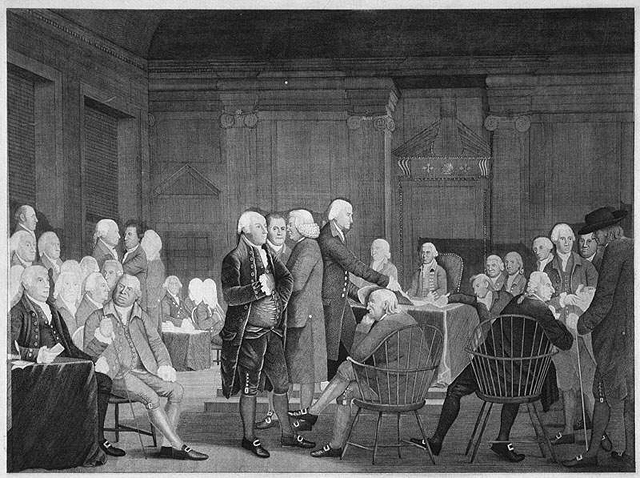
One common misunderstanding is that every delegate signed the Declaration on July 4. The timeline is more interesting. Congress voted for independence on July 2, 1776, when it approved the independence section of the Lee Resolution. It then spent July 3 and much of July 4 editing Jefferson’s draft. In the afternoon of July 4, Congress adopted the final text.
Printed copies, known as Dunlap broadsides, were made quickly and sent out to assemblies, committees, and military leaders. The parchment copy people often picture came later. According to the National Archives, Congress ordered the Declaration to be engrossed on parchment on July 19, and delegates began signing that copy on August 2. Eventually, 56 delegates signed it, though not all were present on the same day and not every member of the drafting committee signed the parchment.
This timeline changes the way July 4 should be understood. The date marks adoption of the text and public announcement of the decision, not a single dramatic signing scene. That does not make the date less important. It makes it more precise. July 4 became powerful because the words approved that day gave independence a public voice.
The words created a standard Americans could argue with
The Declaration’s most famous language says that all men are created equal and have unalienable rights, including life, liberty, and the pursuit of happiness. Those words did not describe American society as it actually existed in 1776. Enslaved people were excluded from freedom, women were excluded from formal political power, Native nations faced expanding colonial pressure, and property rules limited participation for many men. The Declaration’s ideals were broader than the society that adopted them.
That gap is one reason the document has remained so important. Its power did not come only from what it accomplished immediately. It also came from the standard it set. Abolitionists, civil rights leaders, women’s rights advocates, labor organizers, and many others later used the Declaration’s language to challenge the country to live up to its own stated principles. The National Archives notes that Abraham Lincoln saw the Declaration as a rebuke to tyranny and oppression, a reminder that its words could be used against injustice rather than only to honor the past.
In that sense, the Declaration changed American political argument. It gave people a shared text for debating what freedom should mean. Some used it narrowly, as a document about independence from Britain. Others treated it as a promise that had not yet been fulfilled. That tension is not a side note. It is part of the reason the document still matters.
It turned rebellion into diplomacy
The Declaration also had an international purpose. The colonies needed more than courage to survive against the British Empire. They needed supplies, loans, recognition, and eventually military alliance. A formal declaration made it easier for foreign governments, especially France, to treat the colonies as a political entity rather than as British subjects in revolt.
This did not mean France immediately became an ally on July 4. The Franco-American alliance came in 1778 after the American victory at Saratoga helped convince France that the cause had a real chance. But the Declaration was part of the diplomatic groundwork. It announced that the United States was claiming a place among nations, with the power to make war, conclude peace, contract alliances, and establish commerce.
Those final claims sound formal because they were meant to be formal. Congress was saying that independence was not only an idea. It was a new legal and diplomatic position. The colonies were no longer asking to be treated better within the empire. They were claiming the authority to act outside it.
Why the Declaration still rewards careful reading
The Declaration is short enough to read in one sitting, but it carries several layers at once. It is a record of a specific political crisis in 1776. It is a work of persuasion shaped by Congress and aimed at a broad audience. It is also a statement of ideals that later Americans and people around the world have used in ways the signers did not fully imagine.
Careful reading keeps all of those layers in view. The Declaration did not create a perfect democracy. It did not end slavery, establish voting equality, or settle the meaning of liberty. It did something more limited and still enormous: it declared that government should answer to the people, that rights could be used to judge political power, and that the colonies were prepared to become a new nation.
That is why the 250th anniversary is more than a birthday. It is a chance to look past the familiar image of parchment and signatures and ask what the words were doing in their own time. In 1776, the Declaration changed a war by giving it a public purpose. Ever since, it has changed arguments by giving people language strong enough to challenge power, measure promises, and imagine a freer political community.