 Akshay Dinesh
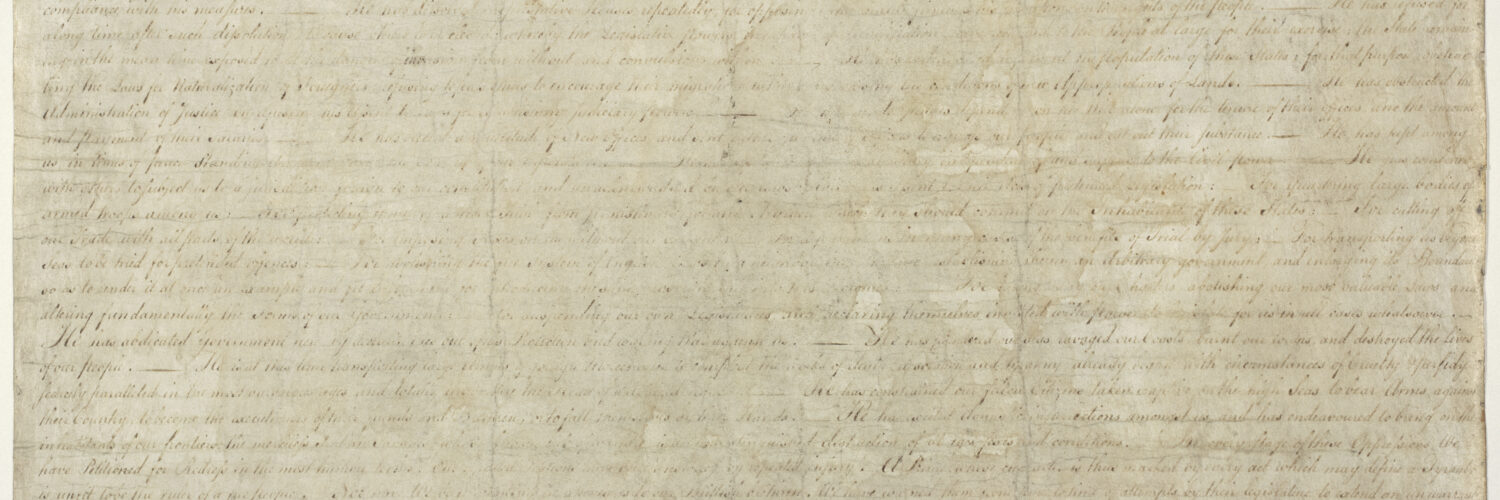
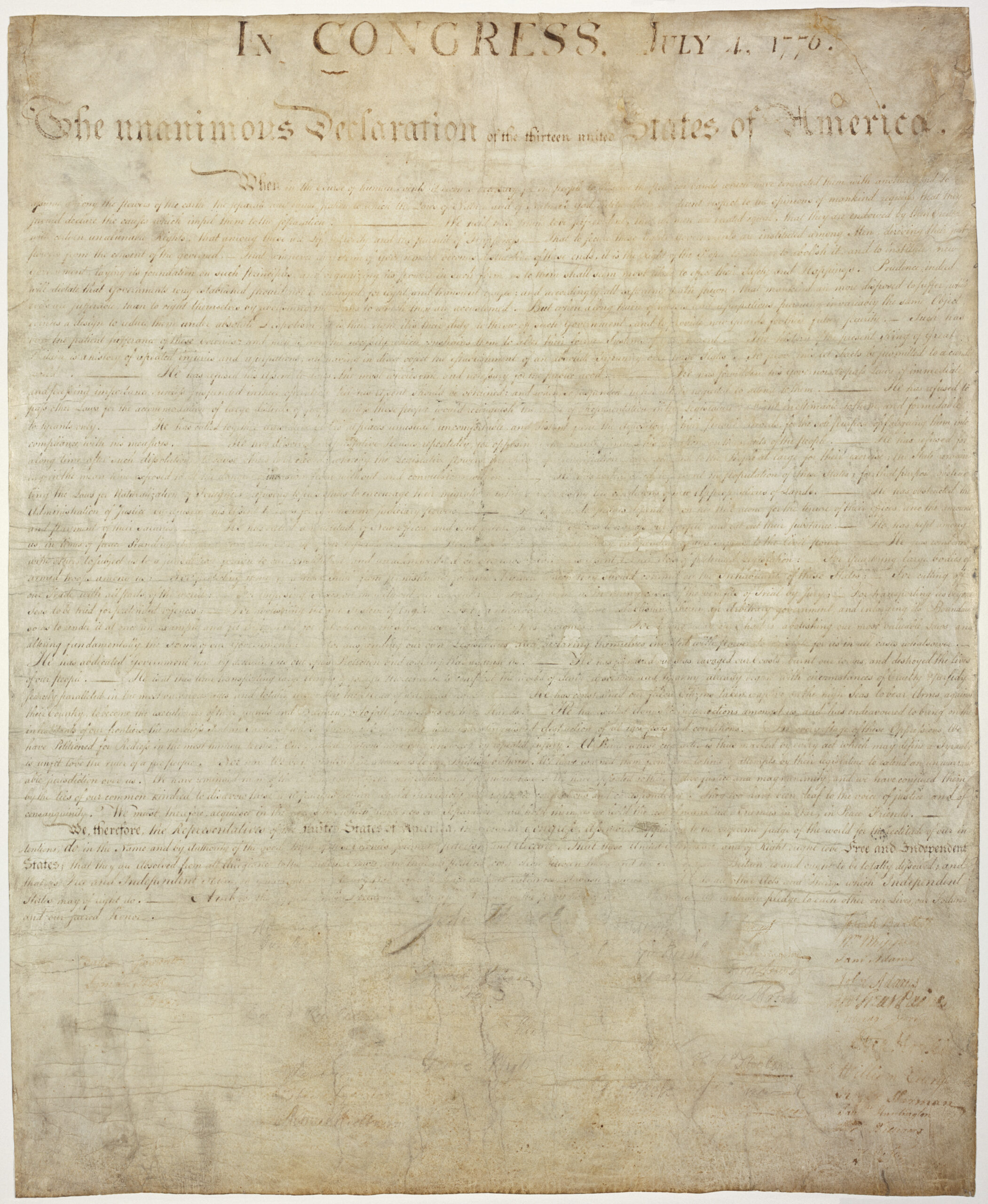
The Declaration of Independence is often remembered for its sweeping language about equality, rights, and government by consent. Those lines deserve attention, but they were not the whole argument. In 1776, the longest and most urgent part of the document was the list of grievances against King George III. That list did not read like a decorative appendix. It was the evidence Congress offered to explain why reconciliation had failed and why separation had become, in its view, necessary.
For modern readers, the grievances can feel repetitive or difficult because many refer to specific colonial disputes over legislatures, judges, trade, troops, and war. Yet that is exactly why they matter. They show how the Declaration moved from political philosophy to practical accusation. Congress was saying that the break with Britain was not caused by one tax, one battle, or one angry pamphlet. It was the result of what the document called a long pattern of abuses that made ordinary self-government impossible.
The grievance list was the Declaration’s proof
The National Archives describes the Declaration as a document built to explain the causes of separation. Its famous opening principles set the standard: governments should protect rights and rest on the consent of the governed. The grievances then try to prove that the British king had violated that standard. In other words, the list connects the abstract argument to the colonists’ lived political conflict.
There were 27 grievances in the adopted text. Some accuse the king of blocking useful colonial laws. Others accuse him of dissolving legislatures, interfering with courts, keeping standing armies in the colonies, protecting troops from local trial, cutting off trade, imposing taxes without consent, and waging war against his own subjects. The complaints were not arranged as a neutral history. They were arranged as a prosecution: point after point, Congress portrayed George III as a ruler who had broken the obligations of legitimate government.
This mattered because Congress was addressing several audiences at once. Colonists who still hoped for reconciliation needed to hear why independence was not reckless. Foreign powers needed to see that the colonies were making a serious claim, not merely rioting against authority. British readers, too, were being told that the colonists had petitioned and protested before cutting the final tie. The grievance list gave the Declaration its courtroom-like structure: principle first, evidence next, verdict at the end.
Why the king became the target
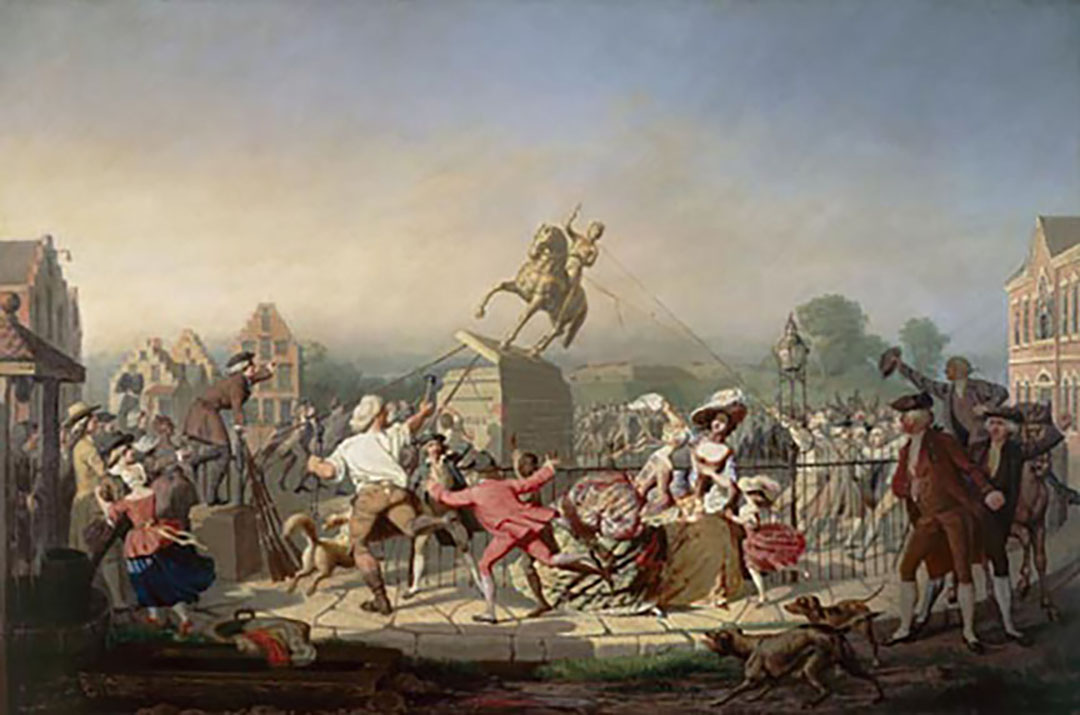
Many policies that angered colonists came from Parliament, including taxes and laws regulating trade. So why did the Declaration direct its charges so sharply at King George III? The answer lies partly in eighteenth-century political thinking. Colonists were used to thinking of the king as the central bond that connected them to the empire. Colonial charters came from royal authority, royal governors represented the Crown, and appeals for relief were often addressed to the king.
The National Constitution Center’s America at 250 essay on the grievances explains that the king was not seen simply as a ceremonial figure. He had power through ministers, royal officials, military command, appointments, and proclamations. Colonists also believed that a ruler had duties as well as authority. If subjects owed allegiance, the king owed protection and respect for established rights. The Declaration argued that he had failed in that role.
Blaming the king also helped Congress make a clean political break. A dispute only with Parliament might have left open the idea that the colonies could remain loyal to the Crown while rejecting certain laws. The Declaration closed that door. By describing the king as responsible for repeated injuries, Congress severed the personal and legal relationship that had held the colonies inside the empire. Independence required more than rejecting a few policies. It required rejecting the ruler who, in the colonists’ argument, had allowed or directed them.
The first grievances focused on self-government
A large share of the grievance list concerns the machinery of colonial government. Congress accused the king of refusing approval for needed laws, suspending colonial legislation, dissolving representative assemblies, obstructing elections, and making legislative work difficult by forcing assemblies to meet in inconvenient places. To modern readers, these complaints may sound procedural. To the colonists, procedure was power.
Colonial assemblies were where local representatives debated taxes, laws, petitions, and resistance. When governors dissolved them or delayed their work, colonists saw more than an administrative dispute. They saw their ability to govern local affairs being squeezed. The complaint was not just that Britain had made bad decisions. It was that colonists were being denied the political tools needed to correct those decisions.
The same concern appears in the judicial grievances. The Declaration accuses the king of obstructing justice, making judges dependent on royal will, and limiting fair legal process. Courts are less dramatic than battlefields, but they are central to self-government. If judges depend on the ruler rather than law, rights become fragile. If people cannot trust courts to decide disputes fairly, political disagreement can quickly feel like domination.
The middle grievances attacked imperial control
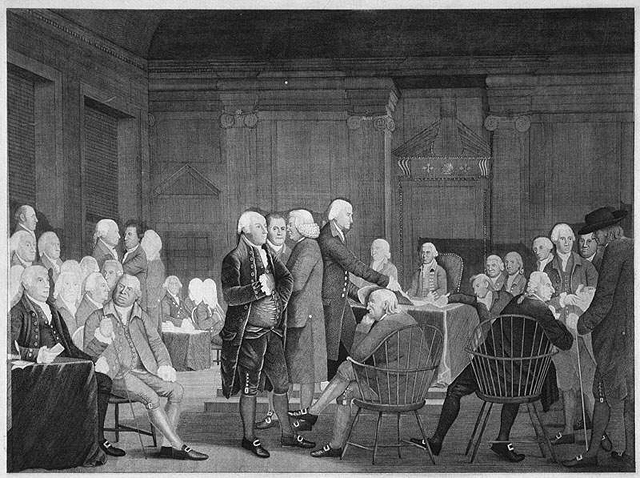
The grievances then move from colonial institutions to imperial policy. Several complaints focus on standing armies, troop quartering, military authority over civilian life, and trials that could protect British officials from local accountability. These were not abstract fears. Memories of troops in Boston, the Boston Massacre, the Coercive Acts, and military rule in Massachusetts shaped how many colonists understood British power by 1776.
Other complaints target trade restrictions, taxation without consent, and the loss of jury trial in certain cases. These issues had been building for years. The Stamp Act crisis, the Townshend duties, the Tea Act, and the broader fight over Parliament’s authority all fed the belief that Britain was trying to legislate for the colonies without meaningful colonial consent. The Declaration compressed those years of conflict into a list of accusations that readers could follow.
One important point is that the grievances were selective. Congress did not include every colonial complaint, and it shaped the list to make independence look justified to a broad audience. That does not make the grievances meaningless. It makes them political writing. They were chosen, arranged, and phrased to show a pattern: local law blocked, representation weakened, courts compromised, troops imposed, commerce restricted, taxes levied, and constitutional limits ignored.
The final grievances turned conflict into war
Near the end, the tone grows sharper. The Declaration accuses the king of declaring the colonies outside his protection, waging war against them, burning towns, disrupting trade, hiring foreign soldiers, and stirring violence on the frontier and among enslaved people. By this point, the argument has moved from rights denied to lives threatened. Congress was telling readers that the conflict had passed beyond ordinary political correction.
The National Archives history of the Declaration notes that by 1775 and 1776, British actions had already hardened the crisis. The king had declared the colonies in rebellion, Parliament had passed the American Prohibitory Act, and Congress had learned that German troops would be hired to fight in North America. Fighting at Lexington and Concord, Bunker Hill, and elsewhere had made war a fact before independence became a formal declaration.
These final grievances helped explain why Congress believed petitions were no longer enough. The Declaration says that repeated appeals had been answered by repeated injury. That line matters because it presents independence as a last resort. Congress wanted readers to see the colonies not as impatient rebels, but as communities that had tried lawful complaint, been refused, and now had to protect themselves.
Why the grievances still matter
The grievance list helps readers avoid a shallow version of the Declaration. The document was not only a celebration of rights, and it was not only a dramatic announcement of nationhood. It was a carefully argued case that connected political ideals to concrete abuses. Without the grievances, the Declaration’s principles would float above the crisis. With them, those principles become a standard for judging real government behavior.
The list also shows the limits of the founders’ vision. The Declaration spoke about rights and liberty while many signers lived in societies built on slavery, exclusion, and unequal political power. One grievance even used hostile language about Native peoples, reflecting colonial fears and prejudices rather than a universal respect for all communities. Reading the grievances honestly means seeing both the force of the colonists’ argument against imperial rule and the blind spots in the world that produced it.
That tension is part of why the Declaration has remained so contested and influential. Later generations could return to its principles and ask whether the country had lived up to them. The grievances remind us that rights language becomes powerful when people connect it to institutions, laws, courts, representation, and daily life. A government can fail its people not only through one dramatic act, but through repeated decisions that close off peaceful correction.
The Declaration’s grievance list was meant to persuade a world watching a rebellion become a nation. It gathered years of colonial frustration into a single pattern and argued that the old relationship could not be repaired. To read it closely is to see independence not as a sudden mood, but as a case Congress believed it had to prove.