 Akshay Dinesh
Absentee ballots make voting possible when a voter cannot, or chooses not to, cast a ballot at a polling place on Election Day. The basic idea is simple: the voter receives a ballot before Election Day, marks it outside the polling place, returns it through an approved method, and election officials verify it before counting it. The details are not simple, though. States set different rules for who may use an absentee ballot, when it must be requested, how the voter must identify themselves, and when the ballot must arrive.
That mixture of convenience and procedure is why absentee voting is worth understanding as a civics topic, not just as an election errand. A ballot cast away from the polls still has to protect the same values as in-person voting: voter access, privacy, eligibility, accuracy, and public confidence. Good mail-voting systems are built around those tensions. They try to make participation practical without treating a ballot like an ordinary piece of mail.
What an Absentee Ballot Actually Is
An absentee ballot is a real ballot completed outside the usual Election Day polling-place setting. In many places, the phrase overlaps with vote by mail, mail ballot, or advance ballot. Some states still use absentee voting mainly for people who have a reason they cannot vote in person, such as travel, illness, military service, disability, school, work, or living abroad. Other states allow any registered voter to request a mailed ballot without giving a reason.
The National Conference of State Legislatures tracks these differences because absentee voting is mostly governed by state law. As of its July 2026 summary, more than half of states offered no-excuse absentee voting, while a smaller group still required voters to meet one of the state’s listed reasons. A few states conduct most elections primarily by mail, sending ballots automatically to active registered voters rather than waiting for each voter to request one.
Those categories can blur in everyday speech. A voter may say they are voting absentee even if their state calls the process voting by mail. Another voter may receive a ballot automatically because their state has all-mail elections, not because they applied for an absentee ballot in the older sense. The important civic point is the same: the ballot leaves the polling place environment, so the election system has to verify, track, return, and count it through a different chain of steps.
Why States Use Different Rules
Absentee voting developed partly because Election Day cannot fit every voter’s life. Military members may be stationed far from home. College students may live in another state. Workers may have long shifts. Older voters or voters with disabilities may find travel difficult. People may be caring for family members, recovering from illness, observing religious commitments, or simply unable to get to the right polling place at the right time.
At the same time, elections are administered locally under state rules. That means each state balances access, deadlines, verification, and election-office capacity in its own way. Some states emphasize voter convenience by allowing broad mail voting and multiple return options. Others keep stricter absentee eligibility rules or shorter return windows. A voter’s experience in Oregon, Michigan, Texas, Florida, or New York can therefore look very different even when the federal offices on the ballot are the same.
This is one reason national summaries can be useful but incomplete. Vote.gov points voters back to official state election offices because registration deadlines, absentee request rules, voter identification requirements, ballot-return options, and cure procedures vary. A rule that is true in one state may be wrong in the next. For students and first-time voters, that is often the most important practical lesson: voting rules are not only about citizenship; they are also about address, timing, and the election office that serves that address.

The Usual Path From Request to Count
The absentee process often begins with registration. A voter generally has to be registered at the correct address before requesting or receiving a ballot, though deadlines and same-day options vary widely. If the state does not automatically mail ballots to voters, the voter usually submits an application to a local election office. That application may ask for identifying information, a signature, and sometimes an absentee excuse if the state requires one.
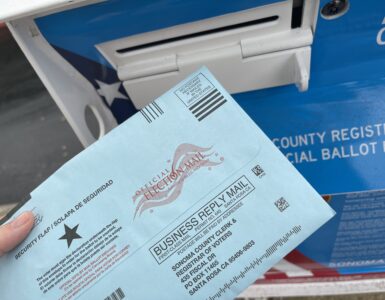
After the request is accepted, the election office sends the ballot packet. A typical packet may include the ballot, instructions, a secrecy sleeve or inner envelope, and a return envelope. The instructions matter because small details can affect whether a ballot is accepted. Some states require the voter to sign the return envelope. Some require a witness, identification number, copy of an ID, or other information. Some allow drop boxes; others require return by mail or delivery to an election office.
Once the voter returns the ballot, election workers check it in. They may compare the signature with voter records, confirm that the voter has not already voted, scan a barcode, or mark the ballot as received in a tracking system. In some states, voters can track whether their ballot was mailed, received, accepted, or flagged for a problem. Ballot tracking is not the same as seeing how a person voted. It is usually about the status of the ballot envelope and voter record, not the choices inside the ballot.
The ballot is then prepared for counting according to state law. Election workers may separate identifying envelopes from ballots so votes can remain private. They may begin processing before Election Day in some states, while other states limit when envelopes can be opened or ballots can be tabulated. These timing rules help explain why some races are called quickly while others take longer, especially in states with large numbers of mailed ballots.
Why Signatures, Deadlines, and Envelopes Matter
Absentee ballots can feel more relaxed than standing in line at a polling place, but the envelope is part of the voting system. The signature, barcode, voter information, and return deadline help election officials connect the ballot to an eligible voter without exposing the voter’s choices. That is why a missed signature or late return can become a serious problem. The ballot may be completed, but the election office still needs a valid way to accept it.
Deadlines are especially important because states do not all use the same standard. Some require a mailed ballot to arrive by the time polls close on Election Day. Others count ballots postmarked by Election Day if they arrive within a set number of days afterward. A voter who assumes every state follows the same rule can be caught by surprise. The U.S. Postal Service also does not issue ballots; it delivers them. The request, ballot design, voter eligibility, and acceptance rules come from election officials.
Many states have a process often called curing a ballot. If a signature is missing or does not match well enough, the voter may be contacted and given a chance to fix the issue before a deadline. Cure rules are another state-by-state detail. Some states require notice and an opportunity to correct certain mistakes; others are more limited. For voters, the practical takeaway is to read the envelope carefully, sign where required, return the ballot early, and watch for official notices from the election office.
How Absentee Voting Protects Privacy and Access
A well-run absentee system has to solve two problems at once. It must make voting reachable for people who cannot easily appear in person, and it must prevent anyone from treating the ballot as casual paperwork. That is why mail ballots use return envelopes, voter declarations, identity checks, barcodes, ballot logs, and bipartisan or multi-person handling rules. The exact safeguards vary, but the purpose is consistent: election officials need to know that the right voter returned one ballot while keeping the voter’s selections secret.
Privacy depends on separating identity from vote choices. The outer envelope may identify the voter so officials can verify eligibility. The ballot itself is handled separately so it can be counted without being tied to the voter’s name. This is similar in spirit to in-person voting, where a voter checks in under their name but marks a ballot privately. Absentee voting changes the setting, but it does not erase the need for a private vote.
Access matters just as much. For military and overseas voters, absentee voting can be the main way to participate in elections back home. Vote.gov and the Federal Voting Assistance Program point these voters to the Federal Post Card Application, which helps them register and request absentee ballots under rules designed for voters away from their voting jurisdiction. For students, workers, caregivers, and voters with health or mobility barriers, absentee options can turn voting from a logistical obstacle into a realistic act of participation.

What Voters Should Check Before Relying on One
The most important absentee-ballot habit is checking official information early. A voter should know whether they are registered at the right address, whether their state requires an excuse, how to request the ballot, when the request is due, how the ballot can be returned, and whether the state offers ballot tracking. These checks are not exciting, but they prevent most avoidable mistakes.
It also helps to understand the difference between mailing time and election deadlines. A ballot placed in a mailbox close to Election Day may not arrive in time if the state requires receipt by Election Day. A drop box may be convenient in one county but unavailable or restricted in another. An election office may allow a voter to hand-deliver their own ballot but limit who can return a ballot for someone else. These rules can change after legislation or court decisions, which is why current official state guidance matters more than memory.
Absentee voting is not a shortcut around election rules. It is a different route through them. When voters read instructions carefully, return ballots early, and use official tracking or election-office contacts when something looks wrong, absentee ballots can expand participation while preserving the structure that makes election results trustworthy. The ballot may be marked at a kitchen table, dorm desk, hospital room, military base, or overseas address, but it still becomes part of the same public count.