
 Akshay Dinesh
College move-in lists usually make room for the obvious things first: bedding, chargers, laundry supplies, notebooks, and enough hangers to keep a tiny closet from turning into a pile. Shower shoes can look like one of those small extras that gets tossed into the cart at the last minute. They are cheap, light, and easy to forget. That is exactly why they deserve a little more attention.
Shared dorm bathrooms are different from home bathrooms because they turn a private routine into a public one. The floor may be cleaned regularly, but it is still used by many people in a short stretch of time. Water sits in corners. Towels drip. People walk in from hallways, locker areas, and bedrooms. Google reported in July 2026 that search interest for back-to-school items, including shower shoes, tends to rise around the start of August. That seasonal spike makes sense: students are not just buying supplies; they are trying to imagine routines they have never had to manage before.
The real problem is the shared floor
A dorm shower floor is not dangerous just because it looks wet or a little worn. The bigger issue is contact. Damp shared surfaces can carry skin cells, moisture, and microorganisms from many users. MedlinePlus, a health information service from the National Library of Medicine, explains that athlete’s foot is a fungal infection that can be picked up from damp surfaces such as showers, swimming pools, and locker room floors. Mayo Clinic gives similar prevention advice, recommending waterproof sandals or shoes around public showers, pools, and locker rooms.
That does not mean every barefoot step in a shared bathroom leads to a problem. Most daily risks are ordinary and manageable. The point is that a shared wet floor creates better conditions for certain fungi to survive and move from one surface to another. A shower shoe creates a simple physical barrier between skin and tile. It does not need to be fancy to do that job.
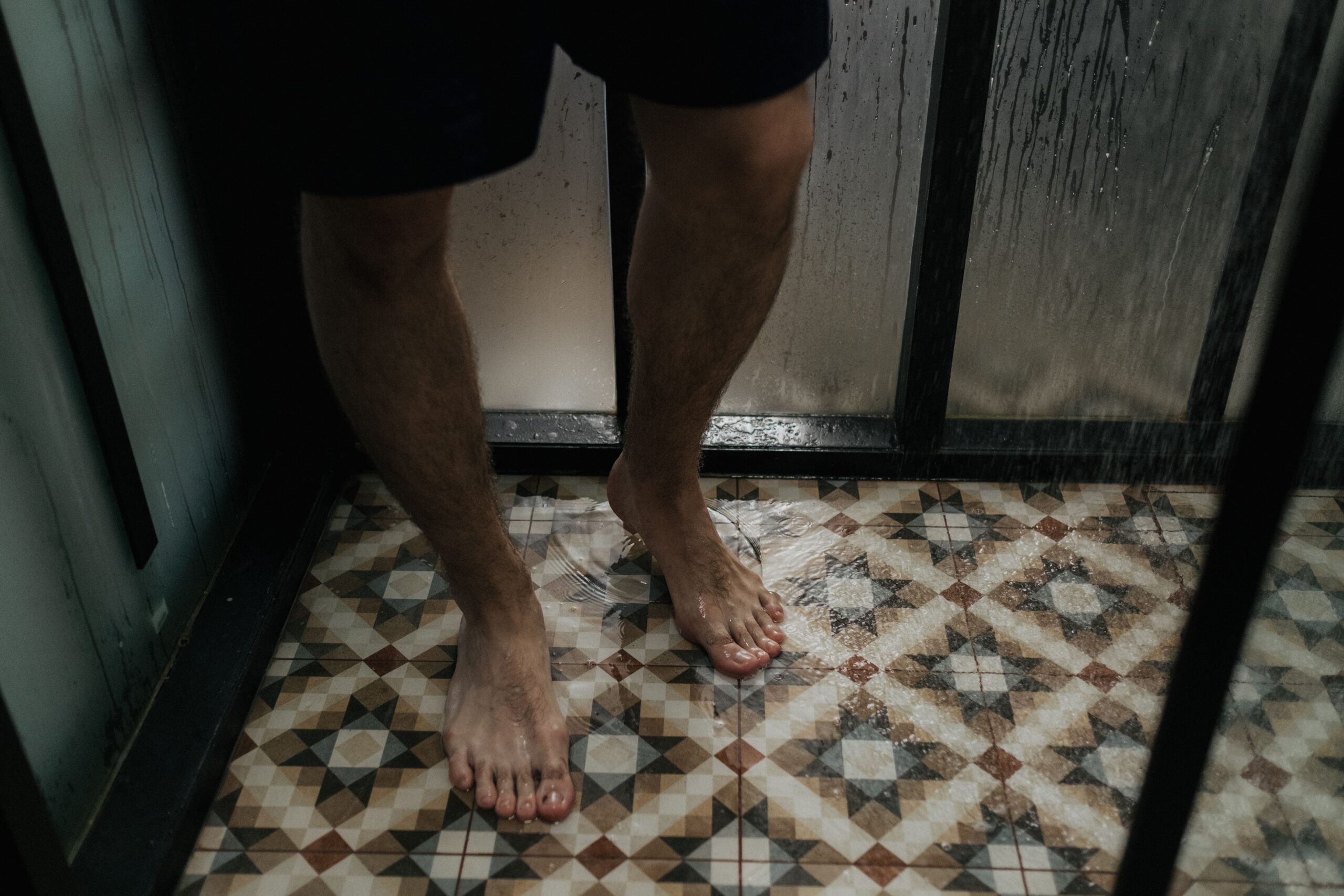
A barrier works because it changes the contact
Shower shoes are sometimes talked about as if they magically make a bathroom clean. They do not. Their job is narrower and more realistic: they reduce direct skin contact with wet surfaces used by many people. That matters because the skin between the toes is often warm and moist after bathing, and those are exactly the conditions where fungal irritation can become more likely.
Think of the shoe as a layer in a larger routine. The sole keeps your foot off the floor. Drainage holes or open sides help water escape instead of pooling under the foot. A textured bottom can make walking on tile less slippery. A pair that dries quickly is less likely to stay damp in a bag all day. None of these details is dramatic, but together they turn a small object into a useful habit.
The word “shoes” can be misleading here. Dorm shower shoes are usually flip-flops, slides, or waterproof sandals. They should be easy to rinse, quick to dry, and simple enough that you will actually wear them every time. A pair that feels awkward, rubs the skin, or becomes slippery when wet will probably end up abandoned under the bed.
Good shower shoes are boring in useful ways
The best pair for a shared bathroom is usually not the most stylish pair or the thickest pair. It is the pair that solves the basic problem without creating a new one. Waterproof material matters because cloth or foam that soaks up water can stay damp for hours. A grippy sole matters because bathroom tile can be slick, especially when soap, shampoo, or conditioner gets on the floor. A secure fit matters because loose sandals can slide off at the worst moment.
Drainage is worth noticing. Shoes with holes, grooves, or open designs dry faster than closed footwear that traps water. That does not mean every shoe has to look like a pool sandal, but it should not behave like a sponge. Students also need to think about where the shoes go after the shower. Tossing wet sandals into a sealed laundry bag or plastic bin keeps moisture trapped. Letting them air out by the door, on a rack, or beside a shower caddy is usually better.
There is also a difference between shower shoes and hallway shoes. A pair used on bathroom floors should not become the same pair worn across campus, through mud, or into a dining hall. Keeping the pair limited to the bathroom area helps the routine stay clean and predictable. It also makes the habit easier to remember: towel, caddy, shower shoes, then go.

The habit matters more than the product
Shower shoes only help when they become part of the routine. Put them on before stepping into the bathroom stall or shower area, not after crossing half the wet floor. Keep them on while rinsing off, while reaching for shampoo, and while stepping back onto the tile. If the bathroom has a changing area that also gets wet, it makes sense to keep them on there too.
Foot care after the shower is just as important. The Centers for Disease Control and Prevention emphasizes basic foot hygiene, including washing feet and wearing protective footwear. MedlinePlus also advises keeping feet clean, dry, and cool. Drying between the toes sounds like a tiny detail, but it is one of the simplest ways to keep moisture from lingering where irritation often starts. Clean socks help too, especially after a hot walk across campus or a long day in closed shoes.
A small amount of care for the shower shoes themselves helps the habit last. Rinse off soap film when needed. Shake out extra water. Let the pair dry in open air. Replace them if the sole wears smooth, the strap loosens, or the material starts to smell even after cleaning. The goal is not perfection; it is a steady routine that stays easy enough to repeat during busy weeks.
Students should also know when a normal hygiene routine is not enough. Itching, cracking, peeling, burning, or a rash between the toes can have several causes, including athlete’s foot. Over-the-counter antifungal treatments are common, but persistent, painful, spreading, or recurring symptoms deserve help from a qualified health professional. Shared bathrooms call for prevention, not panic.
Shared bathrooms get easier with a system
The first week in a residence hall often feels clumsy because every ordinary task has new steps. A shower suddenly requires keys, a towel, a caddy, clean clothes, and enough awareness not to lock yourself out. Shower shoes fit into that system because they remove one decision. You do not have to judge whether the floor looks clean enough. You just put them on.
A good bathroom kit can stay simple: quick-dry shower shoes, a caddy with drainage, a towel that can hang properly, soap or body wash, shampoo, and a small place to store wet items afterward. Students who share a suite bathroom may also need a cleaning schedule, but the same principle applies. Moisture is easier to manage when people do not leave puddles, damp towels, or personal items scattered across the floor.
There is a social side to this too. Shared bathrooms work better when everyone treats the space as partly their responsibility. Wearing shower shoes protects one person, but wiping up spills, reporting plumbing problems, and keeping personal items contained help the whole floor. The practical habits are small, but they add up to a bathroom that feels less stressful to use.
Shower shoes are not the most exciting thing on a college packing list. That is part of their charm. They are a small, low-cost way to make an unfamiliar living situation feel more manageable. In a place where dozens of people may use the same wet floor every day, a simple barrier can make the routine cleaner, calmer, and easier to repeat.