 Akshay Dinesh
A seating chart can look like one of the smallest decisions in a school day: a name on a desk, a spot near the window, a seat beside a friend or far from one. Yet that small map quietly changes the classroom. It shapes what students notice, who they talk to, how easily they ask questions, and whether the room feels calm, social, scattered, or focused.
That does not mean there is one perfect arrangement for every class. Rows, groups, pairs, horseshoes, and flexible seating all solve different problems. The better question is what the class needs to do at that moment. A room set up for quiet independent work should not feel the same as a room set up for debate, peer review, or a science lab. Seating works best when it matches the kind of thinking students are being asked to do.
Seats Change What Students Can See and Hear
Attention is partly personal, but it is also physical. A student near the front usually has an easier view of the board, the teacher, and the main demonstration. A student in the back may still be paying attention, but the room gives them more visual distance, more bodies in the way, and more chances for small distractions to grow before anyone notices.
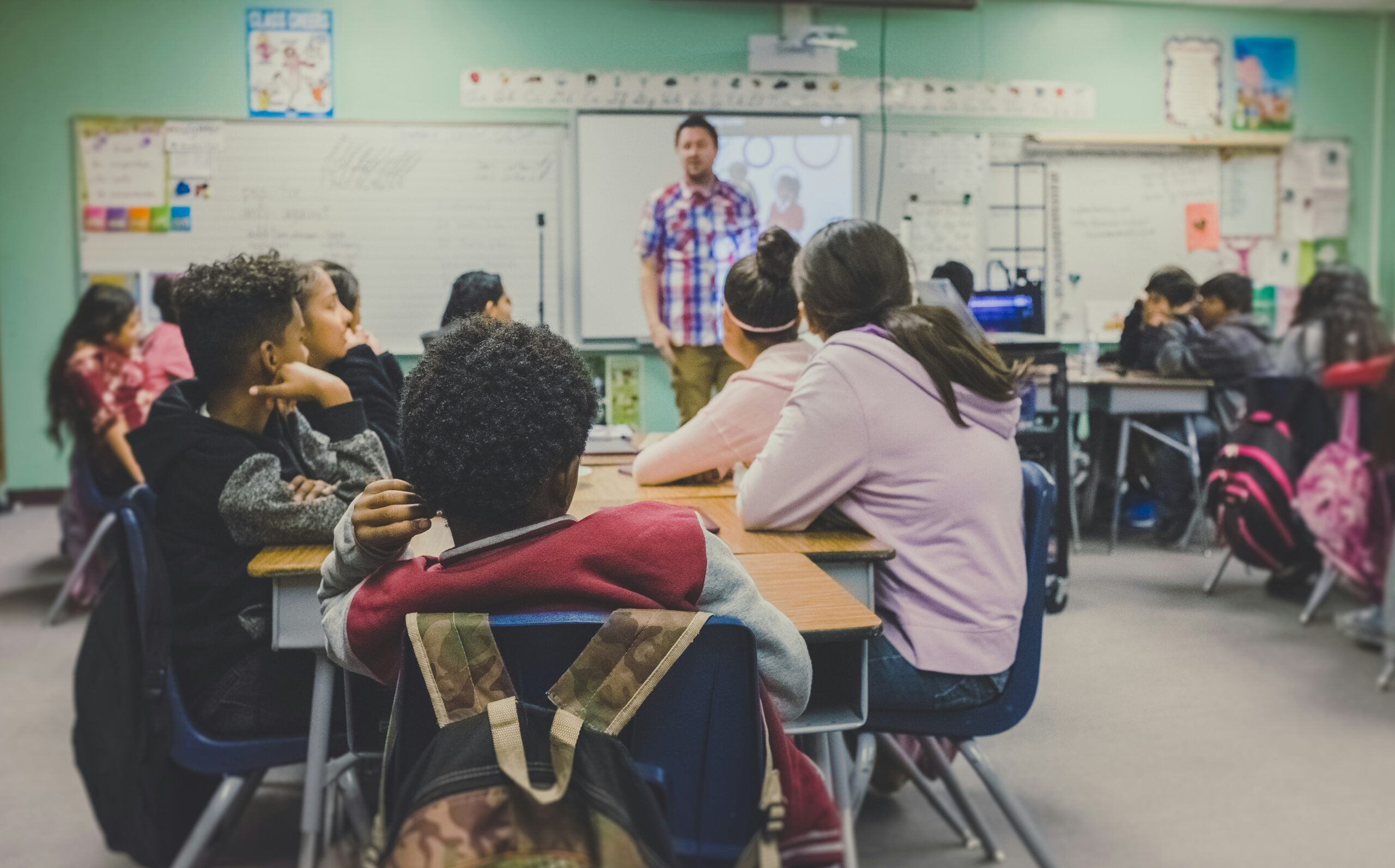
Yale’s Poorvu Center for Teaching and Learning summarizes classroom seating as more than furniture placement. It notes that seating arrangements can affect learning, motivation, participation, attention, and relationships. That broad effect makes sense because a classroom is not just a collection of individual desks. It is a communication system. Every seat changes sight lines, listening effort, and the ease of joining the lesson.
Rows often help when the main task is listening, modeling, testing, or working independently. Everyone faces the same direction, side conversations are more visible, and the teacher can scan the room quickly. But rows can also make some students feel far from the action, especially if discussion always happens near the front or center. A seating plan that improves quiet focus can weaken participation if it leaves too many students out of the conversational path.
Neighbors Can Raise or Lower the Noise Level
The person beside a student matters more than adults sometimes admit. Friends can become strong learning partners when they help each other stay organized, compare ideas, and explain confusing directions. The same friendship can also become a steady invitation to whisper, joke, or drift away from the task. A seatmate does not have to be a bad influence to be distracting. Sometimes two students simply bring out each other’s talkative side at the wrong time.
This is why assigned seating can feel unfair to students while still serving a real classroom purpose. In a 2012 classroom study discussed widely in education research, student-selected seating produced much more disruptive behavior than teacher-assigned seating. The point is not that students should never have choice. It is that choice works best when the room has already built habits of focus, respect, and accountability.
Good seating charts separate combinations that reliably derail learning, but they also avoid treating students as fixed problems. A student who struggles during independent work may do better near a calm peer and away from the highest-traffic part of the room. The same student might thrive in a group during a hands-on project. Seating should respond to patterns, not labels.
Different Layouts Support Different Kinds of Work
Desk layout sends a message before anyone speaks. Rows say, “Face forward and follow the shared thread.” Groups say, “Talk to the people near you and build something together.” A horseshoe says, “Listen across the room and be ready to enter the discussion.” None of those messages is automatically better. Each one fits a different kind of lesson.
Research reviews on classroom seating have found that rows tend to reduce off-task behavior during individual assignments, especially when students are expected to listen, practice, or complete work quietly. Group seating can increase interaction, questions, and peer support, but it also makes casual conversation easier. A horseshoe or semicircle can invite whole-class discussion because students can see more faces, not just the back of someone’s head.
The strongest classrooms often change the room over time. A teacher might use rows for a short explanation, pairs for practice, groups for a project, and a circle for reflection. Even when desks cannot move easily, the seating chart can still change the classroom’s flow. A student who rarely speaks may be placed where eye contact is easier. A student who misses directions may sit closer to the source of instruction. A group that needs leadership may include someone who keeps the task moving.
Seating Also Shapes Social Life
Students do not only learn math, science, reading, and history in a classroom. They also learn who feels familiar, who seems approachable, and who gets included. Seating can either repeat the same social patterns every day or gently widen them. That social side of seating is not just sentimental; it can change the way students experience the room.
A large randomized classroom experiment published in PLOS ONE in 2021 studied 182 classrooms with nearly 3,000 students in grades 3 through 8. Students were assigned seating for a semester, and researchers found that students seated next to each other became more likely to form mutual friendships. The study did not pretend that seating solves every social boundary. Similarity still mattered. But proximity had a real effect: students were more likely to connect with the people they repeatedly sat beside.
That finding gives seating charts a more generous purpose. They are not only about stopping side conversations. They can help students work with classmates outside their usual circle, reduce social isolation, and make collaboration feel less awkward. A teacher who changes seating thoughtfully can give students repeated chances to be known by more than one group.
A Good Seating Chart Is Flexible, Not Punitive
The weakest seating charts are usually the ones that become silent punishment. A student is moved, everyone understands why, and the new seat becomes a public label. That may stop one disruption for a day, but it can damage trust. A better seating plan feels normal, adjustable, and connected to learning goals. Seats change because the class changes, not because a student has been marked forever.
Flexibility also protects the students who need practical access. Some students need to see the board clearly, hear directions with less background noise, avoid visual clutter, or sit where movement around the room is less distracting. Others need a partner who can help them enter group work without taking over. A fair seating chart is not always identical treatment. It is a room arranged so more students can do the work in front of them.
Students can help by noticing their own patterns honestly. A seat that feels fun may not be the seat where work gets done. A seat near the front may feel exposed at first but make directions easier to catch. A group table may be energizing during a project and frustrating during a quiet quiz. Learning to read those patterns is part of becoming a stronger student.
Why the Room Feels Different After Seats Change
When a seating chart changes, the classroom can feel different before the lesson even begins. The jokes come from another corner. A quiet student has a clearer path into discussion. A talkative pair no longer pulls each other away from the task. The teacher can circulate more easily. The board is easier to see. None of those changes is dramatic on its own, but together they alter the room’s rhythm.
That is why seating charts deserve more credit than they usually get. They do not replace good teaching, clear directions, strong relationships, or meaningful work. They simply make those things easier or harder. A thoughtful seating plan lowers the friction: fewer distractions to fight, fewer students hidden at the edges, fewer social patterns left to chance.
The best seat is not always the closest, quietest, or most comfortable one. It is the seat that helps the student do the work, hear the lesson, join the right conversation, and stay connected to the room. When seating is treated as part of learning rather than a classroom chore, a chart of names becomes something more useful: a map of attention, access, and possibility.