
 Akshay Dinesh
A school lunch tray can look simple: an entree, fruit, vegetables, milk, and maybe a side that feels familiar from home. Behind that tray, though, is a complicated set of choices. Cafeteria teams have to serve food students will actually eat, stay within a budget, handle allergies and local preferences, manage labor and delivery schedules, and meet federal nutrition rules that decide what counts as a reimbursable meal.
Those rules do not write one national menu for every school. A lunch in Arizona may look different from a lunch in Vermont, and a high school line may look different from an elementary school line. Still, the same basic framework shapes the meal before a student ever reaches the counter. It explains why milk choices change, why whole-grain foods show up so often, why fruit and vegetables are offered in certain patterns, and why a familiar cafeteria item may be reformulated even when its name stays the same.
The Tray Is Built Around Meal Components
The National School Lunch Program does not judge a meal only by whether it looks filling. It is organized around required food groups, often called meal components: fruits, vegetables, grains, meats or meat alternates, and milk. Schools plan menus across the week so students in different grade groups receive appropriate amounts for their age and stage, rather than one identical portion standard for every child in the building.
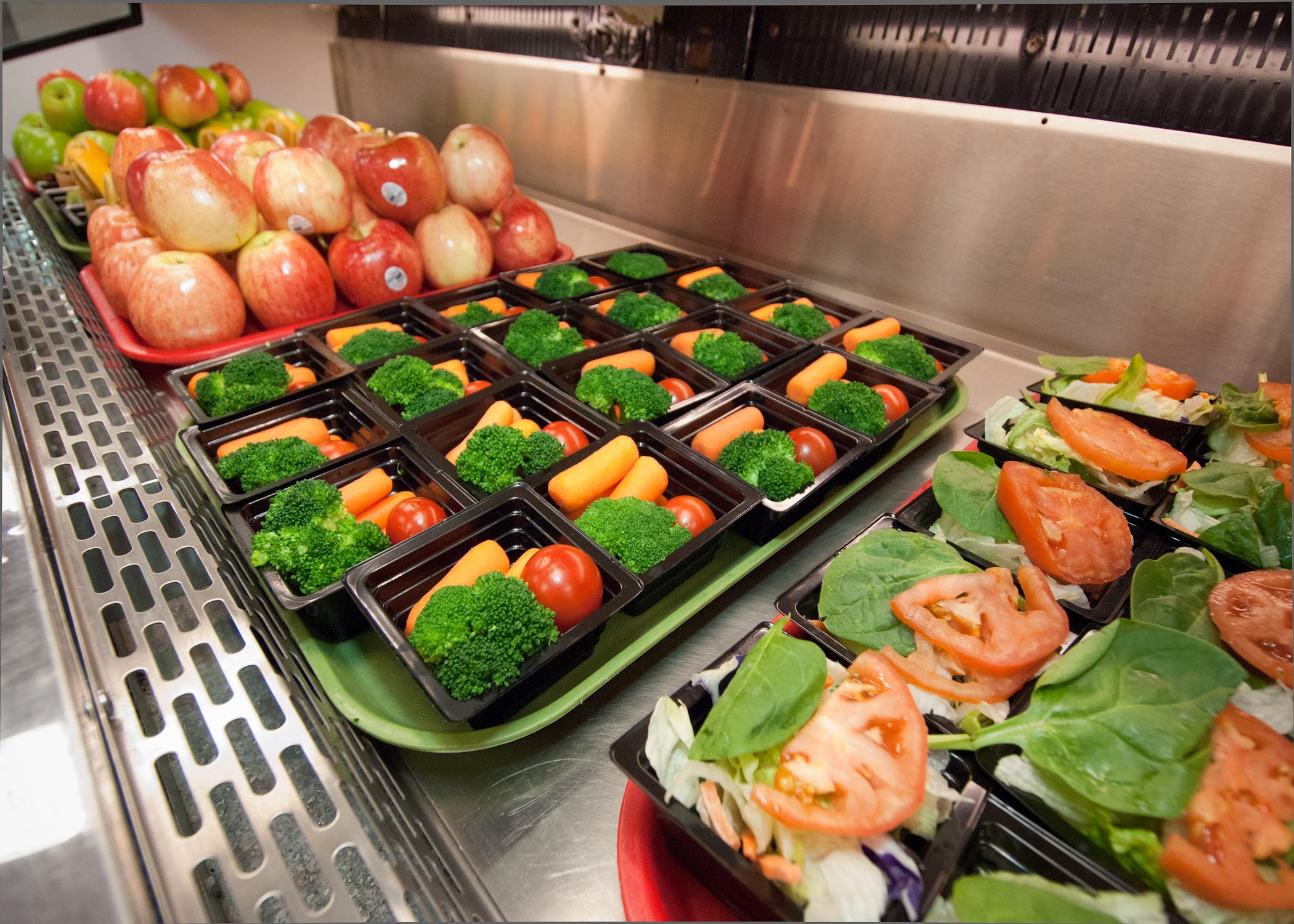
This is why cafeteria meals often have a visible structure. A slice of pizza may count partly as a grain and partly as a meat alternate because of the crust and cheese. A bean burrito may bring together grains, vegetables, and protein. A side of carrots or leafy greens is not just decoration; it helps the menu meet vegetable requirements across the week. The point is not to make every tray perfect in isolation, but to create a pattern of meals that offers regular access to major food groups.
Students also have some choice inside that structure. Many schools use “offer versus serve,” which lets students decline certain items while still taking enough components for the meal to count. That flexibility matters because a tray full of untouched food does not help anyone. A student who chooses fruit, an entree, and milk may still have a qualifying meal, while another student may build a fuller tray with vegetables and extra sides.
Nutrition Standards Shape the Ingredients Before Students See Them
Some school lunch rules are visible. Others are hidden inside the recipes. A bun may be whole grain-rich even if it looks like an ordinary hamburger bun. A sauce may have less sodium than the version sold in a grocery store. A cereal, yogurt, or flavored milk may be reformulated so it can fit new limits on added sugars. The lunch line often looks familiar because the technical work happens long before serving time.
Whole grains are a good example. Federal standards require most grains offered during the school week to be whole grain-rich, meaning they contain a meaningful amount of whole grain while meeting the program’s technical definition. That does not mean every grain item must taste heavy or look brown. It does mean vendors and cafeteria teams often choose breads, tortillas, pasta, pizza crusts, and breakfast items that meet the standard while still feeling acceptable to students.
Sodium works differently because it is measured across menus rather than by a single salty-tasting food. The USDA’s 2024 final rule kept current sodium limits in place for several years, then required lower limits beginning July 1, 2027. That phase-in matters. Schools cannot simply remove salt from one recipe and call the job finished; sodium appears in cheese, breads, sauces, deli-style meats, soups, seasonings, and many prepared foods. Lowering it takes recipe testing, supplier changes, staff training, and time for students to adjust.
Added sugars are also being handled in stages. Product-based limits for items such as breakfast cereals, yogurt, and flavored milk began taking effect in 2025, while a broader weekly added-sugars limit is scheduled for July 1, 2027. That means the change may show up quietly: a slightly different yogurt, a cereal with less sweetness, or flavored milk that still exists but has a lower added-sugar cap. The cafeteria may not announce a nutrition-standard change, but the menu has been shaped by it.
Milk Rules Changed, but Choice Still Depends on the School
Milk is one of the most noticeable parts of a school meal because it comes in a separate carton and students often have strong opinions about it. For years, school milk rules focused on fat-free and low-fat options. In 2026, federal policy changed. The Whole Milk for Healthy Kids Act was signed on January 14, 2026, and USDA followed with a rule effective June 8, 2026, allowing schools and several child nutrition programs to offer whole milk and reduced-fat 2 percent milk, along with the previously allowed low-fat and fat-free options.
That change does not mean every cafeteria will immediately serve every kind of milk. It gives schools more flexibility. A district still has to consider cost, storage space, supplier contracts, student demand, state guidance, and how the milk fits with the rest of the meal standards. Some schools may add whole or 2 percent milk quickly; others may keep a narrower set of choices. Local decisions can make the rule look different from one cafeteria to the next.
The milk update also shows how school nutrition rules are not frozen. They respond to law, dietary guidance, public comments, food industry capacity, and political debate. A student may only see a carton in a cooler, but that carton reflects years of disagreement over nutrition, waste, student preference, dairy markets, and what schools should be expected to manage during a short lunch period.

Rules Have to Meet Real Cafeteria Life
Nutrition standards are only one part of lunch planning. A meal also has to be served fast enough for a crowded lunch schedule, affordable enough for the district, simple enough for staff to prepare safely, and appealing enough that students will eat it. This is where policy meets the practical world of food service. A recipe that looks excellent on paper may fail if it takes too long to assemble or if most students leave it untouched.
Schools also depend on suppliers. If a district needs a lower-sodium tortilla, a whole grain-rich pizza crust, or a cereal that meets added-sugar limits, someone has to make it consistently, ship it on time, and offer it at a workable price. Large districts may have more purchasing power, while smaller or rural districts may have fewer vendor options. This is one reason federal rules often phase in over several school years instead of changing everything overnight.
Student acceptance is not a trivial detail. School meal programs are meant to feed students, not merely display compliant food. Cafeteria teams often use taste tests, student feedback, rotating menus, and familiar formats to introduce changes gradually. A whole grain-rich item may work better when paired with a popular filling. A lower-sodium recipe may need herbs, acidity, heat, or texture to keep it from tasting flat. Good school food service is part nutrition, part logistics, and part honest observation of what students actually choose.
What Students and Families Can Learn From a Menu
A school menu can teach more than what is for lunch on Thursday. It can show how public programs balance health goals, budgets, student preference, and local conditions. When a menu lists vegetables by type, offers fruit daily, uses whole grain-rich items, or changes milk options, those details are not random. They are signs of a system trying to turn broad nutrition policy into meals served hundreds or thousands of times a day.
For students, reading the menu with that in mind can make lunch feel less mysterious. If a favorite item changes, it may be because a recipe was adjusted to meet sodium, whole grain, or added-sugar standards. If one school offers a milk choice that another school does not, the difference may come from local implementation rather than a mistake. If a tray includes fruit and vegetables even when the entree is familiar, the meal pattern is doing its quiet work.
Families can use this understanding without turning lunch into a lecture. The useful questions are practical: What choices does the school offer? Which items does the student actually eat? Are there allergy, religious, medical, or personal needs that require communication with the cafeteria or school office? How does school lunch fit with breakfast, snacks, activity level, and food at home? A menu is only one part of a student’s day, but it can still be read with care.
The most important thing to remember is that school lunch rules are not just paperwork. They shape recipes, purchasing, portions, milk coolers, salad bars, serving lines, and the choices students make under real time pressure. A tray is the final version of many decisions. Understanding those decisions makes the meal easier to evaluate, and it gives students and families a clearer view of how a public program becomes an everyday lunch.