 Akshay Dinesh
Steve Jobs helped turn computers from specialized machines into everyday tools for work, creativity, communication, and entertainment. As a co-founder of Apple, he played a central role in the rise of the personal computer, the Macintosh, the iPod, the iPhone, and the iPad. His career also reached beyond Apple: after leaving the company in 1985, he helped build Pixar into one of the most important studios in computer animation. Jobs did not invent every technology associated with his name, but he had a rare gift for connecting engineering, design, marketing, and user experience into products that felt clear and desirable.
His story is also more complicated than a simple tale of genius. Jobs could be inspiring, demanding, impatient, and difficult. He made bold decisions that changed entire industries, but he also depended on collaborators such as Steve Wozniak, Jony Ive, Ed Catmull, John Lasseter, and many Apple and Pixar teams whose work made those ideas real. The most useful way to understand Jobs is to see both sides at once: the intense design thinker who pushed technology toward elegance, and the leader whose methods often created pressure as well as breakthrough results.
Early Life and the Start of Apple
Steve Jobs was born on February 24, 1955, in San Francisco, California, and was adopted by Paul and Clara Jobs. He grew up in what became Silicon Valley, surrounded by electronics, engineering, and a culture of tinkering. Paul Jobs, a mechanic and craftsman, taught him how to work carefully with tools, and that early attention to how things were built stayed with him. Jobs later attended Homestead High School, where he met Steve Wozniak, an older student with extraordinary skill in electronics and computer design.
Jobs briefly attended Reed College in Oregon before dropping out, though he continued sitting in on classes that interested him. He later pointed to a calligraphy course as one influence on the typography and visual polish of the Macintosh. In 1976, Jobs, Wozniak, and Ronald Wayne founded Apple Computer. Wozniak designed the Apple I, while Jobs focused on selling it and imagining how personal computers could reach a wider audience. The Apple II, released in 1977, became the company’s breakthrough: a relatively approachable computer with color graphics, expansion slots, and appeal beyond hobbyist circles.
The Macintosh and a New Idea of Personal Computing
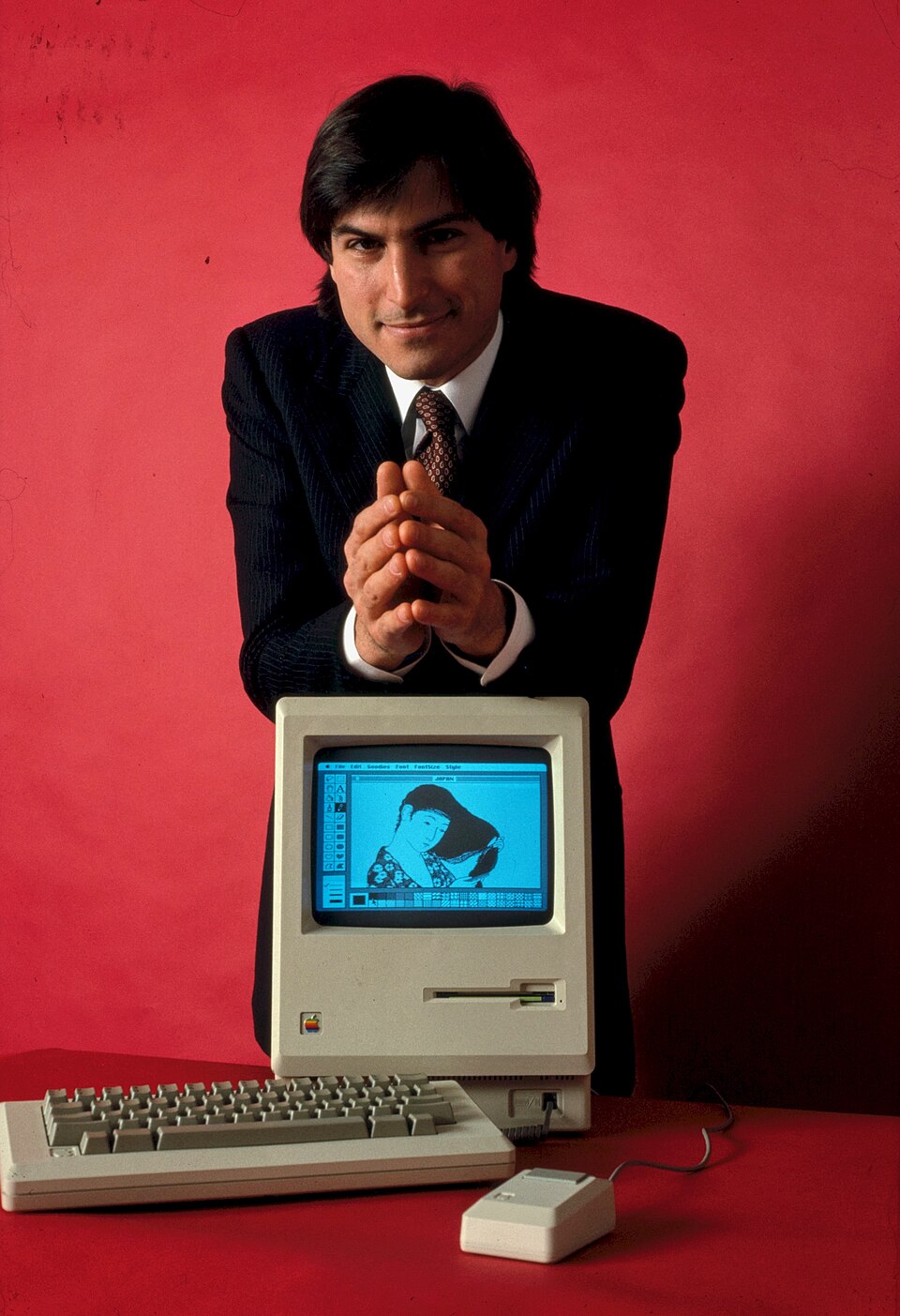
Jobs wanted computers to feel less intimidating. Earlier computers often required typed commands and technical patience, but Jobs became fascinated by graphical interfaces, windows, icons, and mouse-based control. Apple first tried these ideas in the Lisa, then brought them to a broader audience through the Macintosh, released in 1984. The Mac did not instantly dominate the market, but it gave personal computing a new visual language and showed how much design could shape the way people understood technology.
The Macintosh launch also showed Jobs’s flair for presentation. Apple’s famous 1984 Super Bowl advertisement, directed by Ridley Scott, framed the Mac as a rebellion against dull, centralized computing. The message was dramatic, but it captured something real about Jobs’s approach: he wanted products to carry a point of view. To him, a computer was not only a machine with specifications. It was an object people touched, looked at, learned, and lived with.
That intensity created problems inside Apple. Jobs clashed with executives, including John Sculley, whom he had helped recruit as CEO. By 1985, after internal conflict and disappointing Macintosh sales, Jobs was pushed out of the company he had co-founded. It was a humiliating break, but it also opened the next chapter of his career.
NeXT, Pixar, and Lessons Outside Apple
After leaving Apple, Jobs founded NeXT, a company that built high-end computers for education and business. NeXT hardware was too expensive to become a mass-market success, but its software mattered enormously. The NeXT operating system later became a foundation for Apple’s modern macOS after Apple acquired the company in 1996. In that sense, one of Jobs’s apparent failures became the bridge back to Apple.
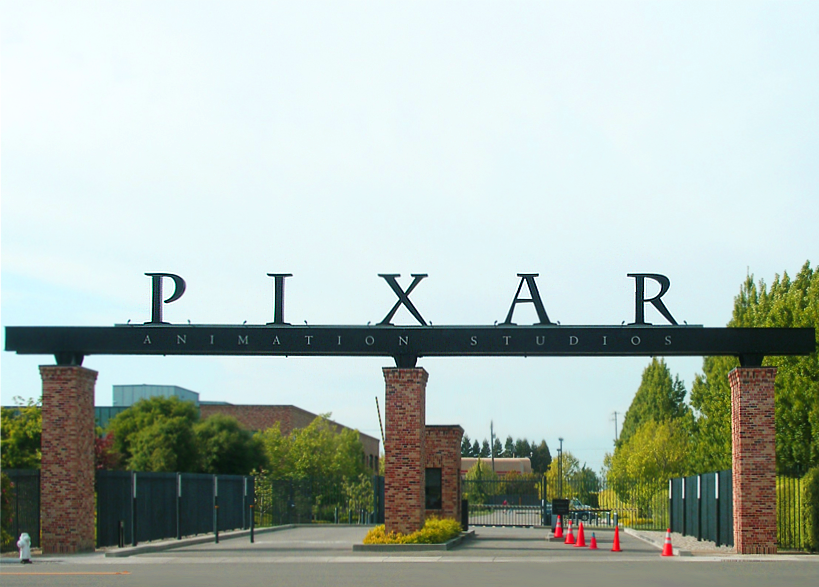
Jobs also bought the computer graphics division of Lucasfilm in 1986, a group that became Pixar. At first, Pixar struggled to find its business model. Over time, the studio moved from selling hardware and software toward making animated films. Its breakthrough came with Toy Story in 1995, the first feature-length film made entirely with computer animation. Pixar’s success showed another side of Jobs’s influence: he understood that technology mattered most when it helped people tell stories, solve problems, or experience something memorable.
Return to Apple and the Product Era That Changed Daily Life
Apple bought NeXT in 1996, bringing Jobs back into the company. By 1997, he had become interim CEO. Apple was struggling, so Jobs narrowed the product line, cut distractions, and pushed the company toward a clearer identity. The iMac, released in 1998, helped revive Apple’s public image with its colorful translucent design and simple setup. It made the computer feel less like office equipment and more like a friendly household object.
The iPod, introduced in 2001, paired elegant hardware with iTunes and later the iTunes Store. It did not simply store music; it made digital music easier to organize, buy, and carry. The iPhone, released in 2007, had an even larger impact. By combining a phone, internet device, camera, media player, and app platform in a touch-based interface, it helped define the modern smartphone era. The iPad followed in 2010, extending Apple’s design approach to tablets and changing how many people read, browse, draw, watch video, and use apps on a larger portable screen.
These products succeeded partly because they connected hardware, software, services, and retail experience into a single system. Jobs cared deeply about packaging, stores, fonts, materials, and the feeling of using a device for the first time. That attention could seem obsessive, but it made Apple products recognizable in a crowded technology market. Competitors often focused on features; Jobs pushed Apple to focus on the whole experience.
Leadership, Health, and Lasting Influence
Jobs’s leadership style remains debated. Many people who worked with him described moments of sharp criticism and intense pressure. Others remembered his ability to cut through confusion, raise standards, and make teams believe they could build something better than expected. Both views matter. His success was not only the result of personal charisma; it depended on talented teams, strong design culture, and a company structure that could turn demanding ideas into finished products.
In 2004, Jobs was diagnosed with a rare form of pancreatic neuroendocrine tumor. He continued leading Apple for several years while his health declined, taking medical leaves and eventually resigning as CEO in August 2011. Tim Cook, who had served as Apple’s chief operating officer, became CEO. Jobs remained chairman of the board until his death on October 5, 2011, at age 56.
Steve Jobs’s legacy is visible every time people expect technology to be simple, polished, and deeply integrated into daily life. The personal computer, animated film, digital music, smartphone, and tablet markets all carry traces of his decisions. His career also offers a useful caution: vision alone is not enough, and brilliance does not excuse every behavior. Jobs mattered because he saw that technology could be judged not only by what it did, but by how clearly and beautifully it helped people do it.