 Akshay Dinesh
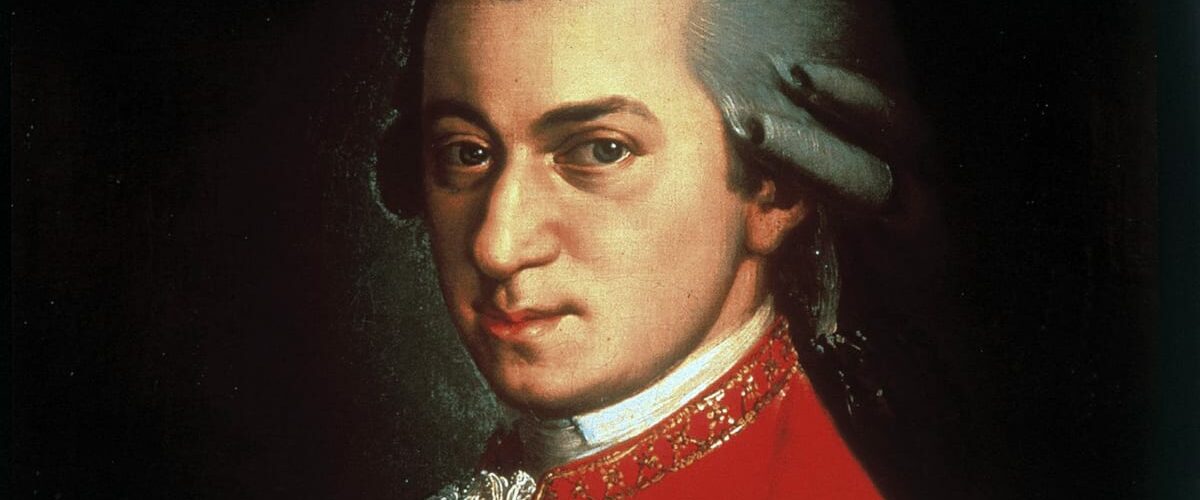
Wolfgang Amadeus Mozart is one of the central figures of Classical-era music because his work combines grace, drama, wit, and emotional depth with extraordinary technical control. Born in Salzburg in 1756, he grew up inside a musical household led by his father, Leopold Mozart, a violinist, composer, and teacher. Mozart became famous as a child performer, but his lasting importance comes from much more than early talent. Across operas, piano concertos, symphonies, chamber music, sacred works, and solo pieces, he showed how clear musical form could still feel alive, surprising, and deeply human.
Mozart lived only 35 years, yet his output remains enormous. The modern Kochel catalogue, the standard system used to identify his works, begins with childhood pieces and ends with the unfinished Requiem. What makes the music so durable is not just quantity. Mozart could write melodies that seem simple at first hearing, then reveal layers of balance, tension, humor, and feeling as listeners return to them. That blend of accessibility and craft is why his music still belongs in concert halls, opera houses, classrooms, films, and everyday listening.
Early Talent and European Tours
Mozart’s childhood was unusual even by the standards of musical prodigies. He learned keyboard and violin at an early age, composed as a child, and performed before aristocratic audiences while traveling with his family. His older sister Maria Anna, known as Nannerl, was also a gifted musician, and the siblings often appeared together during tours arranged by their father. These journeys brought Mozart into contact with courts, composers, singers, and instrumental styles across Europe.
The tours were demanding, but they widened his musical imagination. In cities such as Munich, Paris, London, and Vienna, Mozart heard different national styles and absorbed them quickly. Italian opera, German counterpoint, French elegance, and keyboard virtuosity all left traces in his writing. Instead of copying one tradition, he learned how to make several musical languages work inside his own voice.
Salzburg, Vienna, and a Search for Independence
As a teenager and young adult, Mozart worked in Salzburg under the Prince-Archbishop’s court. The position gave him professional experience, but it also limited his ambitions. Mozart wanted room to compose operas, perform as a pianist, and build a career beyond a provincial court appointment. His frustration with Salzburg eventually pushed him toward Vienna, where he hoped to support himself through commissions, teaching, publishing, and public performance.
Vienna became the center of Mozart’s mature career. There he developed into one of the era’s great pianist-composers, writing piano concertos that allowed him to display both brilliance and subtlety. These concertos were not merely vehicles for fast passagework. The soloist and orchestra often seem to converse, disagree, answer, and surprise one another, turning the concerto into a kind of musical drama without words.
Operas Full of Character and Motion
Mozart’s operas show his gift for turning musical form into character. The Marriage of Figaro, first performed in 1786, moves with comic speed while revealing tensions around class, desire, loyalty, and forgiveness. Don Giovanni, first performed in 1787, blends comedy, danger, seduction, and punishment in a way that still feels theatrical and unsettling. Cosi fan tutte explores love and disguise with music that can sound light on the surface while carrying more complicated emotional questions underneath.
The Magic Flute, from 1791, reaches a different kind of audience through fairy-tale imagery, spoken dialogue, comic scenes, and serious ideals. Its music ranges from Papageno’s earthy charm to the Queen of the Night’s dazzling coloratura writing. Across these works, Mozart understood that music could reveal what a character would not or could not say plainly. A melody, ensemble, or orchestral color can expose hesitation, sincerity, fear, mischief, or longing before the plot catches up.
Symphonies, Chamber Music, and the Late Style
Mozart’s instrumental music is often praised for balance, but balance should not be mistaken for politeness. His late symphonies, especially No. 39, No. 40, and No. 41, show a composer who could build large structures with urgency and imagination. Symphony No. 40 in G minor is especially memorable for its restless opening theme, while Symphony No. 41, often called the Jupiter, ends with a finale that combines contrapuntal skill with bright dramatic force.
His chamber music rewards close listening in a different way. String quartets and quintets, piano quartets, violin sonatas, and wind serenades show Mozart working with conversation on a smaller scale. Each instrument can have a distinct personality, and the musical argument often depends on how those voices answer one another. This is one reason Mozart remains valuable for students: the music demonstrates melody, harmony, structure, and ensemble thinking without feeling like an exercise.
Why Mozart Still Matters
Mozart’s reputation grew after his death not because he fit a simple myth of effortless genius, but because the music kept proving useful, moving, and teachable. Performers return to him because the scores demand clarity and honesty. Listeners return because the music can be elegant, funny, tender, theatrical, and stormy, sometimes within a single movement. Composers study him because he shows how much can happen inside a well-shaped phrase.
His unfinished Requiem has helped shape the romantic image of Mozart’s final days, but his legacy is larger than that story. The operas remain alive on stage. The piano concertos still feel fresh in performance. The late symphonies continue to anchor orchestral programs. Mozart’s music endures because it makes discipline sound natural: every phrase seems carefully made, yet the best moments arrive with the ease of speech.