

 Akshay Dinesh
A sharp boom breaks the quiet on a bitterly cold night. The house seems to jolt, but neighbors a short distance away may have heard nothing. One possible explanation is a frost quake: a sudden fracture associated with freezing, water-rich ground. It can sound remarkably like an explosion or a small earthquake, even though the process happens close to the surface and is not caused by tectonic plates slipping.
Frost quakes, a kind of cryoseism, need more than a cold forecast. Moisture in the ground, a rapid drop in temperature and the insulating effect of snow can all influence whether conditions are favorable. A boom alone is not proof of a frost quake, but understanding the conditions helps explain why these strange sounds sometimes accompany an intense cold snap.
What happens beneath the frozen surface?
Soil and rock contain spaces and cracks that can hold water. When that water freezes, the resulting ice takes up more volume than the liquid did. In confined, water-rich ground, freezing and cooling can build stress in the surrounding material. If the stress becomes greater than the material can withstand, a sudden fracture can release energy as a sharp sound and a brief vibration.
The details are more complicated than imagining every patch of damp soil bursting like a full bottle in a freezer. Water can move through some soils, empty spaces can accommodate some expansion, and cooling can also make frozen material contract. Ground composition, moisture and the speed of cooling all affect how stress develops. The essential point is that a sudden release of stress in frozen material can be audible at the surface.
The Maine Geological Survey describes frost quakes as localized shaking and noise caused by sudden deep freezing of the ground. Their effects can be strong enough to wake people nearby while going unnoticed a few hundred yards away. That limited reach is one reason a dramatic sound need not indicate a large event deep underground.
Why a sudden cold snap can make a difference
Ground that has been wetted by rain or melting snow has a supply of water available to freeze. A rapid plunge from milder weather into severe cold can cool the surface and freezing zone quickly, allowing stresses to build. Frost quakes are relatively unusual: a cold night by itself does not guarantee one, and there is no single temperature that reliably predicts when a particular patch of ground will crack.
Snow changes the picture because the air spaces within a snowpack slow heat transfer. A thick blanket can insulate the ground from a sudden drop in air temperature. With little or no snow, the cold can reach the ground more readily. The Maine Geological Survey notes that frost quakes often occur during an early cold snap, particularly where snow cover is absent, and frequently happen during the coldest hours between midnight and dawn.
Air temperature and ground temperature are not interchangeable. The surface responds to weather faster than deeper layers do, and a thermometer above the ground cannot tell you exactly what is happening in a buried crack. Nor is wind chill a measure of the ground’s temperature: moving air can affect how quickly an object cools, but it does not make the object colder than the surrounding air by itself.
Frost quake, ice quake or earthquake?
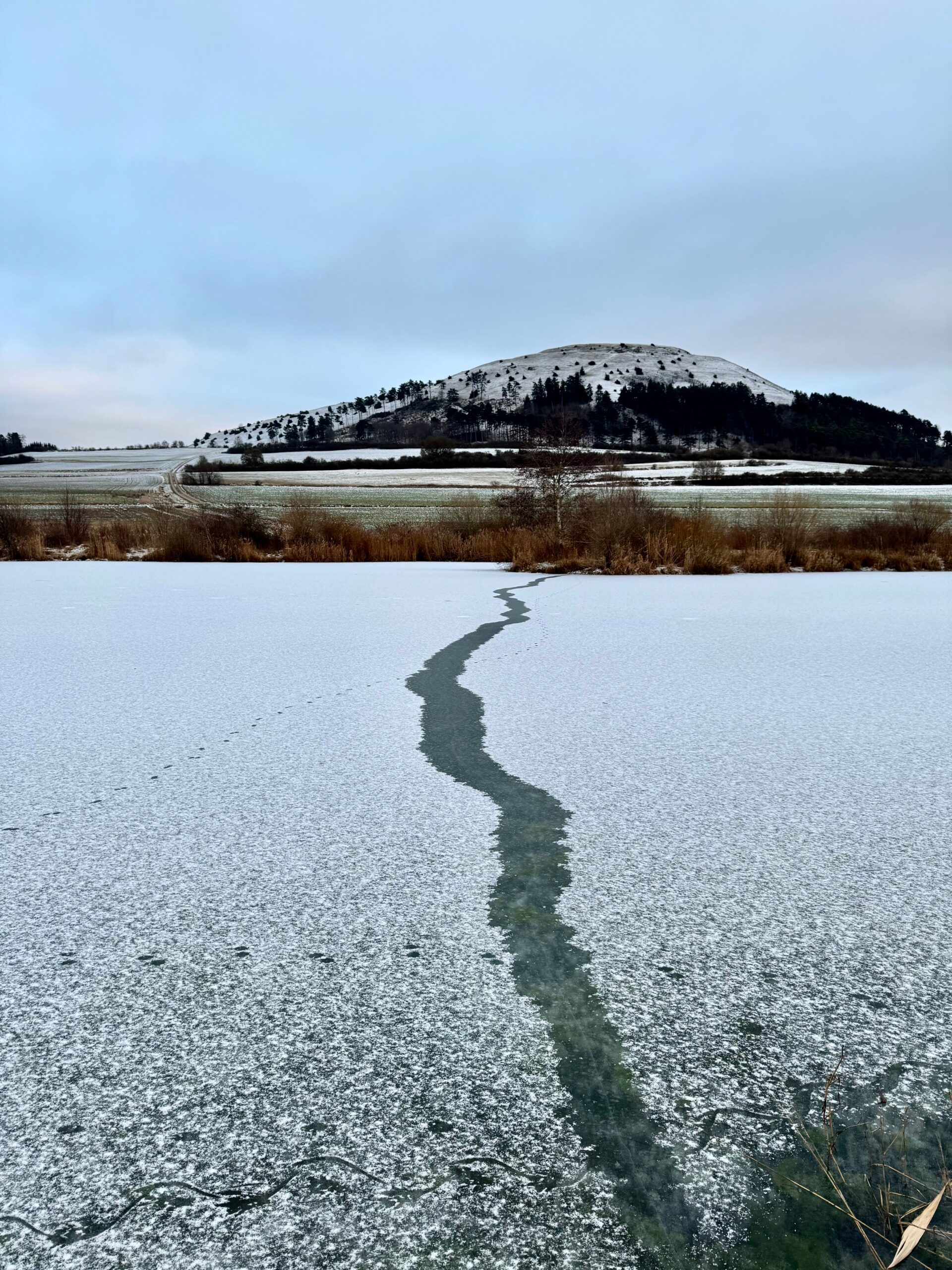
The terminology can be confusing. In a Canadian Hazards Information Service report, frost quakes are described as events in frozen, groundwater-saturated soil or rock, while ice quakes occur in frozen bodies of water. Both may be grouped under the broader term cryoseism, although everyday usage varies. Cracking lake ice can make impressive noises too; a sound near a lake is not automatically evidence that the ground itself fractured.
A tectonic earthquake is different again. It results from a sudden slip along a fault, often kilometers below the surface, as accumulated stresses are released. The Canadian report notes that cryoseisms tend to be felt over a smaller area than earthquakes of the same magnitude and are often reported because of their sound rather than ground motion. Seismometers and reports from multiple locations can help specialists distinguish events, though a small local event may not be detected by a distant network.
Frost heave is a related but different process. It is the lifting of ground as ice grows in freezing soil, sometimes raising a road or sidewalk. A frost quake describes a sudden release of energy and the accompanying sound or shaking; a raised pavement alone does not establish that a frost quake occurred. The National Snow and Ice Data Center explains how ice growth can deform frozen ground.
What to do after an unexplained boom
Cold weather and a very local sound make a frost quake plausible, not certain. Ice, buildings and trees can also make noises during temperature changes, and a loud bang can have an unrelated cause. Check reliable local earthquake reports and weather information when available, and compare notes with nearby neighbors without going outside into dangerous cold just to investigate.
Do not dismiss signs of an immediate hazard as a frost quake. If you smell gas, see smoke, notice significant damage or suspect another emergency, move to a safe place and contact the appropriate emergency service or utility from there. A frozen lake is not a safe shortcut for investigating a sound; ice thickness and strength can vary.
The next boom on a frigid night may remain unidentified. Still, frost quakes offer a useful reminder that ground is not a motionless foundation: water, ice and temperature changes can put it under stress until a small, sudden fracture makes itself heard.





Add comment