

 Akshay Dinesh
A favorite song reaches a quiet passage, the harmony shifts, and then a voice or instrument surges into the space. A shiver runs up your back. The hair on your arms may rise even though the room is warm. Researchers call this response frisson, or aesthetic chills: a brief peak of emotion that can include tingling, goosebumps, a lump in the throat, tears, or a sudden change in breathing. Music does not produce the reaction in everyone, and the same passage may move one listener while leaving another untouched. The reason lies in a meeting of musical prediction, personal meaning, the brain’s reward system, and the body’s arousal response.
A musical chill is both an emotion and a body event
Goosebumps originally helped mammals respond to cold and threat. Tiny muscles at the base of hair follicles contract, making the hairs stand up; in fur-covered animals, that can trap insulating air or make the animal look larger. Humans retain the reflex even though our relatively sparse body hair makes it less useful. The autonomic nervous system, which adjusts functions such as heart rate, breathing, sweating, and pupil size without conscious instruction, helps control this response.
Music can recruit some of the same bodily machinery without cold or danger. In a landmark 2001 study in the Proceedings of the National Academy of Sciences, neuroscientists Anne Blood and Robert Zatorre asked participants to bring music that reliably gave them chills. As the reported chills grew stronger, heart rate and breathing changed, and brain activity shifted in regions involved in reward, emotion, and arousal. The study was small, but it established an important point: the experience was not merely a poetic description. It coincided with measurable events in the brain and body.
A chill does not always include visible goosebumps. Some listeners report a wave of tingling, warmth, tears, or tightness in the chest instead. Researchers therefore distinguish the broader subjective experience of chills from piloerection, the narrower term for hairs physically standing up. Both can happen together, but one is not required for the other.

Your brain is constantly predicting what comes next
Listening is an active process. After years of hearing music, the brain learns patterns: a melody tends to return to a home note, a phrase often lasts a certain length, a dissonant chord invites resolution, and a gradual rise in loudness suggests that a climax is approaching. These expectations need not be explained in music-theory language. A listener can feel that a note is delayed or that a chorus arrives with extra force without being able to name the harmony.
Chill-inducing moments often play with that predictive system. A composer or performer may postpone an expected entrance, shift suddenly to a new harmony, add voices to a thin texture, leap to an unusually high note, or move from restraint to a powerful crescendo. The moment works because it balances familiarity and surprise. If every event is obvious, there may be little tension. If the music is completely unpredictable, the listener may not have a stable pattern against which to feel the surprise.
This helps explain why a structural change can feel larger than its sound alone. Imagine a choir entering after a long unaccompanied solo. The added volume matters, but so do the wait, the contrast, and the meaning the listener assigns to the entrance. The brain has been building a model of the unfolding piece. When the music fulfills that model in an especially satisfying way, or violates it and then makes the surprise feel coherent, the response can crest quickly enough to become physical.
Anticipation and arrival engage the reward system differently
One of the clearest findings about musical pleasure came from a 2011 Nature Neuroscience study led by Valorie Salimpoor. The researchers combined brain imaging with physiological measurements while participants listened to self-selected music that gave them chills. They found evidence of dopamine release in the striatum, a set of brain regions involved in motivation, learning, and reward. Crucially, the pattern differed across time: the caudate was more involved during anticipation, while the nucleus accumbens was more involved near the peak emotional moment.
That separation fits the shape of many musical experiences. Pleasure is not confined to the final chord, soaring note, or beat drop. Part of it comes from sensing that the moment is approaching. A familiar pause can become charged because the listener knows what follows, while a first-time listener may feel tension without knowing exactly how it will resolve. Music turns waiting into part of the reward.
Dopamine is sometimes described too simply as a pleasure chemical. It is better understood as one participant in systems that help the brain learn what is valuable, direct attention, and pursue anticipated rewards. The 2011 findings do not mean that a single chemical explains every shiver, nor that dopamine directly raises each hair. They show that abstract sound patterns can engage reward circuitry in ways that track both wanting the peak and experiencing it.
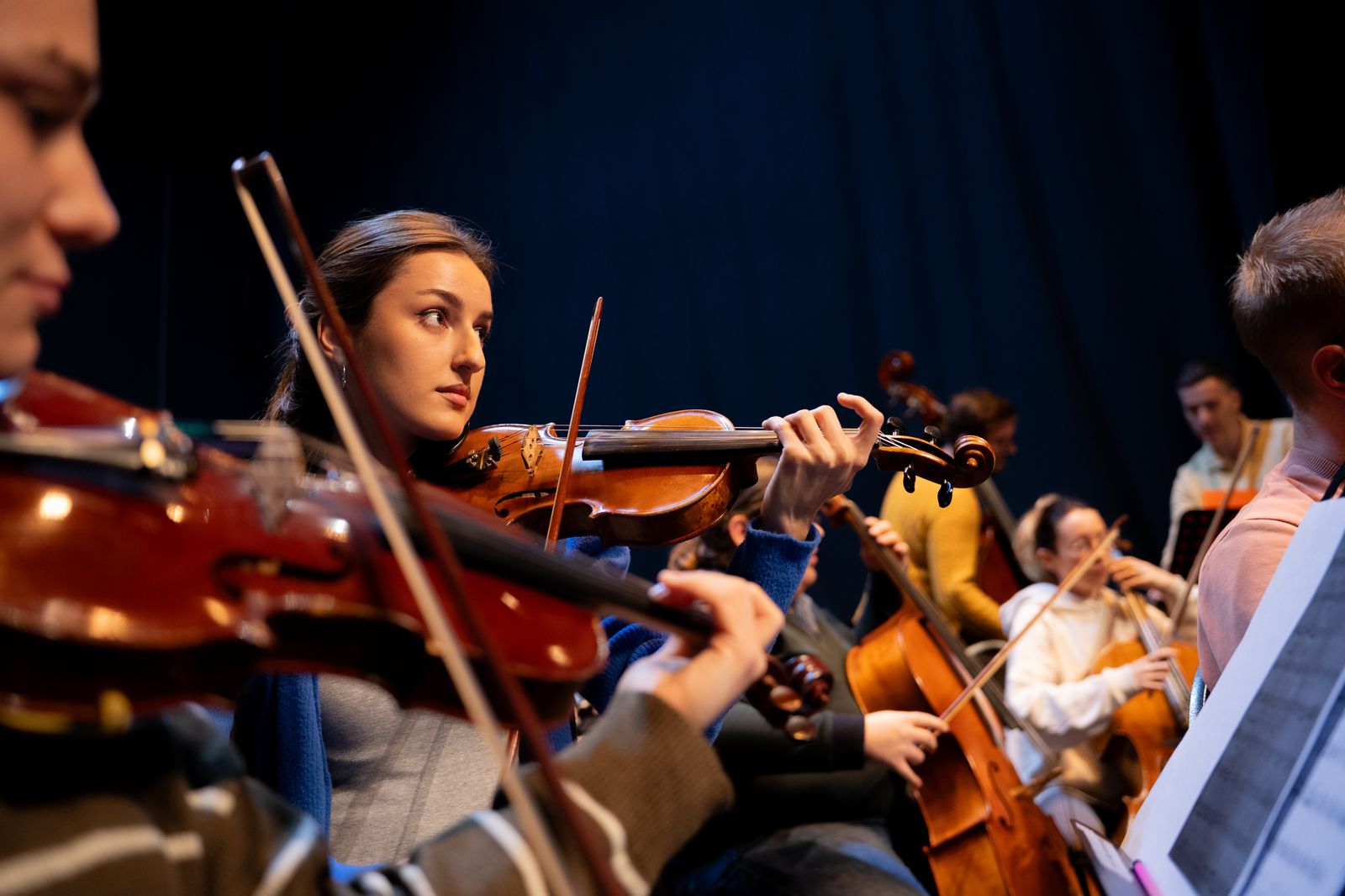
The same song does not move every listener the same way
A musical feature is only half of the encounter. Familiarity, attention, memory, culture, and personality all affect what the listener expects and what the sound means. A modulation in a symphony, a sudden silence in a rock song, a vocal ornament in a devotional performance, and a bass entrance in electronic dance music can all become peak moments for listeners who understand the relevant musical language. There is no universal chord or instrument guaranteed to produce chills.
Personal association can intensify the effect. A song tied to a graduation, a long drive, a relationship, or a period of loss carries more than acoustic information. When it returns, the listener is hearing both the present performance and a network of memories. That is one reason self-selected pieces tend to work well in laboratory studies: researchers are measuring a response shaped by a person’s listening history, not only by features that can be counted in the score.
People also differ in how readily they experience aesthetic chills. A 2026 study of more than 15,000 participants in the Dutch Lifelines cohort found that susceptibility to chills from music, visual art, and poetry was partly associated with family-related and genetic differences. The researchers also found a relationship with openness to experience and artistic interest. Those results describe variation across a large population; they do not provide a simple test for whether any one person will react to a particular song.
Other work has linked music-induced chills with stronger communication between auditory regions and areas involved in emotion and social processing. The direction of cause remains difficult to pin down. Repeated, attentive engagement with music might strengthen relevant connections, preexisting connectivity might make intense responses more likely, or both processes may operate together. Not getting chills is therefore not a sign of poor hearing, weak emotion, or a lack of musical understanding.
Why the feeling can return even when you know the song
Ordinary surprises lose force after repetition, yet a well-known musical climax can still send a shiver down the spine. Memory changes the experience rather than simply erasing uncertainty. Once a listener knows the piece, exact anticipation becomes possible: the breath before the singer enters, the suspended chord before the resolution, or the instant the full ensemble returns. The pleasure can shift from discovering what happens to savoring how and when it happens.
Performance keeps familiar music from becoming perfectly fixed. A conductor may stretch a pause, a singer may color a word differently, and a live audience can alter the emotional setting. Even a recording changes with context. Headphones may reveal a faint harmony that was previously missed, while a concert’s volume and shared attention can amplify bodily arousal. Careful listening often exposes several layers of expectation operating at once, from the next beat to the return of a theme heard minutes earlier.
Music-induced chills sit at an unusual boundary. They are deeply personal, yet they arise from ordinary biological systems for prediction, reward, and arousal. They can be triggered by a private memory or by a carefully prepared musical turn that thousands of people hear together. The shiver is brief, but it reveals how much work the brain and body do while listening: learning patterns, forecasting the future, attaching meaning, and responding when sound arrives with exactly the right mixture of expectation and surprise.