 Akshay Dinesh
On the evening of November 9, 1989, East Germany still had a government, armed border guards, and a concrete barrier cutting through Berlin. A few hours later, thousands of people were crossing into West Berlin while guards stood aside. The border did not open because one official calmly announced that the Berlin Wall had ended. It opened through a chain reaction: months of public pressure, a confusing new travel rule, a televised press conference, determined crowds, and border officers who received no workable orders.
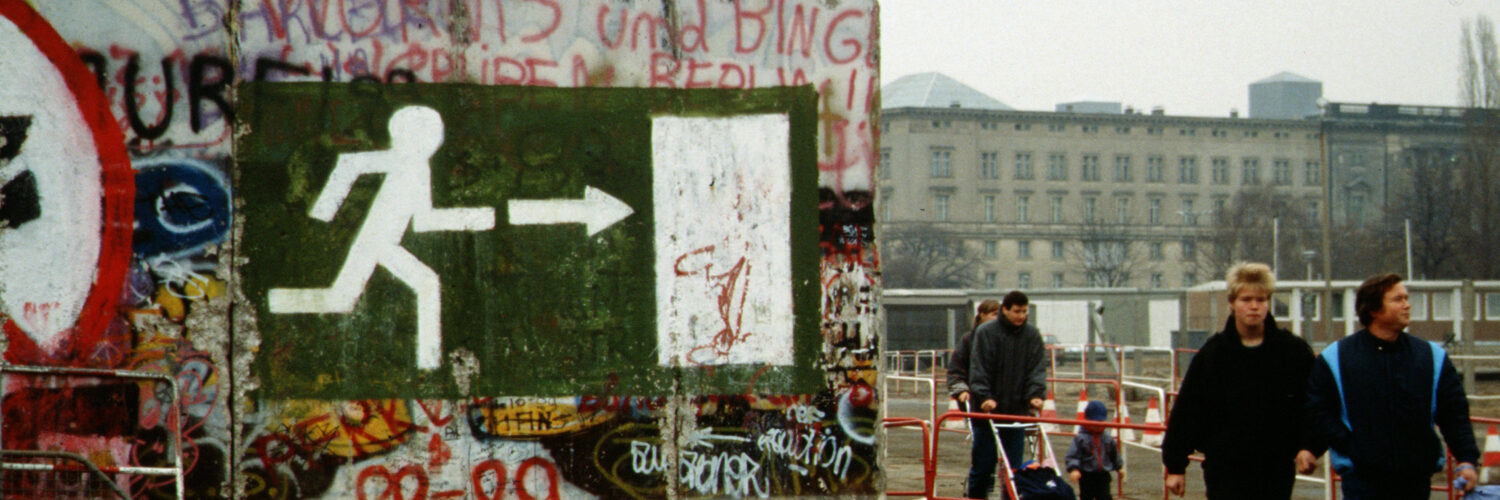
Calling that night the “fall” of the Wall can make it sound as if the concrete structure vanished at once. It did not. Much of it remained standing for months. What collapsed on November 9 was the system that made the barrier effective: the state’s willingness and ability to keep its own citizens from crossing.
The Wall was built to stop an exodus
Berlin had been divided since the end of World War II. The United States, Britain, France, and the Soviet Union occupied separate sectors of the city, even though Berlin lay deep inside the Soviet occupation zone. In 1949, the western zones became the Federal Republic of Germany, commonly called West Germany, while the Soviet zone became the German Democratic Republic, or East Germany. Berlin remained split between the two political systems.
That division created a serious problem for East Germany’s ruling Socialist Unity Party, known by its German initials, SED. People who were unhappy with political control, limited opportunities, or economic conditions could reach East Berlin and cross into West Berlin. Millions left East Germany during the postwar years, and many were young workers or trained professionals whose departure weakened the country.
Before dawn on August 13, 1961, East German forces closed streets and rail lines along the border. Barbed wire soon gave way to concrete walls, watchtowers, patrol roads, fences, lights, and other barriers. According to the Berlin Wall Foundation, the border system around West Berlin eventually stretched about 155 kilometers, or 96 miles. Its purpose was not to protect East Germany from an invading army. It was built primarily to prevent people inside East Germany from leaving.
For 28 years, the Wall separated neighborhoods, workplaces, friends, and families. People still attempted to escape by tunneling, hiding in vehicles, crossing waterways, and using improvised aircraft. Some succeeded; others were captured or killed. The barrier became the most visible symbol of a divided Europe, but its power depended on much more than concrete. It depended on surveillance, travel restrictions, armed enforcement, and the assumption that the state would use force.
By 1989, the East German government was losing control
The crisis of 1989 did not begin at the Wall. Reform was spreading elsewhere in the Soviet bloc, and Soviet leader Mikhail Gorbachev had made clear that Moscow was less willing to use military power to preserve unpopular governments. In Hungary, authorities began removing border fortifications with Austria. East Germans discovered that they could travel through Hungary and continue west, while others sought refuge in West German embassies in Prague, Warsaw, and Budapest.
Inside East Germany, public protest grew. Demonstrators in Leipzig and other cities demanded freedom to travel, honest politics, and democratic change. The chant Wir sind das Volk, meaning “We are the people,” challenged the SED’s claim to speak for the population. On November 4, hundreds of thousands gathered at Alexanderplatz in East Berlin. The marches remained overwhelmingly peaceful, and the security forces did not carry out the kind of violent crackdown that many people feared.
The government tried to recover by changing leaders and making concessions. Erich Honecker, who had led East Germany since 1971, resigned in October. His replacement, Egon Krenz, promised renewal but could not restore trust. On November 7, the Council of Ministers resigned; the next day, the SED Politburo followed. The state still possessed police, troops, and border installations, yet its leaders were responding to events rather than directing them.
Travel was the immediate pressure point. The government wanted a rule that would reduce the wave of people leaving through neighboring countries without surrendering control of the border. Officials drafted new regulations that would let citizens apply for private trips and permanent departure. The plan still involved applications, permits, and administrative procedures. It was not a carefully prepared order to throw open every checkpoint that evening.
A press conference turned a rule into an urgent promise
Shortly before 7 p.m. on November 9, Politburo member Günter Schabowski reached the new travel regulations near the end of a live televised press conference. His explanation was hesitant, and the officials responsible for carrying out the policy had not prepared the public, the press, or the border guards for an immediate change. When a reporter asked when the regulation took effect, Schabowski searched his papers and replied that, as far as he knew, it applied “immediately, without delay.”
Those words mattered because East Germans had spent decades hearing that crossing the border required special permission. A promise of future paperwork was one thing; an announcement that appeared to take effect at once was another. News organizations quickly reported that the border was opening. Television transformed an unclear statement into a public expectation shared by millions of viewers.
The famous press conference was a trigger, not a complete explanation. Without the peaceful demonstrations, the departures through Hungary and Czechoslovakia, the leadership crisis, and the declining threat of Soviet intervention, one muddled answer would not have dismantled the border regime. The announcement became powerful because the government had already lost much of its authority and because citizens were ready to test whether the words were real.
People began traveling to checkpoints across Berlin. They did not arrive with an official instruction sheet showing that the gates were open. They arrived because they had heard the announcement and believed the state should honor it. Every new person in the crowd increased the pressure on guards who had received no clear order matching what television viewers thought they had heard.
The crowd and the guards made the announcement real
Bornholmer Straße became the decisive checkpoint. As the crowd grew, officers telephoned their superiors for guidance. The chain of command offered no practical solution. Guards initially allowed a limited number of people through and marked some identity documents in a way that could prevent their holders from returning. That tactic could not manage the swelling crowd, and it risked making an already tense situation more dangerous.
At about 11:14 p.m., according to the chronology maintained by Germany’s Federal Agency for Civic Education, the barriers at Bornholmer Straße were raised and people passed without the normal controls. Other Berlin checkpoints followed. The Berlin Wall Foundation marks Bornholmer Straße as the first crossing to open on the night of November 9.
This was not simply a case of a crowd physically overpowering the guards. Officers on duty made choices under extraordinary pressure, while senior leaders failed to provide a coherent command. The people at the checkpoint also changed the risk calculation by gathering openly and peacefully. Firing on such a crowd could have produced a massacre and perhaps a wider revolt. Opening the barrier let the immediate pressure escape, but it also destroyed the credibility of every closed checkpoint that remained.
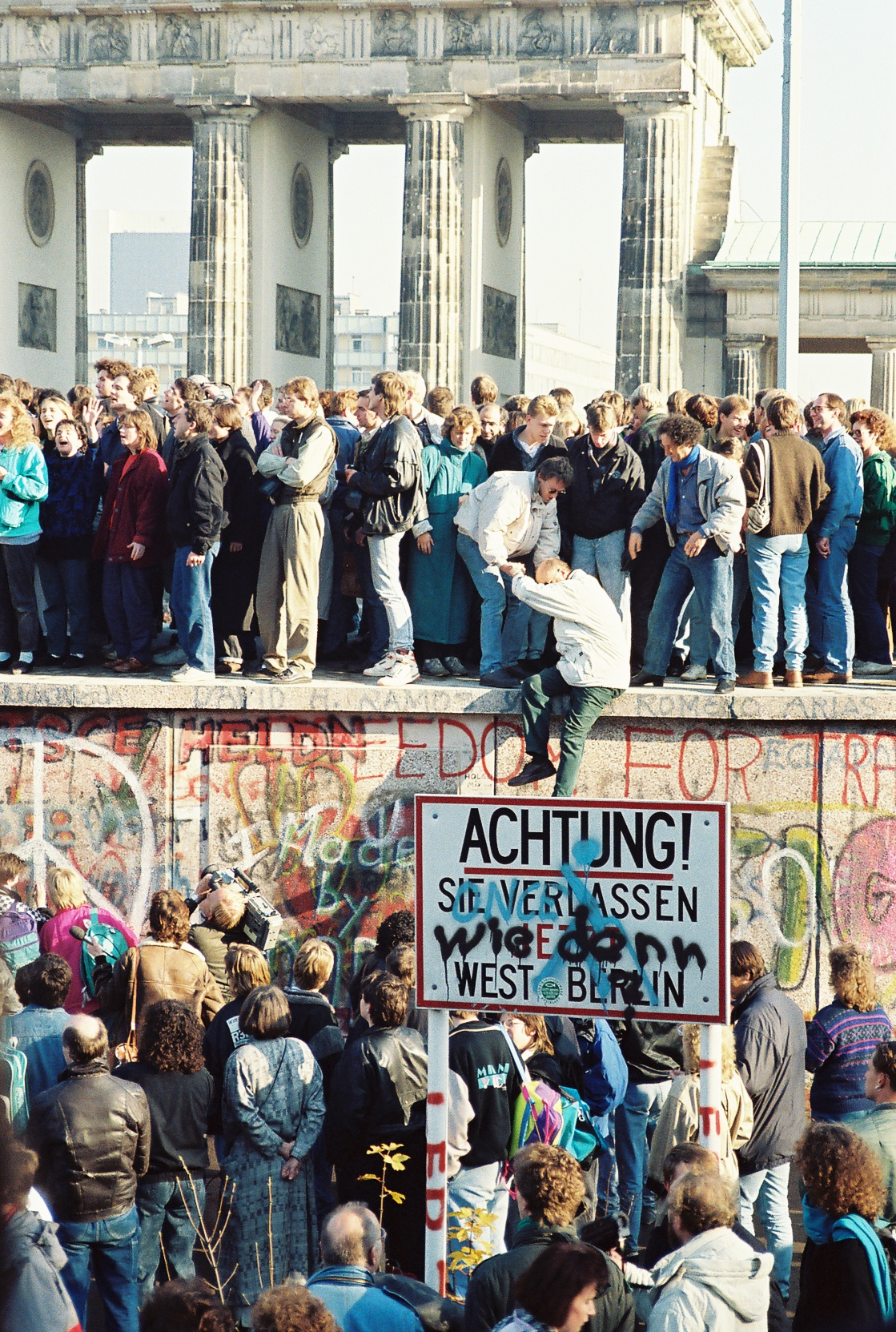
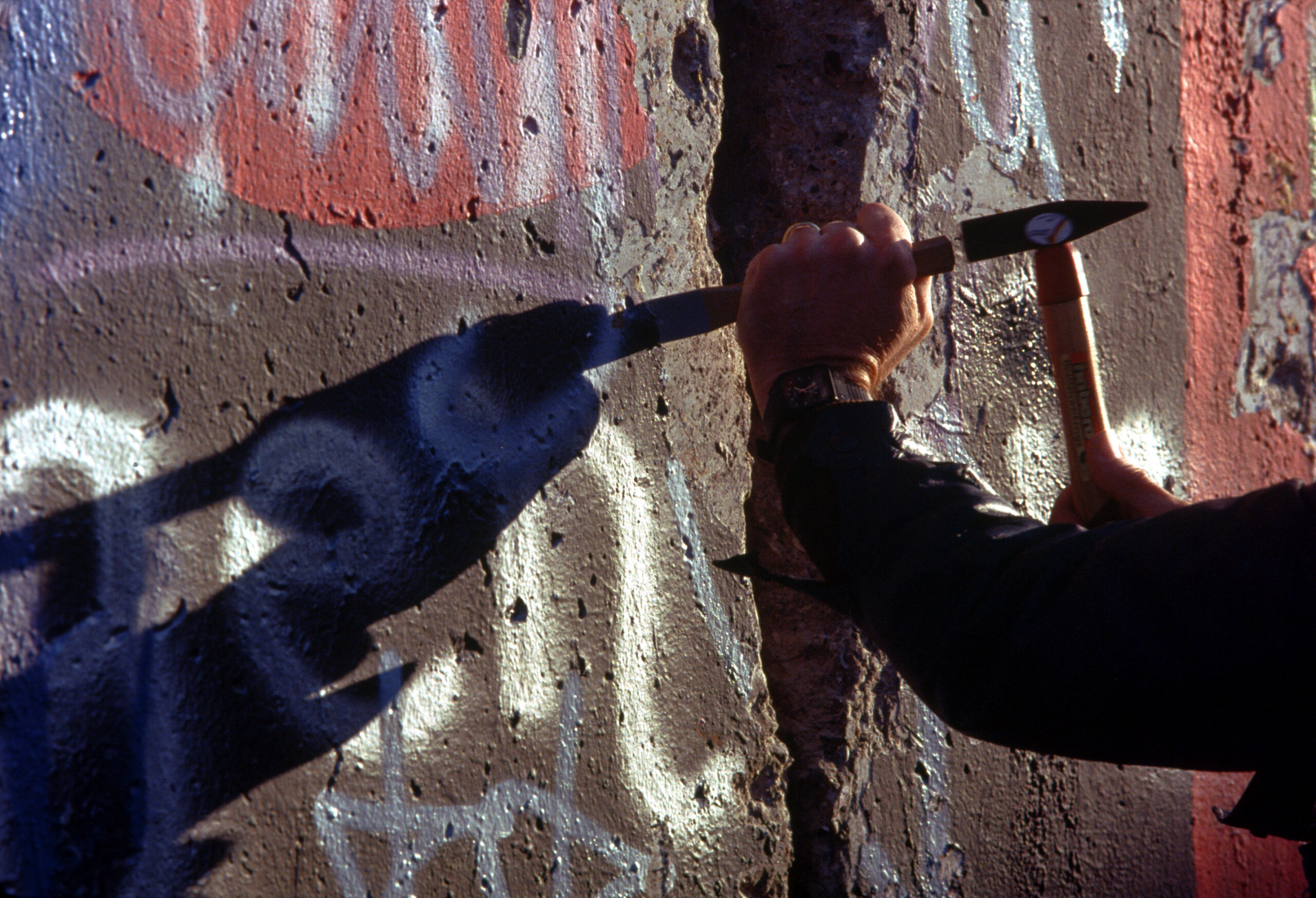
West Berliners greeted the visitors with cheers, flowers, drinks, and embraces. People climbed onto the Wall near Brandenburg Gate. The images traveled around the world, creating the impression that the entire structure had been breached at once. The joy was real, but the physical demolition came later. New crossings were cut through the barrier, individuals chipped away pieces as souvenirs, and official dismantling accelerated in 1990.
The Wall opened in one night, but reunification took negotiation
The opening of the border did not automatically reunite Germany. East Germany continued to exist, and many protesters initially sought democratic reform rather than immediate absorption into West Germany. Difficult questions remained about elections, currency, property, military alliances, and the rights and responsibilities of the four victorious powers from World War II.
Events moved quickly. East Germany held its first free parliamentary election in March 1990. East and West German leaders negotiated the terms of union, while the two German states and the United States, Soviet Union, Britain, and France settled the international questions. Germany formally reunified on October 3, 1990, nearly eleven months after the border opened.
The distinction matters because it restores human agency to the story. A careless sentence helped accelerate events, but one official did not single-handedly bring down the Wall. Citizens had spent months marching, leaving, organizing, and demanding change. Journalists carried the announcement into homes. Crowds insisted that a public promise be honored. Border guards decided not to turn a confused political crisis into bloodshed.
November 9, 1989, shows how quickly a powerful system can become fragile when its rules no longer command belief. The Wall remained a massive physical object, but by midnight it could no longer perform its political purpose. Concrete had divided Berlin for 28 years. In a few hours, collective action and a government’s loss of control made that concrete crossable.