 Akshay Dinesh
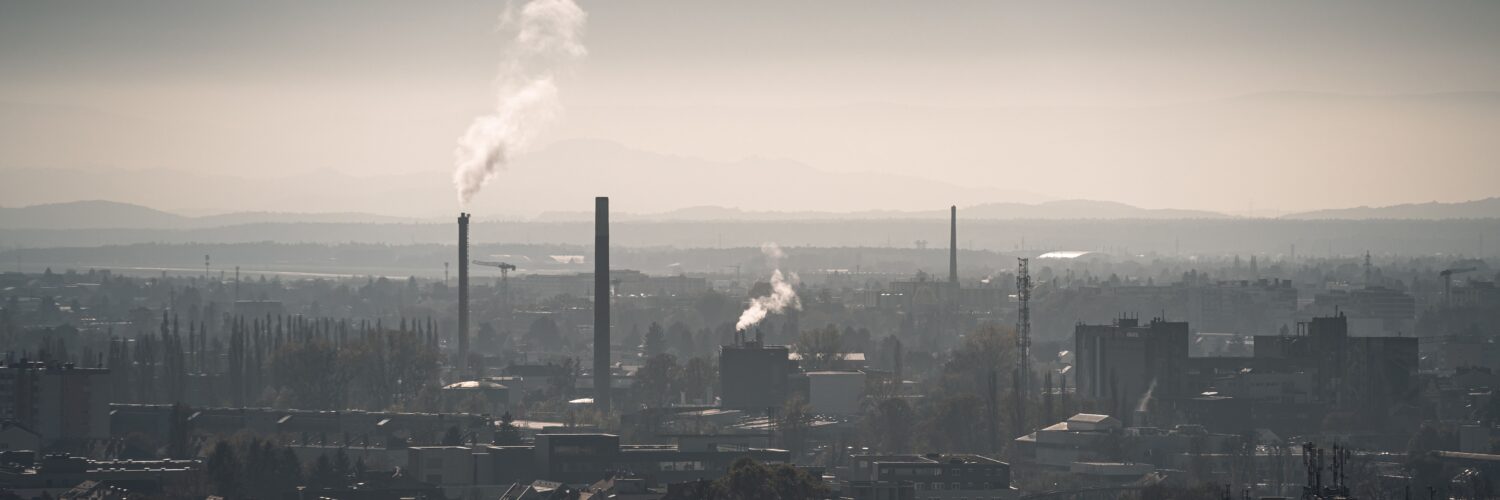
Air pollution is often discussed as if it were one substance, but the atmosphere holds a shifting mixture of gases, droplets, soot, dust, salt, smoke, and chemically formed particles. Some of those particles reflect sunlight and cool the surface below. Others absorb sunlight, warm the air, or darken snow and ice. Taken together, human-produced aerosols have offset part of the warming caused by greenhouse gases, even while polluted air harms health. That apparent contradiction is real, and it begins with the difference between a gas that can remain aloft for decades and a particle that may last only days.
Aerosols are particles, not a single kind of pollution
In atmospheric science, an aerosol is a suspension of tiny solid particles or liquid droplets in air. Sea spray, desert dust, wildfire smoke, volcanic sulfate, soot from incomplete combustion, and particles formed from industrial emissions all qualify. Some are emitted directly, while others form when gases react in the atmosphere. Sulfur dioxide, for example, can become reflective sulfate particles; nitrogen oxides and ammonia can help form nitrate and ammonium particles.
Size matters, but composition matters just as much. The U.S. Environmental Protection Agency defines PM2.5 as fine particulate matter with an aerodynamic diameter of 2.5 micrometers or less. That category is useful for health and air-quality rules because particles this small can travel deep into the lungs, yet two PM2.5 particles can behave very differently in sunlight. A pale sulfate droplet tends to scatter light, while a dark black-carbon particle absorbs it.
Aerosols also have much shorter atmospheric lives than carbon dioxide. Most particles in the lower atmosphere are removed by rain, settling, or contact with surfaces within days to weeks, although particles injected high into the stratosphere can remain much longer. Their effects are therefore concentrated near particular regions and seasons. Carbon dioxide mixes around the planet and accumulates, so its warming is more uniform and persistent.
Bright particles scatter light; dark particles absorb it
Earth gains energy from sunlight and loses energy by emitting heat to space. Anything that changes that balance creates what scientists call radiative forcing. A reflective aerosol sends some incoming sunlight back toward space before the surface can absorb it, producing a cooling influence. Sulfates, nitrates, sea salt, and some organic particles are effective scatterers.
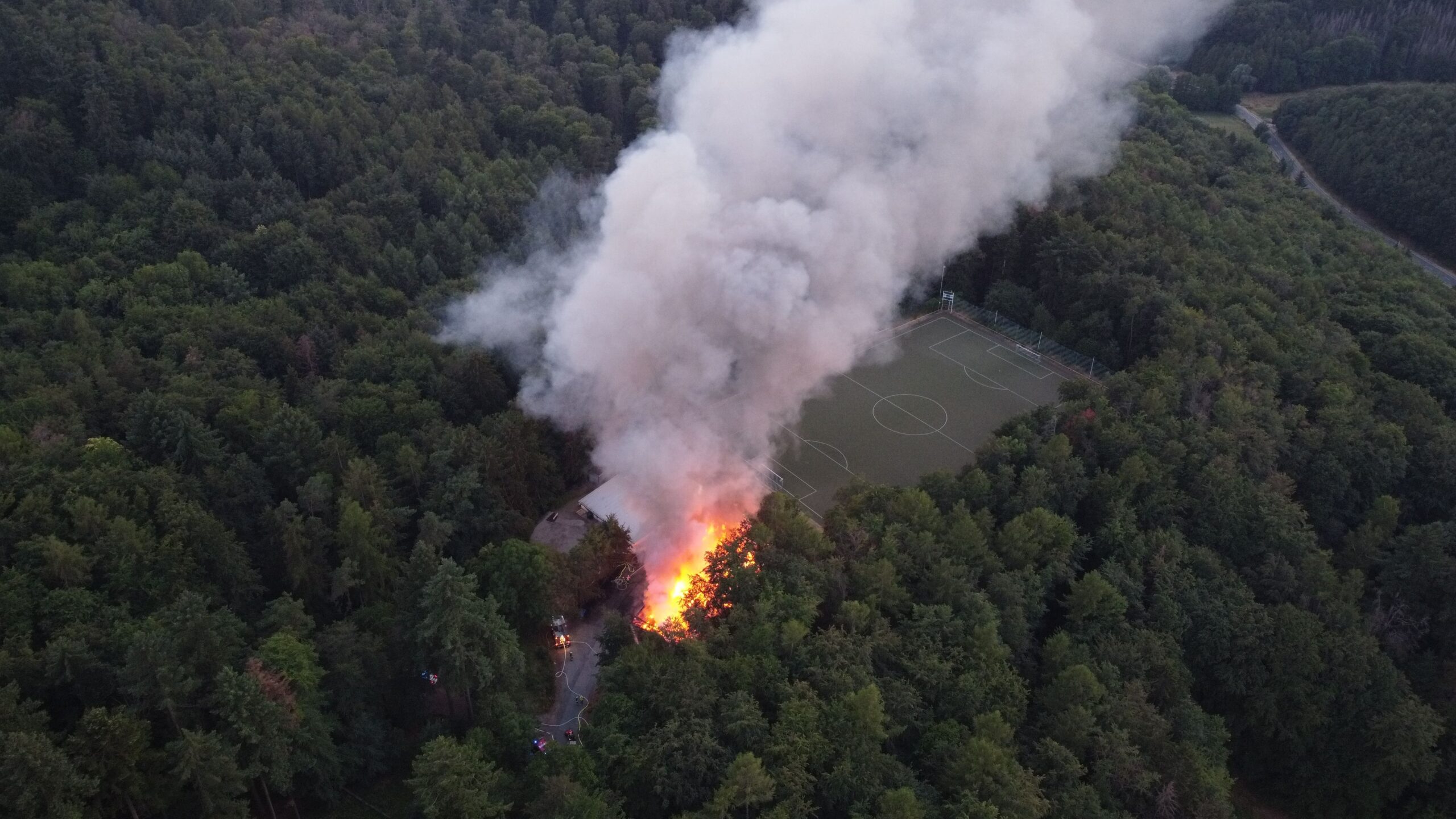
Dark particles work differently. Black carbon, the strongly light-absorbing part of soot, warms the layer of air in which it floats. It may shade and cool the ground directly beneath that layer, but the climate effect does not stop there. When black carbon settles on snow or ice, it darkens a normally reflective surface, allowing more sunlight to be absorbed and encouraging melting.
Wildfire smoke shows why simple labels fail. A smoke plume can contain black carbon, light-absorbing brown carbon, and reflective organic material in proportions that change as the plume ages. Mineral dust can cool or warm depending on its color, height, particle size, and the brightness of the surface below. The same particle may also become coated through atmospheric reactions, altering how it interacts with light.
The Intergovernmental Panel on Climate Change concluded that human-produced aerosols have, on balance, cooled the climate since the nineteenth century. Its 2023 synthesis estimated that greenhouse gases contributed roughly 1.0°C to 2.0°C of warming from 1850–1900 to 2010–2019, while other human drivers, principally aerosols, contributed between 0.0°C and 0.8°C of cooling. Those ranges are not a cancellation ledger: aerosol cooling is uneven, short-lived, and accompanied by serious damage to health and ecosystems.
Particles can change the clouds above them
Water vapor usually needs a surface on which to condense, and airborne particles provide many of those microscopic surfaces. Scientists call suitable particles cloud condensation nuclei. When more of them enter a low cloud, the available water may be divided among a larger number of smaller droplets. A cloud filled with many small droplets can reflect more sunlight than one containing fewer large droplets, even when both hold a similar amount of water.

That brightening is one reason aerosol–cloud interactions produce a net cooling influence in current climate assessments. Smaller droplets may also collide less efficiently, which can delay rain and change how long a cloud persists. Yet cloud responses are not identical everywhere. The amount of moisture, the height and type of cloud, air movement, particle composition, and existing pollution all affect what happens next.
Absorbing particles add another complication. If soot heats the air around a cloud, droplets may evaporate and cloud cover may shrink. In other settings, smoke can encourage cloud formation or alter the location and timing of rainfall. The IPCC identifies aerosol–cloud interactions as a major source of uncertainty in estimates of Earth’s energy balance, not because the basic physics is unknown, but because clouds respond to many interacting conditions across enormous ranges of space and time.
Cooling the climate does not make dirty air beneficial
A climate effect describes a change in planetary energy flow; it does not measure whether a pollutant is safe. Fine particles can enter the respiratory system, and the EPA links particle pollution with cardiovascular and respiratory harm. Sulfates and nitrates that scatter sunlight can still contribute to unhealthy PM2.5. Smoke that briefly cools part of the surface can still expose communities to dangerous air and disrupt daily life.
Pollution also changes regional weather and water cycles. The IPCC reports with high confidence that aerosol cooling counteracted some greenhouse-gas-driven increases in monsoon rainfall over parts of South Asia, East Asia, and West Africa during the twentieth century. That does not mean every aerosol source produces the same response, or that a single hazy day changes a monsoon. It shows that sustained regional emissions can influence circulation and rainfall as well as temperature.
Volcanic eruptions reveal the contrast between short-lived aerosol cooling and persistent greenhouse warming. A major eruption can send sulfur dioxide into the stratosphere, where sulfate particles spread widely and reflect sunlight for a year or two. Surface temperatures may dip until those particles settle out. The carbon dioxide added by human activity, by contrast, does not disappear on that timetable; a substantial portion continues affecting climate for centuries.
Cleaner air can reveal warming that pollution had hidden
When controls reduce sulfur pollution, the atmosphere becomes healthier and clearer, but some of the associated aerosol cooling also fades. Researchers sometimes describe the resulting temperature response as unmasking warming. It is not extra warming created by clean-air rules. It is warming from long-lived greenhouse gases that reflective pollution had temporarily obscured.
This is why climate and air-quality policies cannot be treated as interchangeable. Cutting sulfur dioxide without rapidly cutting carbon dioxide can expose some near-term warming, yet preserving harmful particulate pollution would be a dangerous and temporary strategy. The durable path is to reduce greenhouse gases while continuing to remove health-damaging particles and their precursor gases. Reducing black carbon can deliver both air-quality benefits and a near-term climate benefit, especially where soot lands on snow and ice.
Measurements from satellites, aircraft, ground stations, and ocean instruments help scientists track how much aerosol is present, what it is made of, and how it changes clouds and radiation. NOAA’s updated state-of-the-science material emphasizes the same central point found in NASA and IPCC assessments: aerosols are varied, their regional effects are complex, and their total human-caused influence is cooling. Better observations continue to narrow the uncertainty, especially around clouds.
The useful question, then, is not whether air pollution warms or cools the climate. Different particles do different things, and the same plume can contain competing influences. Reflective aerosols have hidden a fraction of greenhouse warming, while black carbon adds warming and speeds the loss of bright snow and ice. Clearing the air remains essential; keeping the climate stable requires cutting the long-lived gases whose heat does not wash out with the next rain.