
 Akshay Dinesh
A fish is hooked, the line tightens, and the catch begins moving toward the boat. Then the pull suddenly changes. What reaches the surface may be only part of the fish, or nothing at all. When a shark or another predator takes an animal from fishing gear, scientists call the event depredation. It can look like a simple contest between a fisher and a hungry shark, but the pattern reaches much further: it affects fish mortality estimates, fishing costs, wildlife management, and the way recovering predators share crowded waters with people.
New evidence from a long-running federal survey shows why the issue has become difficult to dismiss. NOAA Fisheries scientists examined two decades of standardized bottom-longline work in the Gulf of Mexico and found that the estimated depredation rate had tripled since 2005. The result does not mean that sharks suddenly learned one new trick, or that any single cause explains every lost catch. It does show that an interaction once treated mainly as an angler’s complaint can be measured as a real ecological and management problem.
What shark depredation looks like
Depredation happens after a fish becomes restrained by a hook, line, trap, or net. A free-swimming fish can flee, change direction, or hide. A hooked fish is slowed, often injured, and connected to a line that may transmit vibrations through the water. Those conditions create an unusually concentrated feeding opportunity for a predator that can detect movement, pressure changes, odors, or struggling prey.
The shark does not need to take the whole fish. A clean bite, a missing section, or recognizable tooth damage may be enough to classify an event when researchers can inspect the catch. Sometimes a line returns with no hook or fish, but that is weaker evidence: gear can break on the bottom, snag, or fail for reasons unrelated to a predator. Careful studies separate verified depredation from ambiguous losses because counting every empty hook as a shark attack would exaggerate the pattern.
The consequences extend beyond a disappointing trip. A commercial fisher loses saleable catch and time. A recreational angler may release or discard what remains. The target fish has still died even if it never enters the official landed catch. Repeated losses can also tempt people to move, change gear, or take actions against sharks, turning an ecological interaction into a human-wildlife conflict.
How a 20-year survey measured the trend
Stories from anglers are valuable clues, but they are not automatically a fair year-to-year measurement. More people may begin reporting incidents, fishing effort may shift, and social media can make unusual encounters seem common. NOAA’s Southeast Fisheries Science Center had a stronger comparison available: its annual Bottom Longline Survey, which has sampled waters from Texas around the Gulf and up the Atlantic coast toward North Carolina since 1995.
The survey was standardized in 2001, and researchers began recording depredation as a regular data field in 2005. Crews documented whether depredation occurred, which animal appeared to be responsible when identification was possible, which catch was damaged, and environmental details such as location, depth, water temperature, and salinity. Because the work followed a research protocol rather than the changing choices of commercial or recreational fishers, it produced what scientists call fishery-independent data.
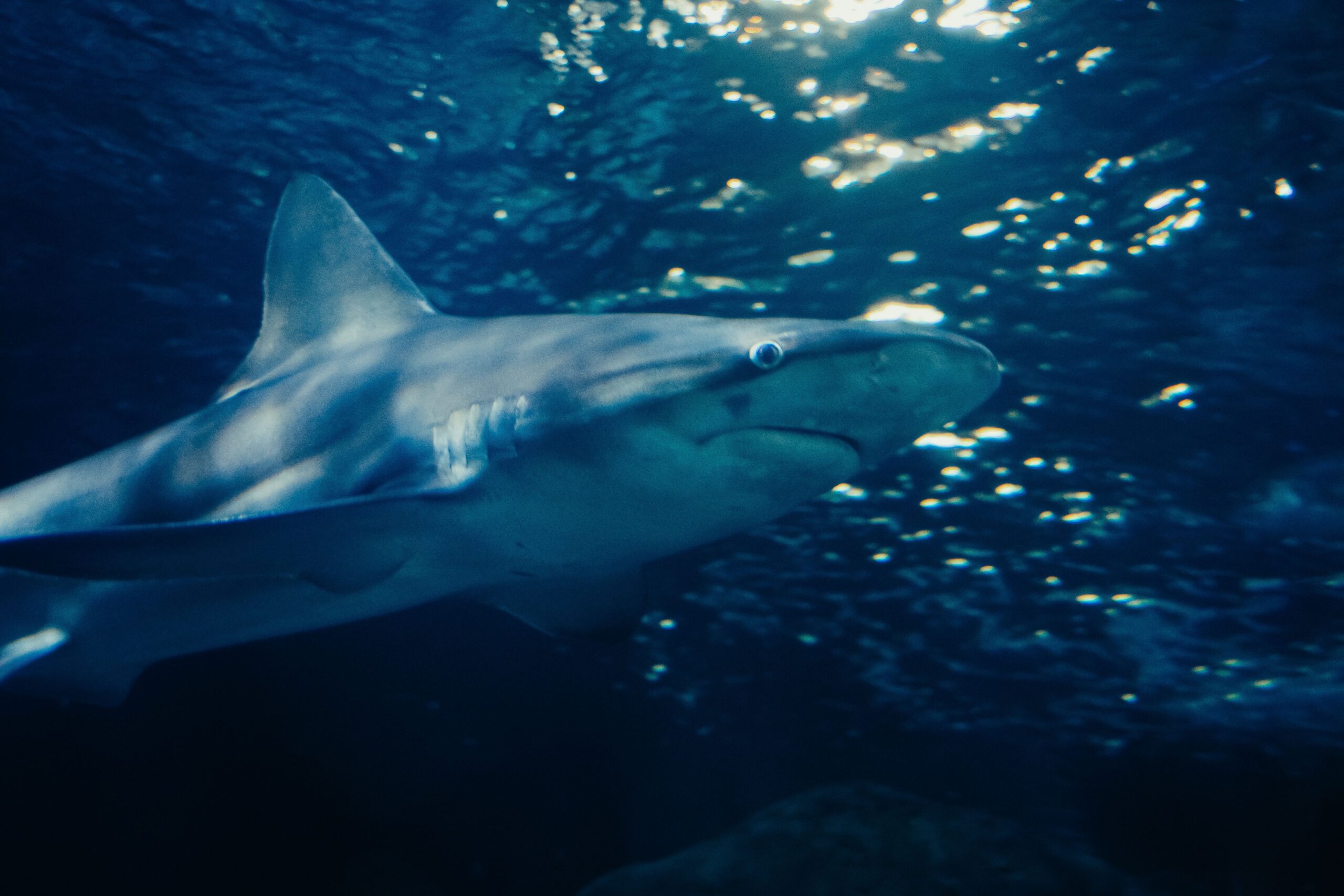
The Gulf analysis covered 2,846 longline sets made from 2005 through 2025 and assessed 27,001 captured fish. Researchers verified 1,508 depredation events and identified the predator in 547 of them. More than 99 percent of those identified predators were sharks; only two great barracudas and one greater amberjack broke the pattern. Thirteen shark species appeared, led by sandbar, blacktip, bull, and tiger sharks.
Annual rates moved up and down, as real wildlife data often do. Sampling conditions, local predator abundance, and chance can all make one year different from the next. To make years comparable, the scientists used statistical models that accounted for environmental conditions and where sampling occurred. The resulting standardized index showed an overall threefold increase across the 20-year record, with red snapper depredation especially pronounced in recent years.
Why more sharks may be taking hooked fish
A rising depredation index is not the same as a complete explanation. One plausible factor is the recovery of some large coastal shark populations after decades of depletion. If more predators and more fishing lines occupy the same places, encounters can become more frequent. NOAA biologist William “Trey” Driggers anticipated that possibility when he added depredation to the survey record: rebuilding predators could bring benefits to marine ecosystems while also producing more interactions with fisheries.
That does not justify the simple claim that there are “too many sharks.” Shark species follow different population trends, live in different habitats, and face different fishing rules. A century-scale study published in the ICES Journal of Marine Science identified at least 51 recreational target stocks affected by 22 shark species from Maine to Texas and the U.S. Caribbean. Bull sharks and sandbar sharks appeared most often, yet their management differs: recreational anglers may harvest bull sharks under applicable rules, while sandbar sharks generally may not be retained.
Behavior may matter too. Sharks can learn that engines, boat activity, or struggling fish predict food, especially where fishing repeatedly concentrates prey in the same spots. A hooked fish’s movement can make it conspicuous, and fighting it for a long time increases the period of vulnerability. Environmental conditions can change where predators and target fish meet. None of these mechanisms needs to act alone; population recovery, fishing effort, learned behavior, habitat, season, and prey availability can overlap.
The new survey result is strongest as evidence of change, not as proof of one cause. That distinction matters. Management built on the wrong diagnosis could harm a recovering shark population without meaningfully reducing losses, or could ignore fishing practices that increase the chance of an encounter.
Why a missing fish still counts
Fishery managers estimate how many fish die so they can set catch limits and judge whether a stock is growing or shrinking. Landed fish are visible in catch records. A depredated fish is harder to see. It may be recorded as damaged, counted inconsistently, or missed entirely if the line returns empty. Yet from the target population’s perspective, the fish is dead whether it reaches a dock, becomes a shark’s meal, or falls away from the hook.
That creates a form of hidden mortality. If it grows large enough and remains unaccounted for, a stock assessment can underestimate the total losses experienced by species such as red snapper. Depredation also complicates abundance surveys. Researchers use standardized catches as an index of how many fish are present, but predators removing some of those fish can alter what crews observe. Long-term records help scientists recognize and adjust for that pressure rather than treating it as random noise.
There is a broader ecological lesson here. The return of a predator is often described as an uncomplicated conservation success, while a lost catch is framed as an uncomplicated nuisance. In practice, restored food webs create new negotiations over space and resources. The scientific challenge is to keep those tradeoffs visible: sharks play important ecological roles, fishing communities face genuine costs, and the target fish should not disappear from the accounting.
Why there is no single easy fix
An effective response has to reduce losses without shifting harm elsewhere. Moving after repeated bites, shortening the time a hooked fish remains in the water, or avoiding a known hotspot can sometimes reduce immediate exposure. Gear changes and shark deterrents may help in particular fisheries, but a device that works for one species, depth, or fishing method may fail in another. Deterrents also need testing for durability, cost, target catch, and unintended effects on protected animals.
Changing shark harvest rules is equally complicated. Some sharks involved in depredation have rebuilt more strongly than others; some remain protected or vulnerable because they grow slowly and produce few young. Removing predators broadly would not guarantee that surviving sharks stop taking hooked fish, and it could erase conservation gains. NOAA’s depredation strategy therefore emphasizes better reporting, research on behavior and deterrents, improved estimates of unobserved mortality, and cooperation among scientists, managers, and fishing communities.
The most useful next step is better separation of questions that are often bundled together. How much depredation is occurring? Which species are responsible? Are interactions driven by predator abundance, fishing patterns, learned behavior, or environmental change? Which losses affect stock assessments, and which interventions work without creating a new problem? The 20-year Gulf record answers the first question more firmly than before while showing how much remains to be tested.
A shark taking a fish from a line is a brief event, but it sits at the intersection of predator recovery, human behavior, statistics, and food-web ecology. Treating every bitten catch as either proof of shark overpopulation or an anecdote to ignore misses what the evidence can teach. Standardized surveys turn those damaged fish into data, and that data gives fisheries a better chance to protect both the catch people depend on and the predators that belong in the sea.