Akshay Dinesh
A battery that works in a kitchen, car, or phone can become nearly useless in the deepest shadows of the Moon. Near the lunar South Pole, some permanently shadowed terrain stays close to minus 200 degrees Celsius, while nearby sunlit ground can be dramatically warmer. There is almost no atmosphere to spread heat from one place to another, so hardware must endure sharp thermal contrasts as it moves across the landscape. For rovers, drills, scientific instruments, and emergency equipment, storing electricity is only half the problem. The battery must survive the cold, warm up without damage, and deliver power when it is needed.
NASA’s Solid Power for Extreme Environment Adaptability and Resilience in Space project, known as SPEARS, is testing one possible answer: solid-state batteries built for wide temperature swings and vacuum. Recent prototype cells worked down to minus 80 degrees Celsius with reduced performance and survived exposure as cold as minus 170 degrees Celsius without lasting damage. Those results do not mean a battery can run unheated at the coldest lunar sites. They show something more practical: a cell can endure a deep freeze and return to work after controlled warming.
Why the lunar South Pole is so hard on batteries
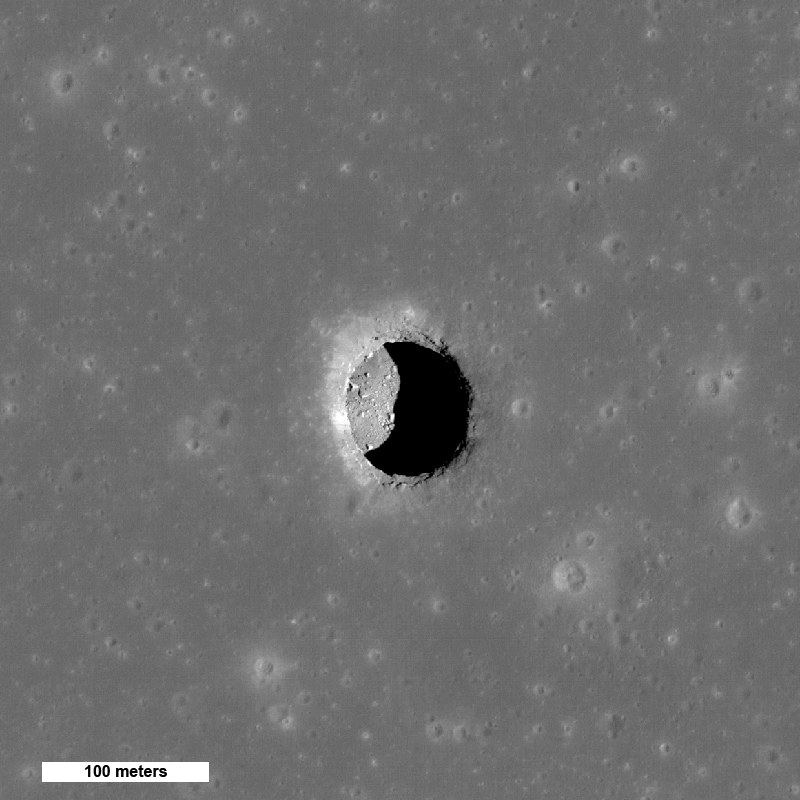
Earth’s atmosphere and oceans move heat around, softening many local temperature extremes. The Moon has only a very thin exosphere, so sunlight heats exposed surfaces directly while shadowed ground radiates heat into space. NASA’s Lunar Reconnaissance Orbiter has measured temperatures below minus 246 degrees Celsius in some polar craters. At the same time, an object that moves into sunlight can face a much warmer environment. A rover crossing a crater rim therefore encounters an energy-storage problem tied to geography, lighting, and time.
The polar landscape also complicates charging. Solar panels produce electricity only when light reaches them, yet the most scientifically interesting deposits of water ice may lie in permanent shadow. A battery must carry energy into those dark regions or receive it from another source. It may also need to wait through long periods without charging while still keeping electronics, communications, and heaters alive. Every watt used to warm the battery is a watt unavailable for driving, drilling, measuring, or transmitting data.
Cold changes the chemistry inside a conventional cell. Ions must move through an electrolyte between the electrodes, but lower temperatures slow that motion and raise internal resistance. The cell then produces less usable power, and trying to charge it too aggressively can cause damaging reactions. Liquid electrolytes can also freeze or lose the properties that make ion transport possible. This is why a cold battery may still contain chemical energy yet fail to deliver it at the rate a machine requires.
What changes when the electrolyte is solid
Most familiar lithium-ion batteries use a liquid or gel electrolyte. It carries lithium ions while a separator keeps the electrodes from touching and short-circuiting. A solid-state cell replaces that liquid pathway with a ceramic, polymer, or other ion-conducting solid. The change can reduce leakage and flammability risks, which matters inside a habitat or beside an astronaut. It also removes a liquid component that may freeze, boil, or evaporate when exposed to extreme temperatures and vacuum.
A solid electrolyte is not simply a frozen liquid. Its atoms form a structure through which lithium ions move from site to site. The U.S. Department of Energy has described some promising materials as superionic conductors because their mobile ions can move in a liquid-like way through an otherwise solid framework. Temperature still matters: colder atoms vibrate less, ion motion slows, and resistance rises. Engineers must therefore tune the electrolyte, electrodes, interfaces, and cell geometry as a complete system rather than treating the solid material as an automatic solution.
The boundary between two solids is especially demanding. A liquid can flow into microscopic gaps and keep contact with a rough electrode, but two solid layers may pull apart, crack, or touch unevenly as temperatures change. Poor contact creates bottlenecks for ion movement and wastes energy as heat. Repeated expansion and contraction can make those interfaces worse over time. A lunar battery must survive not only one cold test but many thermal cycles without losing reliable contact inside the cell.
Surviving the cold is different from working in it
The distinction between survival temperature and operating temperature is easy to miss. NASA reported that the small SPEARS cells operated well from 80 degrees Celsius down to minus 60 degrees Celsius and continued with somewhat reduced performance at minus 80 degrees Celsius. Separate exposure tests cycled the cells between 100 degrees Celsius and minus 170 degrees Celsius without permanent damage. At the lowest exposure temperature, however, the batteries were not delivering useful power. They had to be warmed back into their operating range.
That difference changes how engineers design a lunar vehicle. Keeping a battery warm continuously requires insulation and heater power throughout the cold period. Letting it cool saves energy, but the vehicle then needs a dependable way to reheat the cell before restarting. The best choice depends on how quickly the machine must respond, how much stored energy it carries, and whether another heat source is available. An emergency pack may need a different strategy from a scientific instrument that can wake on a planned schedule.
Mass makes the tradeoff sharper. Thick insulation, large radiators, redundant heaters, and extra battery capacity can all improve reliability, but every kilogram must be launched and landed. A cell that safely tolerates deep cold can reduce the amount of hardware needed to protect it, even if a small heater is still necessary before use. That saving may allow a rover to carry another instrument or travel farther between charging points. The battery’s value is therefore measured not only by energy density but by the thermal system it makes possible.
How thermal-vacuum testing reveals weak points
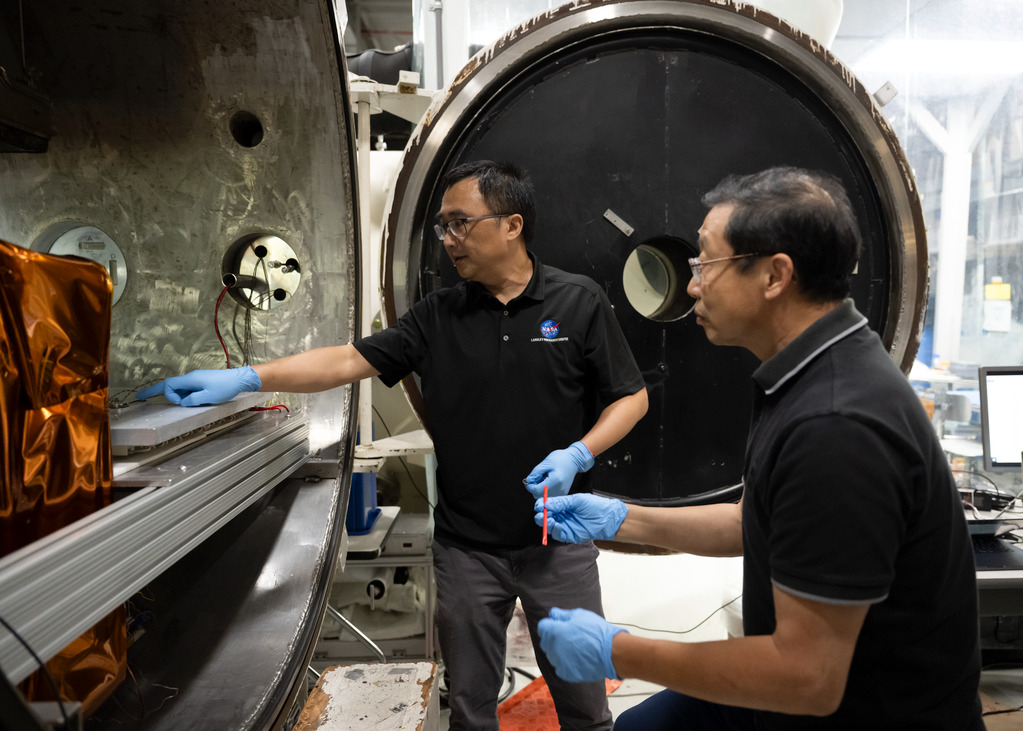
Laboratory testing must reproduce more than a low number on a thermometer. A thermal-vacuum chamber removes air while controlling the temperature around the test article. In a vacuum there is no air to carry heat by convection, so hardware gains and loses heat mainly through conduction and radiation. Materials can also release trapped gases, seals can behave differently, and heat may collect in places that would be cooled by air on Earth. Testing the assembled cell under those conditions exposes problems that a simple freezer test cannot.
Researchers measure voltage, current, capacity, resistance, and physical changes as the cell warms and cools. They also compare performance before and after exposure to see whether the cold caused hidden damage. A battery that produces power once at minus 80 degrees Celsius has passed an important milestone, but it has not yet proved mission readiness. Engineers still need to test larger cells and packs, repeated cycles, vibration, radiation, dust exposure, charging behavior, and the electronics that control temperature and current.
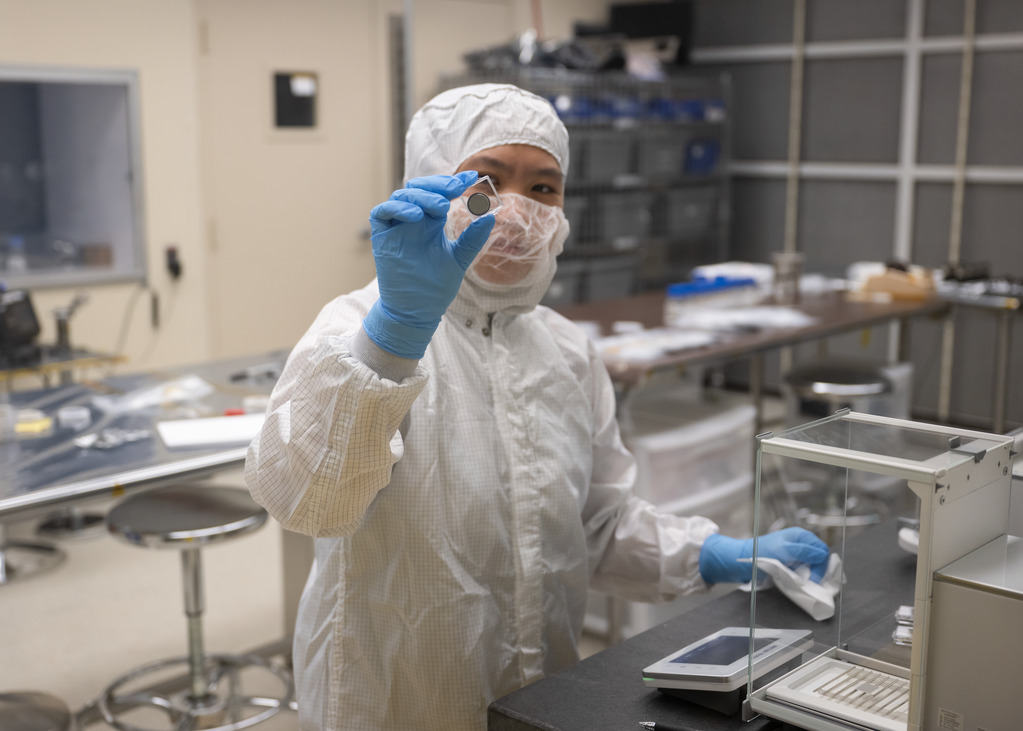
Scale is another source of uncertainty. A coin cell can cool and warm more evenly than a large pack, and its internal layers are easier to keep under controlled pressure. A rover battery contains many cells, electrical connections, sensors, structural supports, and a management system. A weakness in one cell can affect the whole pack. The SPEARS results are best understood as evidence that the chemistry deserves further development, not as proof that a finished lunar battery is ready to install.
A battery belongs to a larger lunar power system
Batteries store energy; they do not create it. A lunar surface system may recharge from solar arrays, receive power through cables or beamed-energy links, or work alongside fuel cells or radioisotope systems. Mission planners must match the source, storage, and load to the terrain and schedule. A drill used briefly in a shadowed crater has different needs from a communications relay expected to run through a long night. No single battery chemistry is likely to be best for every job.
This is where the ability to tune solid-state cells becomes useful. Electrode and electrolyte choices can favor high energy, high power, long cycle life, or tolerance of a particular temperature range. The safest emergency battery may not be the lightest rover battery. A stationary instrument may accept slow warming, while a crewed vehicle may require immediate backup power. Designing around the real task prevents impressive laboratory numbers from becoming poor engineering choices.
SPEARS began in 2026 as an early technology-development effort, and NASA Ames is preparing test boards and electronics intended to move the work toward space-environment testing. Important questions remain about manufacturing, durability, scale, and cost. Still, the early results sharpen an essential idea: lunar equipment does not always need a battery that functions at the coldest possible temperature. It may need one that can safely sleep through that cold, wake with modest heating, and perform predictably afterward.
The Moon’s shadows turn battery design into a lesson about systems. Chemistry determines how ions move, the environment determines how quickly that motion slows, and thermal engineering determines how much energy must be spent to recover. A useful lunar battery must bring all three together. If solid-state cells can repeatedly survive deep cold without damage, they could make tools, rovers, and scientific stations lighter and more dependable in places where sunlight never arrives.