 Akshay Dinesh
A marching musician has to solve two problems at once. The feet must carry the body through curves, diagonals, and exact yard-line coordinates, while the upper body keeps producing a controlled musical phrase. Ordinary walking works well for getting from one place to another, but its small rises, falls, and jolts can travel through the torso, arms, mouthpiece, and instrument. On a football field, those motions can turn a sustained note into a pulse of bumps.
Many marching bands answer that problem with the roll step, also called a glide step in some programs. The marcher places the heel first, then transfers weight smoothly across the foot toward the toes. The movement is designed to keep the upper body quiet even while the lower body travels quickly. It is not just a visual trick. It helps a large group move with shared timing, preserve the sound of the ensemble, and make curved or straight formations look deliberate from the stands.
Movement Has to Protect the Music
Try singing one steady note while walking normally and paying close attention to the sound. Each footfall may create a tiny interruption because the body rises, drops, and absorbs impact. A wind player faces the same challenge with less room for error. The lips, jaw, breathing muscles, hands, and instrument all have to remain organized while the legs are moving underneath them. If the shoulders bounce, the angle of a mouthpiece may shift. If the chest tightens, a long phrase can become harder to support.
The roll step reduces those disturbances by spreading each forward landing through time. Instead of dropping the whole foot or striking the ground with a stiff leg, the marcher touches down at the heel and lets contact travel toward the front of the foot. The knee remains flexible, and the body continues forward rather than hopping upward. Kennesaw State University’s Marching Owls handbook describes the goal as isolating locomotion below the waist so that changes in movement are nearly invisible in the upper body and musical performance.
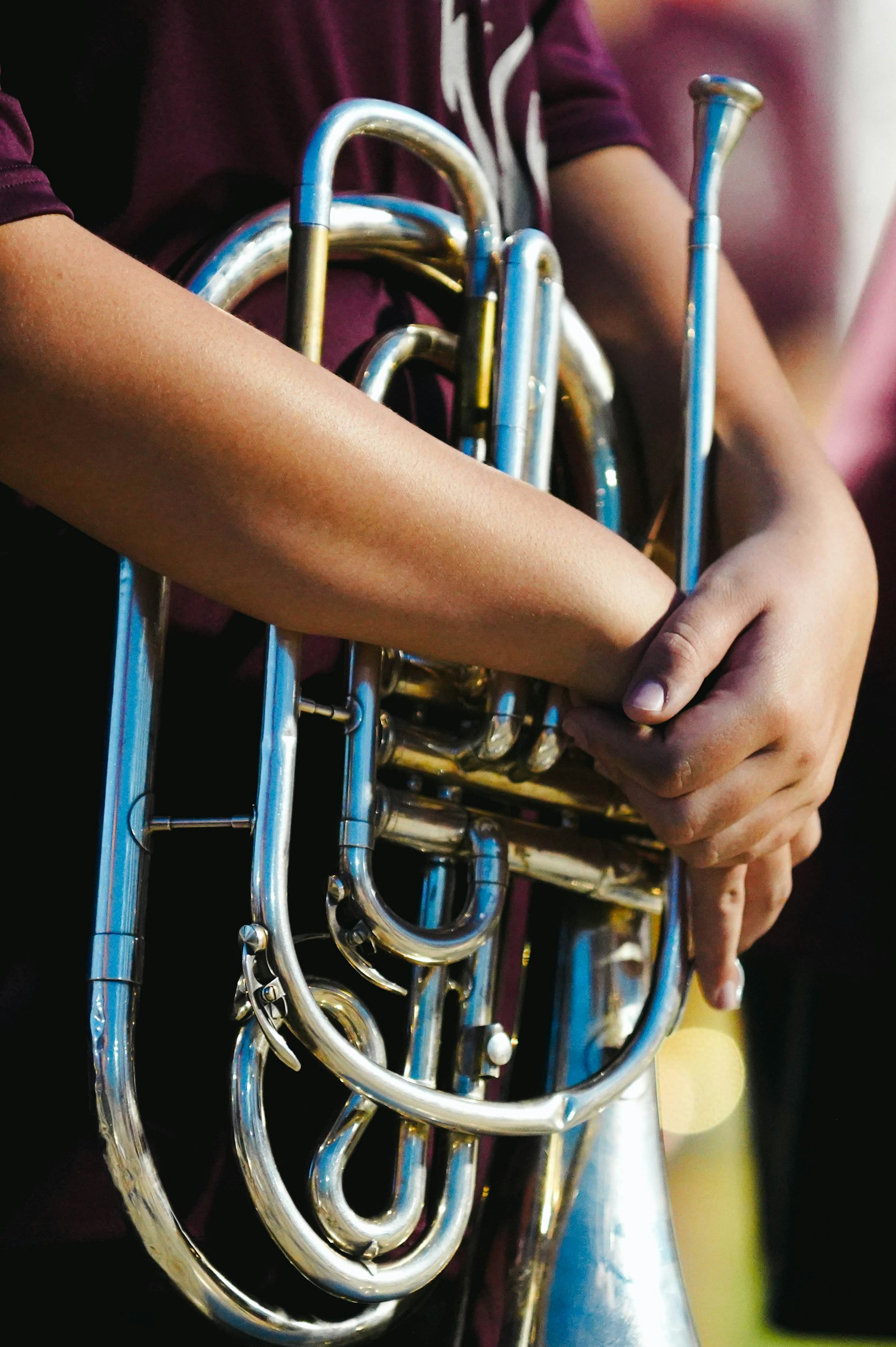
That steadiness also helps players who do not use a mouthpiece. Percussionists need a stable platform for repeated strokes and controlled stick heights. Woodwind players must keep finger position and embouchure consistent. Color guard performers use different equipment and technique, but they still depend on predictable pathways and timing around moving musicians. One person’s bounce can become a spacing problem for everyone nearby.
What the Heel-to-Toe Motion Actually Does
In a forward roll step, the heel makes the first contact and the foot gradually accepts weight until the toes leave the ground behind the body. The motion resembles a careful walk, but it is more deliberate. The toes usually point forward, the legs travel in parallel paths, and the upper body stays tall rather than leaning back. Purdue University’s 2025 All-American Marching Band handbook describes its glide step as a natural forward stride in which the feet roll smoothly from heel to toe and the torso does not bounce.
The transfer of weight is the useful part. A hard flat-footed landing creates a quick force that the body must absorb. Rolling through the foot lengthens that transfer, giving the ankle and knee more time to manage it. The result is not literally motionless; no walking technique can remove every vertical movement. What changes is the size and suddenness of the disturbance. From a distance, the head, shoulders, horn angle, and instrument carriage appear to travel on a much smoother line.
Backward marching uses a different contact pattern. Many bands ask marchers to stay on the platforms, or balls, of the feet with the heels slightly raised. Placing the heel first would be awkward when traveling backward and could pull the weight behind the base of support. The upper-body goal stays the same: smooth travel with minimal bounce. Direction changes add another layer, because the feet may have to pivot or carve through an intermediate angle while the instrument continues facing the audience.
Details vary by program, so “roll step” is not one universal recipe. Some directors teach a straight-leg style; others allow a natural knee bend. Some define exactly how high the toe should clear the turf or how the foot should pass the standing leg. Those choices affect the visual identity of the ensemble. A marcher should treat the band’s own technique handbook and staff instructions as the final standard.
One Step Becomes a Moving Grid
A single smooth step matters, but marching drill depends on hundreds of steps agreeing with one another. A common field measurement is the 8-to-5 step: eight equal steps cover five yards. Five yards is 180 inches, so each step is 22.5 inches. That standard lets a drill writer place performers by count and coordinate. If a musician takes eight steps that are slightly too large, the error may seem small at first, yet repeated inaccuracies can bend a straight line or close an interval that was supposed to remain open.
Timing is equally exact. The foot usually reaches its placement on the beat, so a line of marchers creates a visible rhythm that matches the music. If one person anticipates a step while another hesitates, the formation can shimmer even when both eventually reach the right dot. Marching technique therefore links body control with musical pulse. The feet are effectively another section of the ensemble, articulating counts together.
Marchers also learn to “dress” a form by using peripheral vision to maintain alignment and spacing. Looking only at the ground may help someone find a yard line, but it makes the larger formation harder to read. Looking only at the person beside them can spread that person’s error through the line. Strong field awareness combines a known coordinate, a consistent step size, guiding points in the formation, and quick visual adjustments that do not disturb posture.
This is why smoothness and precision cannot be separated. A beautiful roll through the foot does little good if the marcher arrives one count late or drifts across a pathway. Precise coordinates are also incomplete if the upper body jolts at every landing. The technique works when timing, distance, direction, and sound remain connected.
Roll Step Is One Style, Not the Only Style
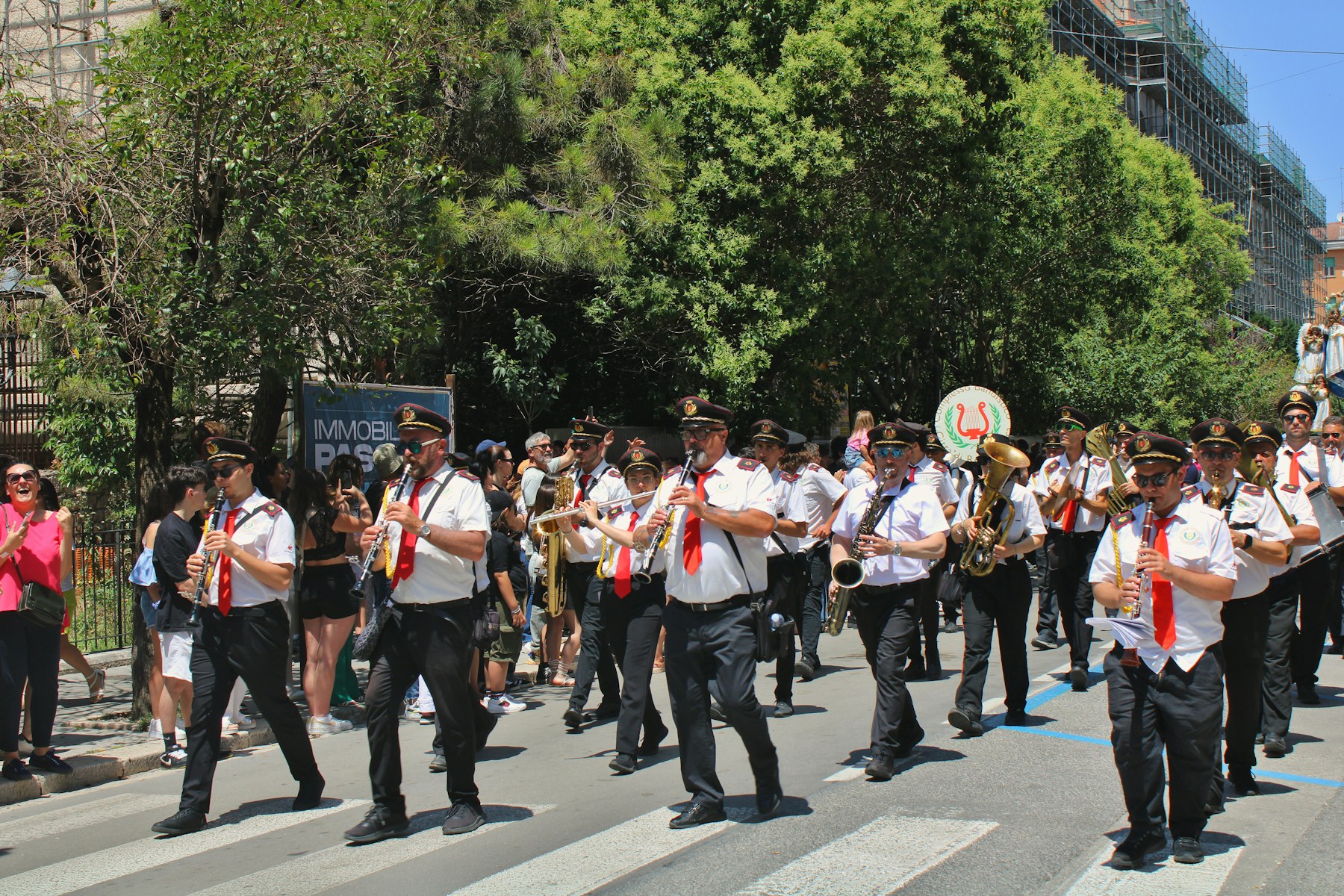
Marching traditions make different visual choices. Many contemporary field bands and drum corps favor a low, smooth glide because it supports rapid drill and a stable playing platform. Other ensembles use a chair step or high step, lifting the knee and emphasizing a more vertical, ceremonial motion. The Ohio State University Marching Band, for example, teaches distinctive measured-step and high-knee fundamentals as part of its performance identity. The University of California Marching Band is also known for a high-step tradition.
These styles are not simply better and worse versions of the same movement. They create different silhouettes, energy, and historical associations. A high step can project strength and make a clear visual statement during a pregame entrance. A glide step can make complex curves and fast direction changes appear to float across the field. Show design, tempo, uniform, field surface, and institutional tradition all influence the choice.
Even within one production, a band may use more than one technique. A smooth forward glide can shift into backward movement, a lateral slide, a jazz run, or a stylized high step. The important constant is shared execution. When everyone applies the same posture, timing, stride, and horn angle, the audience reads the group as one moving ensemble rather than a collection of individual walkers.
How Marchers Build a Smoother Step
Beginners often focus so hard on the feet that everything above the waist becomes tense. A more useful practice sequence separates the problems and then recombines them. First, learn the pathway at a slow tempo without an instrument: forward motion, consistent stride, controlled heel-to-toe transfer, and a level head. Next, repeat it while checking alignment against yard lines or a straight floor marking. A phone video from the side can reveal bouncing or overstriding that is difficult to feel in the moment.
Then add time. A metronome or drum track makes early and late placements obvious. Practice short groups of eight counts at the band’s standard step size, stop cleanly, and check the final coordinate. Box drills add direction changes by moving forward, sideways, backward, and sideways again. The Kennesaw State handbook uses connected box exercises to teach how techniques meet at transitions, which is where otherwise careful marchers often lose balance or timing.
The instrument should return only after the lower-body pathway feels familiar. Start with carriage position, then playing position, then simple sustained tones or an easy scale. The test is not whether the feet look impressive in isolation. It is whether the musical sound remains steady and the instrument angle stays consistent while the marcher travels. A technically correct step that causes the phrase to collapse still needs work.
Common errors have clear causes. Reaching too far can pull the torso backward. Locking the knees can create a visible jolt. Rising onto the toes during forward movement can add bounce. Looking down for every coordinate can disturb posture and awareness. Most corrections become easier at a slower tempo, where the marcher can identify the exact count on which control disappears. Pain is not a normal measure of improvement; persistent discomfort should be brought to a director and an appropriate health professional.
The roll step looks simple because skilled performers hide the work. Underneath that smooth surface are measured distances, timed foot placements, flexible joints, controlled posture, and constant awareness of other people. When those pieces agree, the band can cross a field without the music sounding as though it is traveling over rough ground. The audience sees one shape move and hears one phrase continue, which is the real purpose of the technique.