 Akshay Dinesh
Mexico’s Independence Day is September 16, but the celebration begins the night before. On September 15, crowds gather in public squares, flags fill the streets, and officials repeat a ceremony known as El Grito. At about 11 p.m. in Mexico City, the president appears on the balcony of the National Palace, rings a historic bell, names heroes of independence, and leads the crowd in cries of “¡Viva México!” The next day is the national holiday.
The two dates are not competing versions of the same event. They form one commemoration. The evening ceremony remembers the urgent call that set an uprising in motion, while September 16 marks the day associated with the beginning of Mexico’s struggle against Spanish rule. That distinction also explains another point that often causes confusion: the holiday honors the start of a war for independence in 1810, not the moment independence was finally achieved in 1821.
The uprising began before dawn on September 16
In 1810, the town now called Dolores Hidalgo was part of the Viceroyalty of New Spain. Miguel Hidalgo y Costilla, a Catholic priest in the town, belonged to a group discussing political change. Other important participants included the military officers Ignacio Allende and Juan Aldama, as well as Josefa Ortiz de Domínguez, whose warning helped the conspirators act after authorities discovered their plans.
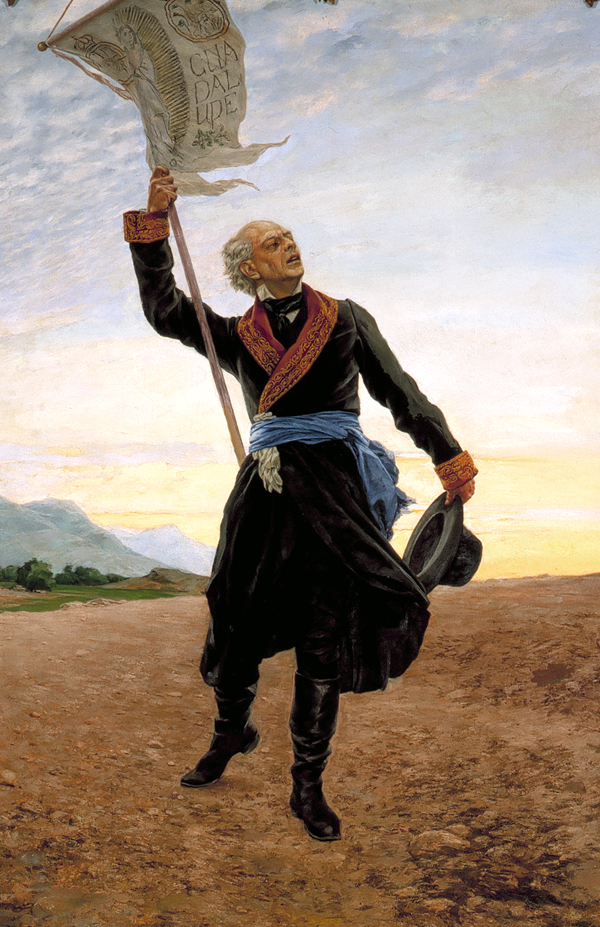
The planned revolt had to begin sooner than expected. During the early hours of Sunday, September 16, Hidalgo had the parish bell rung to bring people together. He addressed the crowd and urged resistance to what he called bad government. That moment became known as the Grito de Dolores, or Cry of Dolores. It did not declare a finished nation into existence. It transformed a secret conspiracy into an open rebellion.
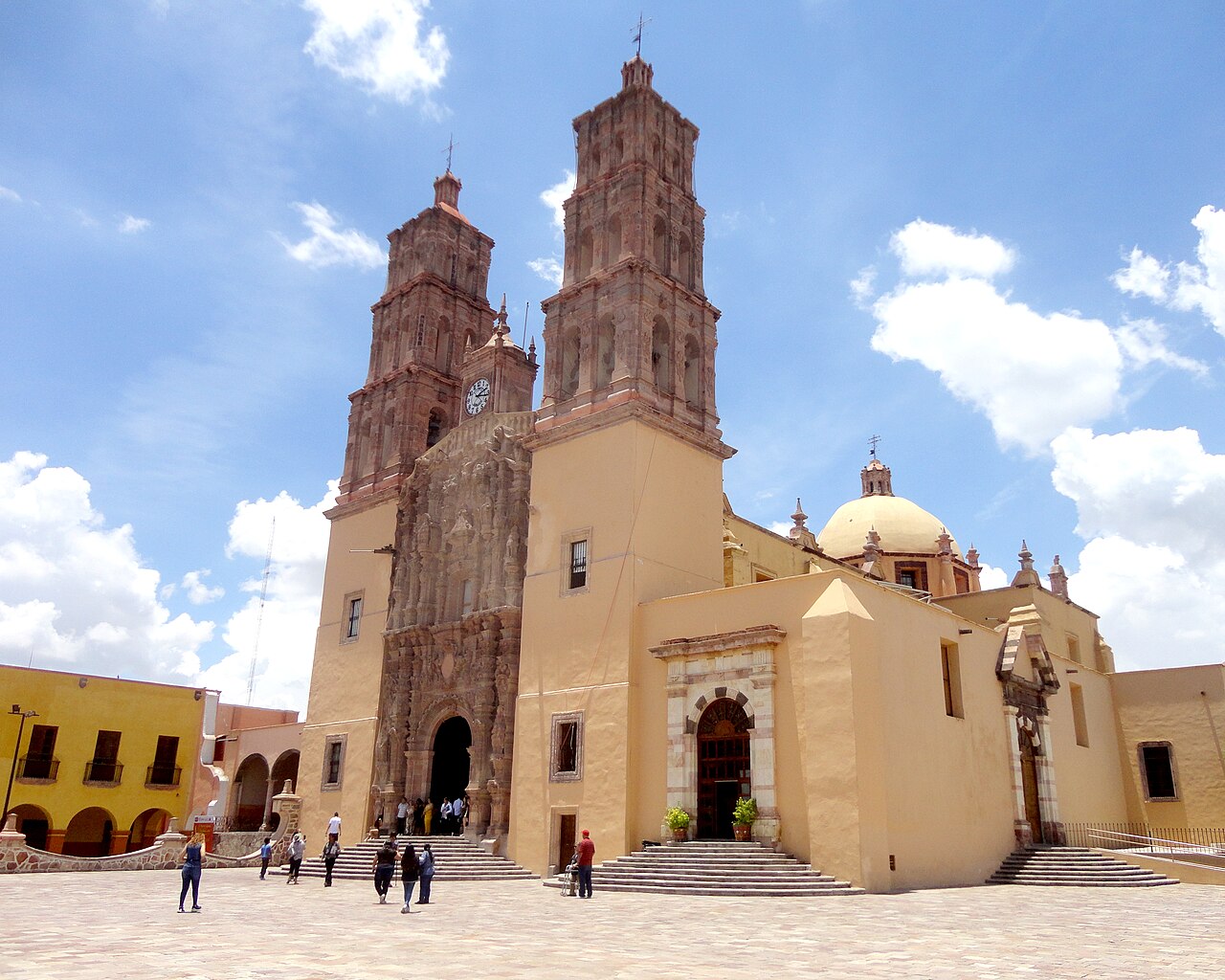
The bell and the gathering became powerful symbols because the call spread far beyond the churchyard. Hidalgo’s followers moved toward San Miguel and Celaya, and the rebellion quickly attracted a large, socially varied force. Indigenous people, mestizos, laborers, artisans, and members of other groups joined for reasons that were not always identical. Some wanted an end to colonial inequalities and tribute. Some opposed Spanish-born officials. Some defended local interests amid a crisis in the Spanish monarchy. Independence was a movement, but it was never a single, perfectly unified idea.
Why New Spain was ready for a revolt
The uprising grew from both a political crisis and deep social strain. Napoleon’s forces invaded Spain in 1808 and displaced King Ferdinand VII, creating uncertainty about who held legitimate authority across the Spanish Empire. In New Spain, that crisis sharpened arguments over whether local people could govern while the Spanish throne was in turmoil. Meetings that appeared to be literary or social gatherings gave conspirators cover to discuss rebellion.
Colonial society also distributed power and opportunity unevenly. Spanish-born peninsulares often held the highest offices, while American-born people of Spanish descent, commonly called criollos, could be wealthy yet excluded from some positions. Indigenous communities, people of mixed ancestry, and people of African descent faced systems of tribute, coerced labor, racial classification, and economic disadvantage that varied by place but shaped daily life. The movement drew strength from these tensions, even though its leaders did not agree on how far social change should go.
Hidalgo himself represented those contradictions. He was an educated priest familiar with Enlightenment ideas, and in Dolores he encouraged crafts and local production. Yet the mass uprising that followed his call soon became larger and less controllable than the conspirators had expected. The early insurgent army won important victories, suffered devastating reverses, and also committed violence. Treating the independence struggle as a simple march from oppression to freedom hides the uncertainty and conflict experienced by people on every side.
No one recorded Hidalgo’s exact words
The modern ceremony sounds precise, but the original cry was spoken rather than written down. Historians have several later accounts, and they do not give identical wording. Hidalgo appears to have praised religious and political causes familiar to his listeners, condemned bad government, and called people to action. Phrases now closely connected with the ceremony developed as later generations remembered and reshaped the event.
That uncertainty matters. A national tradition can preserve the meaning of an event without functioning like an audio recording. The ceremony does not reproduce one verified speech word for word. It reenacts the act of calling a public together and naming a shared political cause. Each president follows a recognizable form but may vary the list of heroes or causes included in the vivas.
The bell has a similar symbolic history. In 1896, during the presidency of Porfirio Díaz, the bell associated with Hidalgo’s parish was moved to the National Palace in Mexico City. Mexico’s National Institute of Anthropology and History notes that annual festivities have begun on the night of September 15 since that period. The transfer placed a physical object from Dolores at the center of the capital’s national ceremony, linking a local uprising to the state that eventually emerged from it.
The war continued for eleven years
Hidalgo did not live to see independence. Royalist forces captured him in 1811, and he was executed that July. Leadership passed through other hands, most notably José María Morelos, who gave the insurgency a clearer political program. In his 1813 Sentimientos de la Nación, Morelos called for independence, popular sovereignty, an end to slavery, and the removal of caste distinctions. He was captured and executed in 1815, but resistance continued.
Vicente Guerrero sustained the insurgency in southern Mexico while political conditions changed in Spain and New Spain. In 1821, Guerrero and the former royalist officer Agustín de Iturbide joined behind the Plan of Iguala. It promised independence, protection for the Roman Catholic religion, and political union among social groups, though the new order did not erase the inequalities created under colonial rule.
The Army of the Three Guarantees entered Mexico City on September 27, 1821, and the Act of Independence was signed the following day. Those dates mark the completion of the break with Spain more directly than September 16 does. Yet nations often choose beginnings as their symbolic birthdays. September 16 remembers the point when an uncertain revolt became public and irreversible, even though victory was still years away.
Why September 15 and 16 belong together
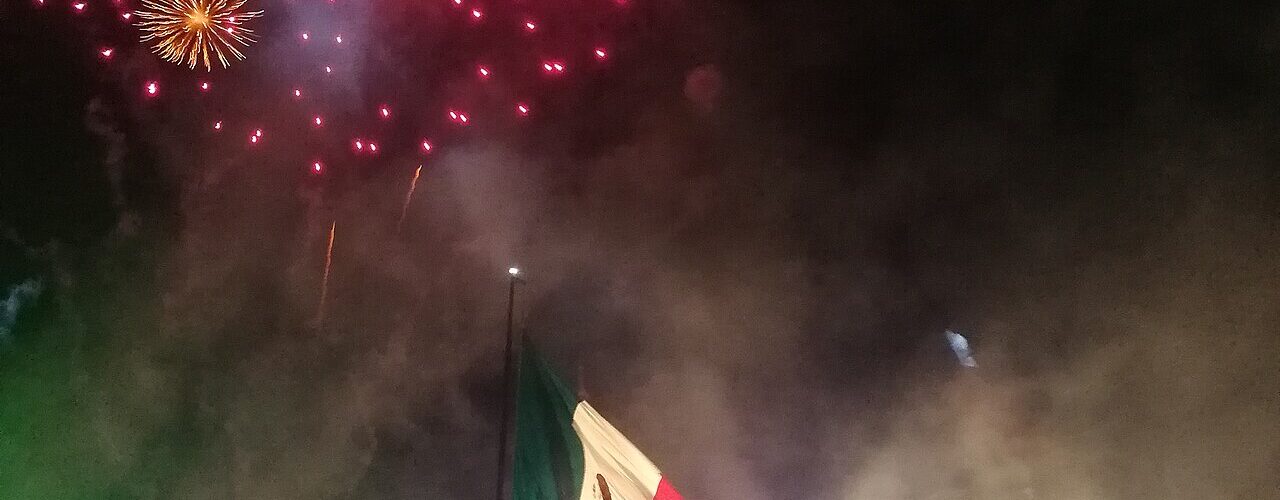
The evening of September 15 gives the commemoration a dramatic threshold. People gather at night, hear the bell, answer the vivas, and cross into the anniversary of the uprising. The ceremony happens at the National Palace, in state capitals, in municipalities across Mexico, and in Mexican communities abroad. Fireworks, music, food, flags, and public performance surround the formal ritual, turning historical memory into a shared civic event.
September 16 then carries the official holiday, including a major military parade in Mexico City. The pairing is practical as well as symbolic: the nighttime gathering leads into the day set aside for national observance. It also makes the chronology easier to understand. Hidalgo’s call belongs to the early morning of the 16th; the modern reenactment starts late on the 15th and culminates as the anniversary arrives.
This is also why Cinco de Mayo is not Mexican Independence Day. May 5 commemorates the Mexican victory over French forces at the Battle of Puebla in 1862, more than four decades after independence from Spain. The battle became especially visible in celebrations in the United States, which helps explain the mix-up, but it marks a different conflict and a different historical achievement.
Mexico’s September celebration holds several layers at once: a remembered call whose exact words are uncertain, a war that outlasted its first leaders, and a modern ritual shaped long after 1810. The night of September 15 and the holiday on September 16 work together because independence was not a single instant. The ceremony honors the decision to begin, the holiday preserves that beginning as a national landmark, and the eleven years between revolt and victory remind us how difficult political independence was to achieve.