 Akshay Dinesh
Diwali may arrive in late October one year and well into November another, yet the festival has not wandered from its traditional place in the calendar. The apparent movement happens because the date most people see on phones and wall calendars belongs to the solar Gregorian system, while Diwali is timed through Indian lunisolar calendar traditions. Its main night is linked to amavasya, the new-moon phase, rather than to a permanently numbered Gregorian date.
That difference turns a familiar holiday question into a rich piece of astronomy. The date follows the changing angle between the Sun and Moon, while the calendar also keeps lunar months from drifting away from the seasons. In 2026, official Indian holiday calendars place Diwali, also called Deepavali, on Sunday, November 8. The calculation behind that date connects the night sky, precise timekeeping, regional custom, and a festival observed in many different ways.
Diwali follows a lunar phase, not a numbered date
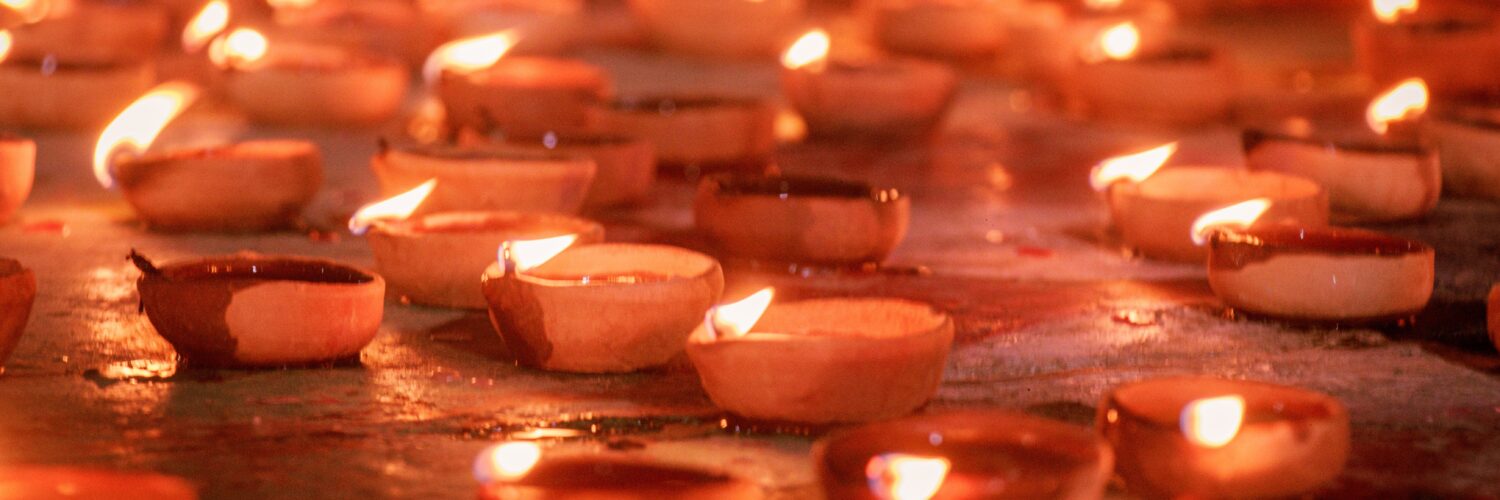
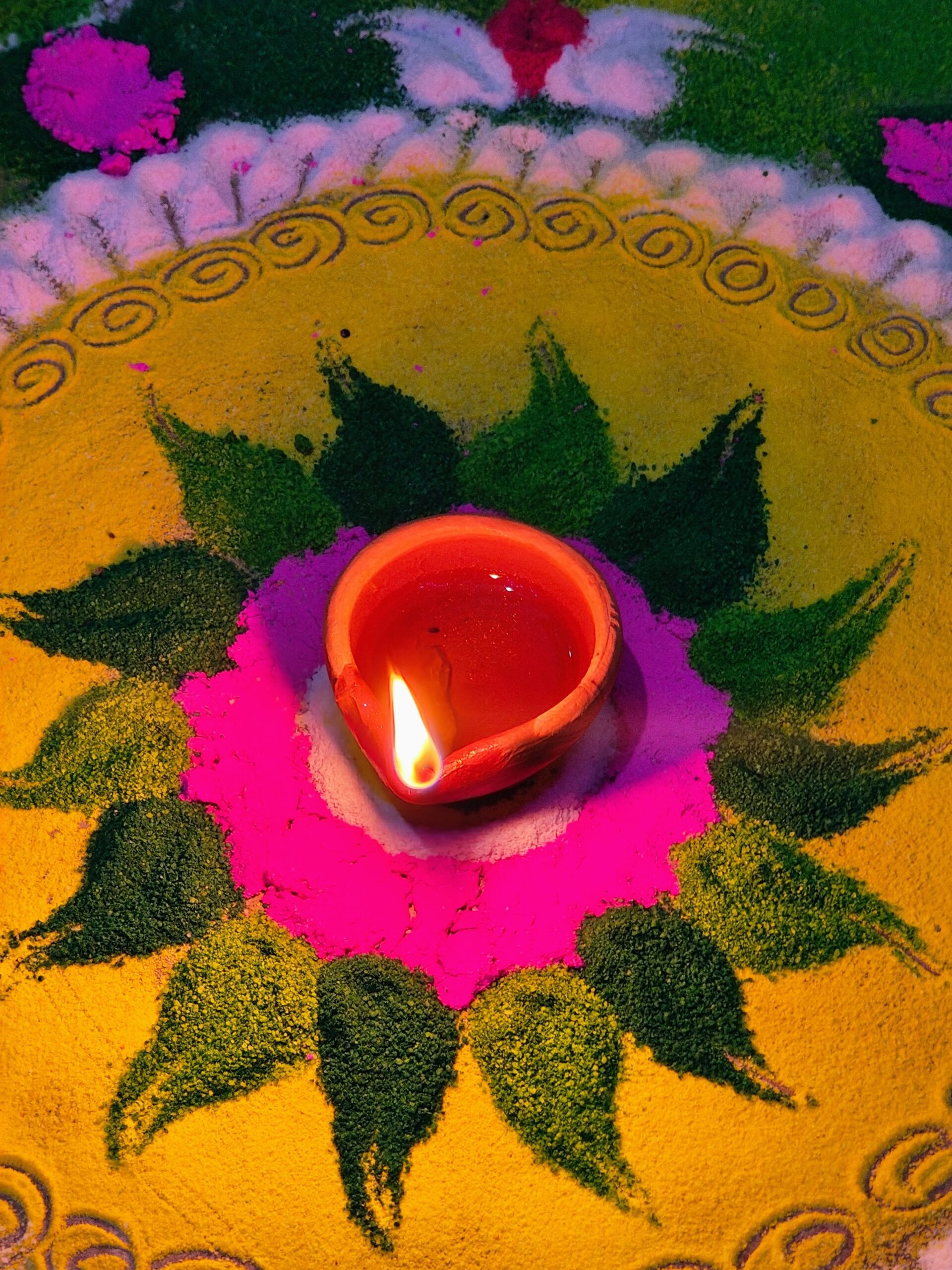
The Gregorian calendar fixes holidays to numbered dates such as January 1 because its months are part of a solar year. Diwali works differently. Its central night is associated with amavasya, when the Moon is near the Sun in the sky and its illuminated half faces mostly away from Earth. That is why the night is naturally dark and the glow of diyas, or small oil lamps, carries such visual force.
Calendar names vary across India. In one regional system, the relevant new moon may be described as falling in Kartika; in another, the same lunar phase may be placed within Ashvina because the month begins at a different point in the Moon’s cycle. That difference in naming does not mean observers are looking at different moons. It reflects several long-lived calendar traditions that organize the same astronomical motions in different ways.
The festival itself is just as varied. Diwali and Deepavali are names used across a wide geographic area, and the stories, rituals, and meanings differ by community and region. Hindu traditions may connect the celebration with Lakshmi, Rama, Krishna, or Kali. Jains, Sikhs, and some Buddhist communities also mark the season through distinct histories and observances. The Smithsonian’s National Museum of American History notes this diversity rather than treating Diwali as one identical celebration everywhere.
A tithi is measured by the Sun and Moon
To understand the date, it helps to replace the everyday idea of a “day” with a more precise calendar unit called a tithi. A tithi is not a midnight-to-midnight block. India’s Positional Astronomy Centre, part of the India Meteorological Department, defines it by the Moon gaining 12 degrees of celestial longitude on the Sun. Each 12-degree step is one tithi, so a complete 360-degree cycle contains 30 tithis.
Those 30 divisions form two halves, or pakshas. During the waxing half, the Moon’s visible portion generally grows from new to full. During the waning half, it shrinks from full toward new. Amavasya closes the waning sequence as the Sun and Moon return to nearly the same direction in the sky.
This geometry explains why a tithi does not fit neatly inside a civil date. The Moon’s orbital speed changes, and Earth is moving around the Sun at the same time. A tithi can therefore begin in the morning, cross midnight, or end during the evening. Almanacs called panchangs list exact starting and ending times so a festival can be assigned according to the traditional rule for that observance, not merely according to which lunar label appears at midnight.
The main Diwali observance is connected not just with amavasya in the abstract but with its presence during the appropriate evening period. That is one reason a calendar calculation must include both the lunar phase and local clock time. It is also why a simple Moon-phase icon on a generic calendar cannot replace a properly calculated panchang.
A lunar year and a solar year do not match
A cycle from one new moon to the next averages about 29.5 days. Twelve such months add up to roughly 354 days, about 11 days shorter than the solar year that keeps pace with the seasons. If a calendar followed only those 12 lunar months, its festivals would move backward through the seasons year after year, much as dates in a purely lunar calendar do.
Indian festival calendars are lunisolar: lunar cycles shape the months and tithis, while solar motion keeps the year connected to the seasons. When the lunar and solar patterns fall far enough out of step, an extra month called adhika masa is inserted. This intercalation occurs roughly every two or three years, though it follows an astronomical rule rather than a simple repeating count.
The result is a useful balance. Diwali shifts against the Gregorian calendar because the two systems divide time differently, but it remains an autumn festival. It generally stays within an October-November window instead of circulating through summer, spring, and winter. The extra month absorbs the accumulated gap and brings the lunar months back into seasonal alignment.
This is the same broad problem that many calendars solve in their own ways. The Gregorian calendar adds February 29 in leap years because the solar year is not exactly 365 days. A lunisolar calendar faces a larger mismatch between 12 lunar months and one solar year, so an occasional whole month does the correcting. Neither system is “moving” at random; each is preserving a different relationship in nature.
Why two calendars may differ by a day
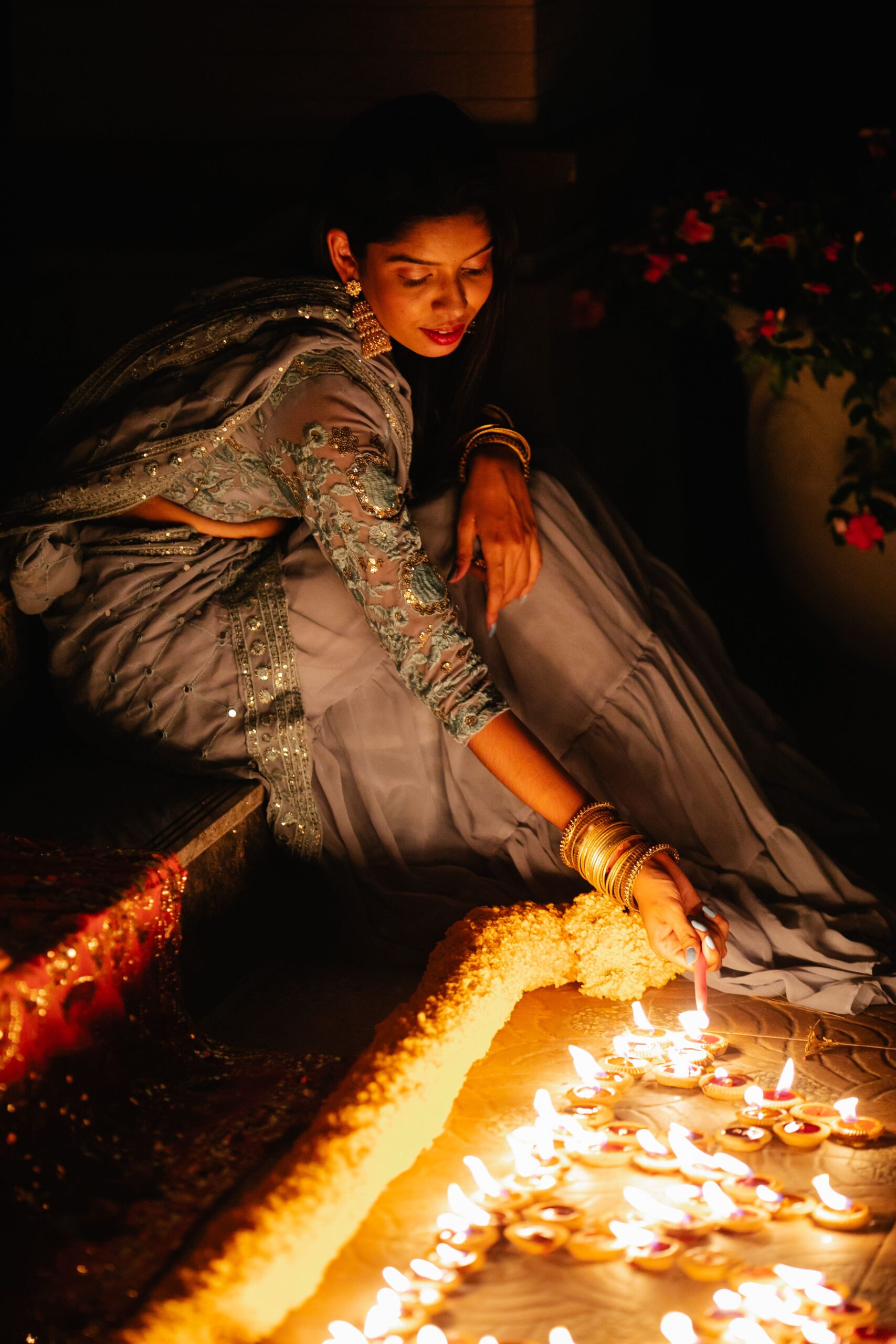
Even after the astronomy is calculated, festival dates can occasionally look inconsistent. A tithi may overlap two Gregorian dates, and different observances use different decision rules. One may be assigned according to the tithi present at sunrise, while another depends on the tithi during sunset or a specified evening interval. Diwali’s main night places special weight on the evening period, when lamps and worship are traditionally central.
Location matters too. The astronomical moment is shared, but local sunrise, sunset, and clock time change with longitude and time zone. A tithi that covers the right evening interval in India may meet a different civil date in North America. Regional panchangs may also use different month conventions or inherited interpretive rules. A one-day difference can therefore reflect a real calendrical choice rather than a mistake.
For practical planning, the calendar produced for the observer’s location and community is more useful than a date copied from another country. Government holiday lists answer a civil question, such as when offices will close. A temple or community calendar may answer a ritual question, such as when the relevant tithi overlaps the evening locally. Both can be internally consistent while serving different purposes.
The India Meteorological Department publishes the Rashtriya Panchang with tithi timings, sunrise and sunset, lunar positions, and festival dates calculated with modern astronomical methods. Its existence shows how exact the process can be. What looks like a floating holiday is anchored to measured positions in the sky.
A moving date with a steady place in the year
The November 8 date in 2026 is one expression of a larger calendar system, not a new rule for Diwali. In another year, the relevant amavasya reaches the required evening window earlier in the Gregorian calendar. After enough lunar-solar mismatch accumulates, an added month shifts the sequence back toward its seasonal place.
Remembering three ideas makes the pattern easier to read. Diwali’s main night follows a tithi connected with the new moon. Tithis are defined by the changing Sun-Moon angle and can cross ordinary date boundaries. The lunisolar calendar periodically adds a month so festivals remain tied to the seasons as well as to lunar phases.
That structure also helps explain why dates should be checked each year and why regional calendars deserve attention. Diwali is both widely shared and locally particular: a season of lamps, gatherings, worship, food, art, and renewal whose stories are not identical everywhere. Its changing printed date is not calendar confusion. It is the visible trace of a system designed to hold the Moon, the Sun, the seasons, and human tradition together.