 Akshay Dinesh
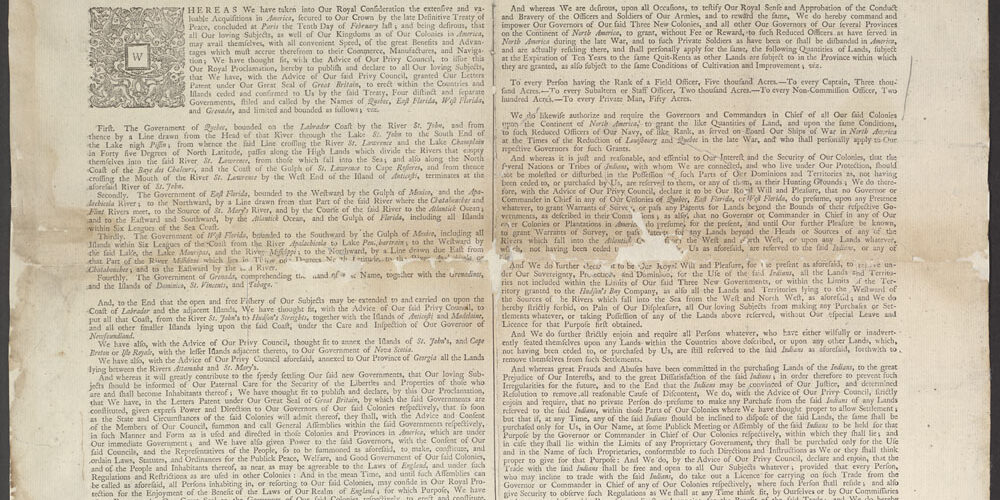
The Proclamation of 1763 looked, at first glance, like a boundary rule. After Britain defeated France in the French and Indian War, King George III’s government drew a line along the Appalachian Mountains and told colonial governors not to grant land beyond it. Settlers were not supposed to buy land there privately, move into reserved territory, or treat victory over France as permission to spread wherever they wished.
That may sound like a practical attempt to prevent chaos on a dangerous frontier. In some ways, it was. Britain had just inherited a huge North American empire, strained relations with many Indigenous nations, and the cost of defending far more land than it had governed before. But to many colonists, especially land speculators, frontier families, and veterans who expected western land as a reward, the proclamation felt like a sudden reversal. The same empire that had encouraged expansion now seemed to be blocking it.
The anger was not only about geography. It was about who had the right to make decisions in North America. The line exposed a question that would keep growing through the 1760s and 1770s: Were the colonies partners in an empire, or subjects expected to obey policies made across the Atlantic?
A Boundary After a War for Empire
The French and Indian War was part of the larger Seven Years’ War, a global conflict that ended in 1763. Under the Treaty of Paris, France gave up Canada and most of its mainland territory east of the Mississippi River to Britain. On paper, Britain had won an enormous prize. In practice, the victory created an administrative problem almost immediately.
British officials now had to govern old colonies on the Atlantic coast, newly acquired French-speaking territory in Quebec, former French forts in the interior, new Florida colonies taken from Spain, and vast lands where Indigenous nations had not agreed to give up control. The proclamation tried to organize that new empire. It created or adjusted governments for Quebec, East Florida, West Florida, and Grenada, and it set rules for land grants and trade beyond the colonies.
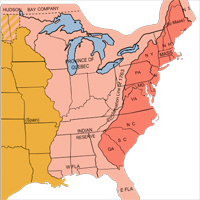
The most famous part was the Proclamation Line. It ran roughly along the Appalachian watershed and placed much of the land west of the line beyond ordinary colonial settlement. The Library of Congress describes the line as a western boundary intended to keep settlers from acquiring land in Indian territory. In British eyes, that was supposed to buy time: time to stabilize relations, time to regulate trade, and time to avoid another expensive frontier war.
Why Britain Wanted a Line
From London, the boundary was less an anti-colonial punishment than an attempt to manage risk. British leaders knew that western settlement had already produced conflict. Farmers, traders, and land companies crossed mountains and made claims that colonial governments could not always enforce. Indigenous nations in the Ohio Country, Great Lakes, and interior Southeast faced growing pressure from settlers who treated British victory as an open invitation.
That pressure collided with British mistakes after the war. The U.S. State Department’s Office of the Historian notes that British commanders angered Native allies of France by ending diplomatic gift-giving practices that had helped maintain relationships. At the same time, settlers continued moving west. Pontiac’s War, which began in 1763, showed British officials how dangerous the situation had become. British forts were attacked across the Great Lakes and Ohio Valley, and imperial leaders feared that settlement without diplomacy would keep producing costly violence.
The proclamation tried to place land purchases under imperial control. Private buyers were not supposed to make their own deals for Indigenous land. Colonial governors were not supposed to issue western surveys or patents beyond the defined limits. People already settled on reserved lands were ordered to leave. In the proclamation’s own logic, only the Crown could regulate future land cessions in a public, official way.
That policy mattered because land was not just empty space waiting to be measured. It was homeland, hunting ground, trade route, village territory, and diplomatic leverage. British officials were not recognizing Indigenous independence in the modern sense, but they were admitting that western land could not be safely treated as a simple colonial prize.
Why Colonists Felt Betrayed
Many colonists saw the same document very differently. For them, the war against France had required years of danger, taxes, militia service, and economic strain. When France lost its claims in the Ohio Valley and beyond, colonists expected new opportunities. Some wanted farms. Some wanted trade. Some wanted repayment for military service. Wealthy investors wanted their western land companies to become profitable.
Virginia’s elite had especially strong interests in western claims. Families and investors had looked beyond the Appalachian Mountains before the war, and some expected Britain to validate those ambitions afterward. George Washington, like other veterans and speculators, had personal interest in western land. So did many less famous people who believed the empire had promised reward, mobility, and room to build futures.
The proclamation seemed to pull that future away. It did not permanently erase every western claim, and later treaties would move some boundaries. But timing mattered. In 1763, just as colonists expected access to newly secured territory, Britain told them that settlement would be delayed, supervised, and restricted. The message felt especially bitter because it came from officials far from the frontier, after colonial soldiers and families had lived through the war directly.
Enforcement was uneven, which made resentment more complicated. Some settlers ignored the line. Some officials lacked the power or will to remove them. Land companies kept lobbying. The rule was strict enough to anger people, but not strong enough to settle the question. That combination made the proclamation a lasting grievance: it interfered with expectations without creating a stable frontier peace.
Why Indigenous Nations Were Central to the Story
It is easy to tell this story only as a dispute between Britain and the colonies, but that leaves out the people whose lands were being fought over. Indigenous nations were not background figures in the proclamation crisis. They were political actors defending territory, trade relationships, and diplomatic standing in a region transformed by war.
The end of French power changed the balance of the interior. Some Native communities had built alliances with France; others dealt with Britain, colonial traders, or both. British victory threatened to reduce their bargaining power, especially if settlers arrived in large numbers without negotiated agreements. Pontiac’s War was not simply a reaction to one proclamation or one policy. It came from broader frustration with British military posts, trade practices, and encroachment.
For Indigenous nations, the Proclamation Line could be useful but also limited. It recognized, at least in policy, that colonists could not simply seize or purchase reserved land on their own. Yet it still assumed British authority over the process. The Crown claimed the power to decide how land would be acquired in the future, which meant the line was not a full guarantee of Indigenous control. It was a boundary drawn by an empire trying to manage a crisis.
That tension helps explain why the proclamation has different meanings in different places. In the future United States, it became part of the story of colonial anger before independence. In Canada, the Royal Proclamation of 1763 has remained significant in discussions of Indigenous rights and treaty relationships. The same document could be remembered as a cause of settler frustration, a British imperial tool, and an important recognition that Indigenous land claims could not be ignored.
How the Line Fed a Larger Crisis
The Proclamation of 1763 did not cause the American Revolution by itself. No single law did. Colonists also objected to new taxes, customs enforcement, standing armies, limits on self-government, and the feeling that Parliament was making decisions without colonial consent. But the proclamation helped set the pattern for those later conflicts.
First, it showed that Britain intended to govern the postwar empire more tightly. Before 1763, many colonial disputes could be blurred by distance, weak enforcement, and local habit. After the war, British leaders tried to make imperial authority more orderly. The frontier line was one early example of that new approach.
Second, it connected local frustration to broader political suspicion. A frontier settler angry about land, a merchant angry about trade rules, and a colonial assembly angry about taxation might not share the same immediate complaint. Over time, though, each could see a common problem: decisions made by imperial officials seemed to narrow colonial freedom.
Third, the proclamation revealed how hard it was for Britain to satisfy everyone after victory. If officials allowed rapid settlement, they risked more conflict with Indigenous nations and higher defense costs. If they restricted settlement, they angered colonists who expected reward and expansion. The empire had won land that it could not easily govern, defend, or distribute.
Why the Proclamation Still Matters
The Proclamation of 1763 matters because it turns a map line into a human problem. Lines on maps can look clean. The realities behind them are rarely clean. This one ran through competing visions of North America: Indigenous nations trying to protect land and sovereignty, colonists pushing toward farms and speculation, and British officials trying to make a larger empire manageable after war.
It also reminds us that the road to independence was not only about taxes on paper, tea, or stamps. It was also about land. Western land shaped family hopes, elite investments, military rewards, frontier violence, and the question of who had authority to decide the future of the continent. When Britain tried to slow that movement, many colonists heard a warning that imperial victory might not bring colonial freedom.
The line did not last as a simple barrier. People crossed it, officials revised policy, and later treaties shifted the geography of settlement. But the conflict it exposed did last. The Proclamation of 1763 showed how a postwar empire could be powerful and fragile at the same time, and how one boundary could make colonists ask whether British rule protected their interests or stood in their way.