 Akshay Dinesh
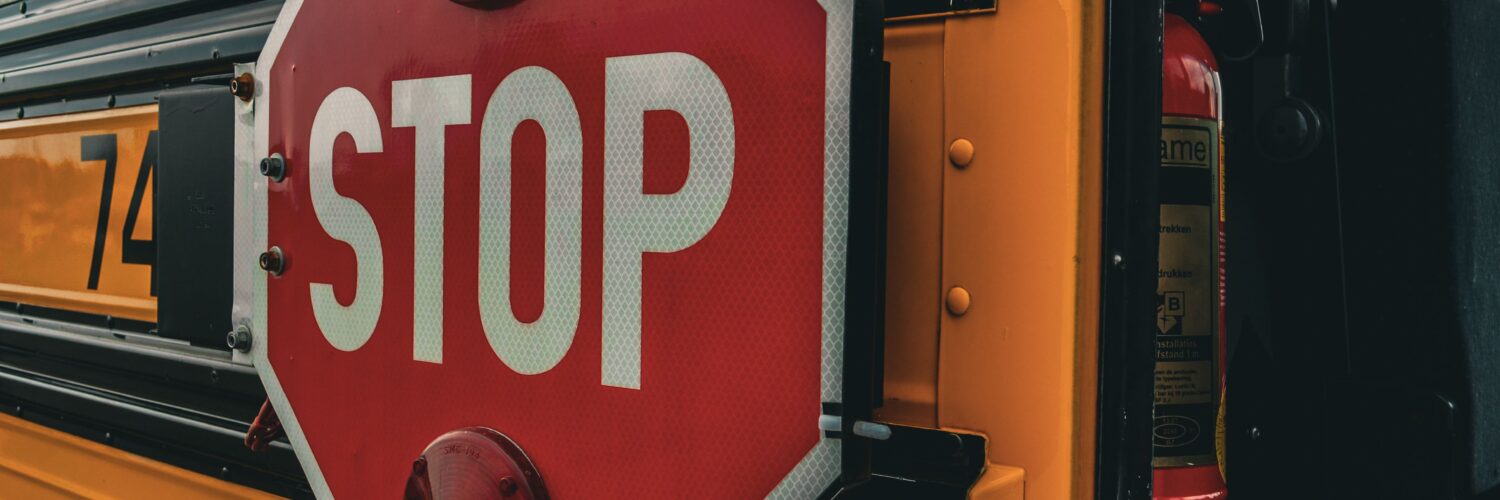
A school bus stop looks ordinary until the bus slows, the yellow lights begin to flash, and the red stop arm swings out from the side. In that moment, a stretch of road becomes something different: a temporary crossing space for children who may be stepping down from high bus stairs, walking around the front of the bus, or waiting near the curb with backpacks and lunch boxes. The stop arm is simple by design, but it is part of a larger safety system built around visibility, timing, predictable behavior, and the fact that children do not move like adults in traffic.
That system matters because the riskiest part of many bus rides is not sitting inside the bus. It is the few seconds before boarding and after getting off, when students are outside the vehicle and close to moving traffic. The National Highway Traffic Safety Administration tells drivers that red flashing lights and an extended stop arm mean the bus has stopped and children are getting on or off. The rule is meant to remove guesswork at exactly the moment when a child may be hardest for a driver to see.
Why the stop arm exists
A school bus is large, bright, and easy to recognize, but size alone does not protect a child crossing the road. The bus can block a driver’s view of a student walking in front of it. A child may be shorter than the hood line of a nearby vehicle. Younger students may focus on the bus door, a parent, a dropped paper, or a friend instead of scanning traffic. Even older students can misjudge whether a car is slowing down enough to stop.
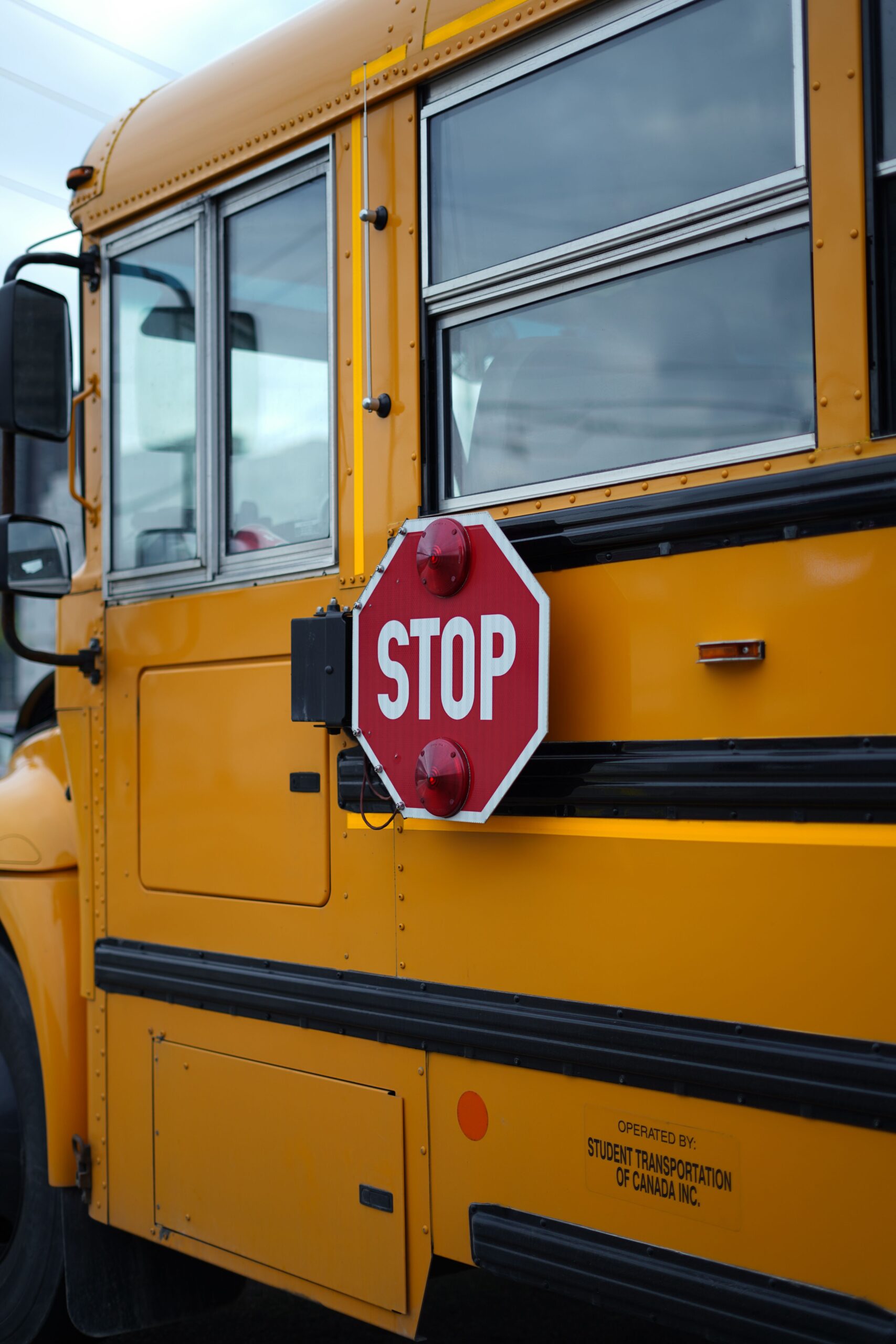
The stop arm solves part of that problem by making the bus’s message impossible to miss. Yellow flashing lights warn that the bus is preparing to stop. Red flashing lights and the extended stop arm tell traffic that loading or unloading is happening. The signal is not just for drivers behind the bus. It is a warning to the whole road scene that children may be nearby, and that the safest choice is to pause until the bus driver has finished the stop.
The curb is where risk concentrates
School buses are among the most regulated vehicles on the road, and the ride itself is usually very safe. The harder safety problem happens around the bus stop. Students gather before the bus arrives, move toward the door after it stops, and sometimes cross in front of the bus after stepping off. A driver who sees only the bus may not see the student who is about to appear from beside it.
NHTSA describes the area around the bus as a place where parents and students need extra care. Its school bus safety guidance tells children to wait away from the curb, avoid running or playing at the stop, and wait for the driver’s signal before boarding or crossing. Those habits sound basic, but they work because they give the bus driver more control over the sequence: stop the bus, activate the signals, open the door, watch traffic, then release students at the right moment.
The stop arm also gives other drivers a clear role. Instead of trying to judge whether a student is actually visible, drivers are expected to obey the signal. That shift is important. Traffic safety often improves when people do not have to make complicated decisions in a few seconds. A red stop arm turns the question from “Do I see a child?” into “Has the bus told me to stop?”
Why illegal passing is still a serious problem
Illegal passing is not rare enough to treat as a minor annoyance. The National Association of State Directors of Pupil Transportation Services has run national stop-arm violation surveys for years to estimate how often drivers pass stopped school buses. Reporting on the 2026 survey said 101,334 participating school bus drivers in 39 states and the District of Columbia recorded 56,024 illegal passings in a single day during the 2025-2026 school year. Projected across a typical 180-day school year, that survey pointed to more than 38 million violations.
Those numbers are estimates, and they come from a voluntary one-day count rather than a perfect measurement of every road in the country. Still, they show why school transportation leaders keep returning to the same problem. A stop-arm violation is not just a driver bending a rule. It is a driver entering the space where students have been told it is safe to move.
Some passings happen because a driver is impatient. Others happen because a driver is distracted, unsure of the rule on a specific road, or following another vehicle too closely to notice the bus signals in time. None of those explanations changes the risk. The bus stop is designed around trust: students trust the driver, the bus driver trusts the traffic signal to be respected, and families trust that nearby vehicles will treat the stop as more than an obstacle in the lane.
How road layout changes the decision
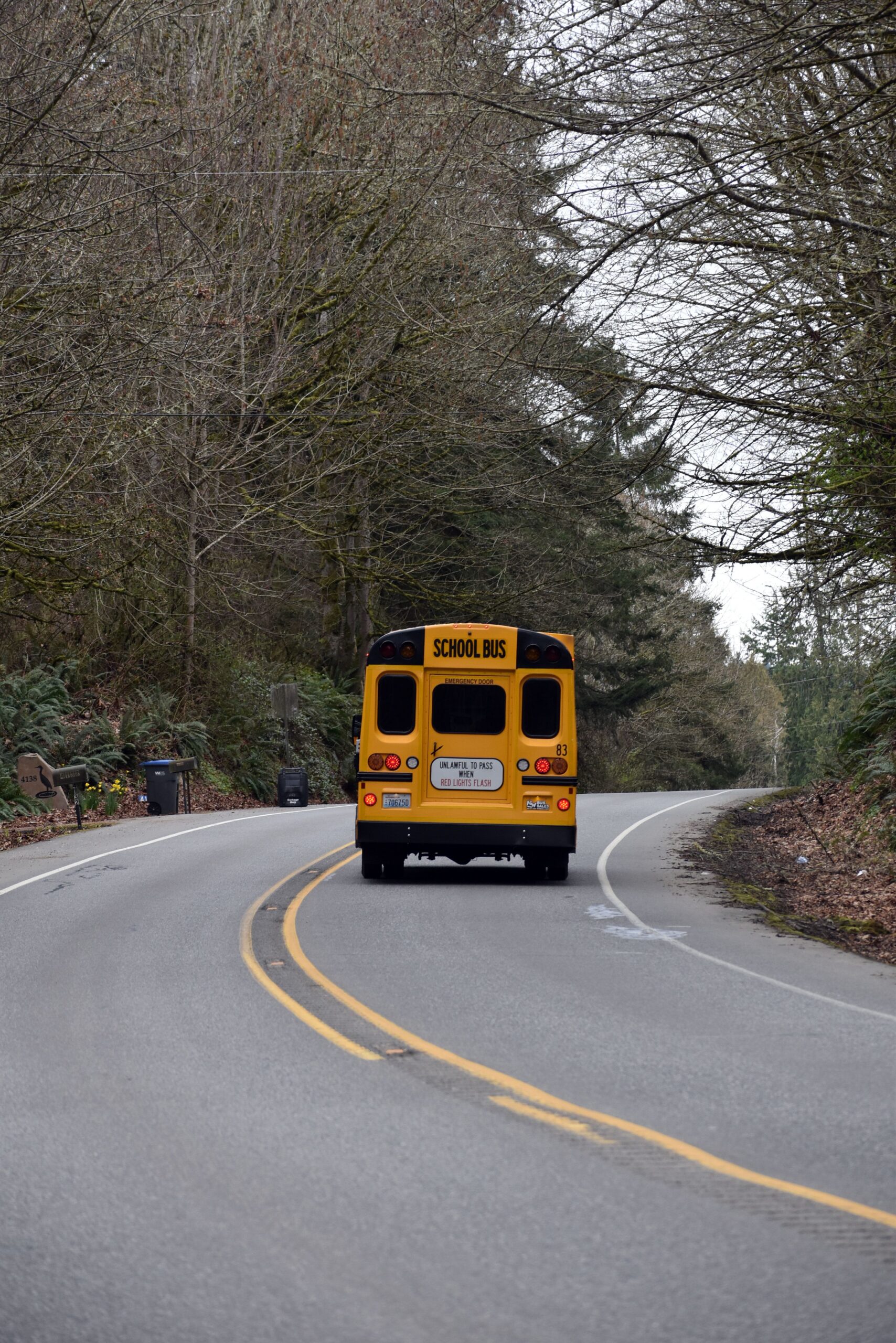
One reason school bus rules can confuse drivers is that roads are not all shaped the same way. A two-lane neighborhood street is different from a wide road with several lanes, and a road divided by a median can be different again. NHTSA’s guide on reducing illegal passing notes that state law varies for approaching traffic on multi-lane or divided highways, especially when a driver is coming from the opposite direction. It also notes an important constant: traffic behind the bus must stop when the red lights are flashing and the stop arm is deployed.
That is why a good driver cannot rely on a vague memory of a rule from another place. The safest habit is to learn the local law and, when there is uncertainty, treat a stopped bus with red lights as a serious warning rather than a delay to squeeze around. The few seconds saved by passing are tiny compared with the possible consequence of being wrong.
What stop-arm cameras add
Stop-arm cameras are one response to the enforcement problem. Instead of depending only on a bus driver’s memory or a nearby officer, a camera system can record a vehicle that passes while the bus lights and stop arm are active. The details vary by state and local program, but the basic idea is to document violations more consistently and make drivers take the signal seriously even when police are not present.
Camera enforcement also raises questions that lawmakers have had to answer carefully. The National Conference of State Legislatures tracks state stop-arm camera laws, including who may operate the systems, how fines can be used, whether signs must be posted, and how long images or video may be kept. Those details matter because a safety tool still needs rules for evidence, privacy, vendor contracts, and local oversight.
Cameras are not a substitute for attention. They do not make a child more visible in the instant before a dangerous pass happens. Their value is mostly before and after the moment: before, by reminding drivers that passing a stopped bus can have consequences; after, by making violations easier to review and enforce. The best outcome is not more tickets. The best outcome is fewer drivers willing to take the chance.
The simple signal behind a complex system
The stop arm is a small piece of hardware, but it depends on many people acting in sequence. The bus driver uses lights, mirrors, doors, and practiced routines. Students wait in the right place and cross only when directed. Families teach children how far to stand from the curb and why rushing near a bus is dangerous. Drivers approaching the bus slow down, stop when required, and leave enough space for the scene to unfold safely.
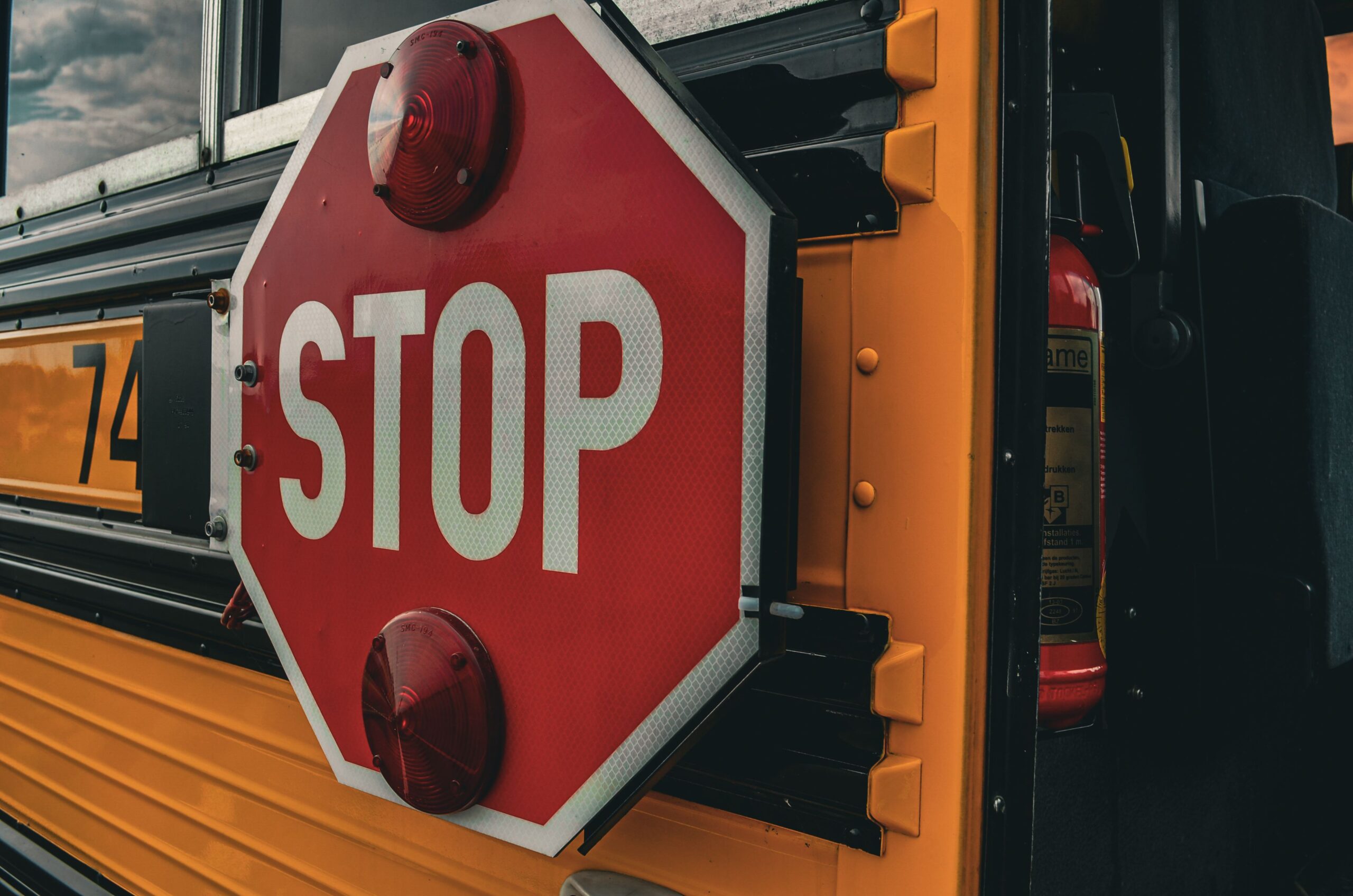
That is the real lesson of the red sign on the side of the bus. It is not there because children are careless or because drivers are always reckless. It is there because traffic moves quickly, children are small, sight lines can be poor, and a normal road can become a crossing zone with very little warning. A school bus stop arm makes that change visible. When drivers respect it, the curb becomes what it is supposed to be: a safe place for students to begin and end the school day.