 Akshay Dinesh
A dilation is one of the clearest ways to see what geometry means by same shape, different size. Instead of sliding, turning, or flipping a figure, a dilation stretches every point away from a chosen center or pulls every point toward it. The result can be larger or smaller, but the figure should still look like the original. Angles stay the same. Straight sides stay straight. Circles remain circles, triangles remain triangles, and a drawing that was proportional before the dilation stays proportional afterward.
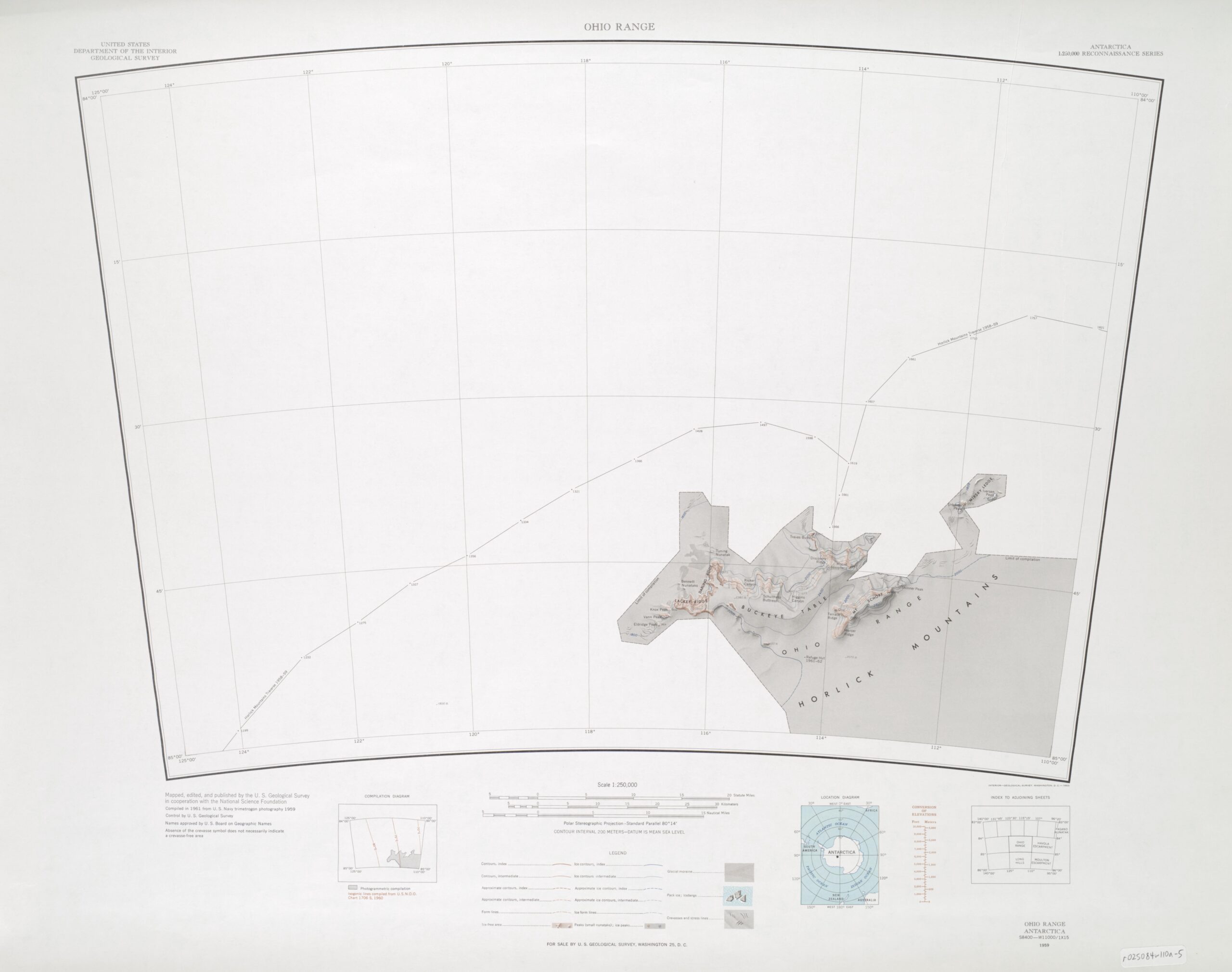
That simple idea explains a surprising amount of everyday measurement. A map is useful because roads, rivers, and distances are shrunk by a consistent scale. A blueprint works because walls and rooms are drawn smaller without changing their shape. A photo can be enlarged without making one side of a face stretch more than the other. Dilations give the mathematical language for that kind of resizing: a figure changes size by a scale factor while preserving its shape.
What a dilation actually changes
A dilation starts with three ingredients: an original figure, a center of dilation, and a scale factor. The original figure is the shape being resized. The center of dilation is the fixed point from which the resizing is measured. The scale factor, usually written as \(k\), tells how much every distance from the center should be multiplied.
If \(k = 2\), every point moves twice as far from the center as it was before. A point that began 3 units from the center ends up 6 units away on the same ray. If \(k = \frac{1}{2}\), every point moves halfway back toward the center. A point that began 8 units from the center ends up 4 units away. The direction from the center stays lined up; the distance changes.
This is different from simply making a side longer by hand. In a true dilation, every corresponding length is multiplied by the same number. If one side of a triangle doubles, all the other side lengths double too. If one distance is cut to one-third, every other matching distance is cut to one-third. That shared multiplier is what keeps the new figure from becoming distorted.
Why the scale factor controls the whole figure
The scale factor does more than make a figure look bigger or smaller. It creates a rule that connects every original length to its matching new length. If a rectangle has sides of 5 units and 8 units, a dilation with scale factor 3 produces sides of 15 units and 24 units. The lengths change, but the ratio between them remains \(5:8\). That unchanged ratio is why the resized rectangle still has the same shape.
For a scale factor greater than 1, the dilation is an enlargement. The image is farther from the center and larger than the original. For a scale factor between 0 and 1, the dilation is a reduction. The image is closer to the center and smaller than the original. A scale factor of 1 leaves the figure exactly where it is, so it is usually not a very interesting dilation.
Area changes differently from length, which is a common surprise. If a square’s side length is doubled, its area is not doubled. A 4-by-4 square has area 16 square units. After a scale factor of 2, the square becomes 8 by 8, with area 64 square units. The side lengths were multiplied by 2, but the area was multiplied by \(2^2\), or 4. For three-dimensional objects, volume changes by the cube of the scale factor. That is why scaling is powerful, but also why it needs careful measurement.
How dilations work on the coordinate plane
The coordinate plane makes dilations easier to calculate because points can be written as ordered pairs. When the center of dilation is the origin, the rule is especially clean: \((x, y) \rightarrow (kx, ky)\). Multiply both coordinates by the scale factor. The point stays on the same line from the origin, but its distance from the origin changes.
For example, suppose triangle \(ABC\) has points \(A(1, 2)\), \(B(4, 2)\), and \(C(2, 5)\). A dilation centered at the origin with scale factor 2 sends the points to \(A'(2, 4)\), \(B'(8, 4)\), and \(C'(4, 10)\). Each coordinate doubled. The new triangle is larger, and each new point lies along the same ray from the origin as its matching original point.
A reduction works the same way. If \(P(6, 10)\) is dilated from the origin by \(k = \frac{1}{2}\), then \(P’\) becomes \((3, 5)\). The point does not move randomly toward the middle of the graph. It moves along the line connecting the origin and \(P\), landing halfway along that path. This ray relationship is what separates a dilation from a general resizing on a screen.
When the center is not the origin, the arithmetic takes an extra step. You compare each point to the center, multiply that difference by the scale factor, and then move back from the center. The idea is still the same: the center acts like the anchor, and every point keeps its direction from that anchor while changing distance.
Why dilated figures are similar
Dilations create similar figures. Similar figures have the same shape, with equal corresponding angles and proportional corresponding side lengths. They do not need to be the same size. A small triangle on a worksheet and a large triangle projected on a classroom screen can be similar if their angles match and their side lengths share the same scale factor.
This matters because similarity lets you transfer information from one figure to another. If two triangles are similar and one side of the larger triangle is three times the matching side of the smaller triangle, then every side of the larger triangle is three times its match. You do not have to re-measure every part from scratch. The scale factor does the work.
Angles are the quiet reason the shape survives. A dilation pushes points outward or inward in a balanced way, so the opening between two sides does not change. A 60-degree angle remains 60 degrees after an enlargement or reduction. That is why a dilated triangle does not become a stretched or flattened version of itself. The lengths change in proportion, but the angle structure remains intact.
A worked example with side lengths
Imagine a triangle with side lengths 6, 8, and 10. A dilation uses a scale factor of \(\frac{3}{2}\). To find the new side lengths, multiply each original length by \(\frac{3}{2}\):
- \(6 \times \frac{3}{2} = 9\)
- \(8 \times \frac{3}{2} = 12\)
- \(10 \times \frac{3}{2} = 15\)
The dilated triangle has side lengths 9, 12, and 15. It is larger than the original because \(\frac{3}{2}\) is greater than 1. The original and new triangles are similar because each matching side was multiplied by the same scale factor. The ratio \(6:8:10\) simplifies to \(3:4:5\), and \(9:12:15\) also simplifies to \(3:4:5\).
Now reverse the question. Suppose a rectangle has one side of 7 inches, and its dilated image has the matching side of 21 inches. The scale factor is \(21 \div 7 = 3\). If the original rectangle’s other side is 4 inches, the matching side in the image must be \(4 \times 3 = 12\) inches. Once one pair of matching lengths reveals the scale factor, the rest of the figure follows.
Common mistakes to avoid
The first common mistake is adding instead of multiplying. If a dilation changes one side from 5 to 8, it does not mean every side gained 3 units. The scale factor is \(8 \div 5 = 1.6\), so every matching length should be multiplied by 1.6. Adding the same number to every side usually changes the shape, especially when the original sides have different lengths.
Another mistake is forgetting the center of dilation. On the coordinate plane, students often multiply coordinates by the scale factor even when the center is not the origin. That shortcut only works for dilations centered at \((0, 0)\). If the center is somewhere else, distances must be measured from that center. The figure still expands or shrinks from the anchor point, not automatically from the middle of the graph.
A third mistake is expecting area to follow the same scale factor as length. If the scale factor is 3, side lengths triple, but area becomes 9 times as large. This difference matters in design, art, science, and modeling. A small change in scale can create a much larger change in surface area, material needed, or space covered.
Where dilations show up beyond homework
Dilations appear anywhere people need a reliable copy of a shape at a different size. Architects use scaled drawings so a building can fit on a page while keeping room proportions meaningful. Engineers and designers use scale models to test ideas before building full-size versions. Photographers and graphic designers resize images carefully so the width and height change together instead of stretching the picture out of proportion.
Maps are another familiar example. A map scale might say that 1 inch represents 10 miles. That does not mean the world has become simple, but it does mean the map uses a consistent relationship between paper distance and real distance. If two towns are twice as far apart on the map as two other towns, their real distances should be twice as far apart too, assuming the map scale is consistent for that region.
The main idea is worth keeping simple: a dilation multiplies distances from a center by the same scale factor. That one rule explains enlargements, reductions, similar figures, coordinate rules, and scale drawings. Once you know what changes and what stays fixed, dilations stop feeling like a new geometry trick. They become a precise way to describe a familiar act: making something bigger or smaller while keeping its shape true.