 Akshay Dinesh
A school bus stopping at railroad tracks can feel strange when no train is visible. Traffic pauses, the bus grows quiet, the driver opens a window or door, and everyone waits for a few seconds before moving again. That pause is not a habit left over from a slower age. It is a safety routine built around one blunt fact: a train cannot stop or swerve like a car, and a bus full of students needs more than a quick glance to cross tracks safely.
Railroad crossings are places where two transportation systems meet at the same level. Roads are built for vehicles that can brake, turn, and react to each other. Railroads are built for heavy machines that follow fixed tracks and need much longer stopping distances. The school bus rule gives the driver time to turn a crossing from a guess into a checklist.
The Stop Creates Time to Read the Crossing
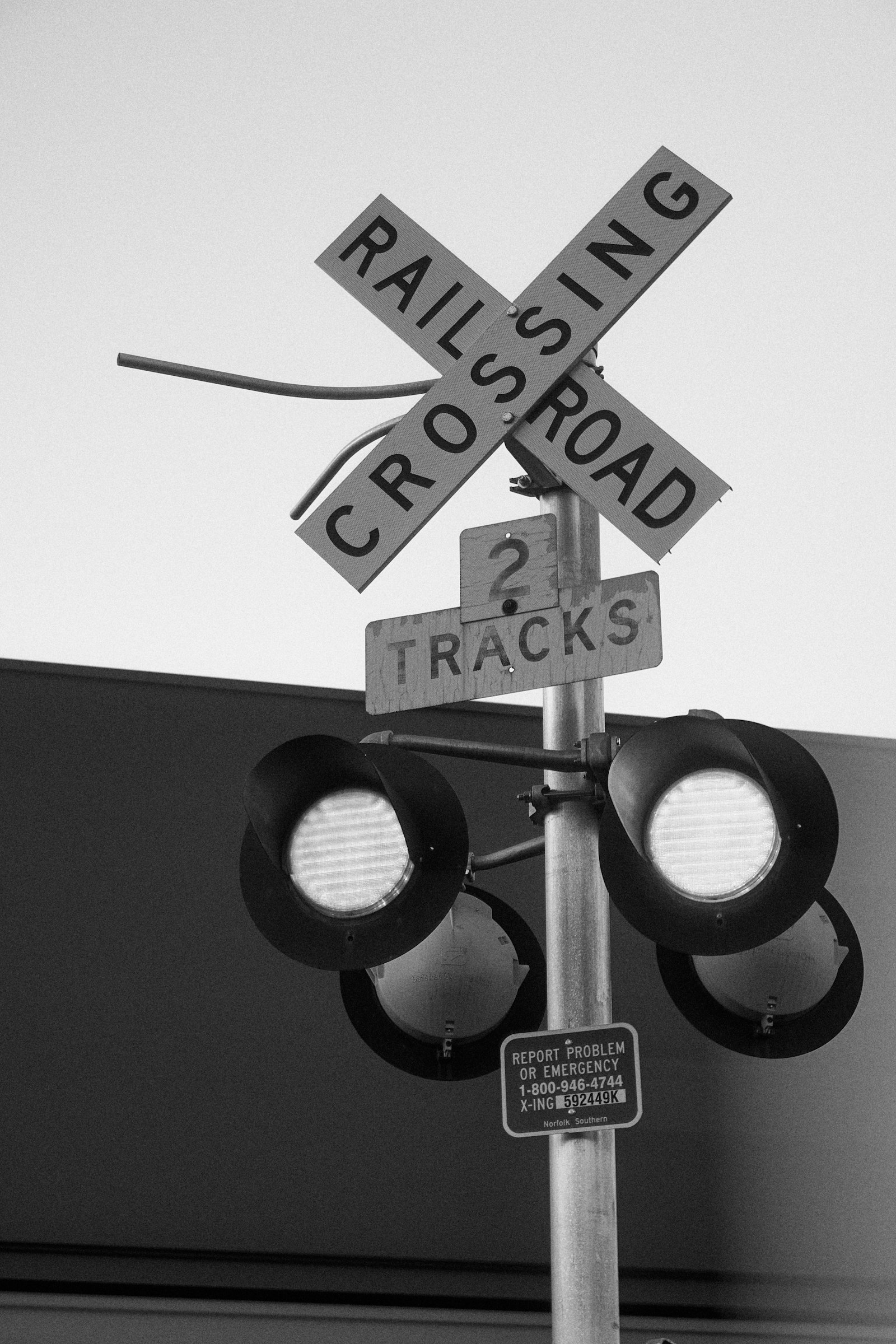
At many crossings, drivers have more information than a simple pair of rails. There may be crossbuck signs, flashing red lights, gates, pavement markings, bells, stop signs, traffic signals, or multiple tracks. Some crossings are wide open and easy to see. Others sit near curves, trees, buildings, hills, or busy intersections that make the view harder.
A moving bus does not give the driver much time to sort through all of that. Stopping changes the task. Instead of trying to read the crossing while rolling forward, the driver can look left and right, check whether signals are active, listen for a horn or approaching train, and decide whether the road beyond the tracks has enough space for the entire bus.
The Federal Motor Carrier Safety Administration’s guidance for certain passenger-carrying commercial vehicles describes a stop zone of no farther than 50 feet and no closer than 15 feet from the nearest rail, followed by looking and listening before crossing. School bus procedures are also shaped by state laws and district training, so details can vary. The basic idea stays the same: stop far enough back to stay clear of the track area, but close enough to see and hear what matters.
Looking Is Not Enough by Itself
A crossing can look empty and still deserve caution. A train may be hidden by a curve, a slope, a building, trees, glare, or another train on a nearby track. At some crossings, one train can pass and make it tempting to move too soon, even though a second train may be coming from the other direction or on another track.
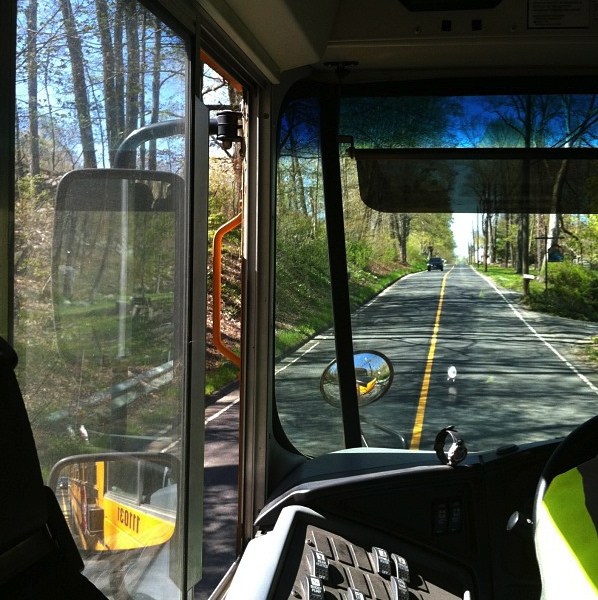
Listening matters because trains announce themselves in more than one way. Horns, bells, track noise, and warning equipment can add information that the driver’s eyes might miss. Operation Lifesaver, a rail-safety education organization, teaches school bus drivers to open the service door and driver’s window at the crossing so they can look and listen in both directions before proceeding.
That is also why students are often expected to stay quiet during the stop. A quiet bus is not about politeness in that moment. It helps the driver hear. Even a few seconds of chatter, music, or movement can compete with the sounds the driver is trained to notice.
The Bus Must Clear the Tracks Completely
Crossing safely is not only about whether a train is nearby. The driver also has to know that the bus can make it all the way across without stopping on the tracks. A traffic light, a stop sign, a backed-up lane, or a line of cars just beyond the rails can turn a clear crossing into a dangerous trap.
This is one reason railroad crossing training pays attention to the space on the far side of the tracks. The driver is not simply asking, “Can I start across?” A better question is, “Can the whole bus, with extra room, get beyond the tracks before stopping again?” That difference matters because a long vehicle may have its front safely in traffic while its rear is still too close to the rail.
NHTSA’s school bus route-planning guidance also treats railroad crossings as route-design issues, not just driver issues. It recommends placing bus stops at least 300 feet from a railroad crossing when planning safer school bus stops and routes. That distance helps avoid loading or unloading children near a place where drivers and students already need extra attention.
Why Trains Change the Risk Calculation
Trains are heavy, fast, and locked onto their path. Even when a train crew sees a vehicle on the tracks, the train may need far more distance to stop than the people in the road expect. A car driver can brake hard and steer away from danger. A train crew can brake, sound the horn, and follow the track. The physics of mass, speed, and friction leave fewer options.
A school bus also has responsibilities that a smaller vehicle does not. It carries many passengers, stops often, and may travel routes with repeated crossings. The safety routine is designed to reduce reliance on perfect timing or lucky visibility. A repeated procedure helps the driver handle familiar crossings with the same seriousness as unfamiliar ones.
This is also why railroad crossing rules sometimes feel stricter than ordinary road rules. At a normal intersection, traffic signs and signals manage vehicles that can respond quickly to each other. At tracks, the cost of a wrong assumption is much higher. The stop gives the driver a short, controlled pause before entering a space where there is no room for improvising.
Rules Can Change, but the Reason Is Still Understandable
In recent federal discussions, FMCSA has considered whether some commercial vehicles should have an exception at crossings with active warning devices that are not activated, such as gates and flashing lights that are working but not signaling an approaching train. A March 2026 Federal Register notice asked for more comments and data on that idea. The discussion shows that crossing rules are not only about tradition. They also involve technology, traffic flow, rear-end crash risk, state law, and how much trust to place in warning systems.
For students and families, the larger lesson is simpler than the policy debate. The stop exists because safety at a railroad crossing depends on several checks lining up at once. The driver needs to see the signals, hear the surroundings, judge the road beyond the tracks, and confirm that the bus can clear the crossing completely.
That pause may add only a few seconds to the ride. It turns a dangerous meeting point between road and rail into a predictable routine: stop, look, listen, check the space ahead, and go only when the crossing is clear. When the bus moves again, the quiet moment has done its job.