 Akshay Dinesh
Before independence became a serious political goal, colonial resistance had a practical problem: each colony could complain, petition, or protest on its own, but Parliament could still treat those complaints as scattered local unrest. The Stamp Act Congress changed that pattern. In October 1765, delegates from nine colonies met in New York to answer a new British tax on printed paper, and their meeting helped turn a burst of anger into a common constitutional argument.
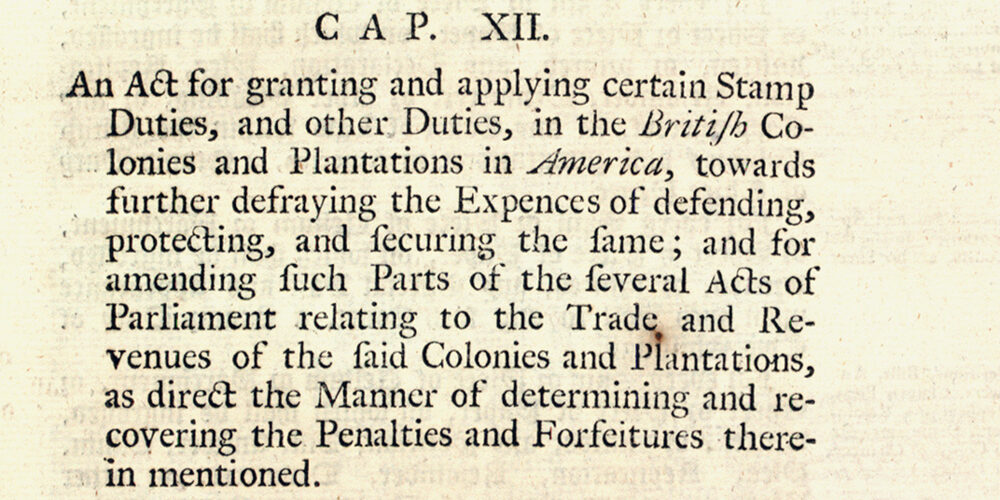
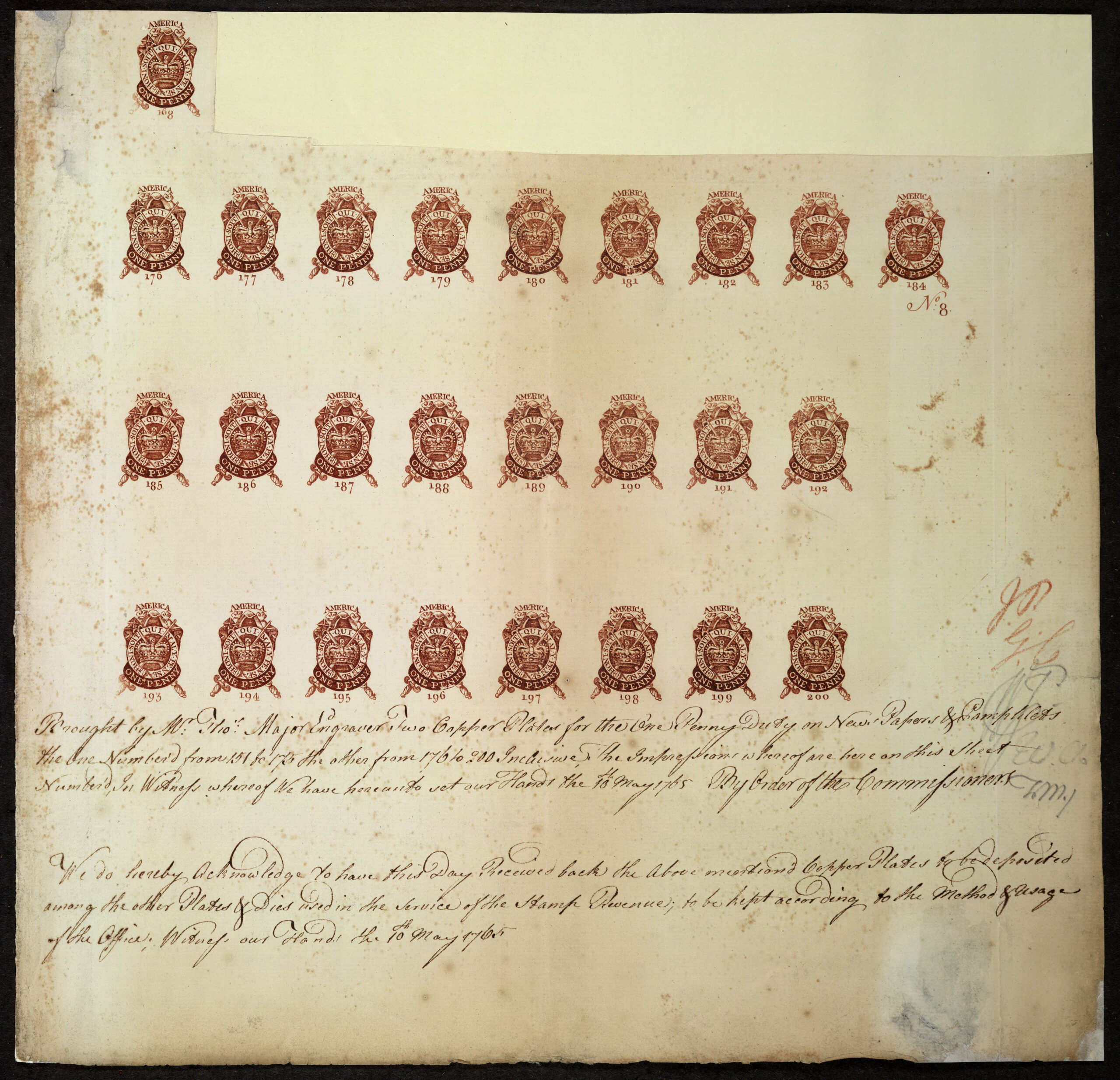
The Stamp Act itself touched ordinary life in a way earlier imperial taxes often had not. It required stamped paper or official stamps for newspapers, legal documents, contracts, licenses, pamphlets, playing cards, and other printed materials. The National Archives in the United Kingdom summarizes the law as a tax on paper goods that had to carry a royal stamp. That made it visible not only to merchants and lawyers but also to readers, printers, students, and anyone who needed documents to conduct business.
A tax that made distant power feel local
Parliament passed the Stamp Act in March 1765, after the costly Seven Years’ War had expanded Britain’s debt and left troops stationed in North America. British officials argued that the colonies should help pay for their own defense. Many colonists saw the issue differently. They did not simply object to paying money; they objected to being taxed by a legislature in which they had no elected representatives.
That distinction matters because it explains why the Stamp Act became more than a complaint about cost. A small tax can still feel politically dangerous if it seems to change who has authority. Colonial assemblies had long raised money through local laws. The Stamp Act bypassed that familiar route and treated Parliament as able to tax the colonies directly. For many colonists, that crossed a constitutional line.
The law also spread pressure across groups that did not always organize together. Printers feared higher costs and possible limits on newspapers. Lawyers and merchants needed stamped documents for contracts, court filings, and trade. Ordinary readers saw the tax in the paper culture that carried news and opinion. Because the tax appeared on the tools of communication itself, it helped resistance travel quickly.
Why meeting together was a bold step
The call for a congress came from Massachusetts, whose assembly suggested that colonies consult together on their shared circumstances. That may sound ordinary now, but in 1765 it was politically sensitive. The colonies had separate governments, separate assemblies, and separate local interests. A meeting that crossed colonial boundaries could look, to British officials, like an unauthorized political body.
Even so, nine colonies sent delegates: Massachusetts, Rhode Island, Connecticut, New York, New Jersey, Pennsylvania, Delaware, Maryland, and South Carolina. Several other colonies did not attend, often because royal governors blocked or discouraged the assemblies from choosing delegates. The group that gathered in New York was therefore incomplete, but it was still remarkable. It showed that resistance to the Stamp Act was not confined to one town, one port, or one unusually angry colony.
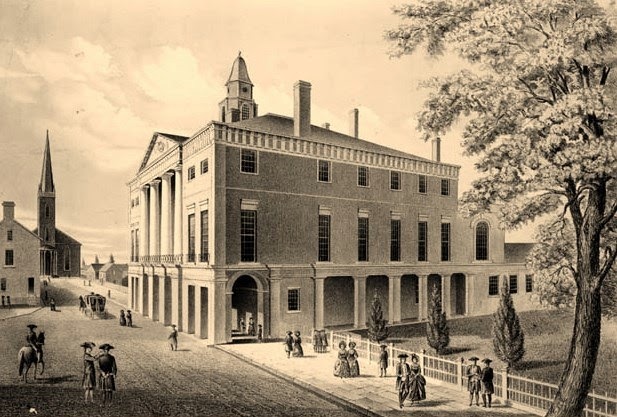
The delegates met in New York City Hall, near the site later associated with Federal Hall. They were not revolutionaries declaring independence. Many still described themselves as loyal British subjects. That loyalty was part of their argument. They claimed the rights of English subjects while insisting that those rights included consent to taxation through representatives.
The Declaration of Rights and Grievances
The most important result of the meeting was the Declaration of Rights and Grievances, adopted on October 19, 1765. The Library of Congress timeline notes that the Stamp Act Congress passed this declaration and argued that American colonists were equal to other British citizens. Encyclopedia Virginia’s primary-document context describes it as a response asserting colonists’ rights as British subjects against Parliament’s taxes on the colonies.
The declaration did not say that Parliament had no authority at all. Its argument was more careful and, in some ways, more powerful. The delegates accepted allegiance to the king and acknowledged a connection to the British Empire, but they denied that Parliament could impose internal taxes on people who had no vote for members of Parliament. Taxation, they argued, required consent, and consent came through colonial assemblies.
That is where the famous idea of “no taxation without representation” becomes more than a slogan. The issue was not whether colonists disliked taxes. People usually dislike taxes. The deeper issue was whether a legislature could claim to represent people who had no direct way to choose its members and no practical voice in its decisions. British defenders of Parliament often spoke of “virtual representation,” the idea that members of Parliament represented the interests of the whole empire, not only their own voters. Many colonists rejected that as too thin to protect liberty.
The declaration also objected to the expansion of admiralty courts, where cases could be heard without local juries. For colonists used to treating jury trials as a key English liberty, that mattered. A tax law was now tied to a broader fear: that distant officials could raise revenue, enforce penalties, and weaken local protections at the same time.
Petitions, boycotts, and pressure from more than one direction
The Stamp Act Congress did not work alone. Street protests, newspaper essays, local meetings, and merchant boycotts all shaped the crisis. Groups such as the Sons of Liberty used public pressure, sometimes in unruly or violent ways, against stamp distributors. Merchants organized nonimportation agreements that reduced purchases of British goods. Printers gave the controversy a wide audience.
That mix of formal and informal action gave the resistance unusual strength. The congress supplied a disciplined argument that could be sent to the king and Parliament. Boycotts gave British merchants a reason to complain about lost trade. Local protest made enforcement difficult on the ground. Each form of resistance had limits, but together they made the Stamp Act hard to carry out.
The result was repeal. Parliament repealed the Stamp Act in 1766, less than a year after it was supposed to take effect. That victory, however, came with a warning. On the same day, Parliament passed the Declaratory Act, claiming the power to make laws binding the colonies “in all cases whatsoever.” In other words, Britain removed the immediate tax but refused to concede the larger argument about authority.
That unresolved tension is why the Stamp Act Congress mattered long after the stamps themselves disappeared. The crisis taught colonists that coordinated pressure could work, but it also taught them that Parliament might answer practical retreat with constitutional insistence. The empire had solved the tax problem for the moment while leaving the representation problem alive.
Why it became a rehearsal for later resistance
The Stamp Act Congress did not create American unity overnight. The colonies still disagreed often, and many people had no voice in these political bodies at all, including enslaved people, Indigenous nations, women, and many propertyless men. Its importance is more specific: it showed that colonies could frame a shared complaint, send delegates, write common language, and act as if one colony’s constitutional problem could become everyone’s problem.
That habit returned in later crises. The Townshend Acts, the Boston Tea Party, the Coercive Acts, the First Continental Congress, and the move toward independence all depended on networks of communication and shared political language. The Committees of Correspondence later made those networks more systematic, but the Stamp Act Congress showed an earlier version of the same idea: separate colonies could meet, debate, and speak together.
It also sharpened a political vocabulary that would keep expanding. Rights, representation, consent, petitions, boycotts, jury trials, and local self-government all appeared in the Stamp Act debate before they became central to the Revolutionary era. The language was still loyalist in tone, but the logic was hard to contain. If taxation required consent, and if Parliament could not genuinely represent the colonies, then every future imperial law could be judged against that standard.
That is why the meeting deserves attention even though it did not produce independence or a famous signed parchment. It was one of the moments when protest became organized enough to teach people what joint action felt like. The delegates did not know where the argument would lead. They were trying to defend colonial rights inside the empire, not announce a new nation. Yet by turning local anger into a shared claim about consent and representation, the Stamp Act Congress helped build the political road that later generations would travel much farther.