 Akshay Dinesh
Phillis Wheatley wrote in a world that was quick to praise liberty and slow to extend it. Born in West Africa around 1753 and forced across the Atlantic as a child, she became one of the most important literary voices of the Revolutionary era while still living inside a society that treated Black freedom as negotiable. Her poems moved through Boston, London, and the wider Atlantic world at the same time that colonists argued about rights, tyranny, and independence.
That timing matters. Wheatley was not simply a talented young poet who happened to live near the American Revolution. Her work placed a Black, enslaved, educated woman inside the very debate that white political leaders often tried to define for themselves. When readers today study her poems, her publication history, and the way powerful men reacted to her writing, they see a sharper version of a familiar question: what did Revolutionary language mean if it did not apply to everyone?
A Poet Formed by Force and Language
Wheatley arrived in Boston in 1761 after being kidnapped from West Africa and transported on a slave ship. John and Susanna Wheatley purchased her and gave her the name Phillis, after the ship that carried her, and Wheatley, after their family. The details are stark, and they should not be softened by the remarkable education that followed. Her learning took place within enslavement, not outside it.
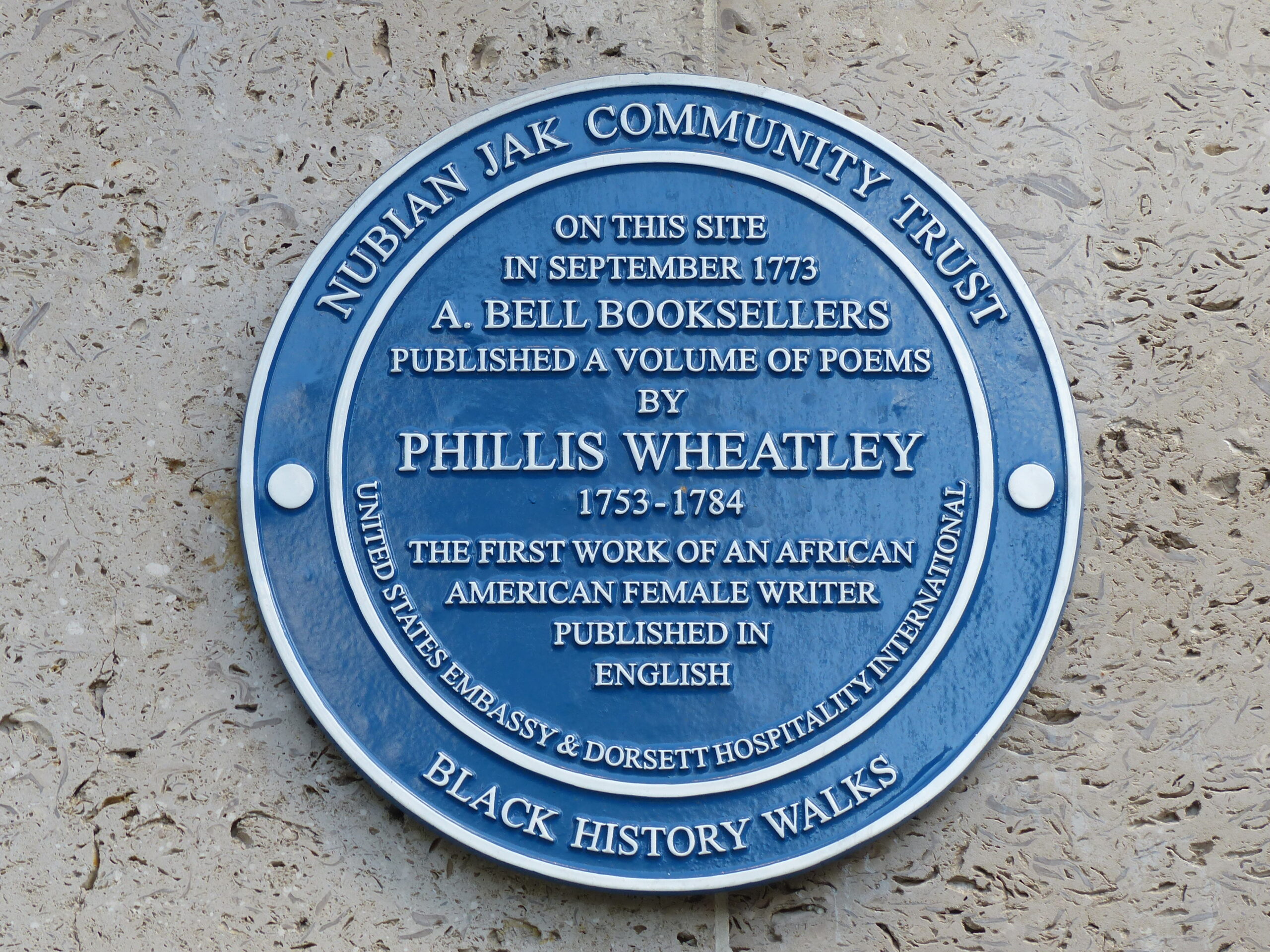
Still, the speed of her education astonished people around her. She learned English, read the Bible and classical literature, and began composing poetry while still very young. The Library of Congress notes that her Poems on Various Subjects, Religious and Moral appeared in London in 1773, making it the first published volume of poetry by an African American poet. That fact is often repeated because it is historically important, but it can also make her seem like a single milestone instead of a working writer with ideas, strategies, and risks.
Her poems show a mind trained in the literary language of the eighteenth century. She used biblical references, classical allusions, elegy, formal address, and the elevated style that educated readers expected from poetry. That style was not a costume. It was one of the tools available to her. By writing in forms associated with learned white men, Wheatley entered a public conversation that many people believed someone like her could not join.
Why Her 1773 Book Was So Unusual
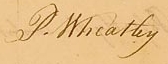
The publication of Poems on Various Subjects, Religious and Moral was not a simple story of talent being recognized. Wheatley could write, but Boston publishers were reluctant to print her manuscript. Her book was published in London by Archibald Bell, and the volume included an attestation signed by prominent Boston men who stated that they believed she had written the poems herself. The need for such a statement reveals how racial prejudice shaped literary judgment before many readers even reached the poems.
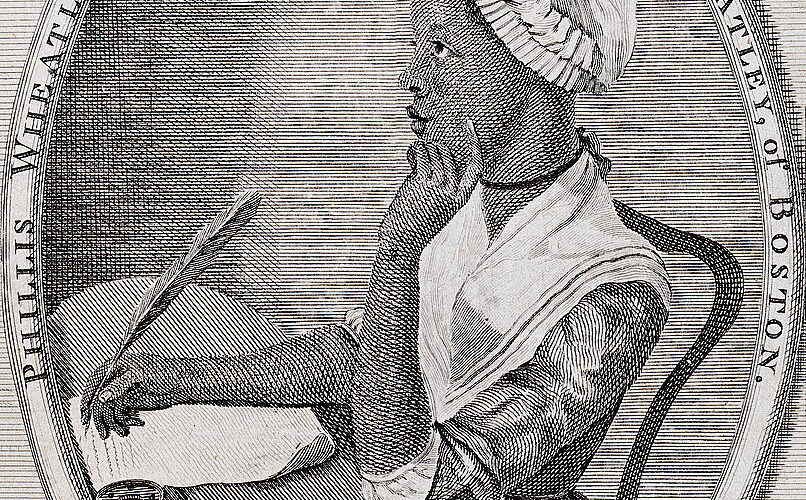
The frontispiece portrait in the book also mattered. It showed Wheatley seated with a pen, paper, and an attentive expression. The image is usually attributed to Scipio Moorhead, an enslaved African American artist in Boston. That pairing is powerful: a Black woman author pictured by a Black artist at the opening of a book that asked white readers to recognize Black intellect. The portrait did not erase the restrictions around Wheatley, but it made her authorship visible.
London publication gave Wheatley’s work a wider audience. Her poems circulated among readers who were already discussing empire, liberty, religion, and slavery. The National Park Service describes her as one of the first Black and enslaved people in what became the United States to publish a book of poems. Her achievement was literary, but it was also political because it contradicted assumptions used to defend enslavement. If a young woman held in bondage could write with command of English literary tradition, the argument that people of African descent were naturally unfit for freedom became harder to sustain.
Liberty, Slavery, and Revolutionary Contradiction
Wheatley’s work is sometimes read as cautious because she wrote in religious and formal language rather than direct political protest. That reading misses the pressure of her situation. She was writing as an enslaved woman in a slaveholding society, often addressing powerful readers whose support could affect whether her work survived. Her poems had to travel through dangerous social conditions.
Even so, she repeatedly brought freedom and bondage into the same field of vision. In poems and letters connected to public figures, she treated liberty as a moral idea rather than a slogan owned by one side in the imperial crisis. Her writing could praise leaders, mourn public losses, and use Christian language while still pressing readers toward the contradiction beneath Revolutionary politics: people who called British rule slavery were often willing to ignore actual slavery in their own homes, businesses, and laws.
Her 1772 poem addressed to William Legge, Earl of Dartmouth, is one example. Wheatley connected the desire for liberty to her own experience of being taken from Africa. She did not need to write like a modern political pamphleteer to make the point. By placing personal loss beside colonial arguments about freedom, she made the language of liberty answer to someone it had tried to exclude.
This is why her poetry belongs in the history of the Revolution, not only in the history of literature. The American Revolution was fought with armies and assemblies, but it was also fought with claims about natural rights, moral authority, and public persuasion. Wheatley tested those claims from a position that exposed their limits.
Writing to Washington and the Problem of Recognition
Wheatley’s best-known Revolutionary connection may be her 1775 poem addressed to George Washington. She sent it to him during the early stages of the war, and Washington replied in 1776, praising her talent and inviting her to visit him if she came near his headquarters. The exchange is often presented as a remarkable moment of recognition between a famous commander and a young poet.
It was remarkable, but it should also be read carefully. Washington’s response did not change the basic structure of American slavery. Nor did praise from elite men guarantee Wheatley security, income, or equal standing. Recognition could open a door, but it did not remove the walls around her.
That tension followed much of her public life. Her poems reached influential readers, and her name became known across the Atlantic. Yet Wheatley still had to navigate dependence, racism, and the economic instability that came after emancipation. She married John Peters, a free Black man, in 1778, but her later years were marked by hardship. She died in Boston in 1784, still in her early thirties.
How Her Poems Ask to Be Read
Reading Wheatley well requires patience with eighteenth-century poetic habits. Her lines may feel formal to modern readers because she wrote for an audience trained to value balance, classical reference, and religious language. But formal does not mean empty. Her poems often move by indirection, turning shared religious or political language toward questions her readers could not comfortably escape.
Students sometimes expect resistance writing to announce itself loudly. Wheatley’s work shows another possibility. A poem can challenge power by occupying a form that power tried to reserve for itself. It can place a Black woman’s intelligence where readers were told not to expect it. It can use restraint as pressure.
Her most difficult poems also ask readers to avoid easy simplification. Some lines sound painfully shaped by the religious and racial assumptions of her time. Scholars continue to debate how to interpret them, especially when a poem seems to speak in a voice that both accepts and unsettles the world that harmed her. That complexity is part of why Wheatley remains important. She does not fit neatly into a single classroom label.
A stronger reading sees her as a writer making choices under constraint. She used the language available to her, addressed the audiences that could publish and circulate her work, and left a record that later generations could study against the history that tried to contain her.
Why Wheatley Still Matters
Phillis Wheatley’s life brings together several histories that are too often separated: the Atlantic slave trade, colonial Boston, women’s education, print culture, Revolutionary politics, Black authorship, and the language of liberty. Her poetry shows that the founding era was never only a debate among famous statesmen. It was also a world in which people denied power found ways to speak into public life.
Her significance is not that she made the Revolution morally complete. She did something more unsettling. She revealed that its highest words were incomplete unless they could face the people excluded from them. Her poems made readers confront a contradiction at the center of Revolutionary America: a society could not honestly praise freedom while treating human beings as property.
That is why Wheatley’s work still belongs in classrooms, libraries, and public memory. She was a poet of skill and ambition, but she was also a witness to the gap between promise and practice. Her writing does not let liberty remain abstract. It asks who is allowed to claim it, who is asked to prove deserving of it, and what happens when the people kept outside the promise write themselves into the record.