 Akshay Dinesh
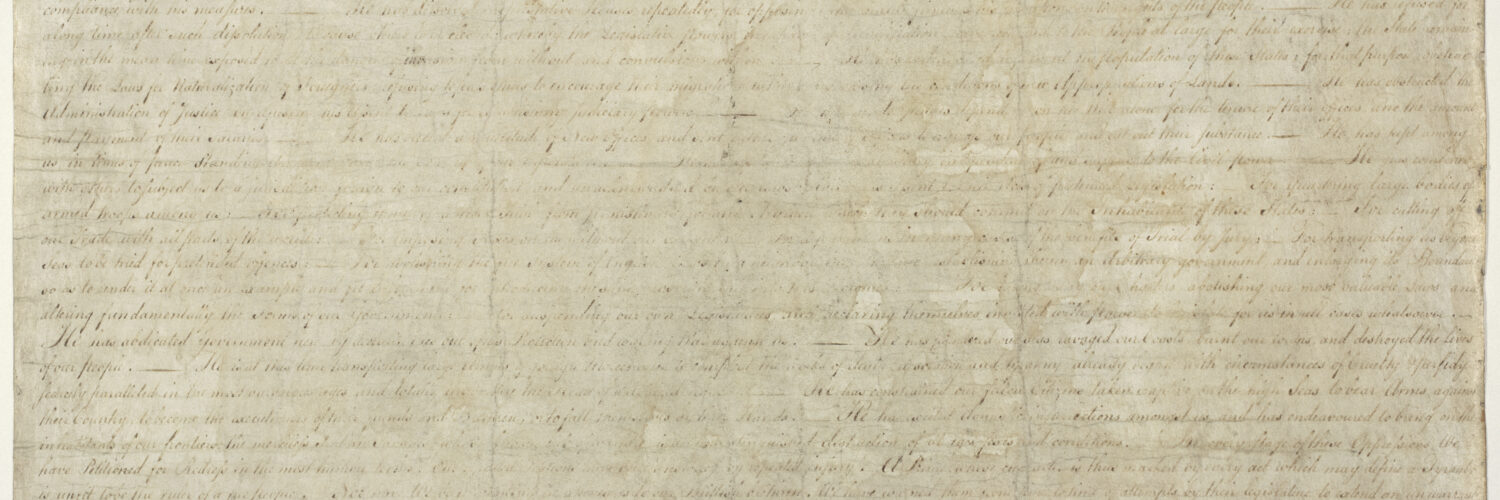
The Declaration of Independence is often pictured as a faded parchment covered with signatures, but that was not how most people first encountered it in 1776. Before the famous signed copy became an American symbol, the Declaration had to travel as news. It needed to reach state governments, military commanders, printers, soldiers, and ordinary people who were trying to understand what Congress had just done.
That job belonged to printed broadsides. A broadside was a single sheet printed on one side, meant to be posted, carried, read aloud, copied into newspapers, or sent quickly from one place to another. In an age without radio, telephones, or instant communication, a broadside could turn a decision made in one room into a public event across many colonies. The Declaration did not become powerful only because it was written. It became powerful because it was printed, moved, read, and reprinted.
A Declaration Needed More Than a Vote
On July 4, 1776, the Continental Congress approved the final wording of the Declaration of Independence in Philadelphia. The decision mattered immediately, but a vote in Congress could not by itself explain the break with Britain to people scattered from New Hampshire to Georgia. The colonies were at war, communication was slow, and many Americans still had mixed loyalties or incomplete information.
Congress needed a version of the Declaration that could move faster than a handwritten copy. The answer was the press of John Dunlap, the official printer to Congress. According to the National Archives and the Library of Congress, Dunlap printed the first published version of the Declaration on the evening of July 4 and into the early hours of July 5. These copies are now known as the Dunlap broadsides.
The choice of a broadside was practical. A single sheet could be produced quickly, folded into packets, handed to riders, or posted in public places. It could also serve as a source text for local newspapers and other printers. Instead of waiting for one ceremonial manuscript to be copied by hand, Congress could send many printed copies into the world at once.
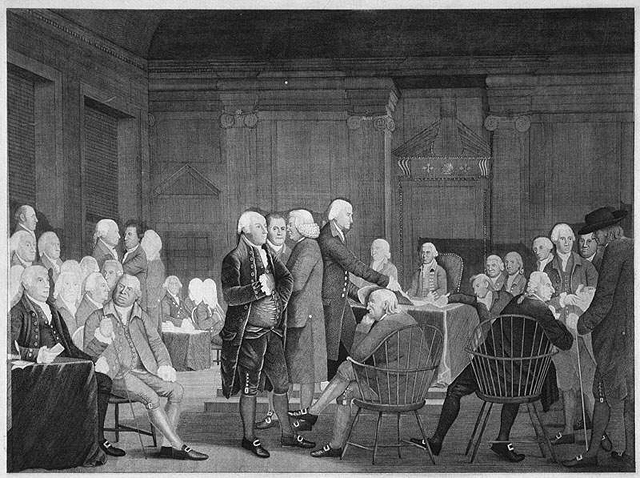
Why Broadsides Were Built for Public News
A broadside was not designed for private reading alone. It was made for public attention. Broadsides announced laws, military orders, ship arrivals, auctions, proclamations, punishments, sermons, and political arguments. Their format was simple because their purpose was direct: put important words where people could see them, hear them, and repeat them.
That mattered in 1776 because literacy was uneven and public reading was common. A copy of the Declaration could be read from a courthouse step, in a military camp, at a town meeting, or outside a state house. People who never held the sheet could still hear its claims. The printed page became a script for public performance.
The Declaration also had to compete with uncertainty. Many colonists knew that conflict with Britain had already turned violent, but independence was a major step beyond protest. The text gave Congress a way to say not only that the colonies were separating, but why. It linked the decision to ideas about consent, rights, government, and repeated grievances against King George III. Printing helped those ideas travel as a shared explanation rather than as rumor.
Broadsides also made copying easier. Once a printer received the text, it could be set again in type and printed in a local newspaper or as a local broadside. That is why the Declaration spread through a chain of print. The first Dunlap copies did not end the process; they started it.
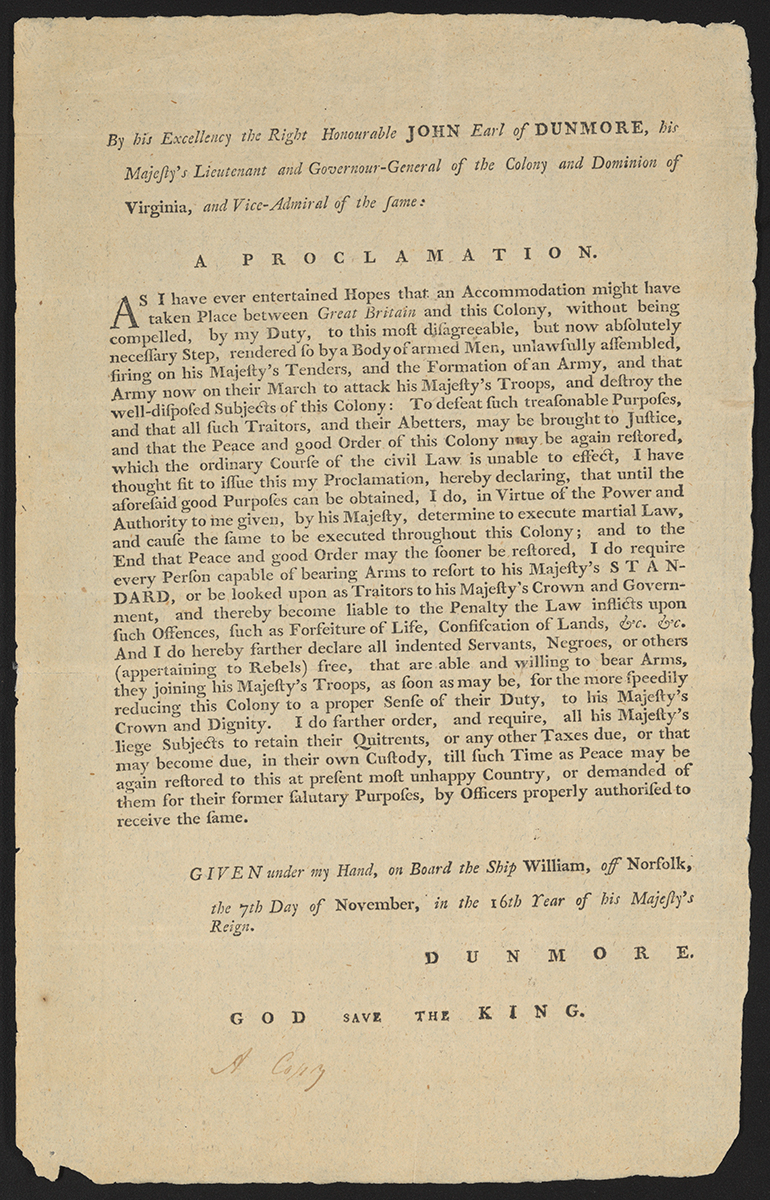
The Dunlap Broadside Carried Independence Into Motion
The Dunlap broadside was not the same object as the signed parchment that later became famous. It did not list all the signers. Instead, it carried the text approved by Congress with John Hancock named as president of Congress and Charles Thomson as secretary. That difference is important because it shows what the first public version was meant to do. It was less a keepsake than an official announcement.
Copies went to state leaders and military commanders. One reached George Washington, who had the Declaration read to the Continental Army in New York on July 9. The setting matters: soldiers heard that the conflict had become a fight for independent states, not merely a struggle over colonial rights within the British Empire. A printed sheet helped turn a political decision into a military and public commitment.
Public readings soon gave the words a wider life. In Philadelphia, the Declaration was read aloud near the Pennsylvania State House on July 8. In other towns, readings and newspaper printings followed. The timing varied by distance and transportation, but the broadside allowed the same core message to move through many local settings.
The technology was ordinary, but the consequence was not. Printers had to set individual pieces of type by hand, correct the page, ink the form, press the sheets, and send them out. Any delay mattered. A day or two could change when a town heard the news, when a newspaper could print it, or when a militia or local government could respond. The Declaration spread through a network of people who carried paper, set type, rang bells, read aloud, and preserved copies.
Local Printings Helped the Declaration Reach New Audiences
The Dunlap broadside was the first printing, but it was not the only important one. As the text moved outward, other printers produced their own versions. Some appeared in newspapers. Others appeared as separate broadsides. These versions show how independence became a local event as well as a congressional act.
One useful example is the Exeter Broadside, printed in New Hampshire in mid-July 1776 by Robert Luist Fowle. It carried the Declaration northward in a form suited to public circulation. In July 2026, the UK National Archives reported the discovery of a rare Exeter printing among papers connected to the captured American privateer Dalton. Reports from the archive and major news agencies described it as one of a very small number of surviving Exeter copies and a striking reminder that printed sheets traveled through wartime routes, not just through tidy official channels.
That discovery matters because it gives the Declaration a more mobile and complicated history. A broadside could be read in a town, carried aboard a ship, captured by an enemy navy, filed in government papers, and rediscovered centuries later. The physical sheet becomes evidence of how revolutionary ideas moved through print, war, trade, and chance.
Local printings also remind readers that the Declaration was not frozen at the moment of approval. It entered a world of printers with different typefaces, line breaks, errors, corrections, and regional audiences. A famous text became familiar through many material forms. The words stayed recognizable, but the experience of encountering them could differ from place to place.
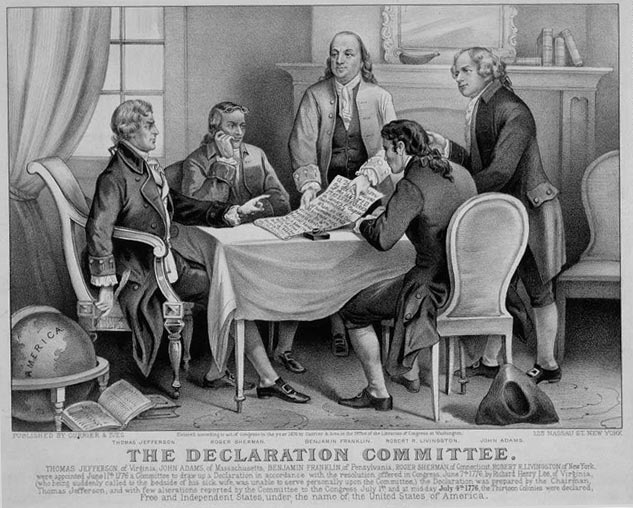
Why the Printed Copies Still Matter
Printed broadsides change the way the Declaration is understood. They shift attention from a single treasured artifact to a communication system. The signed parchment remains important, but it was not the version that first carried independence across towns, camps, and newspapers. The broadside version was the working document of public announcement.
That distinction helps explain why historians care so much about surviving copies. Each one can reveal where the text traveled, who handled it, how quickly it moved, and what version of the wording people saw. Some copies are complete. Others are damaged or fragmentary. Even a fold, notation, filing mark, or printing error can give clues about use and movement.
The survival of these sheets is remarkable because broadsides were often temporary by design. They were posted, folded, carried, read, handled, and sometimes discarded. Their value at the time came from immediate usefulness, not long-term preservation. The fact that any survive after nearly 250 years is partly a matter of careful collecting and partly a matter of luck.
The broadside story also makes the Declaration feel less distant. Independence was not only debated by famous leaders and preserved in glass. It was printed in a shop, carried by riders, read to soldiers, copied by newspapers, and sometimes caught up in the dangers of war. The Declaration became public through ordinary communication tools used with extraordinary urgency.
A Founding Document Became a Public Argument
The Declaration of Independence is remembered for its political ideas, but its influence depended on circulation. A claim about rights and government could not shape public life unless people encountered it. The broadside made that encounter possible. It turned Congress’s words into news that could be heard in streets, camps, taverns, homes, and local assemblies.
That is why printed copies deserve a place beside the signed parchment in the story of independence. The parchment symbolizes commitment. The broadsides show communication. Together, they reveal that a founding document is not only something written and preserved. It is something sent, read, argued over, and remembered because people found ways to carry it beyond the room where it began.