
 Akshay Dinesh
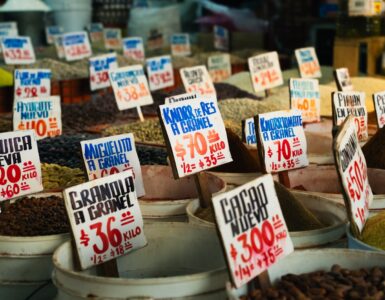
A farmers market can feel simple at first glance: tables, tents, baskets, price signs, and people choosing what looks good for dinner. But the prices on those signs are doing a surprising amount of work. A pint of berries may cost less in one week than it did the week before, while tomatoes from two nearby farms may sit only a few stalls apart with different prices. That is not random. It is a small, visible market where supply, demand, costs, risk, timing, and buyer habits meet in public.
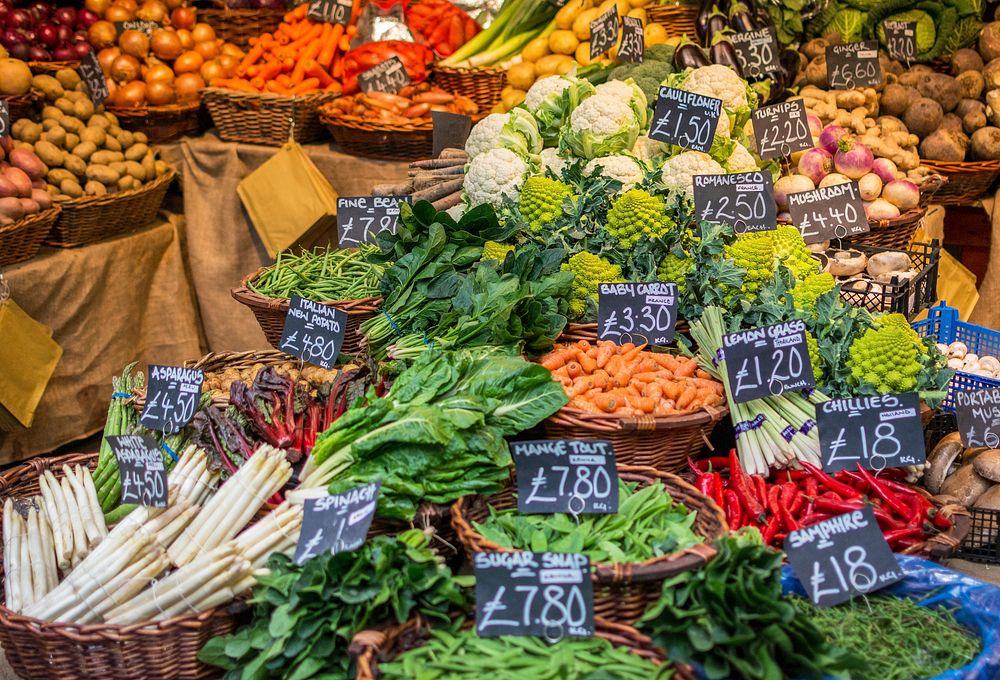
That makes farmers markets useful places to understand economics without starting from graphs. The same forces that shape oil prices, airline tickets, rent, and grocery bills also show up in peaches, eggs, lettuce, honey, and bunches of basil. The difference is that at a farmers market, the chain is shorter. The person setting the price may also be the person who planted the crop, paid for fuel, watched the weather, harvested before sunrise, and stood behind the table waiting to see what customers would buy.
Prices Start With What Is Available
The most basic reason farmers market prices move is supply. When a crop is just beginning its season, there may be only a few boxes available. Early strawberries, the first sweet corn, or the first ripe tomatoes often carry a higher price because many shoppers want them and not many vendors have them yet. A few weeks later, the same crop may be everywhere. If several farms bring full tables of the same item, buyers have more options, and the price often softens.
Seasonal produce makes this pattern easy to see. A crop does not appear in a smooth, factory-like stream. It ripens in waves. Weather can speed it up, delay it, damage it, or make it arrive all at once. A warm stretch may push fruit to ripen quickly, giving a farm more to sell on one weekend than expected. A hard rain can keep workers out of a field, make berries fragile, or reduce the quality of leafy greens. A late frost can shrink the supply before shoppers ever see the crop.
Economists often talk about scarcity as if it were an abstract idea, but at a market table it has a physical shape. Scarcity is the last few cartons of eggs after a busy morning. It is a basket of peaches from trees that produced lightly after a cold spring. It is a farmer choosing whether to bring small cucumbers at a premium price now or wait until there are more next week. Prices are one way that limited supply gets sorted among many possible buyers.
That does not mean every high price is a sign of shortage. Quality matters too. A vendor may charge more for heirloom tomatoes because they are fragile, harder to transport, and grown for flavor instead of uniform shipping. Another may charge less for tomatoes that are slightly blemished but perfect for sauce. The price is not only about how many tomatoes exist. It also reflects what kind of tomatoes they are, how much care they required, and what shoppers are likely to value.
Demand Changes With Weather, Paydays, and Habits
Demand is the other side of the story. At a farmers market, demand can change quickly because shoppers are often buying for immediate use. A sunny Saturday can bring more foot traffic than a rainy one. A holiday weekend can raise demand for berries, corn, tomatoes, flowers, bread, and anything that fits a cookout or family meal. A stretch of hot weather may make shoppers reach for watermelon, cucumbers, peaches, and salad greens while ignoring heavier foods.
Demand also depends on what people already know how to use. A familiar item such as apples or carrots is easier to sell because buyers can picture the meal. A less familiar vegetable may need a recipe suggestion, a sample, or a lower introductory price. In that sense, information affects demand. When a grower explains that kohlrabi can be sliced into slaw or roasted like turnips, the product becomes less risky to a shopper. A simple conversation can change what people are willing to buy.
There is also a budget side. Households compare farmers market prices with grocery store prices, even if the products are not perfectly identical. When food prices are already on people’s minds, shoppers become more sensitive to small differences. The U.S. Department of Agriculture’s Economic Research Service has tracked food price pressures closely in recent years, including volatility in farm-level vegetable prices. Those broader price conditions do not determine every local market sign, but they shape the background against which shoppers decide whether something feels affordable.
A farmers market therefore shows demand as a living pattern, not a fixed number. Some customers arrive with a list and a budget. Others browse, taste, compare, and decide on the spot. Some value local production, freshness, organic practices, unusual varieties, or a relationship with the seller. Others mainly want the best price. A vendor’s challenge is to choose a price that respects the cost of growing the food while still meeting buyers where they are.
Costs Do Not Disappear Just Because the Market Is Local
It is tempting to assume that direct selling should always be cheaper because the food travels a shorter path. Sometimes it is. But local does not automatically mean low-cost. A farmer selling directly to customers may avoid some wholesale middlemen, yet take on other work that a larger supply chain spreads across many businesses. Harvesting, washing, sorting, packaging, loading, driving, setting up a tent, staffing the table, paying market fees, and handling unsold goods all cost money.
Labor is often one of the biggest pieces. Small farms may rely on careful hand labor for crops that do not fit large-scale mechanized systems. A bunch of herbs, a pint of berries, or a mixed box of delicate greens may require more handling than shoppers realize. If wages, fuel, irrigation, insurance, seed, packaging, or stall fees rise, the vendor has to decide how much of that cost can be absorbed and how much must show up in the price.
Direct-to-consumer selling also carries risk. In a wholesale sale, a farm may move a large amount of product at once, though often at a lower price. At a farmers market, the potential price per item may be higher, but the farm does not know exactly how many customers will come. A rainy morning can leave a vendor with crates of perishable produce. A very successful morning can sell out early and leave later shoppers disappointed. Prices have to account for that uncertainty.
The USDA’s Agricultural Marketing Service has long treated farmers markets as part of the local food system, where producers and customers meet more directly. That directness is valuable, but it does not erase the economics of production. A local tomato still needs land, water, tools, labor, skill, transportation, and time. The shorter distance between grower and buyer changes the cost structure; it does not remove costs altogether.
Competition Is Real, but It Is Not Always a Race to the Lowest Price
At many markets, several vendors sell similar goods. That competition matters. If one table has cucumbers at a much higher price than everyone else, customers may walk on. Vendors usually know this, and many keep an eye on nearby prices. Still, farmers markets are not perfect textbook markets where every item is identical and price is the only difference.
One farm’s cucumbers may be smaller, sweeter, pickling-sized, organically grown, or harvested that morning. Another farm may have larger slicing cucumbers at a lower price. A vendor with a loyal customer base may be able to charge more because shoppers trust the quality. A newer vendor may set a sharper price to attract first-time buyers. Two prices can sit side by side because the products, relationships, and buyer expectations are not exactly the same.
That is why farmers markets are a good place to learn about product differentiation. In economics, products are differentiated when buyers see meaningful differences between them. The difference might be flavor, freshness, farming method, variety, convenience, story, or trust. A grocery store often hides some of those differences behind labels and shelf placement. A farmers market brings them into conversation.
Competition can also happen across categories. A shopper with twenty dollars may compare peaches, bread, eggs, jam, flowers, and coffee. Each purchase reduces what remains for the others. Vendors are not only competing with the farm next to them; they are competing for limited household budgets, limited refrigerator space, and limited meal plans. That is why attractive displays, clear signs, samples, and practical cooking advice can matter almost as much as the price itself.
Farmers Markets Make Price Signals Easier to Notice
A price is a signal. It tells buyers something about scarcity, cost, demand, quality, and timing. It tells sellers something too. If a vendor sells out of basil by 9:30 every week, that may signal room to bring more basil, raise the price slightly, or plant more next season. If a crop sits unsold despite careful growing, that may signal that customers need recipes, a smaller bunch size, a lower price, or a different crop mix.
Those signals are not perfect. A low price does not always mean a crop was easy to grow, and a high price does not always mean a seller is earning a large profit. Perishable goods create pressure. A farmer may discount bruised fruit near closing time because the alternative is taking it home or composting it. Another may hold firm because the farm needs a certain price to cover costs. The same market can include bargaining, discounts, bundles, and fixed signs, depending on the vendor and product.
For students, this is one of the most useful lessons a farmers market offers. Supply and demand are not just two crossing lines in a diagram. They are a set of decisions made under real constraints. Farmers decide what to grow months before they know the exact weather or market crowd. Shoppers decide what a product is worth to them that morning. Prices help coordinate those decisions, even though nobody controls the whole system.
Comparing a farmers market with a grocery store can make the lesson sharper. Grocery prices are influenced by contracts, distribution networks, advertising, storage, transportation, and national or global supply chains. Farmers market prices are usually closer to the immediate conditions of local production and local demand. Neither system is automatically better in every situation. They simply reveal different parts of the economy.
What Shoppers Can Learn From the Price Signs
A careful shopper can read a farmers market almost like a weekly economic report. When many vendors have the same fruit piled high, the crop is probably in full season. When only one table has it, the price may reflect early supply, late-season scarcity, or a difficult growing year. When a vendor sells mixed “seconds” at a lower price, that is a lesson in quality grading and price discrimination: different versions of a product can serve different buyers.
The best question is not simply “Why is this expensive?” A better question is “What is this price telling me?” It may be telling a story about frost, labor, fuel, demand, variety, freshness, small-scale production, or the fact that a seller has only six flats left. It may also be telling the shopper to compare, ask questions, try a substitute, or return later in the season.
Farmers markets make economics unusually visible because people can see the goods, talk to the sellers, and watch the choices happen in real time. A price sign is not just a number. It is a small summary of weather, work, scarcity, taste, cost, competition, and human judgment. Once that becomes clear, the market stops looking like a row of unrelated stalls and starts looking like a living classroom for how everyday economies work.





Add comment