

 Akshay Dinesh
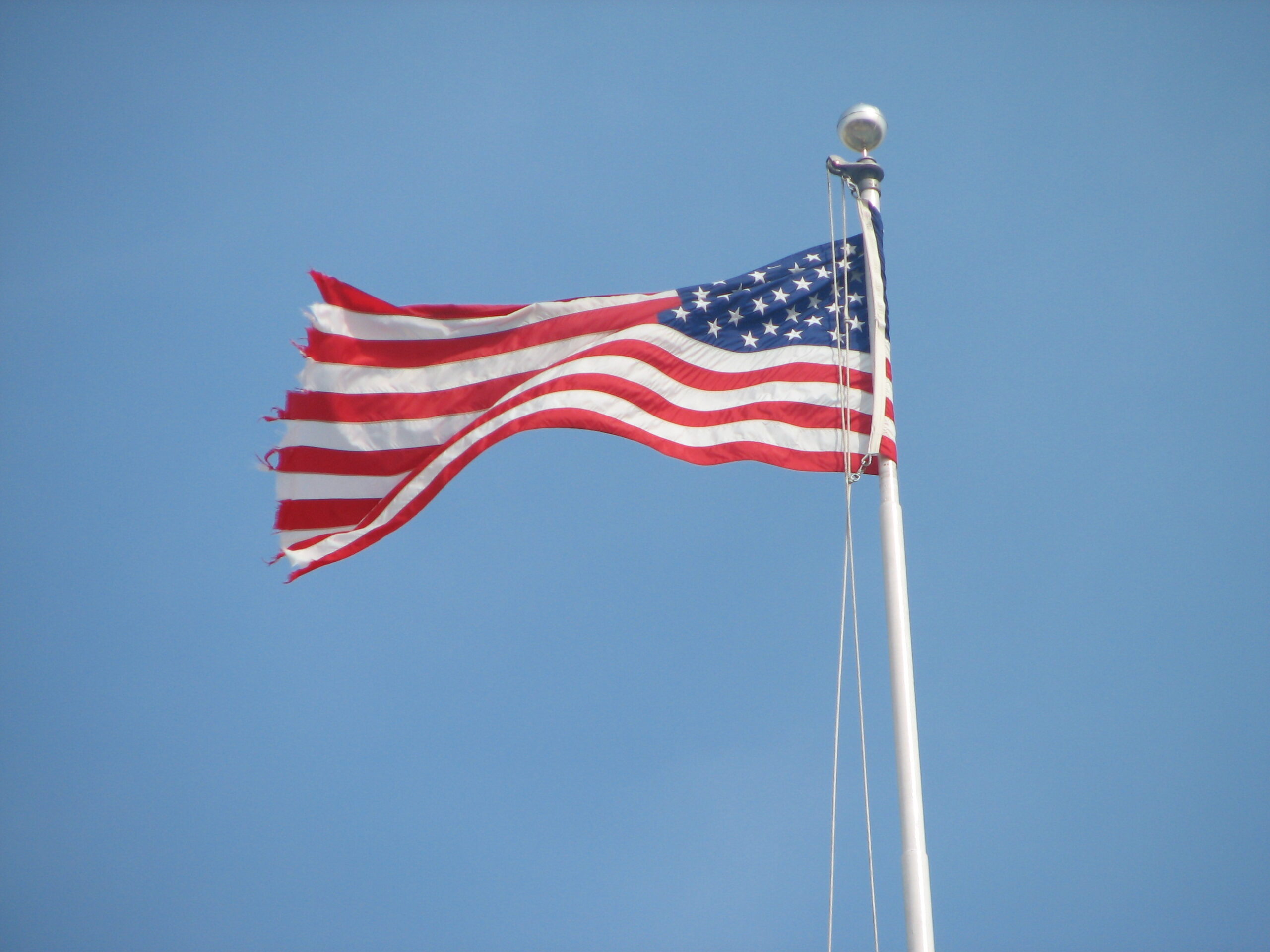
The United States flag looks simple enough to recognize from a distance: red and white stripes, a blue canton, and white stars arranged in rows. But that design carries a lot of history in a very compact form. The stripes point backward to the colonies that declared independence, while the stars keep track of a country that grew far beyond the Atlantic coast. The flag is not just a decoration for holidays or government buildings. It is a record of how the United States chose to represent both its beginning and its expansion.
That record was not settled all at once. Early Americans had to decide what a national flag should show, how it should change when new states joined, and what should stay constant even as the country grew. The answer that eventually stuck was elegant: keep the stripes fixed at thirteen, but let the stars grow with the Union. That is why the flag today has 13 stripes and 50 stars.
The stripes reach back to the original colonies
The 13 stripes stand for the 13 British colonies that became the first states of the United States: New Hampshire, Massachusetts, Rhode Island, Connecticut, New York, New Jersey, Pennsylvania, Delaware, Maryland, Virginia, North Carolina, South Carolina, and Georgia. Those colonies did not become one country overnight. They had different economies, churches, local governments, and political interests. During the American Revolution, the challenge was not only separating from Britain, but also convincing separate colonies to act together as one political union.
That is why stripes made sense as a visual choice. A stripe can stand alone, but it also belongs to a larger pattern. In the flag, the repeated red and white bands suggest separate parts lined up into one shared design. The flag does not erase the fact that the states began as distinct colonies. Instead, it turns that history into a pattern that is easy to see.
The Continental Congress first described the national flag on June 14, 1777. The resolution said the flag would have thirteen alternating red and white stripes and thirteen white stars in a blue field. The Smithsonian’s flag history materials note that the stars represented a “new constellation,” a phrase that fit the political moment. A new nation was trying to show that it belonged among the powers of the world, but it also wanted to signal that its states were joined in a new arrangement.
The first flag did not lock in every detail
One surprising part of the 1777 resolution is how much it left unsaid. It specified the number and colors of the stripes and stars, but it did not say exactly how the stars had to be arranged. Early American flags therefore appeared with different star patterns, including circles, rows, and other layouts. The familiar Betsy Ross circle belongs to popular memory, but the historical record is thinner than the legend suggests. The important point is that the flag’s basic idea was official before its exact visual style became standardized.
That flexibility made sense in a young country with limited manufacturing and long communication delays. A flag made in one town might not look exactly like a flag made elsewhere, even if both followed the same congressional description. What mattered most was recognition: thirteen stripes, thirteen stars, and a blue field that marked the union of the states.
Why the flag once had 15 stripes
The original design worked well until new states joined. Vermont entered the Union in 1791, and Kentucky followed in 1792. Congress then faced a practical symbolic question: should the flag change for every new state? The Flag Act of 1794 answered yes, at least for the moment. It provided for 15 stars and 15 stripes beginning in 1795.
That 15-stripe flag became historically famous because it flew over Fort McHenry during the War of 1812. Francis Scott Key saw it after the British bombardment of Baltimore in 1814, and that sight inspired the poem that later became “The Star-Spangled Banner.” The Smithsonian identifies that Fort McHenry flag as a 15-star, 15-stripe flag, reflecting the law passed after Vermont and Kentucky joined the Union.
But the 15-stripe solution created a problem. If every new state required both a new star and a new stripe, the flag would keep getting busier. With 20 or 30 states, the stripes would become too thin to read clearly. The design needed a way to honor new states without losing the visual memory of the original colonies.
The 1818 rule created the flag system we still use
Congress solved the problem with the Flag Act of 1818. The law returned the flag to 13 stripes and said that one star should represent each state. It also set a timing rule: a new star would be added on the Fourth of July after a state’s admission to the Union. That rule gave the flag a steady rhythm. The stripes would remain a permanent reference to the founding colonies, while the stars could expand as the country expanded.
This decision made the flag easier to understand. The stripes became historical memory. The stars became the living count of the states. Instead of redesigning the entire flag each time the country grew, the United States could add to one part of the design while preserving the other.
USAGov summarizes the modern meaning plainly: the 13 stripes represent the original colonies, and the 50 stars represent the 50 states. The current 50-star flag dates to 1960, after Hawaii became a state in 1959. According to Library of Congress classroom materials, the 50-star version is the 27th edition of the flag and has been in use longer than any earlier version.
The colors carry later symbolic meanings
Many people also ask what the colors mean. The flag’s official early laws described red, white, and blue, but they did not provide a detailed color code of virtues. Later explanations connected red with valor and bravery, white with purity and innocence, and blue with vigilance, perseverance, and justice. USAGov lists those meanings today, and they are widely repeated in civic education.
It is helpful to separate two kinds of meaning. The numbers are historical and structural: 13 stripes for the original colonies, 50 stars for the states. The colors are symbolic: they invite people to connect the flag with civic ideals. Both matter, but they do different work. The numbers tell a story about how the country formed and grew; the colors express what people have wanted the country to stand for.
Why the design still works
The flag’s strength comes from the way it balances memory and change. If it changed completely whenever a new state joined, it would lose continuity. If it never changed at all, it would fail to show the growing Union. The current system does both jobs at once. It keeps the founding colonies visible while allowing each state to be counted equally in the field of stars.
That design also avoids turning the flag into a full history book. It does not show every conflict, contradiction, migration, law, or community that shaped the United States. No symbol can carry that much detail. What it does carry is a compact civic story: a group of colonies declared themselves joined, and the country that grew from them continued adding states under a common flag.
So the answer to the flag’s design is more than arithmetic. The 13 stripes remember the country’s starting point. The 50 stars show its present union of states. Together, they make the flag a rare kind of symbol: one that looks backward and forward at the same time, holding a founding memory in place while leaving room for the nation’s map to change.






Add comment