
 Akshay Dinesh
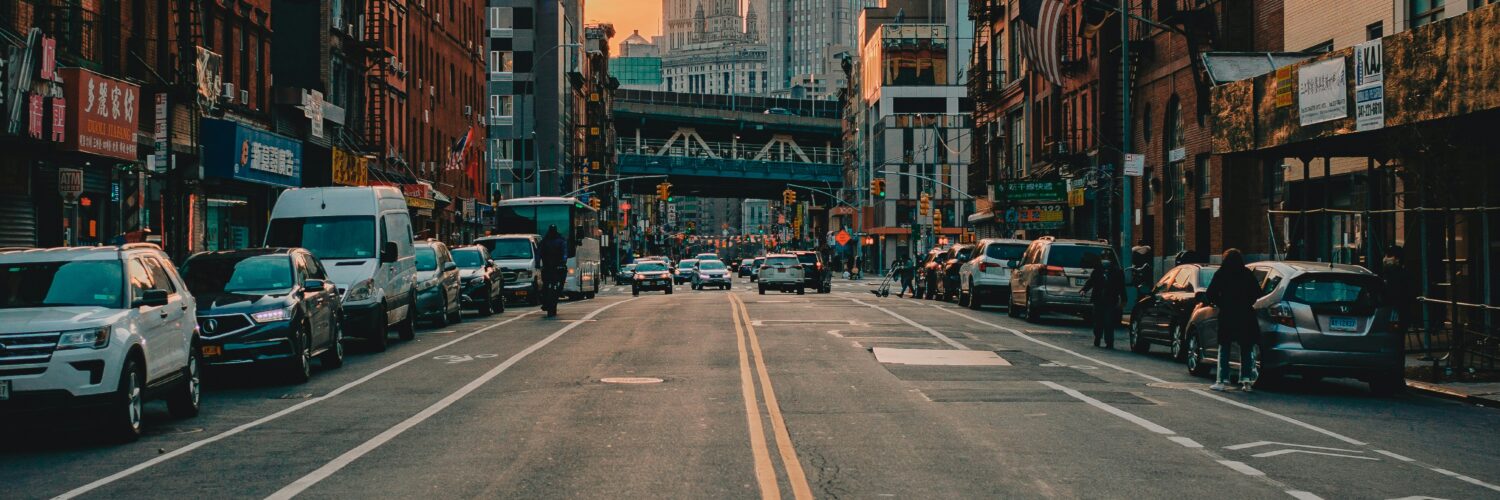
On a few evenings each year, the setting sun drops into the long corridors of Manhattan’s cross streets and seems to pause between the buildings. Traffic lights glow, glass towers catch orange reflections, and people crowd the sidewalks to watch a city grid do something that feels almost ancient. Manhattanhenge is beautiful, but it is not magic. It is a lesson in geography, astronomy, and urban planning happening in public view.
The American Museum of Natural History’s Hayden Planetarium lists the 2026 July dates as Saturday, July 11 at 8:20 p.m. Eastern Time for the full sun on the grid, followed by Sunday, July 12 at 8:21 p.m. for the half sun on the grid. The same kind of alignment also happened in late May, on the other side of the summer solstice. Those paired dates are not random. They appear because the sun’s setting point moves along the horizon through the year, while Manhattan’s streets hold one fixed direction.
Why Manhattan’s Grid Makes the Alignment Possible
Most maps make Manhattan look as if it runs straight north and south, but the island’s familiar grid is tilted. The main avenues and cross streets are rotated roughly 29 to 30 degrees away from true north-south and east-west. That tilt matters because Manhattanhenge depends on the direction a person faces while looking down a long cross street toward the Hudson River and New Jersey.
If Manhattan’s main cross streets ran exactly east-west, the best sunset alignment would fall near the equinoxes, when the sun sets close to due west. Instead, the grid points northwestward. The sun has to set far enough north of west to match the direction of the streets. That happens near, but not on, the summer solstice, when the sun reaches its northernmost sunset positions for the year.
The original Commissioners’ Plan of 1811 laid out much of Manhattan’s grid as a practical system for growth, land division, movement, and development. It was not designed as an astronomical instrument. Yet once a city has long, straight corridors and a consistent orientation, the sky can line up with that geometry. The result is a modern city briefly acting like a giant sightline.
The Astronomy Behind the Moving Sunset
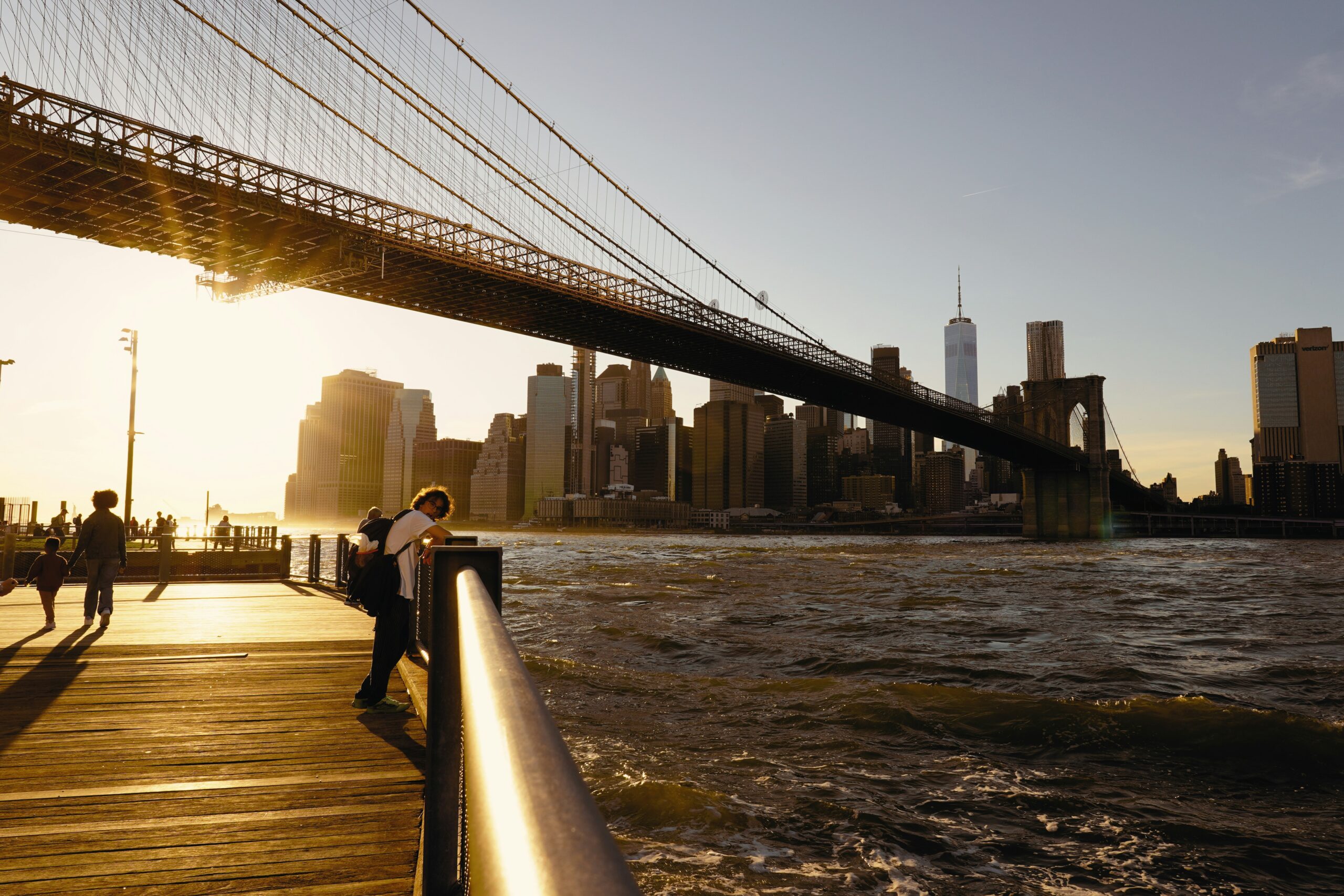
A common shortcut says the sun rises in the east and sets in the west. That is only exactly true around the equinoxes. During the year, the sunrise and sunset points slide north and south along the horizon because Earth’s axis is tilted. In the Northern Hemisphere, sunset moves northward as spring approaches summer, then begins moving southward after the June solstice.
Manhattanhenge occurs when the sunset direction, or azimuth, lines up with the city’s grid. Hayden Planetarium astronomer Jackie Faherty calculates the official dates by matching the sun’s position with the measured orientation of Manhattan’s streets. The details are precise: the sun has to be low enough to sit near the horizon, but also far enough north of west to appear centered down the street corridor.
That is why there are two pairs of sunset alignments instead of one. Before the solstice, the sunset point moves northward and crosses the grid direction. After the solstice, it moves southward and crosses the same direction again. The May and July dates are like two matching pages in a calendar, one before the sun’s northern turn and one after it.
The “full sun” and “half sun” labels describe how much of the solar disk appears above the horizon while it is framed by the street canyon. On a full-sun date, the whole disk appears just above the horizon. On a half-sun date, the horizon cuts through the disk so only the upper part is visible. Both can be striking, but the full-sun version usually gives photographers the clearest round sun between the buildings.
Why the Best Views Need Long, Wide Streets
Not every Manhattan street gives the same view. A strong Manhattanhenge viewpoint needs a long westward sightline, a clear enough horizon, and enough width for the sun to be framed visibly between buildings. Wide cross streets such as 14th, 23rd, 34th, 42nd, and 57th Streets are often favored because they offer broader corridors and recognizable skyline features.
Standing farther east can make the view more dramatic because more of the street corridor lies in front of the viewer. The buildings on both sides create a vanishing point, and the sun appears to settle into that distant opening. Reflections on glass and steel can brighten the sides of the street even before the sun itself enters the frame.
The effect also depends on weather and local obstacles. Clouds near the western horizon can erase the alignment even when the geometry is perfect. Construction scaffolding, buses, trucks, trees, and crowds can block a view that looked promising on a map. A person who understands the geography knows to think like a surveyor: direction, distance, horizon, and obstruction all matter.
What Manhattanhenge Teaches About Cities and the Sky
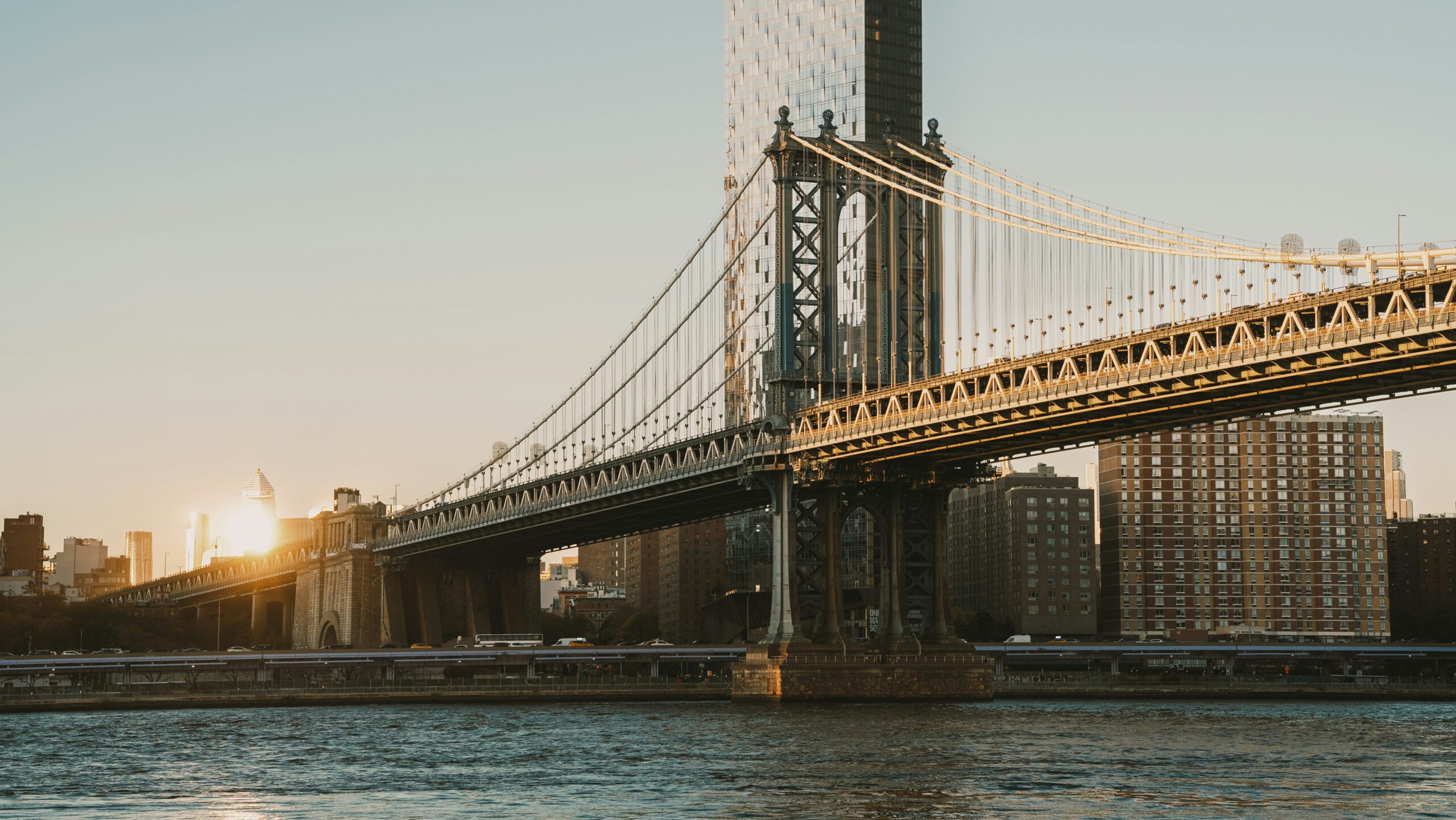
Manhattanhenge is easy to treat as a photo event, but its deeper value is educational. It shows that cities are not separate from the natural world. Street grids, building heights, river edges, horizon lines, and the changing path of the sun all meet in the same scene. A planned city becomes part of the way people notice the sky.
It also shows why map orientation matters. “Uptown” can feel like north, but local directions are not always the same as compass directions. In Manhattan, the grid creates a practical mental map for daily life, while the compass reveals how that familiar map sits on Earth. The difference between those two ways of seeing the city is exactly what makes the alignment possible.
There is a useful contrast with ancient solar alignments. Stonehenge was built with astronomical sightlines as part of its meaning. Manhattan’s grid was built for urban order, real estate, and movement. Still, once the streets existed, people could discover a repeating solar event inside them. That discovery turns ordinary infrastructure into something people can read with curiosity.
The event also rewards patience. The sun’s position changes a little each day, and a few minutes can matter. AMNH’s 2026 July times show the full-sun alignment at 8:20 p.m. on July 11 and the half-sun alignment at 8:21 p.m. on July 12. Arriving early, facing west on a wide cross street, and watching how the light moves across the buildings can make the geometry easier to see before the main moment arrives.
A City Moment Built From Precision
Manhattanhenge feels dramatic because it compresses large ideas into a familiar view. Earth’s tilted axis, the sun’s changing horizon position, a nineteenth-century street plan, and modern towers all line up for a few minutes. The result is not only a sunset, but a reminder that places have hidden measurements built into them.
That is what makes the event worth more than a quick photograph. It gives people a reason to notice the angle of a street, the direction of a river, the height of a horizon, and the steady rhythm of the sky. For a brief evening, the city becomes a calendar anyone can stand inside.





Add comment