
 Akshay Dinesh
The United States Congress looks simple from a distance: one House of Representatives, one Senate, and laws that usually need approval from both. That familiar design came out of one of the most tense arguments of the Constitutional Convention. In the summer of 1787, delegates did not merely debate how many seats each state should receive. They were arguing over what kind of union the new country would become, whether larger states could dominate smaller ones, and whether the national government would be strong enough to do what the Articles of Confederation had struggled to do.
The answer became known as the Great Compromise, or the Connecticut Compromise. It gave the new Congress two chambers with two different ideas of representation. The House would represent people by population. The Senate would represent states equally. That bargain did not solve every conflict at the convention, and it came with deep moral failures connected to slavery and representation. Still, it created the basic structure of Congress that continues to shape American lawmaking.
The Problem Was Bigger Than Seat Counts
By 1787, many national leaders believed the government under the Articles of Confederation was too weak. Congress could not easily raise revenue, regulate interstate commerce, or respond with enough force to national problems. Yet the states did not arrive in Philadelphia ready to hand power to a new central government without conditions. They had recently fought a revolution against concentrated authority, and each state wanted to protect its own voice.
The hardest question was representation. If seats in Congress were based on population, large states such as Virginia and Pennsylvania would carry much more influence. Their delegates argued that this was fair because more people should mean more representation. A government claiming to act for the people could not treat a small state and a large state as if they contained the same number of citizens.
Smaller states saw the matter differently. They feared that proportional representation in every part of Congress would let the large states control national policy. Under the Articles of Confederation, each state had one vote. Small-state delegates did not want to enter a stronger national government only to become permanent minorities inside it. For them, equal state representation was not a technical preference; it was a condition for joining the new system at all.
Virginia and New Jersey Pointed in Opposite Directions
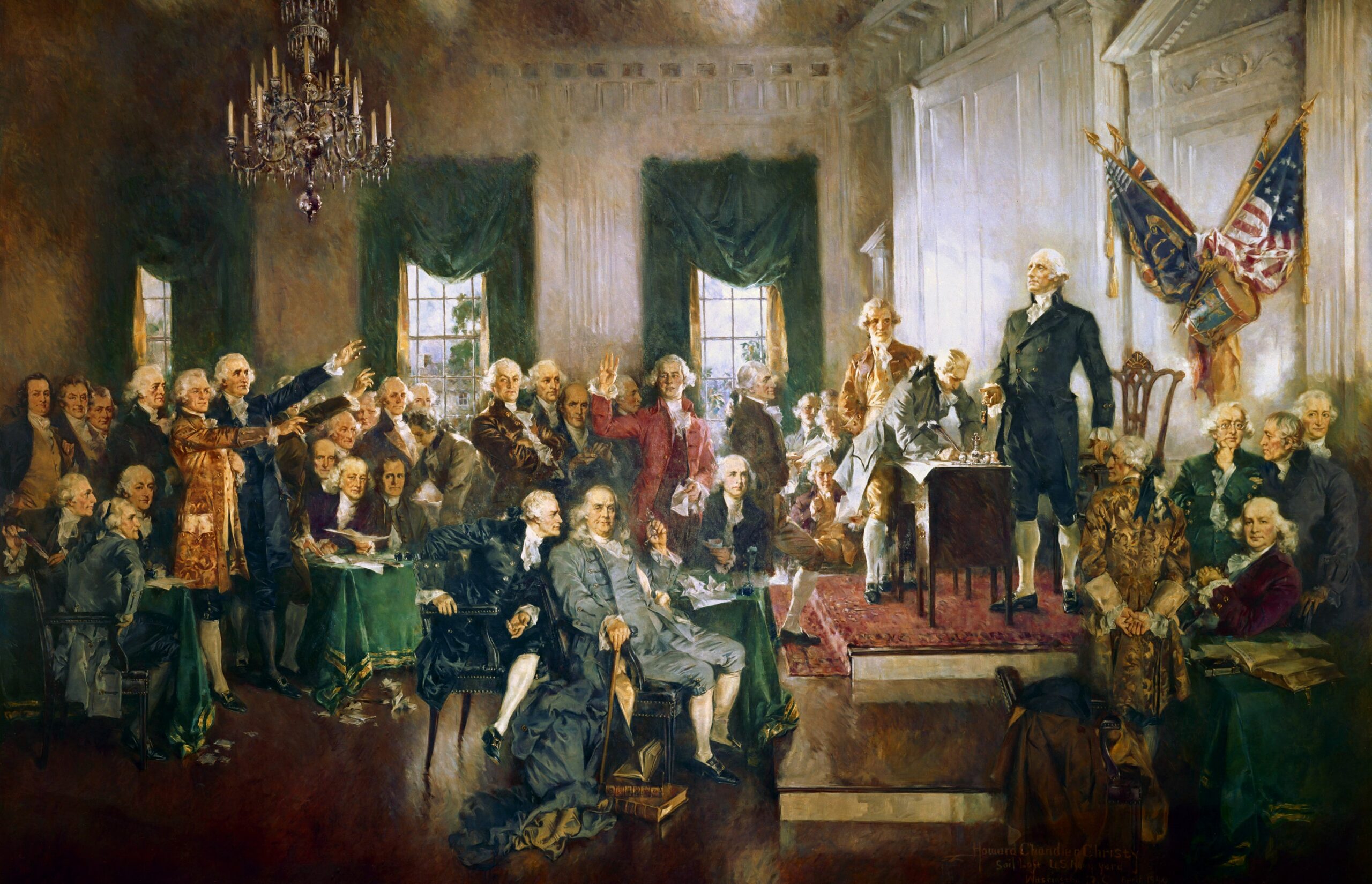
The Virginia Plan, introduced by Edmund Randolph and strongly associated with James Madison, called for a much stronger national government and a two-house legislature. In that plan, representation in both houses would be tied to state population or financial contribution. The plan fit a more national vision: the government would speak for the people as a whole, not merely for states as separate units.
Small-state delegates responded with the New Jersey Plan, presented by William Paterson. It kept a one-house legislature in which each state had an equal vote, while still giving the national government more power than it had under the Articles. The New Jersey Plan accepted that the old system needed repair, but it rejected the idea that the large states should gain control of both chambers in the new Congress.
These plans exposed two competing ideas of political fairness. One idea said that equal citizens deserved representation in proportion to their numbers. The other said that states entered the union as political communities and should not lose their standing simply because they had fewer people. Neither side saw the argument as minor. If the convention could not settle it, the entire Constitution could fail before it was even written.
The Connecticut Compromise Joined Two Principles
Roger Sherman and Oliver Ellsworth of Connecticut helped advance the compromise that eventually broke the deadlock. The plan kept a bicameral legislature, meaning Congress would have two chambers. In the House of Representatives, seats would be apportioned by population. In the Senate, every state would receive equal representation.
The U.S. Senate Historical Office notes that the convention adopted the Great Compromise on July 16, 1787, by a margin of one vote. That narrow result shows how fragile the agreement was. The compromise did not make everyone happy. Large-state delegates lost their demand for population-based representation in both chambers. Small-state delegates gave up the idea that every part of Congress should preserve equal state voting.
What made the bargain workable was that each chamber would answer a different political concern. The House would connect national lawmaking to population and popular election. The Senate would protect the states as equal members of the union. Congress.gov’s Constitution Annotated describes the result as a division of legislative power between a House based on population and a Senate based on equal state representation.
The House and Senate Were Built to Feel Different
The compromise did more than decide how many seats each state would receive. It helped make the two chambers behave differently. House members would serve shorter terms and stand closer to public opinion. Senators would serve longer terms, and before the Seventeenth Amendment in 1913, they were chosen by state legislatures rather than by direct popular vote.
This difference mattered because the framers did not want Congress to move as one rushing body. They expected the House and Senate to check each other. A bill would usually need to survive two chambers built on different principles. The House could reflect population more directly, while the Senate could slow the process and protect smaller states from being ignored.
That design still shapes lawmaking. A bill can pass the House because a majority of representatives, reflecting districts across the country, support it. The same bill can fail in the Senate because the states are represented equally there, not by population. This is why voters in less populous states have more Senate influence per person than voters in the most populous states. The Great Compromise made that imbalance part of the constitutional design, not an accident of later politics.
The Compromise Also Carried the Convention’s Deepest Contradictions
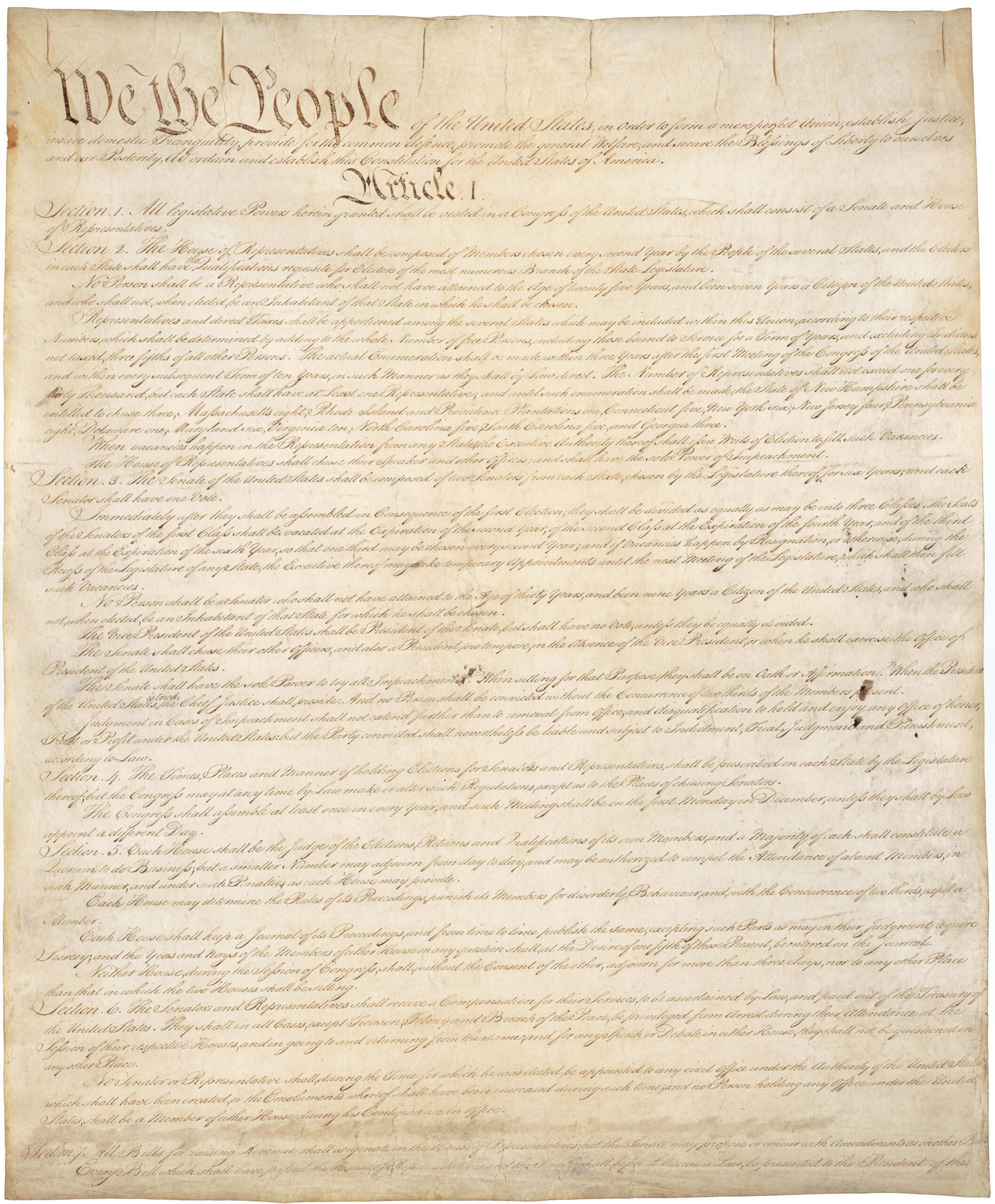
The Great Compromise cannot be understood honestly without the wider debate over slavery and representation. When the convention discussed representation in the House, delegates also argued over how enslaved people would be counted for apportionment. The result was the three-fifths formula, which increased the political power of slaveholding states while denying enslaved people any political rights of their own.
That part of the constitutional settlement was not a side issue. It affected the balance of power in the House, the Electoral College, and national politics for decades. A lesson about the Great Compromise should not turn the convention into a neat story of wise problem-solving. The delegates did solve a structural problem that threatened the Constitution, but they also protected a system that treated human beings as property and built that injustice into national representation.
This is one reason the compromise remains important for students to study carefully. It shows how constitutional design can solve one political conflict while preserving or even strengthening another. A durable government can still contain deep flaws. The Constitution created a stronger union, but its compromises also left future generations to confront problems the framers refused to solve justly.
Why the Great Compromise Still Matters
Every modern argument about Congress still lives partly inside the Great Compromise. When people debate whether the Senate gives too much power to small states, they are debating the equal-state principle from 1787. When people discuss House apportionment, congressional districts, or population shifts after the census, they are working with the population-based principle on the other side of the bargain.
The compromise also helps explain why American lawmaking can feel slow. Passing national legislation usually requires agreement between chambers that represent the country in different ways. That can encourage caution and negotiation. It can also produce gridlock, especially when the House and Senate respond to different political pressures.
The Great Compromise did not simply split the difference between large and small states. It joined two ideas that still sit uneasily together: the people as citizens of one nation, and the states as equal members of a federal union. The House and Senate are the visible result of that bargain. To understand why Congress works the way it does, it helps to begin in that hot Philadelphia summer, when a single-vote compromise kept the convention alive and gave American government one of its defining shapes.





Add comment