
 Akshay Dinesh
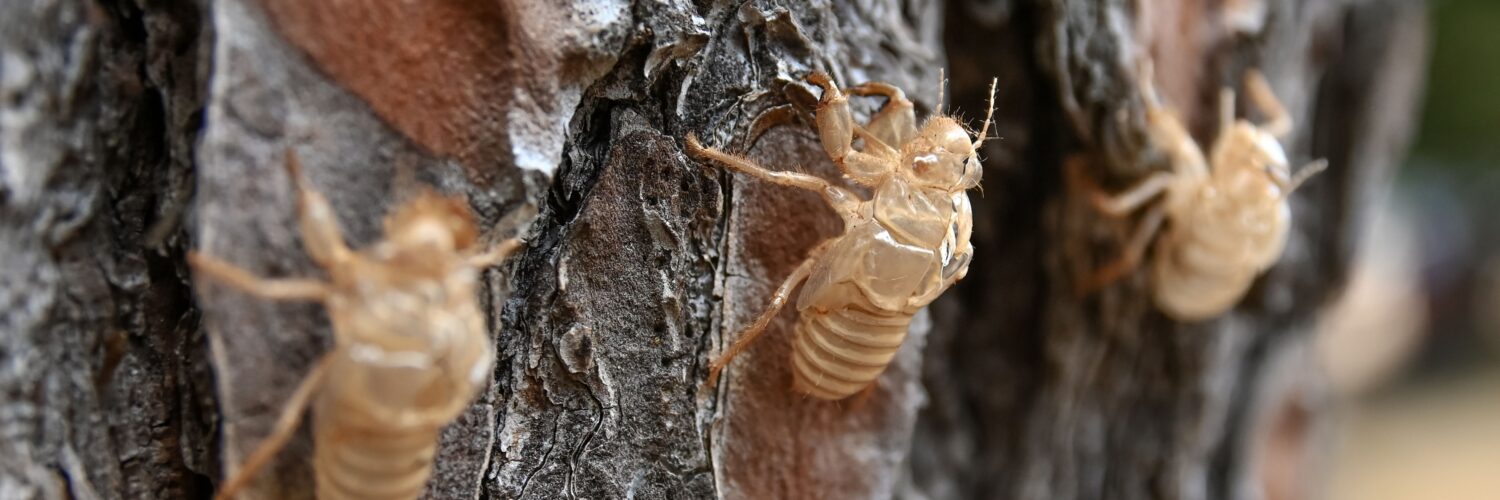
Finding a dry, clawed cicada shell on a tree can feel a little strange at first. It looks like an insect that has frozen in place, but it is really the old outer covering of a cicada that has already moved on. The living cicada climbed out of the soil as a nymph, gripped the bark, split its old exoskeleton, and pulled itself into the air as a soft, pale adult with wings. What remains is a shell-shaped record of one of the most dramatic changes in an insect’s life.
That shell is not a dead cicada. Biologists usually call it an exuvia, the shed exoskeleton left behind after molting. Cicadas are especially good at making this process visible because their final molt often happens on tree trunks, fence posts, porch screens, and other upright surfaces where people can spot the empty skins the next morning.
The Shell Is an Old Exoskeleton
Unlike people, cicadas do not have bones inside their bodies. Their support and protection come from an exoskeleton, a tough outer layer made largely of chitin and other materials that form a flexible but protective body covering. This outer skeleton gives an insect shape, helps protect it from injury and drying out, and provides places for muscles to pull.
The problem is that an exoskeleton cannot simply stretch forever. A growing insect eventually becomes too large for its old outer layer. To keep developing, it must molt, loosening and leaving behind the old covering while a new, larger one takes over. That is why the shell on a tree still has the shape of legs, claws, eyes, and body segments even though the insect is gone.
Cicadas are not the only animals that molt. Crabs, spiders, grasshoppers, and many other arthropods shed outer coverings as they grow. Cicadas stand out because their last molt is large enough, sturdy enough, and public enough for people to notice. A shell stuck to bark is a snapshot of growth that usually happens out of sight in much smaller stages.
Most of a Cicada’s Life Happens Underground
The familiar winged cicada is only the adult stage. Before that, a cicada spends a long juvenile period as a nymph underground, feeding on fluids from plant roots. The University of Connecticut’s periodical cicada project describes cicada juveniles as nymphs that grow through multiple juvenile stages while living in underground burrows. Periodical cicadas are famous for spending 13 or 17 years underground, but many annual cicada species also spend years below the surface before adults appear in summer.
During those underground years, the nymph is built for digging rather than flying. It has strong front legs, a compact body, and no working wings. Each time it outgrows its old covering, it molts into a larger nymph. The empty shells most people find, though, come from the final molt, when the insect changes from a ground-dwelling nymph into an adult that can fly, sing, mate, and lay eggs.
That final stage explains why cicada shells often appear suddenly. The nymphs have been there all along, hidden under lawns, woods, and gardens. When soil conditions and seasonal timing are right, mature nymphs tunnel upward, leave the ground, and look for a safe place to transform. The tree trunk is not random scenery; it is a launch site.
How the Final Molt Unfolds
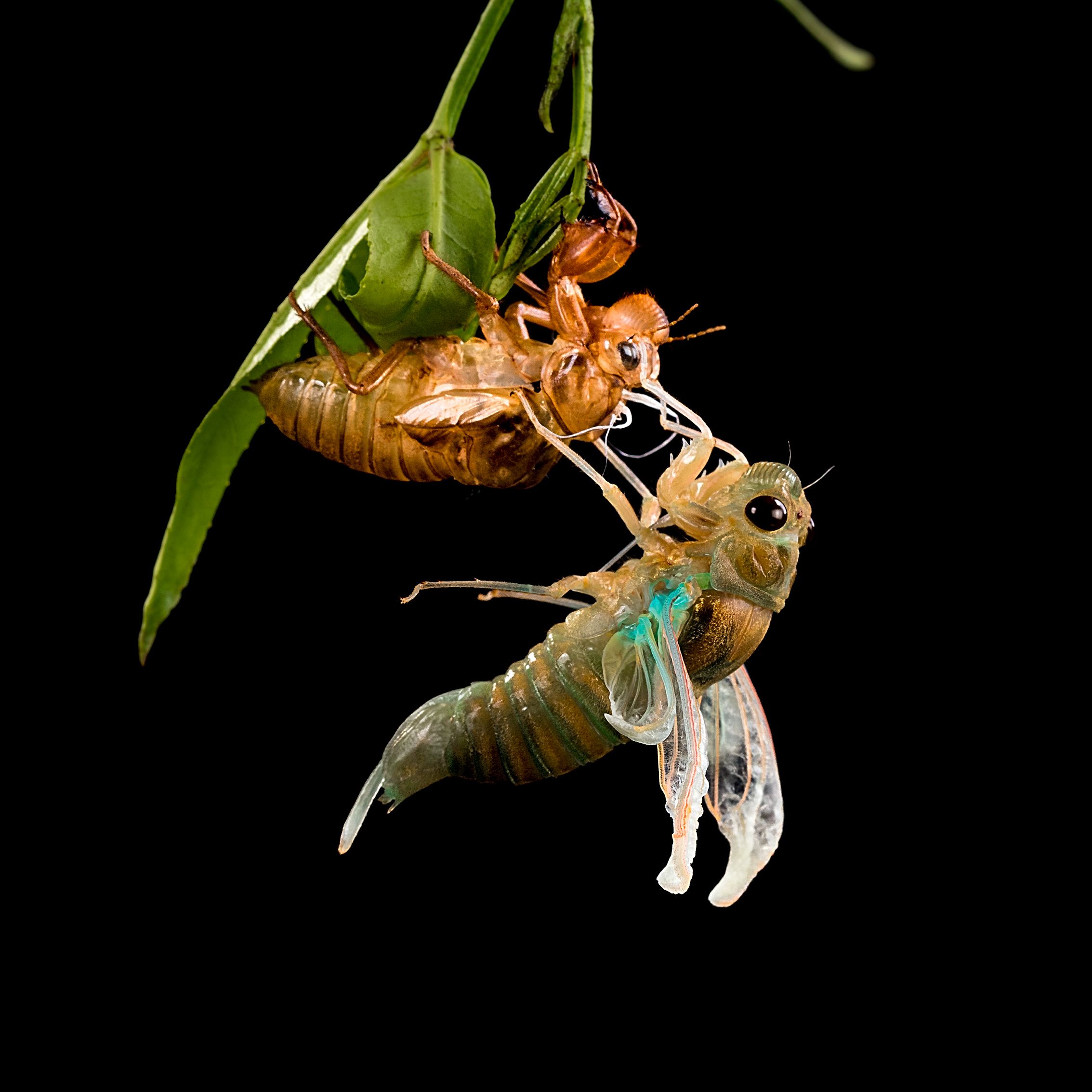
The last molt usually begins after a nymph climbs onto a firm surface and locks its claws into place. Mississippi State University Extension describes a wingless cicada nymph crawling out of the soil at night, gripping tree bark, splitting its exoskeleton along the back, and emerging as a winged adult before dawn. The timing helps the insect avoid some daytime heat and predators while it is at its most vulnerable.
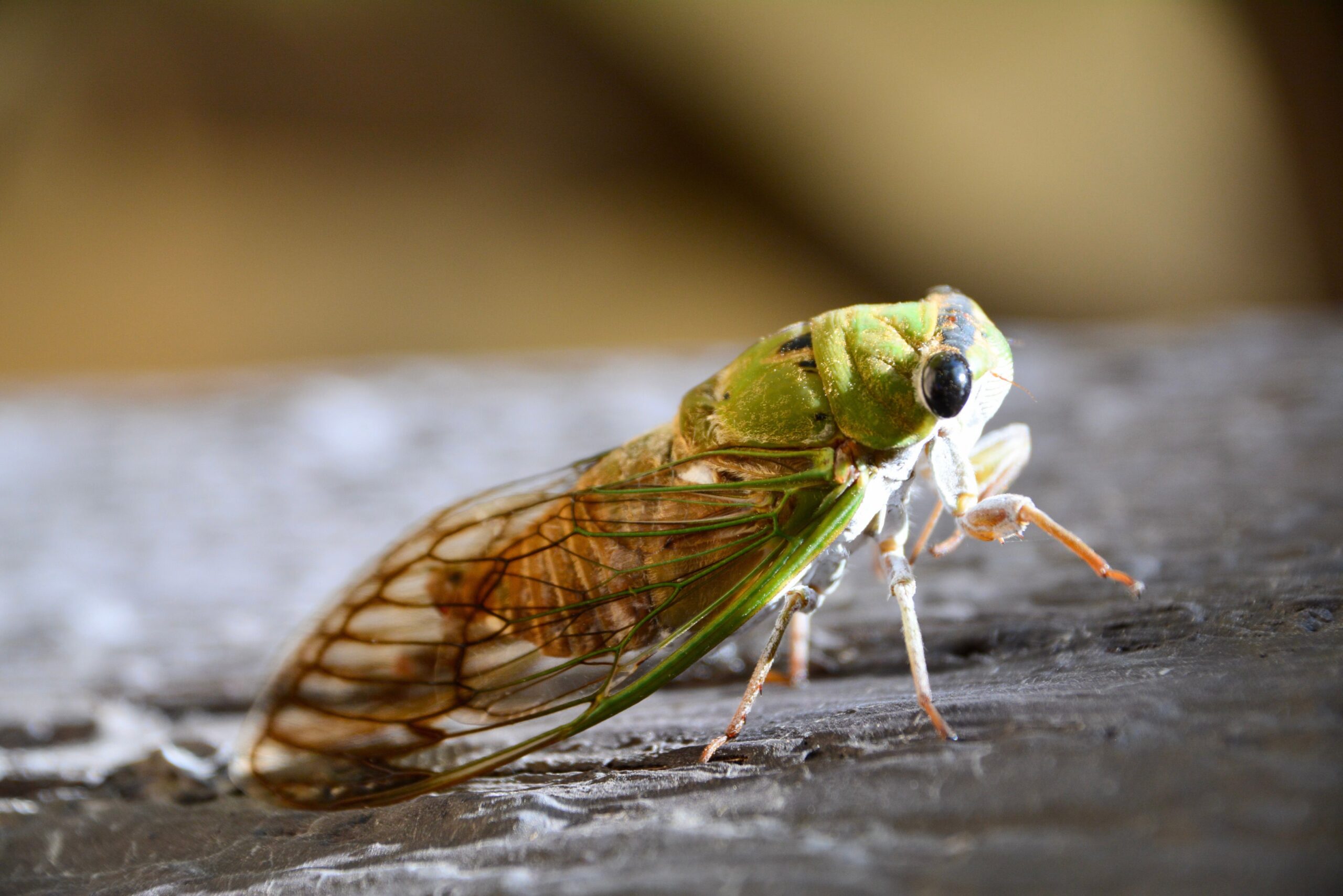
Once the back of the nymph’s old exoskeleton opens, the adult cicada slowly arches backward and pulls free. Its new body is soft, pale, and not ready for flight. The wings are crumpled at first, then expand as fluid moves through them. Colorado State University Extension notes that the newly molted adult hangs for several hours while the wings extend, the body darkens, and the new exoskeleton hardens.
This is a risky window. A cicada that has just emerged cannot fly well, and its new body has not yet become the tougher adult armor it needs. Staying attached to the old shell gives it a stable place to finish hardening. By the time a person finds the empty casing later, the adult may already be in the branches, where males call and both sexes search for mates.
Why the Empty Shell Stays Behind
The shell remains because it is no longer living tissue the cicada needs. It is more like a suit of armor that has been opened from the back and stepped out of. The claws stay hooked to bark or another surface, so the exuvia can cling there for days or weeks, slowly drying and becoming brittle.
That empty shell can still tell a careful observer a lot. Its front legs show the digging tools the nymph used underground. The split along the back marks the exit point. The hollow eye coverings, body segments, and leg joints reveal how complete the outer mold of an insect can be. Even without the adult, the shell preserves the shape of the stage that came before it.
The shell also helps explain why cicadas are often heard before they are fully understood. The loud adult chorus is the most obvious sign of summer cicadas, but the silent shells show the earlier part of the story. Before the sound, there was a hidden life below ground, a climb upward, and a difficult molt that turned a digging nymph into a winged adult.
What Cicada Shells Reveal About Insect Growth
Cicada shells are useful because they make a basic biology idea visible: growth does not look the same in every kind of animal. Mammals grow gradually within skin and bones that expand over time. Insects grow in steps, with each molt creating a sharp before-and-after moment. The shell is evidence of one of those steps.
Cicadas also show a type of development called incomplete metamorphosis. They do not pass through a caterpillar-like larval stage and then a pupa the way butterflies do. Instead, the young nymph already has the basic insect body plan, then gradually grows and changes until the final molt produces the winged adult. The adult looks different from the nymph, but the transformation is built from repeated molts rather than a hidden pupal reorganization.
That is why a cicada shell on a tree is more than a curious summer object. It is a small, sturdy clue about how insects solve the problem of growing inside hard outer bodies. The cicada has left the shell behind because the shell did its job: it protected a digging nymph until the moment came for a new body, new wings, and a short adult life above ground.






Add comment