
 Akshay Dinesh
The chain rule is the derivative rule students often meet right after the power, product, and quotient rules start to feel manageable. At first, it can look like an extra step tacked onto problems that already have enough moving parts. In reality, it answers a simple question: what happens when one function is built inside another function?
That question appears everywhere in calculus. A square root may contain a polynomial. A sine function may contain an angle that is itself changing. A cost model may depend on demand, while demand depends on price. The chain rule keeps track of those layers so the derivative reflects the whole situation, not just the outer shell.
Why ordinary derivative rules are not enough
A basic derivative rule works cleanly when the variable is sitting directly inside a familiar expression. For example, the derivative of x^5 is 5x^4, and the derivative of sin x is cos x. Those rules are powerful, but many functions are not that bare. They are built in layers, such as (3x + 1)^5, sin(x^2), or sqrt(7 – 2x).
In each of those expressions, there is an outside function and an inside function. The outside function is the visible structure: a fifth power, a sine, or a square root. The inside function is what has been placed where a plain x might have been: 3x + 1, x^2, or 7 – 2x. If the inside part changes at the same speed as x, the ordinary rule would be enough. Usually it does not.
Take (3x + 1)^5. If it were just x^5, the derivative would be 5x^4. But the base is not x; it is 3x + 1. As x increases by 1, the inside expression increases by 3. The outside power reacts to the inside expression, and the inside expression reacts to x. A correct derivative must include both reactions.
That is the whole purpose of the chain rule. It says that the rate of change of a layered function is found by differentiating the outside layer, leaving the inside in place, and then multiplying by the derivative of the inside layer. Written compactly, if h(x) = f(g(x)), then h'(x) = f'(g(x))g'(x). The notation is short, but the idea is very concrete: outside change times inside change.
The inside and outside idea
The easiest way to recognize the chain rule is to ask what operation happens last when the function is evaluated. Suppose y = (2x^2 – 5)^4. A value of x is first squared, doubled, and reduced by 5. Only after that whole inside expression is formed does the fourth power happen. The fourth power is the outside function; 2x^2 – 5 is the inside function.
The chain rule starts with the outside. Treat the inside expression as a single object for a moment. The derivative of something to the fourth power is 4 times that something cubed, so the outside part gives 4(2x^2 – 5)^3. But the inside was not just x. Its derivative is 4x, so the full derivative is 4(2x^2 – 5)^3 times 4x, or 16x(2x^2 – 5)^3.
This outside-first order can feel backward because the function itself is evaluated from the inside out. Calculus reverses the viewpoint. To find the derivative, start with the outermost operation, then move inward. Each layer contributes a factor to the derivative, which is why nested functions can produce products even when the original expression does not look like a multiplication problem.

A helpful check is to temporarily name the inside expression. Let u = 2x^2 – 5. Then y = u^4. The derivative dy/du is 4u^3, and du/dx is 4x. Multiplying them gives dy/dx = 4u^3 times 4x. Substituting u = 2x^2 – 5 returns the same answer. This notation is not just a trick; it shows the chain of dependence from x to u to y.
A worked example from start to finish
Consider y = sin(3x^2 + 1). This expression has a trigonometric outside function and a polynomial inside function. The outside function is sin u, and the inside function is u = 3x^2 + 1. The derivative of sin u with respect to u is cos u. The derivative of 3x^2 + 1 with respect to x is 6x.
Putting those pieces together gives y’ = cos(3x^2 + 1) times 6x. A cleaner final form is y’ = 6x cos(3x^2 + 1). The inside expression stays inside the cosine because the outside derivative is evaluated at the original inside function. The extra 6x appears because the angle inside the sine is changing as x changes.
This is where many errors happen. A student may write cos(3x^2 + 1) and stop. That answer differentiates the sine part but ignores how quickly the inside angle changes. Another student may write 6x sin(3x^2 + 1), which differentiates the inside but forgets that the outside function changes from sine to cosine. The chain rule requires both pieces.
The same method works with roots and fractional powers. For y = sqrt(5x – 2), rewrite the function as y = (5x – 2)^(1/2). The outside derivative gives (1/2)(5x – 2)^(-1/2), and the inside derivative gives 5. Multiplying them gives y’ = 5/(2sqrt(5x – 2)). Rewriting the final answer can make it easier to read, but the reasoning stays the same.
How the chain rule works with other rules
The chain rule rarely appears alone for long. It often teams up with the product rule, quotient rule, or trigonometric derivatives. A function such as y = x^2 sin(4x) needs the product rule because it is a product of x^2 and sin(4x). But the second factor also needs the chain rule because the sine contains 4x rather than plain x.
Using the product rule, the derivative is 2x sin(4x) + x^2 times the derivative of sin(4x). The derivative of sin(4x) is cos(4x) times 4. So the final derivative is 2x sin(4x) + 4x^2 cos(4x). The chain rule does not replace the product rule; it handles the nested part inside one factor.
Nested functions can also have more than two layers. For y = e^(sin(x^2)), the outside function is e^u, the middle function is sin v, and the inside function is x^2. Working from the outside in gives e^(sin(x^2)) times cos(x^2) times 2x. Each layer contributes its own derivative because each layer passes change to the next one.
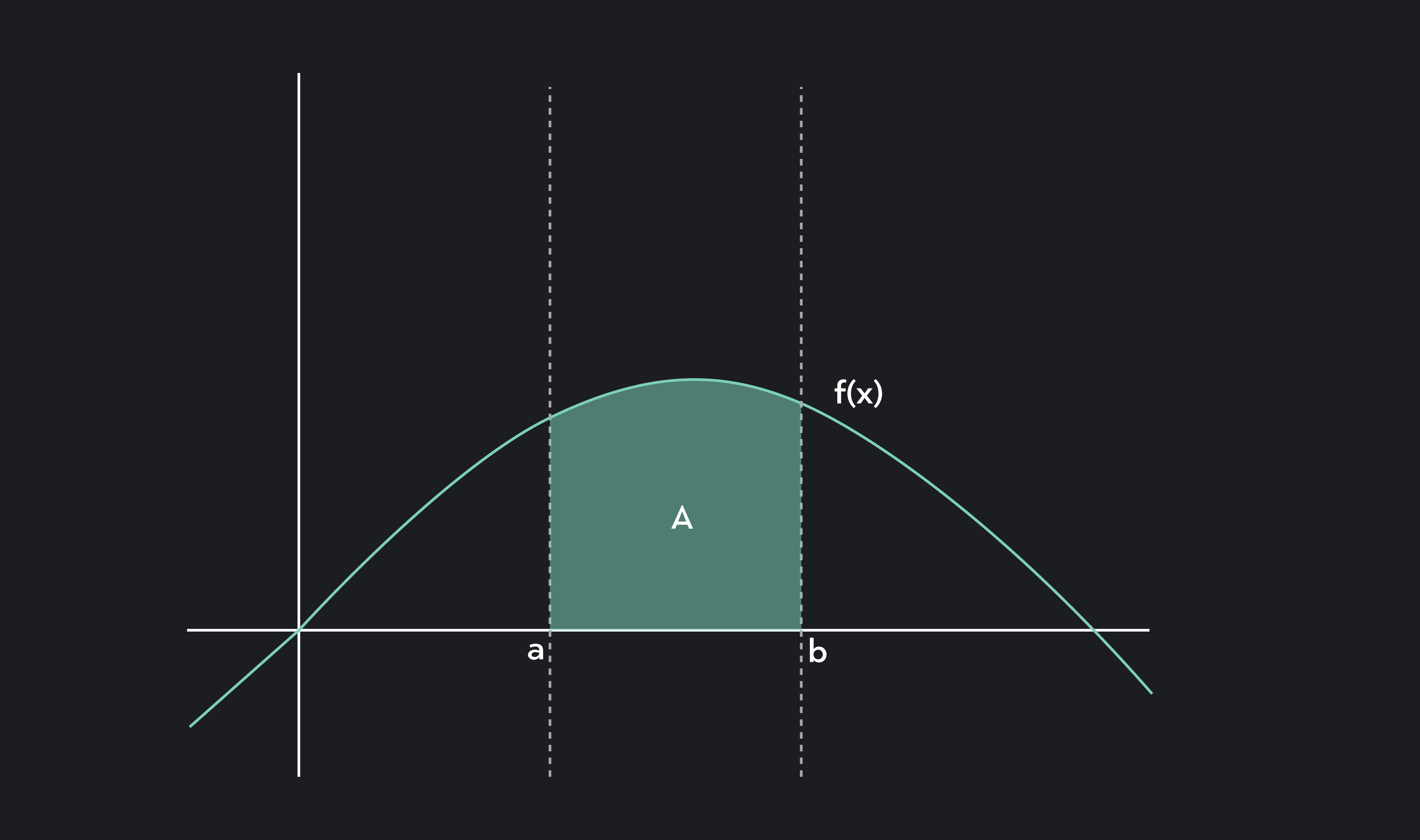
OpenStax presents the chain rule as one of the central tools for differentiating compositions, and that emphasis is well placed. Once functions become more realistic, formulas are often built from layers. Distance may depend on time, temperature may depend on altitude, revenue may depend on price, and volume may depend on radius. If one quantity changes because another quantity changes, the chain rule gives calculus a way to follow the connection.
Common mistakes that make answers drift
The first common mistake is missing the composite function entirely. Not every complicated-looking expression needs the chain rule, but many do. A good test is to ask whether a familiar function has something more complicated than x inside it. If a power, root, exponential, logarithm, sine, cosine, or tangent contains an expression such as 2x – 7 or x^2 + 4, the chain rule is probably involved.
The second mistake is choosing the wrong inside function. In y = (x^2 + 3x)^6, the inside is x^2 + 3x, not just x^2. In y = cos(5 – x^3), the inside is 5 – x^3, including the subtraction sign. Losing a sign inside the derivative can change the whole behavior of the answer, especially with trigonometric functions and decreasing expressions.
The third mistake is replacing the inside expression too soon. For y = (1 + x^2)^7, the outside derivative is 7(1 + x^2)^6, not 7x^6. The inside expression remains inside the outside derivative because the outside function is being evaluated at the inside function. Only after that do you multiply by the inside derivative, which is 2x.
The fourth mistake is treating every product as a chain-rule problem or every chain-rule problem as a product-rule problem. The expression sin(x^2) is not a product of sin x and x^2; it is a composition. The expression x^2 sin x is a product, not a composition. Some problems contain both structures, but identifying the structure first prevents most derivative errors.
Why the rule matters beyond homework
The chain rule is more than a classroom procedure. It is a way to describe linked change. If the radius of a balloon changes over time, and the balloon’s volume depends on the radius, then the volume changes over time because of that chain. If a car’s fuel use depends on speed, and speed changes with time, then fuel use changes through the speed-time relationship. These are not separate rates floating around; they are connected rates.
That connection is why the chain rule becomes essential in related rates, physics, economics, statistics, data modeling, and many other fields that use calculus. A model often begins with one variable, passes through several relationships, and ends with the quantity someone actually cares about. The derivative needs to travel the same path. Ignoring one layer can make a prediction too small, too large, or pointed in the wrong direction.
For a learner, the chain rule becomes easier when it is treated less like a memorized formula and more like a reading skill. Read the function from the outside in. Name the inside when the layers feel crowded. Differentiate one layer at a time. Then multiply the pieces in the order the dependence flows.
Once that habit settles, the formula h'(x) = f'(g(x))g'(x) stops looking mysterious. It says that a change in x moves through g first, then through f. The derivative has to measure both movements. That is why the chain rule is not just another derivative rule; it is the rule that lets calculus follow change through a chain of causes.






Add comment