 Akshay Dinesh
When people talk about a Supreme Court decision, they often focus on the result: who won, who lost, and what rule changed. But the deeper power of a court decision usually lies in what happens afterward. A ruling can become precedent, meaning later courts may use it as a guide when a similar legal question appears again. That is why one case can matter far beyond the people named at the top of the opinion.
The legal phrase for this habit of following earlier decisions is stare decisis. The words come from Latin and are commonly understood as a version of “stand by things decided.” In ordinary language, the idea is simpler than the phrase: courts should not treat the law as if every case starts from zero. Past decisions create a record of reasoning, and that record gives judges, lawyers, lawmakers, teachers, students, and citizens a more stable way to understand what the law means.
Why Precedent Exists
Precedent helps the legal system avoid randomness. If two people bring similar disputes to court, they should not receive wildly different answers just because different judges hear the cases. Earlier decisions give later courts a starting point. They show which facts mattered, which legal rule controlled the outcome, and how the court understood a statute, constitutional provision, or government action.
This does not mean precedent makes every case easy. Legal disputes often turn on details. One case might involve a school, another a workplace, another a public street, and another a digital platform that did not exist when the earlier rule was announced. Still, precedent gives courts a shared language. A later court can ask whether the new dispute is close enough to an older one that the same rule should apply.
Precedent also gives people some ability to plan. A school district, business, city council, or student organization may look at past decisions before deciding what it can legally do. Lawyers use precedent to advise clients. Legislatures write laws with existing interpretations in mind. The American Bar Association’s public education materials emphasize this predictability as one reason stare decisis is so important: it makes legal interpretation less like a personal preference and more like an ongoing public record.
What Counts as the Court’s Reasoning
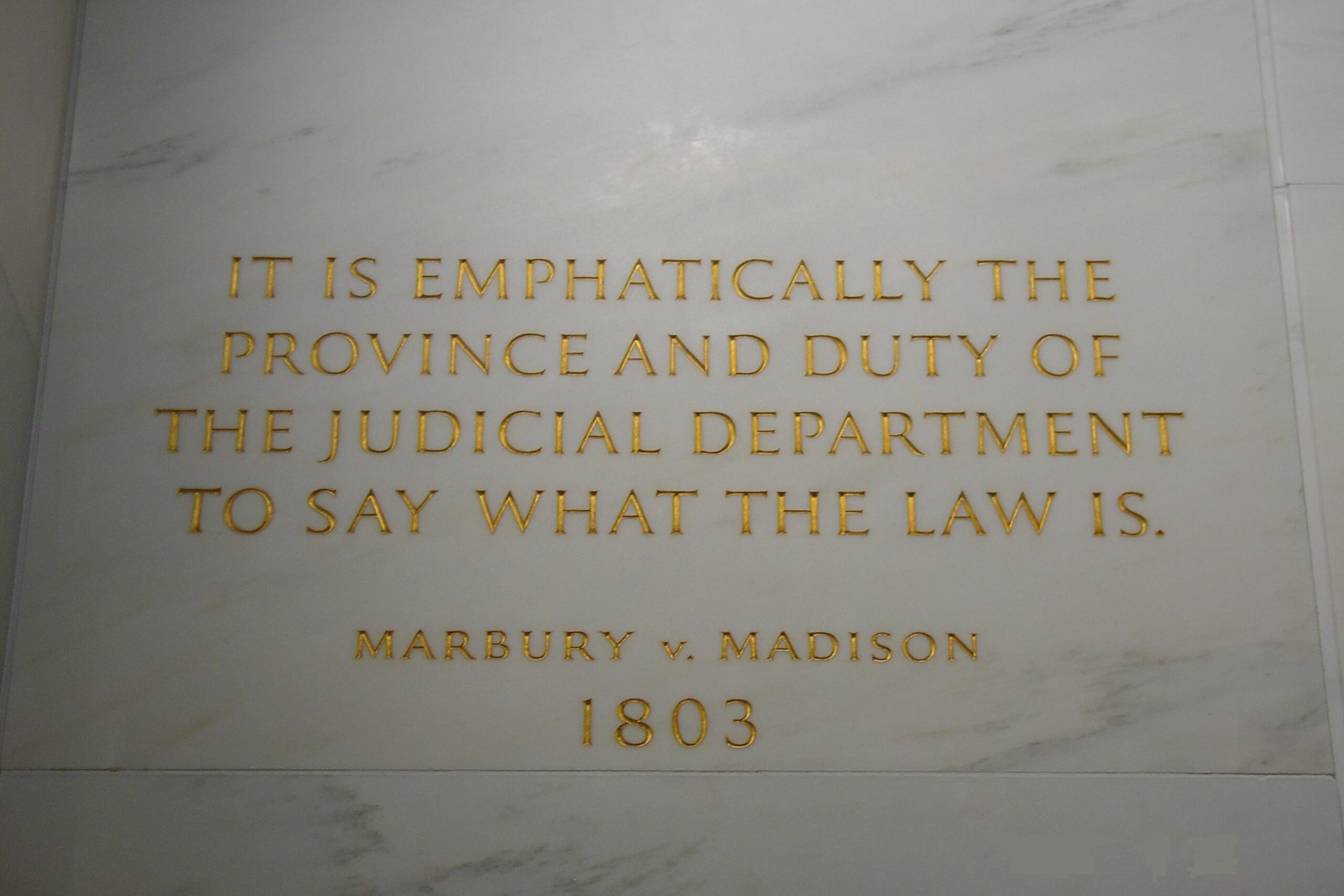
A Supreme Court decision is not just a headline. The opinion explains the legal reasoning behind the result. The syllabus at the front can help readers understand the case, but it is not the official opinion. The main opinion is where the Court announces the rule and explains why that rule applies. For students reading a case, this distinction matters because the rule of law is usually found in the reasoning, not in a news-style summary.
In a majority opinion, more than half of the justices agree on the reasoning. That makes it easier for lower courts to know what rule controls. A unanimous opinion is even clearer because every justice joins the same result and reasoning. A plurality opinion is harder: several justices may agree on the outcome, but fewer than a majority agree on the same explanation. When that happens, later courts may have to work carefully to figure out which principle, if any, has binding force.
Concurring and dissenting opinions matter too, though they do different work. A concurrence agrees with the result but offers a different reason, a narrower path, or a warning about how far the decision should go. A dissent disagrees with the result, the reasoning, or both. Dissents do not control the law at the moment they are written, but they can shape future arguments. Sometimes a dissent preserves an alternative way of thinking that later courts, lawmakers, or scholars return to years later.
Vertical and Horizontal Stare Decisis
Stare decisis works in more than one direction. Vertical stare decisis means lower courts follow decisions from higher courts in the same legal system. A federal trial court cannot simply ignore a controlling Supreme Court decision because the judge thinks the older case was poorly reasoned. The hierarchy matters. It is part of what makes a supreme court supreme.
Horizontal stare decisis is different. It concerns whether a court follows its own earlier decisions. The Supreme Court, for example, generally treats its past rulings with respect, but it is not bound in exactly the same way a lower court is bound by the Supreme Court. That difference explains why debates over precedent can become intense. When the Supreme Court considers changing one of its own earlier rules, it is not merely applying precedent; it is deciding how much weight an older precedent should still carry.
The Constitution Annotated, published through Congress.gov and the Library of Congress, describes the modern Supreme Court’s approach as one that usually follows prior decisions unless there is a special justification, or strong grounds, for overruling them. That wording captures the balance. Precedent is powerful, but it is not a locked door.

How Courts Handle an Older Case
When a court faces an old precedent, it has several choices. The simplest is to follow it. If the facts and legal question are close enough, the court may say the earlier rule controls the new dispute. This is the cleanest version of stare decisis: similar cases are treated alike because an earlier decision already answered the key question.
A court may also distinguish a precedent. Distinguishing means the court recognizes the older case but explains why the new case is meaningfully different. Perhaps the earlier decision involved government speech, while the new case involves private speech. Perhaps the older case interpreted one statute, while the new dispute involves a different statute with different wording. Distinguishing a case does not destroy the precedent. It limits where that precedent applies.
Sometimes a court narrows a precedent without formally overruling it. The old rule remains, but later decisions make it apply to fewer situations. This can happen gradually, as courts decide new cases that test the edges of the older rule. Readers should watch for this because a precedent can lose practical reach even when it has not been openly abandoned.
The strongest move is overruling. When a court overrules a precedent, it says the earlier decision should no longer control. The Supreme Court has done this in major moments, including Brown v. Board of Education, which rejected the “separate but equal” reasoning associated with Plessy v. Ferguson. That example shows why stare decisis cannot be absolute. A legal system that never corrects serious mistakes would preserve injustice in the name of consistency.
Why Overruling Is So Controversial
Overruling a precedent can repair a damaging rule, but it can also unsettle expectations. If people, institutions, and governments have relied on an earlier decision for years, changing it can alter rights, responsibilities, and daily practice. That is why courts often ask more than whether an older decision was wrong. They may also consider whether the rule has proved workable, whether later legal developments have weakened it, whether facts have changed, and whether people have relied on it.
Constitutional cases are especially difficult. If the Supreme Court interprets an ordinary federal statute, Congress may be able to revise the statute. If the Court interprets the Constitution, correction through the normal legislative process is much harder. Constitutional amendments are rare. That gives the Court more responsibility when it chooses either to preserve or overturn constitutional precedent.
This tension explains why stare decisis is not a simple command. Too much rigidity can freeze bad reasoning. Too little respect for precedent can make the law feel unstable and dependent on the membership of a particular court. The hard question is where stability should yield to correction. Different justices often answer that question differently, which is why opinions about precedent can become some of the most important parts of a decision.
How to Read a Case With Precedent in Mind
A reader does not need to be a lawyer to notice how precedent works. Start by identifying the legal question the court is answering. Then look for the older cases the opinion relies on. Does the court treat them as controlling? Does it distinguish them? Does it say they have been weakened by later decisions? These clues show whether the court is extending, limiting, preserving, or changing the law.
It also helps to separate the outcome from the reasoning. The outcome tells who wins the case. The reasoning explains the rule that may guide future cases. A narrow decision may affect only a small set of disputes, while a broad decision may change how many later cases are argued. Concurring and dissenting opinions can reveal where the justices think the main opinion goes too far, does not go far enough, or rests on the wrong foundation.
Stare decisis is one reason court decisions become part of history instead of disappearing after one dispute ends. A precedent carries a legal idea forward, inviting later courts either to follow it, limit it, question it, or eventually replace it. That ongoing conversation is imperfect, but it is central to how a legal system tries to combine fairness, consistency, and the possibility of correction.