

 Akshay Dinesh
When the United States uses military force, the decision does not belong neatly to one branch of government. The Constitution gives Congress the power to declare war, raise and fund armies, maintain a navy, and write rules for the armed forces. It also makes the president commander in chief, responsible for directing the military once it is in service. That design creates strength and tension at the same time: emergencies may require speed, but war can change lives, budgets, alliances, and national priorities for years.
The War Powers Resolution was Congress’s attempt to make that tension harder to ignore. Passed in 1973 after years of conflict in Vietnam and anger over secret bombing in Cambodia, it tried to pull major military decisions back into the shared judgment of Congress and the president. It does not stop every use of force. It does not make foreign policy simple. What it does is set notice rules, time limits, and a framework for asking one central question: how long should a president be able to keep U.S. forces in hostilities without Congress clearly saying yes?
Why the Constitution splits war power
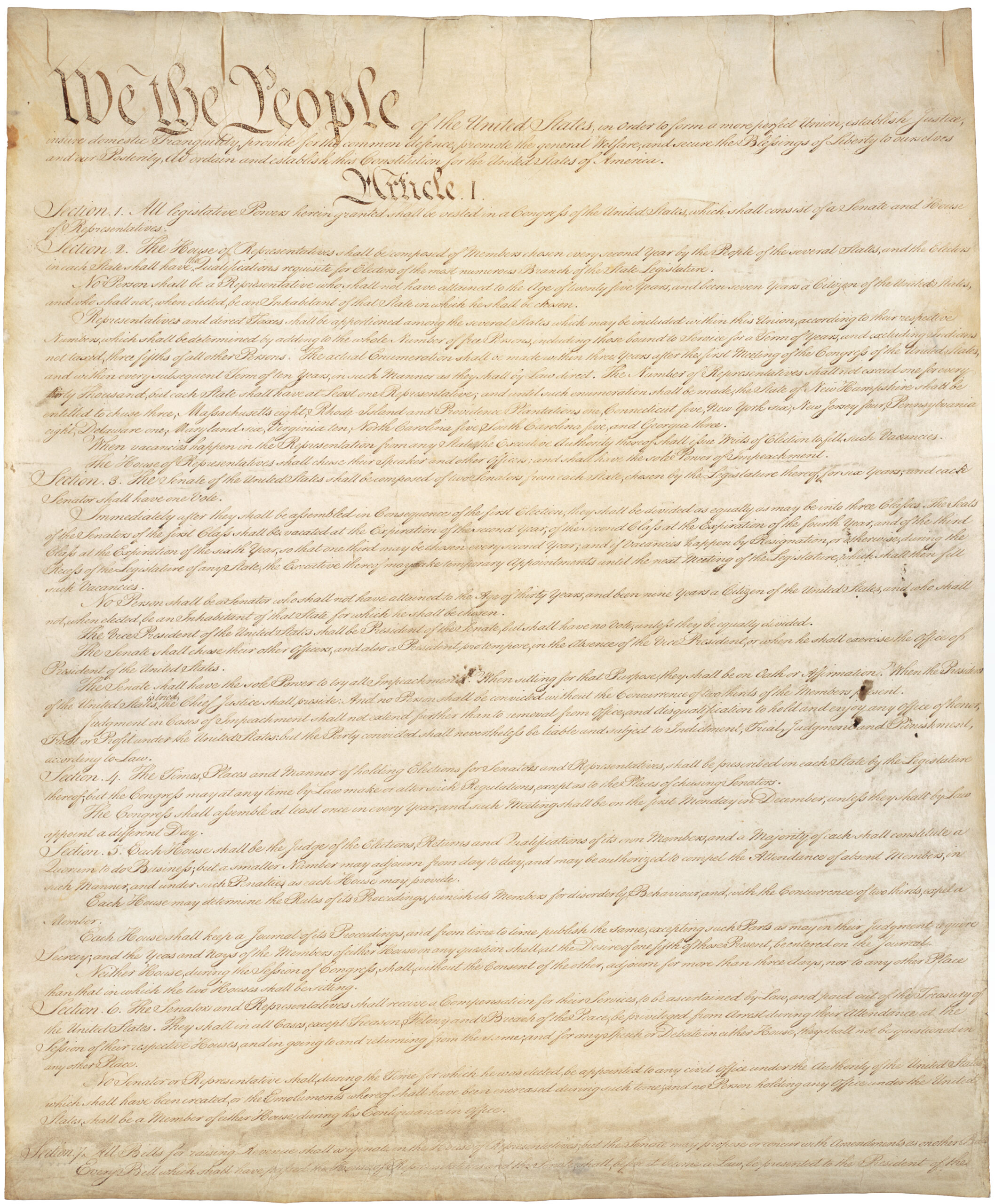
The framers did not want one person to carry the whole power of war. Article I gives Congress the power to declare war, approve military spending, support armies, provide for a navy, and make rules for the armed forces. Those powers matter because war is not only a battlefield decision. It is also a public commitment of money, people, law, and national purpose.
Article II gives the president a different kind of power. As commander in chief, the president leads the armed forces and can respond to threats with the speed and unity that legislatures usually lack. If an attack is underway, or if U.S. forces are already in danger, the country cannot wait for days of speeches before anyone can act. That practical reality has always given presidents room to use force in limited or urgent situations.
The hard part is deciding when a limited action becomes a war in everything but name. The United States has formally declared war only a handful of times, but presidents have sent forces into many conflicts, patrols, strikes, peacekeeping missions, evacuations, and counterterrorism operations. Some were brief. Others lasted long enough to raise the same democratic questions that declarations of war were supposed to answer.
What the War Powers Resolution requires
The War Powers Resolution says its purpose is to make sure the “collective judgment” of Congress and the president applies when U.S. armed forces are introduced into hostilities or into situations where hostilities are clearly possible. In practical terms, that means the president is supposed to consult with Congress whenever possible before sending forces into such situations, and continue consulting while those forces remain there.
The best-known rule is the 48-hour report. When U.S. forces are introduced into hostilities, into situations where hostilities are clearly imminent, or into certain substantial deployments while equipped for combat, the president must report to Congress. The report goes to the Speaker of the House and the president pro tempore of the Senate. It is supposed to explain the circumstances, the constitutional and legal authority claimed, and the expected scope and duration of the action.
The second major rule is the 60-day clock. If Congress has not declared war, passed a specific authorization, extended the period by law, or been physically unable to meet because of an attack on the United States, the president is supposed to end the covered use of forces within 60 calendar days. The law allows up to 30 additional days if the president certifies that military necessity requires more time to remove forces safely.
Why 1973 mattered
The law grew out of a specific historical moment. During the Korean War and the Vietnam War, presidents used large military forces without formal declarations of war. By the early 1970s, many members of Congress believed the balance had shifted too far toward the executive branch. The Cambodia bombing controversy deepened that concern because it showed how major military action could happen with limited public and congressional awareness.
President Richard Nixon vetoed the War Powers Resolution, arguing that it placed unconstitutional limits on the presidency. Congress overrode the veto on November 7, 1973, making the resolution law despite the president’s objections. That fact is important because the law was not a quiet administrative reform. It was a direct constitutional argument between branches after a long and painful war.
The timing also explains the law’s tone. It does not say presidents can never act quickly. Instead, it tries to prevent quick action from turning into open-ended military involvement without Congress taking responsibility. The law assumes that emergency judgment and democratic accountability both matter, and that neither branch should be able to hide behind the other when force is used.
How authorizations change the picture
Congress does not have to declare war formally to approve military action. It can pass a specific Authorization for Use of Military Force, often called an AUMF. An authorization can satisfy the War Powers Resolution because Congress is giving legal permission for a defined use of force, even if it avoids the older phrase “declaration of war.”
The 2001 AUMF, passed after the September 11 attacks, is one of the most important modern examples. Congress authorized force against those responsible for the attacks and those who harbored them. That authorization became the legal basis for many counterterrorism operations across multiple administrations. The debate over its scope shows why wording matters: a short authorization can shape military policy for decades if its terms are read broadly.
Appropriations also matter, but funding alone is not always the same as clear authorization. Congress may fund the military while still disagreeing over a particular deployment or strike campaign. That is one reason the War Powers Resolution focuses on reports, authorizations, and deadlines. It tries to make the legal basis of military action visible instead of leaving it buried inside budget votes or vague statements of support.
Why the law is still contested
The War Powers Resolution has never ended the argument over presidential power. Presidents of both parties have often filed reports while carefully saying their actions are “consistent with” the resolution rather than “pursuant to” it. That wording signals a continuing executive-branch position: presidents may comply with parts of the law while still disputing whether Congress can constitutionally impose all of its limits.
Another difficulty is the word “hostilities.” The law’s strongest clock depends on whether U.S. forces have entered hostilities or circumstances where hostilities are clearly imminent. But modern military operations can include drone strikes, cyber support, surveillance, special operations, partner-force assistance, missile defense, and advisory roles. Each can raise a different question about whether the War Powers Resolution has been triggered.
Reporting data shows how often the issue appears. The War Powers Resolution Reporting Project, which tracks unclassified 48-hour reports, lists more than 100 such reports since the law was enacted, with its public database current through May 1, 2026. That volume does not mean every report involved a large war. It does show that presidents regularly use military force or deploy combat-equipped forces in situations that raise oversight questions.
What the resolution helps readers notice
The War Powers Resolution is not only a legal deadline. It is a reading tool for public life. When news breaks about U.S. forces overseas, the useful questions are not just where the action happened or whether it was successful. Readers can also ask what authority the president claimed, whether Congress was notified, whether a 48-hour report was submitted, whether the 60-day clock might apply, and whether Congress has passed a specific authorization.
Those questions make the structure of government easier to see. A president may have the ability to act first in a crisis, but Congress controls declarations, authorizations, appropriations, and oversight. Members of Congress may criticize or support a military action, but the War Powers Resolution pushes them toward a harder responsibility: voting, authorizing, extending, limiting, or refusing to approve continued involvement.
The law’s limits are real, and so are its weaknesses. It has not erased disputes over undeclared wars. It has not forced every military action into a neat constitutional box. Still, it remains one of the clearest attempts to keep decisions about war from becoming routine executive habit. In a democracy, that matters because the use of force should be fast enough to protect the country, but accountable enough that the country can see who chose it, why it happened, and how long it is allowed to continue.




Add comment