
 Rishay Dinesh
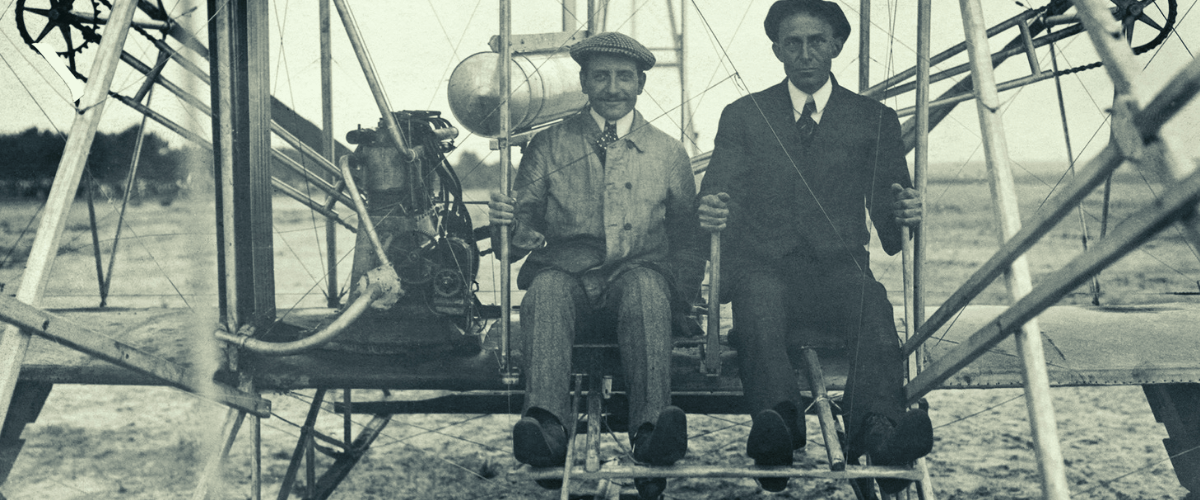
The Wright brothers, Orville and Wilbur Wright, forever changed the course of human history with their groundbreaking invention of the first powered, controlled, and sustained airplane. Their tireless dedication, scientific mindset, and mechanical skills enabled them to achieve what many thought was impossible: human flight. Their success not only revolutionized transportation but also marked the beginning of a new era in science, warfare, communication, and global travel. Today, the Wright brothers are celebrated not just for building an airplane but for inventing the process that made aviation a reality. Their journey is a testament to innovation, persistence, and the power of vision.
Born in the late 19th century in Dayton, Ohio, the Wright brothers grew up in a modest household filled with curiosity and encouragement. From a young age, they were captivated by mechanics and motion, often tinkering with toys and building devices. While neither pursued a college degree, both were voracious learners who built their knowledge through self-study, experimentation, and hands-on experience. Their story is not just about aviation; it is about overcoming the odds with passion, creativity, and relentless effort.
Early Life and Influences
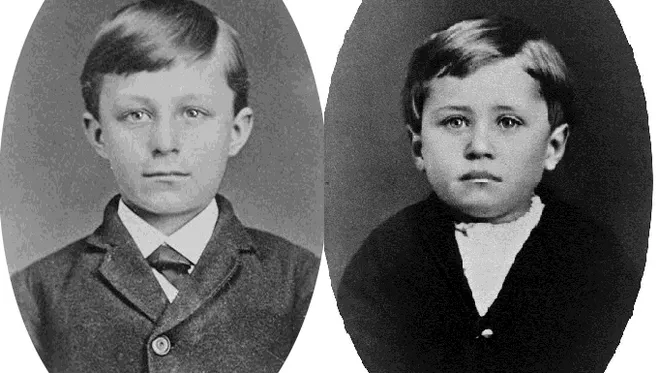
Wilbur Wright was born in 1867, and Orville followed in 1871. Their father, Milton Wright, was a bishop in the Church of the United Brethren in Christ and often traveled, but he made sure to bring back books and interesting objects for his children. One of the most influential gifts was a toy helicopter made of cork, bamboo, and paper, powered by rubber bands. This simple device fascinated the young Wright brothers and planted the seed of interest in flying machines that would later blossom into world-changing innovation.
The brothers shared a deep bond and complementary talents—Wilbur was analytical and methodical, while Orville was inventive and mechanically inclined. As teenagers, they opened a printing business and later a bicycle repair and sales shop. Their work with bicycles helped them develop an understanding of balance, control, and mechanics, all crucial concepts in aeronautics. The flexibility and freedom that came with running their own business gave them time and resources to explore their true passion: building a flying machine.
Inspiration and the Quest for Flight
During the 1890s, interest in flight was growing worldwide. Pioneers like Otto Lilienthal and Octave Chanute had already conducted glider experiments, laying the groundwork for future inventors. When Lilienthal died in a glider crash in 1896, the Wright brothers became determined to pick up where he left off. They began systematically studying the science of flight, reading everything they could find, and even writing to the Smithsonian Institution for technical information. Unlike other inventors, the Wrights believed that the key to successful flight lay not only in propulsion but in control.
From the start, the brothers approached flight as a problem of engineering rather than fantasy. They tested airfoils in a homemade wind tunnel, collecting over 200 experiments’ worth of data on lift and drag. They identified flaws in previous theories and created their own aerodynamic models, which turned out to be more accurate than those used by experts of the time. This scientific approach, combined with their hands-on engineering skills, set them apart from others in the field and positioned them for success.
The Breakthrough at Kitty Hawk
In 1900, the Wright brothers traveled to Kitty Hawk, North Carolina, chosen for its steady winds, sand dunes for soft landings, and relative isolation. They began testing gliders there, refining their understanding of flight control. Through trial and error, they developed a system for three-axis control—pitch (up and down), roll (side to side), and yaw (left and right)—which remains the foundation of aircraft control systems today. Their 1902 glider was the first fully controllable aircraft, a major leap forward.
After conquering control, the brothers turned their focus to powered flight. They designed and built their own lightweight gasoline engine with the help of their mechanic, Charlie Taylor. They also crafted their own propellers, which they understood as rotating wings rather than simple fans. On December 17, 1903, in the windy dunes of Kitty Hawk, the Wright brothers achieved the first successful powered flight. Orville piloted the aircraft, named the Flyer, for 12 seconds, covering 120 feet. Wilbur later flew for 59 seconds and 852 feet that same day. These flights, though short, represented the birth of modern aviation.
Challenges and Public Recognition
Despite their success in 1903, the Wright brothers faced significant skepticism and even ridicule. Many people doubted that powered flight had been achieved, as they had no widespread media coverage and chose to keep their work relatively private. Over the next few years, they continued to refine their aircraft, flying for longer distances and greater durations. In 1905, they built the Wright Flyer III, which was capable of stable and sustained flight, making it the first practical airplane.
To prove the value of their invention, the Wrights turned to the military and foreign governments. By 1908, they began public demonstrations in France and the United States, finally earning the recognition they deserved. Their European flights amazed crowds and silenced critics. That same year, they signed contracts with the U.S. Army and French investors, marking the beginning of commercial aviation. Orville also conducted the first passenger flight, though tragedy struck when his passenger, Lt. Thomas Selfridge, became the first person to die in a powered airplane crash. Despite the setback, the brothers continued their work with resilience and determination.
The Wright Brothers’ Legacy in Aviation
The Wright brothers didn’t just build the first airplane—they pioneered the method for developing flying machines. They introduced scientific rigor, experimental testing, and a practical design approach that influenced every generation of aerospace engineers that followed. Their three-axis control system became the industry standard. Their wind tunnel experiments revolutionized aerodynamics. Their powered flights opened the door to an entirely new realm of human transportation.
Wilbur died young in 1912 of typhoid fever, leaving Orville to carry on their legacy. Orville continued to innovate, participate in aviation organizations, and defend the Wright brothers’ patents, which were frequently challenged. Although Orville eventually retired from public work, he remained a respected figure in the aviation community until his death in 1948. By that time, flight had become an integral part of modern life, from commercial airliners to military jets—none of which would have existed without the Wright brothers’ breakthrough.
The Impact on Technology and Society
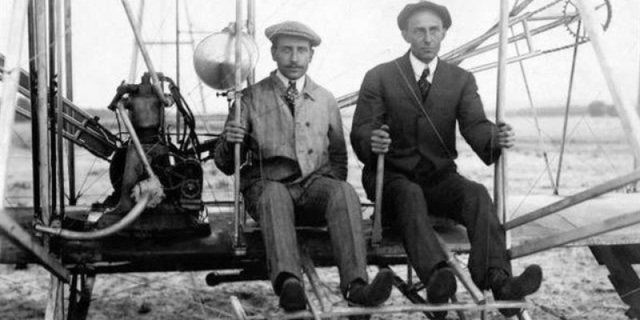
The Wright brothers’ invention profoundly impacted not only transportation but also technology, warfare, and global connectivity. The ability to fly shrank the world, enabling people and goods to move faster and farther than ever before. Aviation fueled globalization, economic expansion, and tourism. It also revolutionized warfare, giving rise to air combat, surveillance, and strategic bombing. The changes initiated by the Wright brothers rippled through every sector of society, from business to science to national defense.
In the decades following their invention, air travel evolved at a rapid pace. Aircraft became larger, faster, and more efficient. The Wright brothers’ early flyers might look primitive today, but their fundamental principles are still in use. NASA, commercial airlines, and even space travel all trace their roots back to the Flyer’s maiden voyage in 1903. Monuments, museums, and schools around the world honor their contributions, and their story remains a symbol of American ingenuity and determination.
Conclusion: The Wright Brothers and the Power of Innovation
The Wright brothers stand as icons of innovation, perseverance, and scientific curiosity. Their journey from a bicycle shop in Dayton to the skies above Kitty Hawk exemplifies how vision and hard work can overcome enormous challenges. They succeeded where many others failed because they understood the importance of knowledge, precision, and patience. Their invention not only changed the way people travel but also transformed how they think about possibility and progress.
Today, their story continues to inspire inventors, engineers, and dreamers. The legacy of Orville and Wilbur Wright lives on in every aircraft that takes to the skies, from passenger jets to space shuttles. Their pioneering spirit reminds us that no dream is too big when approached with discipline and courage. The Wright brothers didn’t just build an airplane—they gave humanity wings.


 Akshay Dinesh



Add comment