Akshay Dinesh
A stream hot enough to burn human skin seems like a poor place to look for a delicate, nucleus-containing cell. Yet a newly described amoeba does more than endure such heat. Incendiamoeba cascadensis, nicknamed the fire amoeba, can feed and reproduce at 63°C (145.4°F), setting a measured upper-temperature record for eukaryotes, the group that includes animals, plants, fungi, and protists.
The discovery changes a boundary biologists had treated as remarkably stubborn. Bacteria and archaea have long been known to grow at much higher temperatures, but no eukaryote had been shown to reproduce above 60°C. The distinction matters: staying intact for a few minutes is not the same as carrying out the coordinated work of growth and cell division. The fire amoeba does that work while operating close to the point where heat usually destabilizes the machinery of a complex cell.
A chance discovery in a hot California stream
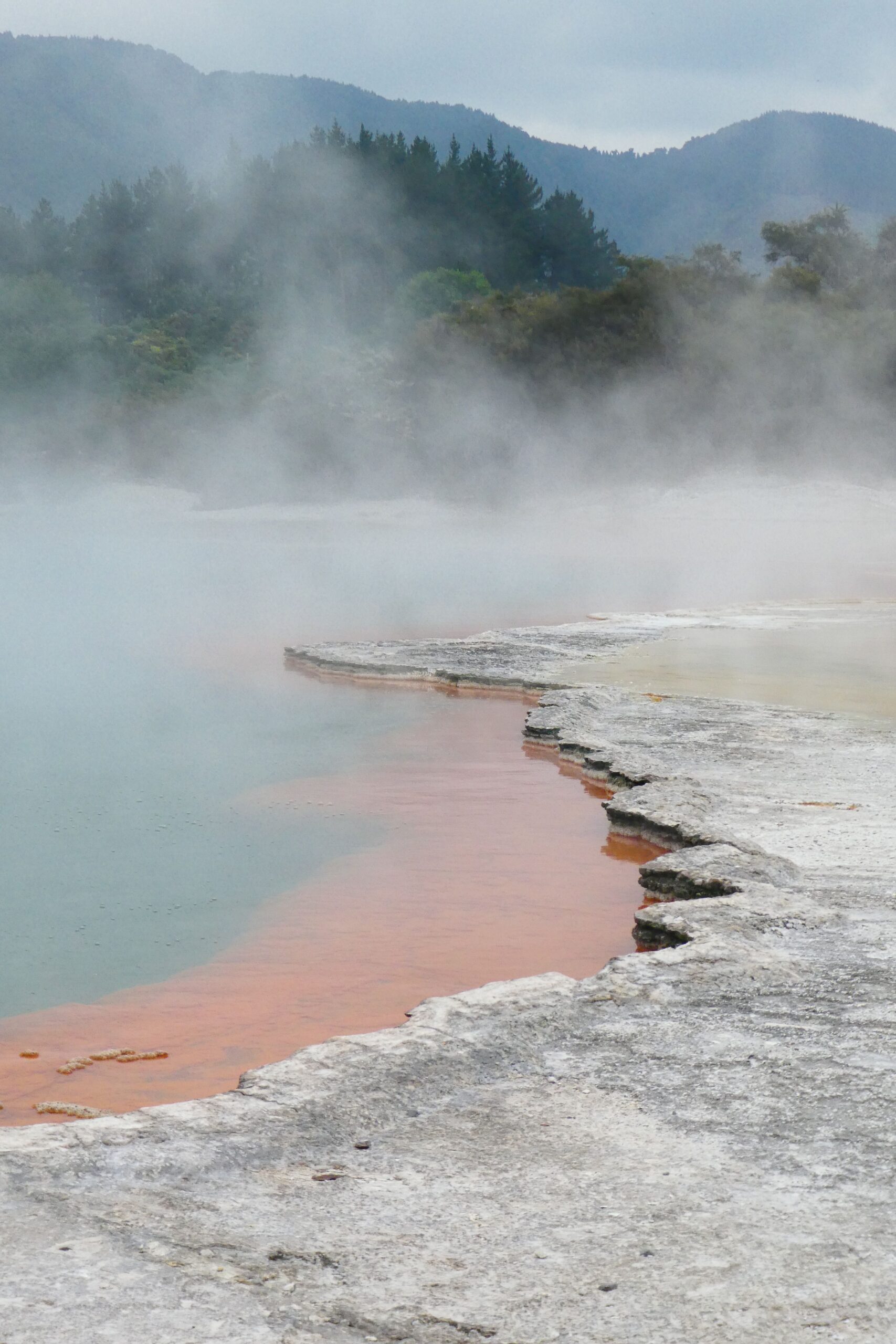
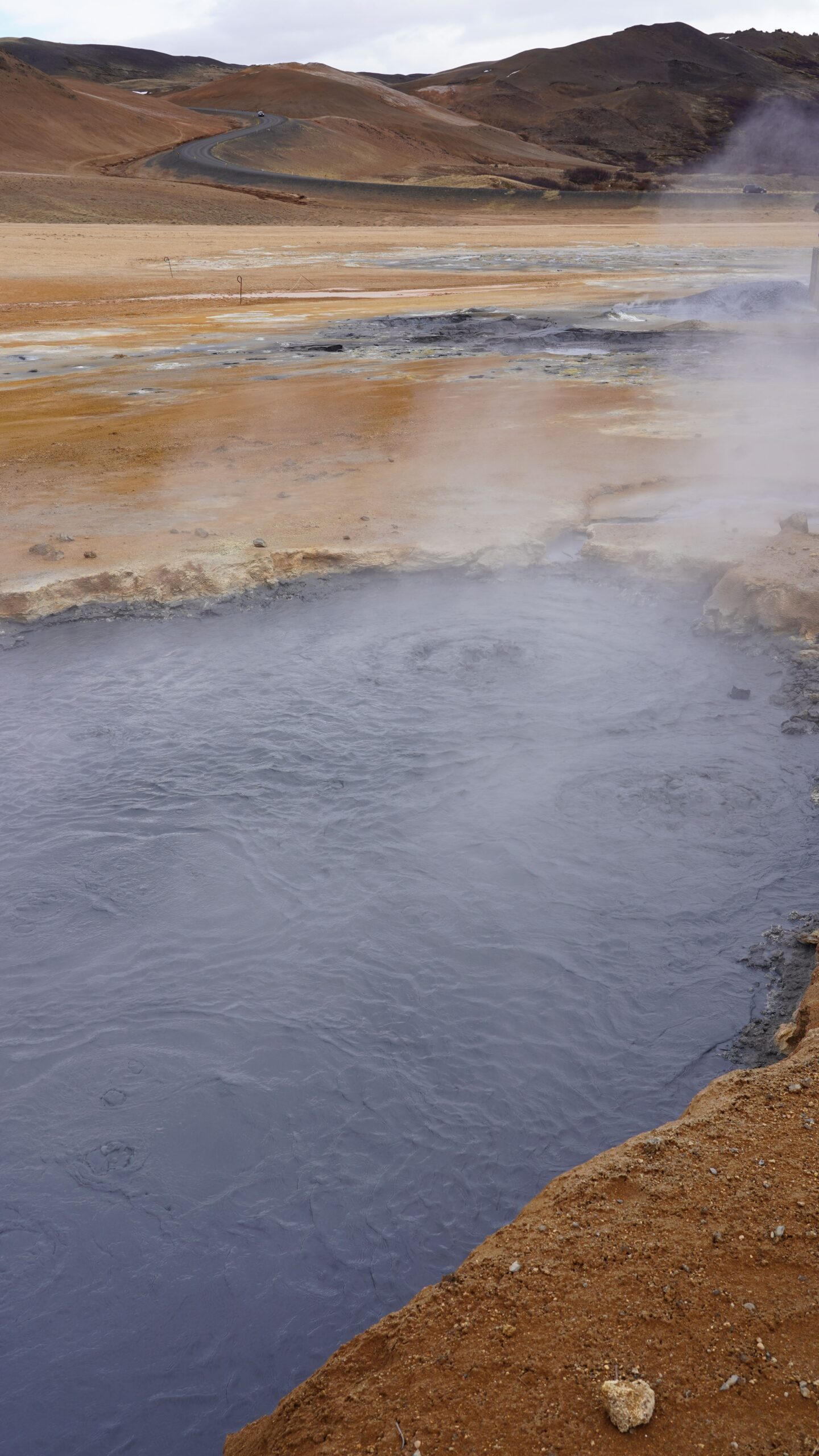
The organism came from Lassen Volcanic National Park in northern California, where groundwater heated by volcanic activity returns to the surface through hot springs, pools, and streams. Researchers were searching for heat-loving amoebas when they collected samples from a small neutral-pH stream. Back in the laboratory, they incubated the samples at high temperatures and found amoebas multiplying in conditions that should have excluded known eukaryotes.
The team named the new genus Incendiamoeba from a Latin root associated with fire, while cascadensis refers to the Cascade Range. Genetic comparisons placed it among the Amoebozoa, in a branch near Vermamoeba vermiformis. That relative can tolerate warm water and is sometimes found in water heaters, but its growth limit is roughly 40 to 45°C. The new species was not simply a warmer version of an ordinary amoeba. Its preferred range and cellular features marked a much deeper commitment to heat.
In controlled experiments, the amoeba grew between 42°C and 63°C, with its fastest growth around 55 to 57°C. It did not grow at 40°C or below, making it an obligate thermophile: heat is not merely something it tolerates but part of the environment it requires. The researchers recovered the organism during several collecting seasons and maintained one strain at 63°C for months, evidence that the result was not a brief response from damaged cells.
Why 63°C is a difficult line for complex cells
All cells face the same basic heat problem. Molecules move faster as temperature rises, and the weak chemical interactions that hold biological structures in useful shapes become easier to disrupt. Proteins may unfold and stick together. Cell membranes can become too fluid and leaky. DNA suffers damage, and the molecular systems that copy or repair it must work in the same punishing conditions.
Eukaryotic cells add another layer of difficulty. Their DNA sits inside a nucleus, and they divide using an elaborate internal framework. They also move materials among membrane-bound compartments and reorganize the cytoskeleton as they change shape, feed, and reproduce. A cell may survive after some of these systems slow down, but successful reproduction requires them to operate in sequence. That is why growth, not momentary survival, provides the clearest test of a temperature limit.
The research team tested 17 temperatures between 30°C and 64°C, using multiple probes to confirm the incubators’ actual conditions. At 63°C, the amoebas still increased in number and could be seen going through mitosis, the process that separates copied chromosomes into new cells. At 64°C they remained motile but no longer reproduced. That one-degree difference captures the important boundary: movement showed continuing activity, while the absence of population growth showed that the full cell cycle had stopped.
Short exposures revealed another distinction. Some cells remained partly active at 66°C and recovered after five minutes at 70°C, but they did not build a growing population at those temperatures. Reports that the amoeba “lives at 70°C” would therefore blur survival and growth. Its record is both more precise and more impressive: repeated cell division at 63°C.
The cellular toolkit behind the heat tolerance
No single molecule appears to act as a magic heat shield. Instead, the fire amoeba seems to protect several vulnerable systems at once. When the researchers compared its genome and gene activity with those of less heat-adapted amoebas, they found expanded or strongly activated pathways related to proteostasis, the continuous work of folding, monitoring, and recycling proteins.
At higher temperatures, the amoeba increased activity in systems associated with protein quality control, DNA repair, environmental sensing, and membrane trafficking. Those responses fit the problems heat creates. Damaged proteins must be refolded or removed before they form harmful clumps. DNA lesions need repair. Membranes and the cargo moving through them must remain organized even as heat makes lipids more mobile.
The predicted proteins of I. cascadensis also had distinctive physical properties. Their exposed surfaces contained more positively charged amino-acid residues than those of many ordinary amoebas. Similar patterns occur in some heat-loving bacteria and archaea, where extra electrostatic interactions can help proteins hold their shape. The resemblance suggests convergent evolution: very different branches of life may arrive at comparable molecular solutions when they face the same physical challenge.
The organism also changes form. In one state it spreads into an irregular amoeboid shape suited to feeding on heat-loving bacteria. Under some conditions it becomes longer and more wormlike, moving faster through its environment. That flexibility is a reminder that adaptation is not only a matter of stable molecules. Sensing local conditions and changing behavior can help a cell remain within the narrow zone where growth is possible.
What the record changes, and what it does not
The finding expands the known temperature range of eukaryotic life by three degrees, from 60°C to 63°C. Three degrees may sound modest, especially when some archaea reproduce above 100°C. Biological limits, however, are often defined by the failure of a particular system. Pushing a complex cell through another complete round of DNA copying, chromosome separation, membrane remodeling, and division requires every essential part to keep functioning.
The discovery also weakens a simple idea that complex cellular organization must always impose a fixed ceiling near 60°C. It does not show that animals or plants could approach that temperature; multicellular organisms must coordinate tissues, circulation, development, and reproduction on a much larger scale. Nor does it erase the profound difference between eukaryotes and the hottest-growing microbes. It shows that one branch of complex cells evolved farther into the high-temperature zone than experiments had previously demonstrated.
The study, led by H. Beryl Rappaport and published in Cell as “A geothermal amoeba sets a new upper temperature limit for eukaryotes” (DOI: 10.1016/j.cell.2026.08.043), combined field sampling, repeated growth trials, microscopy, genome sequencing, and gene-activity measurements. That combination gives the record more weight than a single sighting. It also turns the amoeba into a workable research organism: it grows to high densities in culture and has a sequenced genome, so scientists can test which adaptations make the greatest difference.
Why a tiny amoeba matters to the search for life
Astrobiologists study extremophiles because every measured limit changes how they think about possible habitats beyond Earth. A world or moon is not habitable merely because one environmental variable falls within a known range. Life also needs suitable chemistry, liquid solvent, energy, nutrients, and enough stability for reproduction. Still, the fire amoeba shows why those ranges should be based on evidence rather than assumptions about what a complex cell ought to endure.
Its lessons may be especially useful for understanding how cellular machinery adapts, not for predicting a specific organism on another world. If unrelated heat-loving cells repeatedly favor stronger protein interactions, vigorous repair systems, and careful membrane control, those traits reveal general solutions to high-temperature stress. Researchers can look for the chemical consequences of those solutions in other organisms and use them to refine experiments on the boundaries of habitability.
There is also a lesson closer to home. Extreme environments are rarely uniform. A seemingly ordinary stream beside a dramatic boiling pool can have a different pH, temperature, flow, and microbial community. The fire amoeba was found because researchers sampled that quieter setting and then gave its invisible residents time to grow. Biological frontiers are sometimes crossed by finding a spectacular place. In this case, the decisive step was paying attention to a small stream that looked easy to pass by.