 Akshay Dinesh
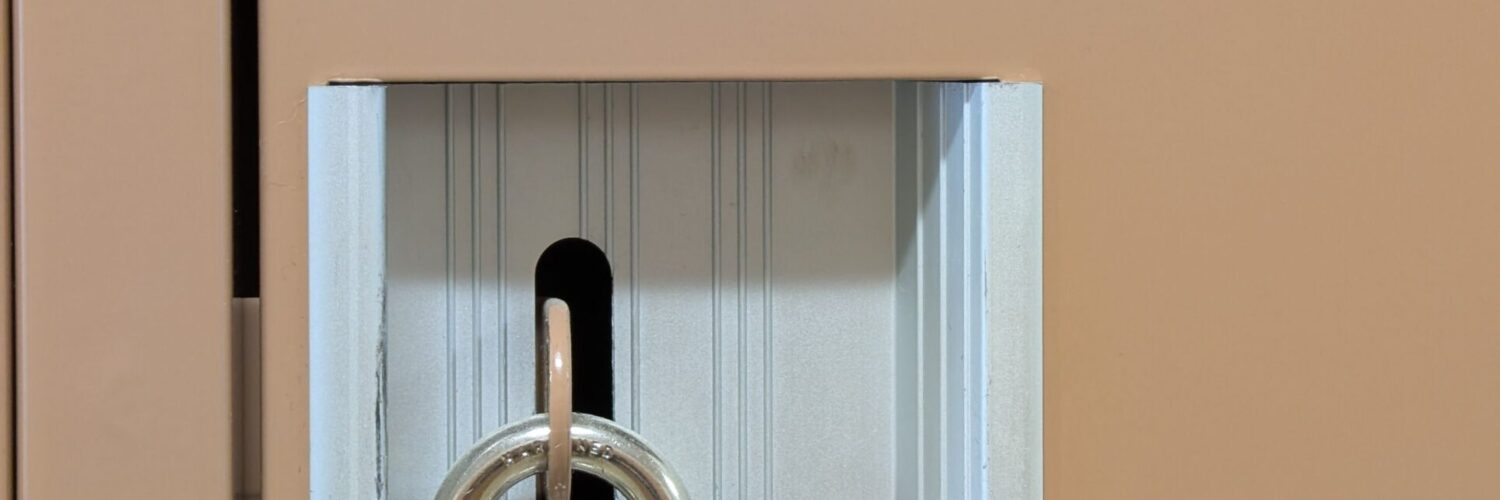
A locker combination can look almost too simple: three numbers, a round dial, and a shackle that opens only when the sequence is entered correctly. Yet that small hallway object is doing several mathematical jobs at once. It depends on order, direction, repeated turns, and numbers that wrap around in a circle instead of stopping at an endpoint. Miss one part of the routine, and the lock may treat the attempt as something entirely different.
That is what makes a combination lock a useful everyday example of math. It is not just a security device. It is a physical model of sequences, modular arithmetic, and careful procedure. The same ideas appear in clocks, calendars, computer addresses, music patterns, and any system where a number can cycle back to the beginning after it reaches the end.
A Combination Is Really an Ordered Sequence
The word combination can be a little misleading. In math class, a combination usually means a selection where order does not matter. If a sandwich includes lettuce, tomato, and cheese, the ingredients are the same no matter which one is named first. A locker lock works differently. The order matters so much that the same three numbers can behave like completely different instructions.
Suppose a lock opens with 12-28-4. The sequence 28-12-4 uses the same numbers, but it is not the same instruction. The first number tells the lock where to place one internal part, the second number tells it where to place another, and the third number finishes the alignment. The lock is not asking, “Which three numbers do you know?” It is asking, “Can you put these numbers in this exact order, with the correct turns between them?”
That makes a locker code closer to a permutation than a simple combination. A permutation is an arrangement where order matters. A three-number lock sequence is not only about which numbers appear. It is about first, second, and third.
The Dial Counts in a Circle
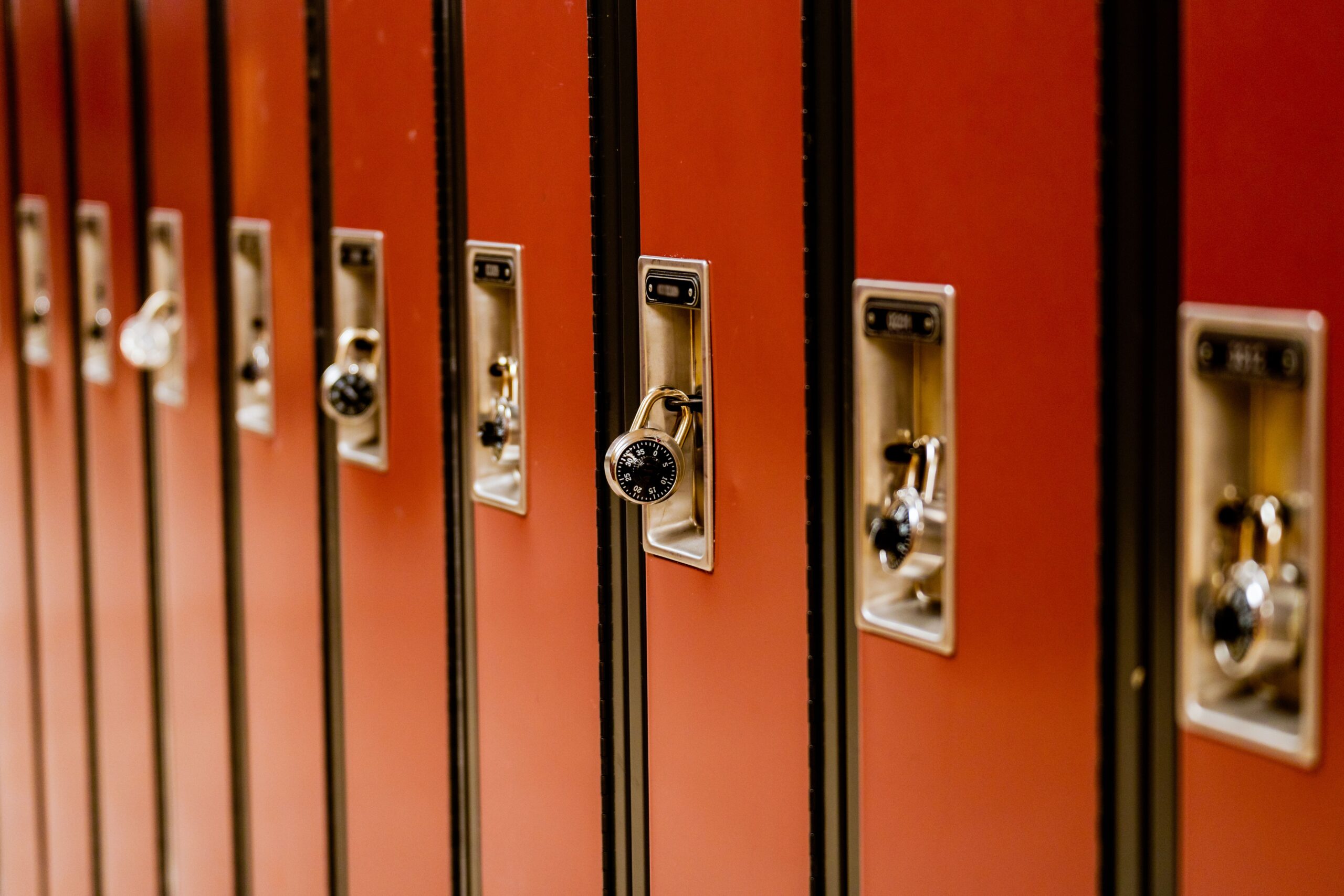
A combination lock dial is not a number line. It is a circle. On many familiar school locks, the numbers run from 0 to 39 or 0 to 59, then return to 0. That wraparound is the heart of modular arithmetic, a branch of number theory that studies remainders and repeating cycles.
A clock gives the easiest comparison. Three hours after 10 o’clock is not 13 o’clock on a standard 12-hour clock. It is 1 o’clock because the count wraps around after 12. In modular arithmetic, numbers are read relative to a cycle. On a 40-position dial, moving forward 43 marks lands in the same place as moving forward 3 marks, because 43 leaves a remainder of 3 after one full turn around 40 positions.
That is why direction and distance both matter when using the dial. Turning right from 35 to 5 is not the same physical movement as turning left from 35 to 5. The endpoint number is the same, but the path around the circle is different. A lock sequence uses that path to move internal parts into place.
This circular counting explains why students sometimes feel certain they stopped on the correct number but still cannot open the lock. They may have reached the right mark at the wrong moment in the rotation. On a dial, the number is only part of the instruction. The direction and the pass count matter too.
Why the Extra Turns Matter
Most common school combination locks begin with a clearing step, often by turning the dial several times in one direction before stopping at the first number. That is not just a ritual. It resets the lock’s internal wheel positions so the sequence starts from a predictable state.
Inside a dial lock, the visible dial is connected to internal wheels or discs. Each wheel has a gate, or opening, that must line up with the others before the lock can release. The dial does not simply point to a number and ask, “Is this correct?” It has to pick up and move different wheels as the user turns the dial through the sequence.
The familiar right-left-right pattern helps separate those steps. Turning several times in the first direction clears old positions and brings the first wheel into the right place. Turning back the other way, often passing the first number once before stopping at the second, lets another wheel move into alignment. The final turn places the last part. If the user skips the extra revolution before the second number, the internal wheel may not be where the sequence expects it to be.
This is why combination-lock instructions can sound strangely specific: turn right, pass, turn left, pass once, stop, then turn right again. The lock is a machine that reads movement, not just memory. The math is written into the motion.

Counting the Possible Codes
The number of possible lock sequences depends on how many dial positions the lock uses and how its mechanism is designed. A simple way to see the counting idea is to imagine a 40-number dial with three entries. If every number could appear in each position, a basic count would be:
40 x 40 x 40 = 64,000 possible ordered sequences
This count treats the first, second, and third positions as separate choices. There are 40 choices for the first number, 40 for the second, and 40 for the third. Multiplying them gives the total number of ordered triples. If the same three numbers were treated as an unordered group, the count would be much smaller, but a dial lock is not unordered. 8-19-31 is different from 31-19-8 because the lock reads the steps in sequence.
Real locks can be more complicated than this classroom count. Some designs may avoid certain number patterns, allow small tolerance around a mark, or use internal details that change the practical number of working combinations. The point is not that every lock has exactly 64,000 equally strong possibilities. The point is that order multiplies possibilities quickly.
That idea travels far beyond lockers. Passwords, PINs, seating arrangements, playlist orders, and tournament schedules all grow more numerous when order matters. A three-item list can be much more powerful than a three-item pile.
Small Errors Change the Whole Instruction
Combination locks are unforgiving because each small error changes the instruction the machine receives. Stopping one mark off, turning the wrong direction, skipping a pass, or beginning without clearing the dial can all leave the internal wheels misaligned. The result feels like the lock is being stubborn, but the mechanism is usually doing exactly what it was built to do.
That makes the lock a good example of procedural precision. In math, the same thing happens when a student uses the right numbers but puts them in the wrong order of operations. In computing, a command can fail because one character is misplaced. In music, the same notes can become a different melody if the order or rhythm changes. Structure gives meaning to the parts.
A useful habit is to read the lock sequence as a set of directions rather than a set of numbers. The first number is not just a value. It is the stopping point after clearing the dial. The second number is tied to a reverse turn and a pass. The third number comes after the final direction change. Remembering the story of the movement often works better than trying to remember three isolated numbers.
Students who struggle with a new locker lock are often not struggling with memory alone. They are learning a physical algorithm. Like long division, a dance step, or a lab procedure, the result depends on doing the steps in the right order.
The Hallway Lesson Hidden in the Lock
A combination lock is small enough to fit in a backpack, but it brings together several big ideas. It shows that a sequence is different from a collection, that circular counting changes how numbers behave, and that a process can carry information through movement. The dial turns, the numbers repeat, and the internal parts line up only when the steps match the design.
That is the quiet lesson in a school hallway. The lock is not just guarding books or a lunch bag. It is turning everyday routine into a hands-on example of number theory and combinatorics. Once that becomes visible, the code on the back of a schedule or the tag of a new lock looks a little less like a random nuisance and a little more like math doing practical work.