
 Rishay Dinesh
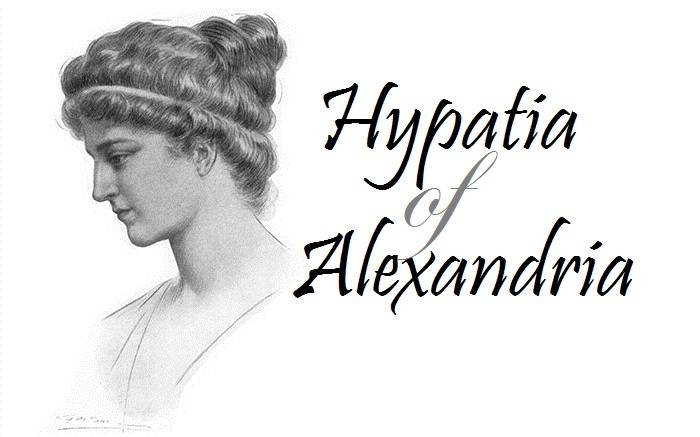
When people think of historical figures, names like Alexander Hamilton, Nikola Tesla, or Ulysses S. Grant often come up. These individuals shaped science, politics, or war. However, history includes many other voices that deserve attention. One of them is Hypatia of Alexandria. She lived more than 1,600 years ago and became one of the earliest known female scholars. At a time when women were rarely seen in science or philosophy, she became a respected teacher and thinker. Her life and tragic death show how far someone can go by standing up for truth and learning.
Early Life in Alexandria
Hypatia was born around 370 CE in Alexandria, Egypt. At that time, Alexandria was a leading city in the Roman Empire. It was known for its grand library, where scholars collected scrolls from all over the ancient world. The city was a center of learning, filled with people of many cultures and religions. Her father, Theon, was a respected mathematician and astronomer. He worked at the library and taught others about science and math. He also believed that girls should have the same chance to learn as boys. So he raised Hypatia with a strong education.
She studied math, astronomy, and philosophy. Theon also encouraged physical training, so Hypatia stayed active by swimming and horseback riding. This balanced approach helped her grow both in mind and body. Many scholars believe her father prepared her to take over his work one day, and he succeeded.
A Public Teacher and Philosopher
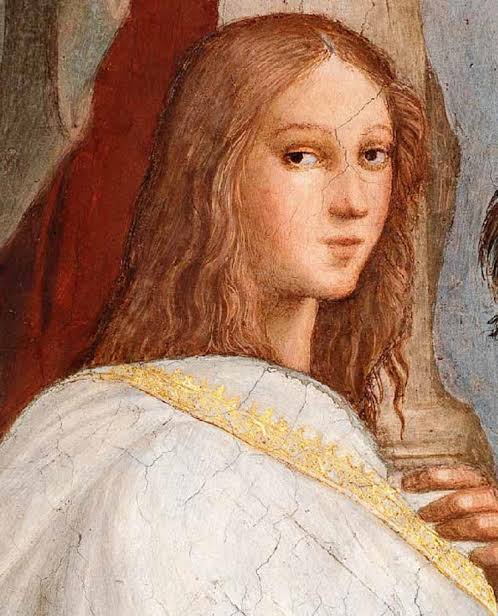
As Hypatia grew older, she became well known for her intelligence. She started giving public lectures and took over her father’s school. Crowds gathered to hear her speak. Students came from many regions to study under her guidance. She taught complex topics such as geometry, astronomy, and Neoplatonic philosophy.
Instead of telling students what to think, Hypatia asked questions that made them think deeply. She encouraged discussion and debate. Her lessons helped students understand both science and how to live a meaningful life. One of her students, Synesius, later became a bishop. He often wrote letters praising her kindness, wisdom, and honesty.
Her Work in Science and Math
Most of Hypatia’s written work has been lost, but other writers mention the topics she covered. She likely wrote commentaries on important scientific texts. For example, she edited Diophantus’s Arithmetica, which focused on solving equations. She also worked on Apollonius’s studies of conic sections—shapes like circles, parabolas, and ellipses. These shapes are still important in science today.
Besides writing and teaching, Hypatia also helped build and improve scientific tools. She used an astrolabe to observe stars and planets. This tool was especially helpful for sailors and astronomers. She also used a hydrometer to measure the density of liquids. Her work helped others understand nature more clearly.
Rising Tensions in Alexandria
While Hypatia focused on learning, Alexandria changed around her. The Roman Empire was weakening. At the same time, the Christian Church was becoming more powerful. Tensions rose between different groups, including Christians, Jews, and pagans. These disagreements sometimes turned violent.
Two men held power in Alexandria during this time. One was Orestes, the Roman governor. The other was Cyril, the Christian bishop. Hypatia supported Orestes and gave him advice. Some followers of Cyril did not trust her. They believed she kept Orestes from working with the Church.
Rumors began to spread. Some claimed Hypatia used magic or tried to control political leaders. These false claims made her a target.
Her Death and the End of an Era
In 415 CE, Hypatia was attacked by a violent mob. This group, known as the Parabalani, dragged her from her chariot. They brought her into a church and killed her with sharp objects. Afterward, they burned her body. Her murder shocked many people in Alexandria.
No one was punished. Even though some Christian leaders were embarrassed by what happened, the crime went unanswered. After her death, many scholars left the city. The Neoplatonist school ended, and the great age of learning in Alexandria slowly faded.
A Legacy That Lasts
Though Hypatia died long ago, her story has not been forgotten. During the Renaissance, people started to read about ancient thinkers again. Hypatia became a symbol of reason, science, and courage. In the 1800s, authors wrote books and plays about her life. Charles Kingsley’s novel Hypatia described her as a martyr for truth.
In the 1900s and beyond, people began to see her as a role model. Women in science and education celebrated her example. In 2009, the movie Agora told her story to new audiences. It showed how she used science to understand the universe and faced danger for her beliefs.
Today, her name is used for schools, science groups, and even space projects. Statues and memorials honor her memory. She stands for truth, learning, and the power of human thought.
Why Hypatia Still Matters
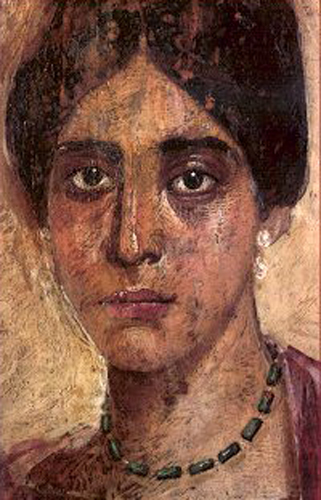
Why does Hypatia’s story matter in our world today? First, she proves that women have always played a role in science and philosophy. History often overlooks them, but they were always there. Her story reminds us to make space for everyone in learning and leadership.
Second, Hypatia believed that reason—not violence—should guide human actions. At a time when people argued over religion and power, she stayed committed to facts and open thinking. That lesson is still important today.
Finally, her death warns us about the dangers of fear and hatred. Hypatia lost her life because people were afraid of her ideas. Her story shows why it’s important to protect free thinking.
A Perfect Fit for Novo Learner
Novo Learner has many helpful articles on science, politics, and history. The site covers leaders like Ronald Reagan, Ulysses S. Grant, and Nikola Tesla. However, it hasn’t featured ancient female scholars. Adding Hypatia would bring something new.
Her story connects science, math, history, and ethics. Students can learn about her life, but also think deeply about fairness, education, and courage. She’s a strong role model for learners of all ages.
Conclusion
Hypatia of Alexandria was more than a scholar. She was a teacher who inspired many students, a scientist who helped keep knowledge alive, and a brave person who stood for reason during a time of chaos. Her life teaches us to value learning and stand strong when facing injustice.
Even though her world was very different from ours, her ideas still matter. Students today can follow her example by staying curious, asking questions, and standing up for what they believe. In remembering Hypatia, we also remember the importance of truth—and the courage it takes to protect it.





Add comment