Akshay Dinesh
Each October, the Nobel announcements seem to follow one route until the Peace Prize takes a geographical turn. The prizes in physics, chemistry, physiology or medicine, literature, and economic sciences are announced by Swedish institutions. The Nobel Peace Prize is selected by a Norwegian committee and presented in Oslo. That split is not a later diplomatic compromise: it comes directly from Alfred Nobel’s will.
The simple answer is that Nobel ordered it. The more interesting question is why he gave Norway the peace prize while assigning the other original prizes to Swedish bodies. On that point, the historical record stops short of certainty. Nobel left precise instructions about the institutions but no explanation for his choice, so responsible accounts have to separate what the will proves from what historians can only infer.
The split was written into Alfred Nobel’s will
Alfred Nobel signed his final will in Paris on November 27, 1895. He directed that most of his fortune should fund annual prizes for work that had brought the greatest benefit to humankind. For physics and chemistry, he named the Royal Swedish Academy of Sciences. He assigned physiology or medicine to Karolinska Institutet and literature to the Swedish Academy.
Then came a different instruction. The peace prize was to be awarded by a committee of five people elected by the Norwegian Storting, Norway’s parliament. Nobel did not ask the Swedish government, the Norwegian government, or a monarch to choose the laureate. He identified a committee and the body that would appoint it.
This distinction still matters. The Norwegian Nobel Committee selects the peace laureate; Norway as a state does not award the prize. The Storting appoints the committee’s five members, but the committee makes its own decision. That structure is meant to give the selection process institutional independence, even though its members enter the role through a parliamentary appointment.
Norway and Sweden were still joined when Nobel made the choice
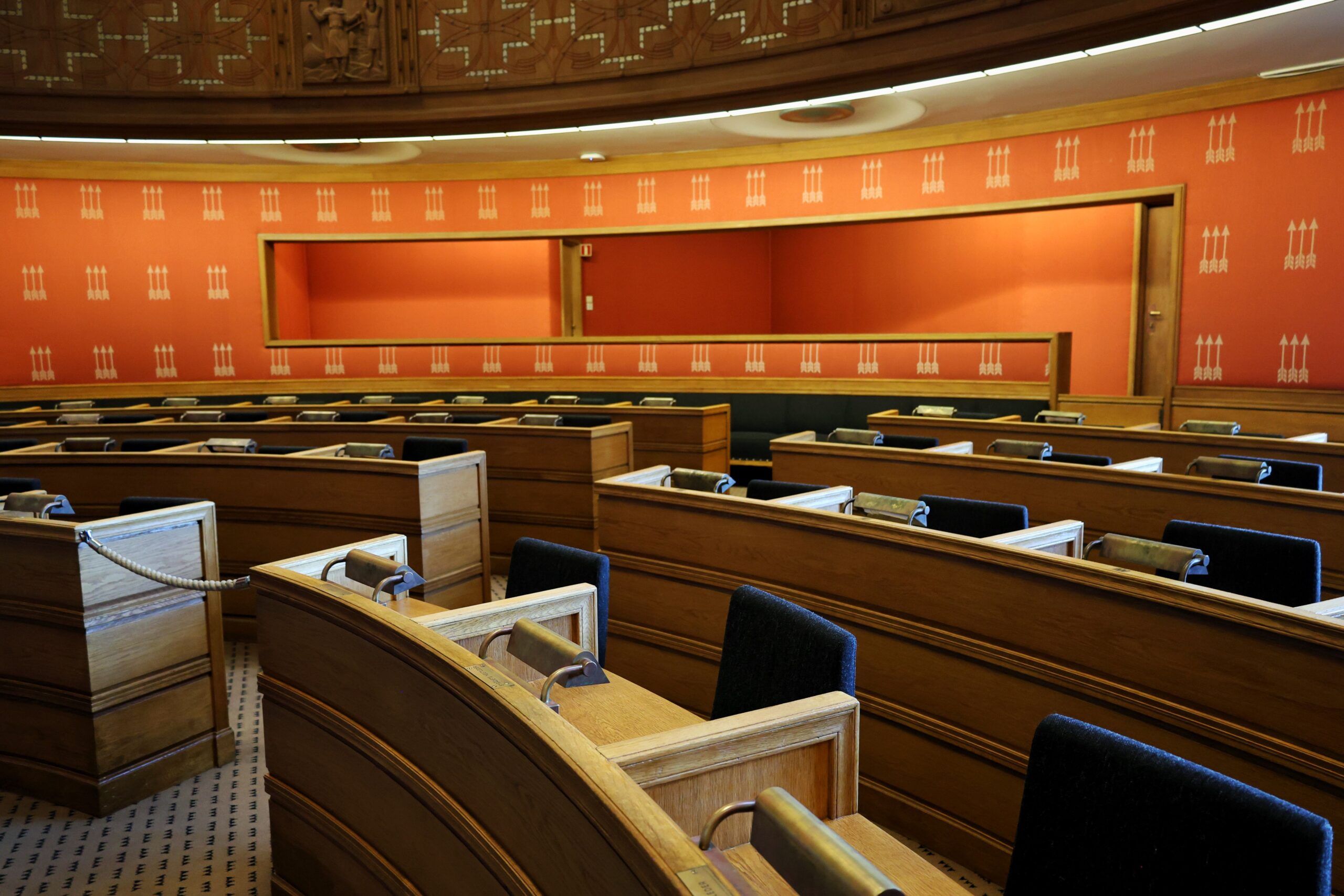
Reading the will through a modern map can make the arrangement look stranger than it did in 1895. Norway and Sweden were then part of a union under the same monarch. The union had begun in 1814 and lasted until Norway became fully independent in 1905, four years after the first Nobel Prizes were awarded.
The two countries were not simply one state in every respect. Norway had its own constitution, parliament, and domestic institutions, while the countries shared a king and Sweden handled their common foreign policy. Nobel could therefore distribute responsibilities across Swedish and Norwegian institutions without treating Norway as an unrelated foreign country.
The union was also under strain. Norwegian demands for greater control over foreign affairs were growing, and the relationship ended peacefully after a political crisis in 1905. It is tempting to read Nobel’s choice as a grand gesture toward Norwegian independence or a plan to balance the union. No surviving statement from him confirms that interpretation. The union supplies essential context, but it does not solve the mystery by itself.
Why Norway? The evidence ends before the theories begin
The official history of the Nobel Prize is unusually direct about the limits of the evidence: Nobel left no explanation for assigning peace to a Norwegian committee. Several plausible ideas have been proposed, and they often appear together. None should be presented as a proven motive.
One possibility concerns Norway’s political culture in the 1890s. The Storting had a reputation for supporting parliamentary government, international arbitration, and organized peace work. Norway also lacked an independent foreign policy under the union and had different military traditions from Sweden. To Nobel, a Norwegian parliamentary committee may have seemed well placed to judge work involving disarmament and cooperation between nations.
A second possibility is simple institutional balance. Nobel placed the scientific and literary prizes with established Swedish organizations he considered capable of evaluating specialized work. Giving the remaining prize to a Norwegian body may have felt natural within the Swedish-Norwegian union. It also spread responsibility beyond Stockholm without requiring Nobel to invent a new international organization.
Personal connections may have shaped his thinking as well. Nobel knew the Austrian peace activist Bertha von Suttner, whose arguments against war influenced European peace movements and Nobel’s own interest in the cause. Norwegian writer and activist Bjørnstjerne Bjørnson was another prominent voice for peace and arbitration. Such relationships help explain why Nobel created a peace prize, but they do not provide a documented answer to why he chose the Storting.
The careful conclusion is less dramatic and more useful: Nobel’s instruction is certain; his motive is not. Historical explanations can be persuasive without becoming facts.
How the Norwegian Nobel Committee works today
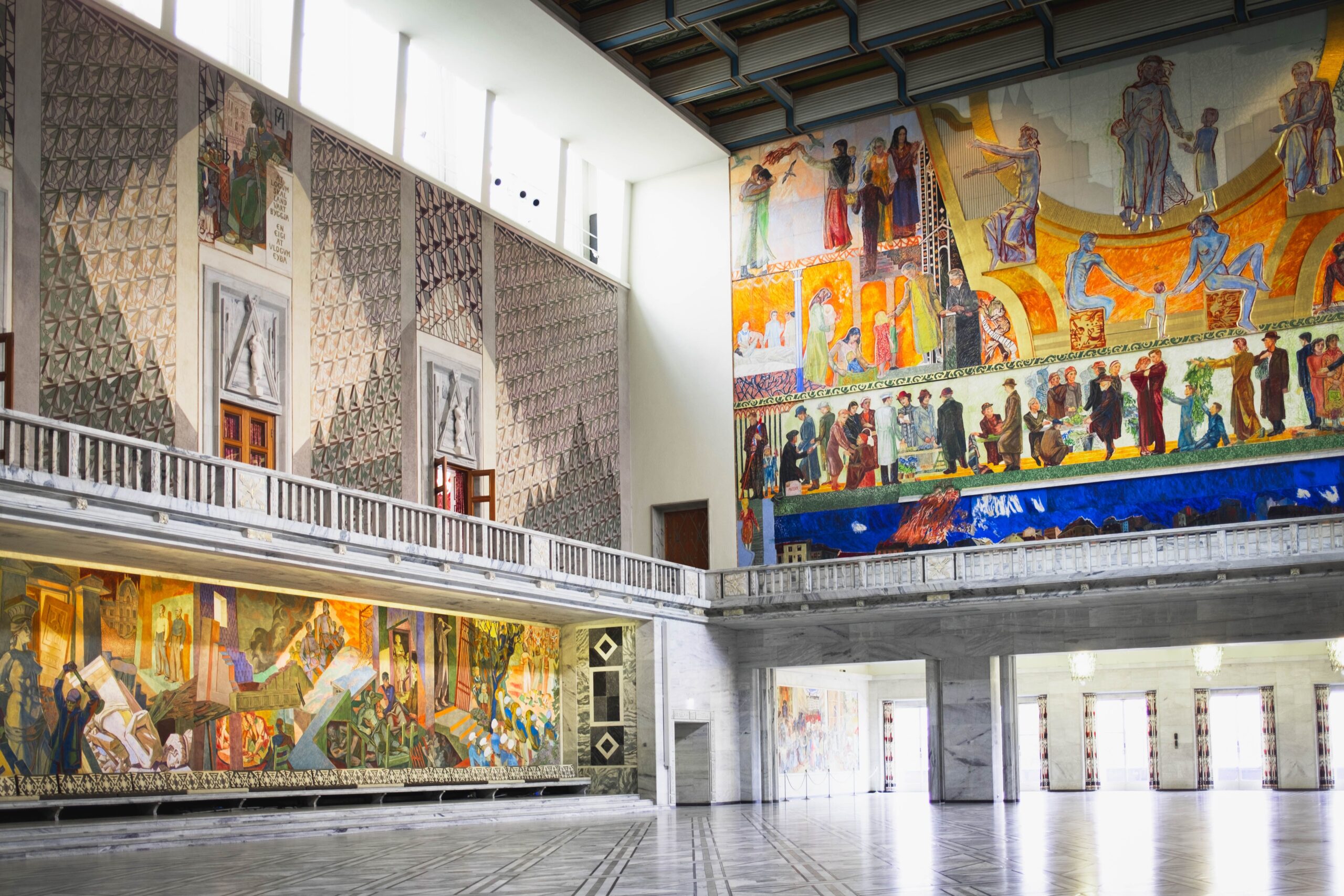
The Norwegian Nobel Committee has selected the peace laureate since the first prizes were awarded in 1901. Its five members are appointed by the Storting, with the committee’s composition broadly reflecting the balance of political parties in parliament. Expert advisers and the Norwegian Nobel Institute support its research, but the committee makes the final choice.
Rules and conventions have changed to protect the committee’s independence. Members of Norway’s government were excluded after controversy surrounding the 1936 prize to German anti-Nazi writer Carl von Ossietzky. A later convention kept sitting members of parliament off the committee, and in 2017 the Storting formally made current members of parliament ineligible.
Those safeguards address a recurring misunderstanding. The peace prize may be awarded in Norway, and its committee may be appointed by Norway’s parliament, but a winning choice is not an endorsement by the Norwegian government. Committee decisions have sometimes drawn criticism at home as well as abroad, which itself shows that the committee and the government are not the same actor.
The process also differs from a public election or an open popular vote. Qualified nominators submit names, advisers study candidates, and the committee deliberates privately. Nominations remain confidential for 50 years. The secrecy protects the process from becoming a campaign and allows later historians to study archived nominations after the embargo expires.
Why the ceremonies still happen in two cities
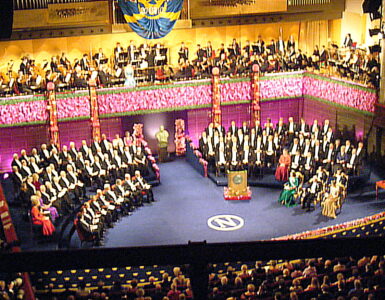
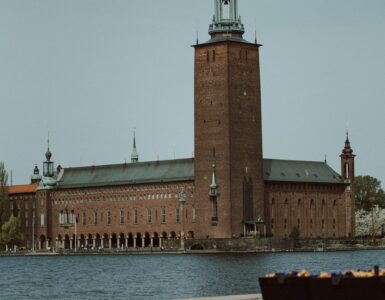
The split between Norway and Sweden becomes visible on December 10, the anniversary of Alfred Nobel’s death. The Nobel Peace Prize is presented at Oslo City Hall by the chair of the Norwegian Nobel Committee. The other Nobel awards are presented in Stockholm by the king of Sweden. The prize in economic sciences joins the Stockholm ceremony, although Sweden’s central bank established it in 1968 and it was not one of the five prizes in Nobel’s will.
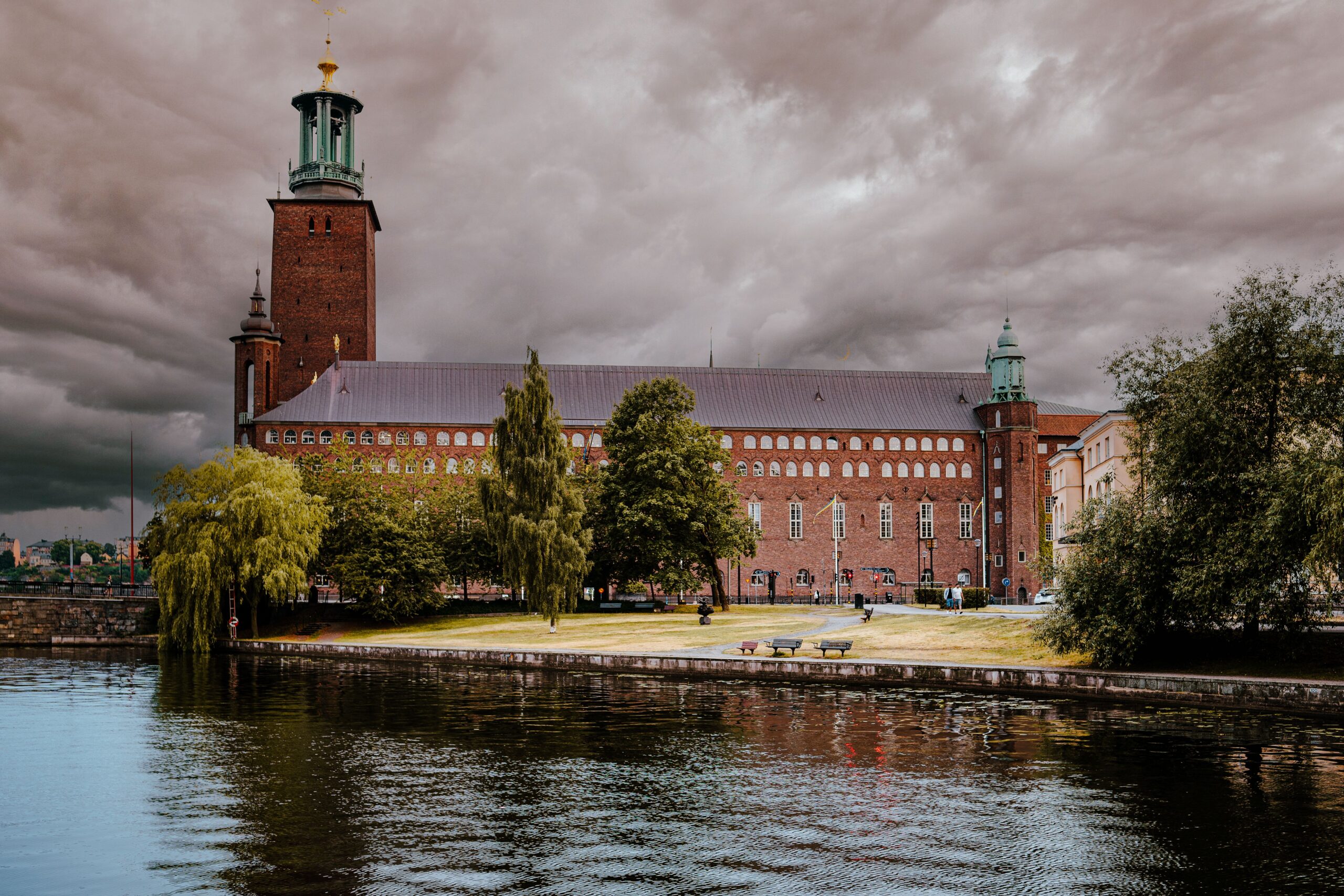
The two-city tradition can look like a ceremonial quirk, but it preserves the design Nobel chose. He did not create one central panel to judge every kind of achievement. He distributed authority among institutions with different expertise, and one of those institutions was deliberately Norwegian.
So why is the Nobel Peace Prize awarded in Norway rather than Sweden? Because Alfred Nobel explicitly assigned it to a five-member committee chosen by the Norwegian Storting. He made that decision while the countries were still joined in a political union. Norway’s peace movement, parliamentary culture, and place within that union may all have influenced him, but no surviving evidence settles the matter. The honest answer keeps both halves together: the location is written in the will, while the reason remains an informed historical question.