
 Akshay Dinesh
Many people notice the same strange problem: a short video feels easy, but a chapter, essay, or long article feels oddly heavy. The words may not be difficult. The reader may even care about the topic. Still, after a few paragraphs, the mind starts reaching for something faster. That feeling is not proof that someone has become lazy or that digital media has ruined attention forever. It is a clue that different media train different habits, and deep reading depends on habits that can weaken when they are not used often.
Short videos are built for quick entry. They start fast, change quickly, and often deliver a joke, explanation, conflict, recipe, opinion, or surprise in seconds. Deep reading works almost the opposite way. It asks the reader to carry details forward, wait for meaning to unfold, connect a sentence to earlier sentences, and tolerate moments that are not immediately rewarding. The difference matters because schoolwork, citizenship, work training, and personal learning still depend on the slower skill of staying with ideas long enough for them to become clear.
Short videos train a fast rhythm
A short video feed does not simply show information. It organizes attention. Each clip gives the mind a rapid cycle: start, react, decide whether to continue, then move on. The next clip may be unrelated to the last one, so the viewer does not need to build a long chain of meaning. If a video is confusing or dull, the exit is effortless. A tiny movement replaces the discomfort of working through it.
That design can be useful in small doses. Short videos can demonstrate a science experiment, show a math trick, explain a pronunciation detail, or make a historical moment more vivid. The problem begins when the fast rhythm becomes the default rhythm for everything. Reading a dense paragraph does not give the same constant resets. It may require thirty quiet seconds before the point becomes visible, and those seconds can feel too slow if the mind has spent much of the day expecting a new stimulus every moment.
Oxford University Press gave a public signal of this cultural worry when it named “brain rot” its 2024 Word of the Year. Oxford defined the phrase as a perceived decline in mental or intellectual state linked to overconsuming trivial or unchallenging material, especially online content. The phrase is blunt and often used jokingly, but its popularity shows a real concern: people can feel their attention changing even before they have the language to describe why.
Deep reading asks for a different kind of attention
Deep reading is not just looking at many words. It is the mental work of building meaning across time. A reader has to remember what was said earlier, notice when a new idea changes the argument, infer what is implied, and sometimes pause to reread. In a story, this might mean tracking a character’s motive before it is openly explained. In science, it might mean holding a process in mind across several steps. In history, it might mean understanding how one decision created consequences years later.
This kind of attention is sustained rather than explosive. It does not always feel exciting at the beginning. It often becomes rewarding only after the reader has stayed long enough for the pieces to connect. That is why experienced readers sometimes enjoy difficult passages that beginners find frustrating. They have learned to trust that the slow part is not wasted time. It is where the mind is assembling the structure needed for understanding.
Researchers often distinguish between quick information pickup and deeper comprehension. A person can scan a screen and catch the headline, the main claim, or a few key facts without building a strong mental model of the whole text. Deep reading is different because it asks the reader to keep asking, “How does this fit with what came before?” That question is hard to sustain when attention has been trained to keep moving.
Research shows the picture is mixed, not simple
The best evidence does not say that every screen is harmful or that paper is magically superior. Digital reading can work very well when the reader has a clear purpose, a manageable text, and few distractions. A 2024 meta-analysis in the journal Educational Research Review found no overall significant difference between paper and digital reading comprehension across recent studies, while also noting that results depend on conditions such as reader age, text type, and task design.
Another large review, published through the American Educational Research Association, looked at leisure digital reading habits and text comprehension. It analyzed studies involving more than 469,000 participants and found that leisure digital reading had only a small positive relationship with comprehension overall, weaker than the relationship usually found for print reading. For primary and middle school readers, the relationship was negative. For older students, it became more positive. That pattern suggests that the issue is not simply screen versus page. It is what people read, how they read, and how much support they have for turning digital text into real comprehension.
Short-form video research is also still developing. A 2024 CHI conference study on short-form video use and sustained attention found that heavier use was related to poorer sustained attention in an online survey, but its longer field experiment did not show that simply changing viewing duration clearly changed most attention-test results. That mixed result matters. It keeps the conversation honest. Short videos may be linked with attention difficulties, but attention is shaped by many things at once: sleep, stress, school demands, motivation, app design, reading practice, and the habits people build around pauses and boredom.

Why reading can feel harder after rapid scrolling
One reason reading feels harder after rapid scrolling is contrast. A feed keeps answering the question, “What is next?” A book or long essay often asks the reader to stay with, “What does this mean?” Those are different mental tasks. The first rewards novelty. The second rewards patience, memory, and interpretation.
Another reason is friction. In deep reading, confusion is not always a sign to leave. It may be a sign to slow down. A paragraph about photosynthesis, inflation, irony, or constitutional law may need a second pass because it contains several connected ideas. The same is true for literature. A sentence may matter because of tone, not just information. When the mind is used to skipping anything that does not pay off immediately, productive difficulty can feel like failure.
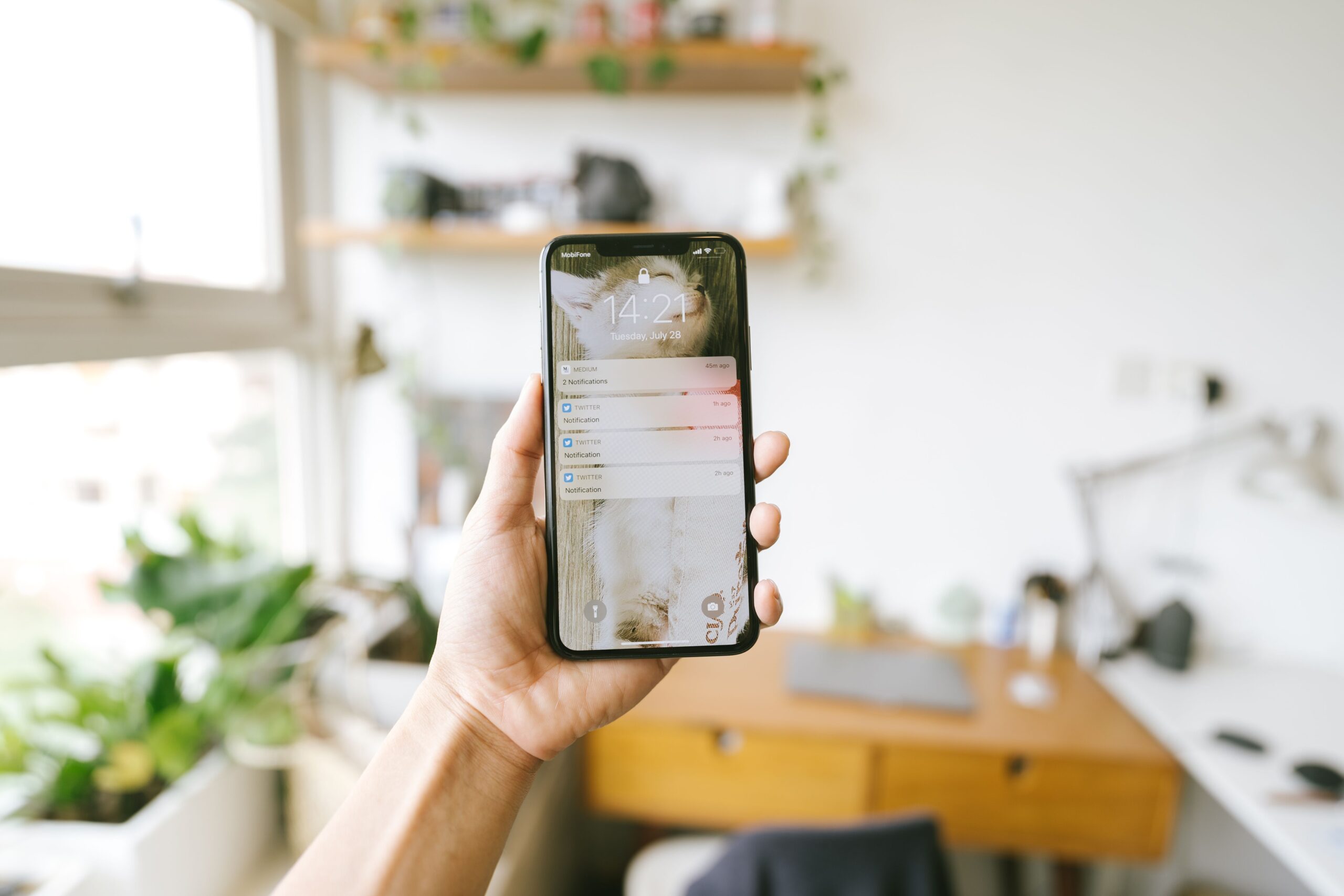
Notifications and multitasking add another layer. Even when the phone is not being used, the possibility of interruption can pull attention toward the device. A reader may check one message, return to the page, and then realize the paragraph has gone blurry. The cost is not just the time spent away. It is the time needed to rebuild the mental thread. That is why a reading session full of tiny interruptions can feel longer and less satisfying than a shorter session protected from switching.
How to rebuild deep reading without turning it into punishment
Deep reading improves when it is practiced in conditions that make success possible. Starting with a difficult classic, a dense textbook chapter, or a long assigned article after weeks of mostly rapid scrolling can feel like sprinting without warming up. A better approach is to rebuild stamina. Ten uninterrupted minutes with a real purpose can do more than an hour of half-reading beside constant alerts.
A useful first step is to separate reading spaces from scrolling spaces. That might mean putting the phone across the room, using a single-purpose e-reader, printing a difficult passage, or reading in full-screen mode with notifications off. The point is not to make reading old-fashioned. The point is to remove the rapid-choice environment so the mind has fewer chances to escape before comprehension begins.
Readers can also make the slow work visible. After a page or two, pause and write one sentence: “The main point so far is…” For fiction, the sentence might name what a character wants or what has changed. For nonfiction, it might name the claim and the evidence. This small check keeps reading active without turning it into a worksheet. It also proves to the reader that effort is becoming understanding.
Another helpful strategy is to choose a reading ladder. Start with a shorter essay, story, chapter, or article that is interesting but not effortless. Then move to something slightly longer or denser. Attention grows through repeated success. If reading always feels like a test of willpower, the habit becomes fragile. If it feels like entering a quieter room where ideas have time to gather, the habit becomes easier to return to.
The goal is not less media, but better control
The healthiest goal is not to treat every video as a threat and every printed page as noble. People learn from many forms. A short video can spark curiosity, show a process clearly, or introduce a topic that someone later studies in depth. The problem is letting the fastest form of attention become the only comfortable form.
UNESCO’s 2023 Global Education Monitoring Report made a similar point about educational technology more broadly: technology can solve some learning problems, but some uses can also be harmful when they are poorly governed or treated as a substitute for stronger learning conditions. That balance is useful here. Screens are not the enemy of reading. Uncontrolled switching is the enemy of sustained thought.
Deep reading is still one of the best ways to practice sustained thought because it gives the mind something that cannot be understood all at once. It asks for memory, patience, imagination, and judgment. Those skills are not lost simply because someone watches short videos. But they do need regular use. When reading starts to feel hard, the answer is not shame. The answer is to notice the rhythm the mind has been living in and gently train it to stay longer with something worth understanding.