 Akshay Dinesh
Grace Hopper worked with computers when using one meant more than sitting at a keyboard and typing instructions. Early machines were massive, expensive, difficult to schedule, and often understood only by small teams of mathematicians, engineers, and military specialists. Hopper saw something unusual in those machines. She did not only see faster arithmetic; she saw a future in which people could describe work to a computer in a language closer to ordinary human thinking.
That idea sounds natural now because modern programming languages hide so much of the machine beneath readable words and structure. In the 1940s and 1950s, though, it was a radical shift. Hopper helped push computing away from a world of machine-specific codes and toward reusable instructions, compilers, and business languages that ordinary organizations could understand. Her life joined mathematics, military service, teaching, and invention in a way that changed who could participate in computing.
From Mathematics to Wartime Computing
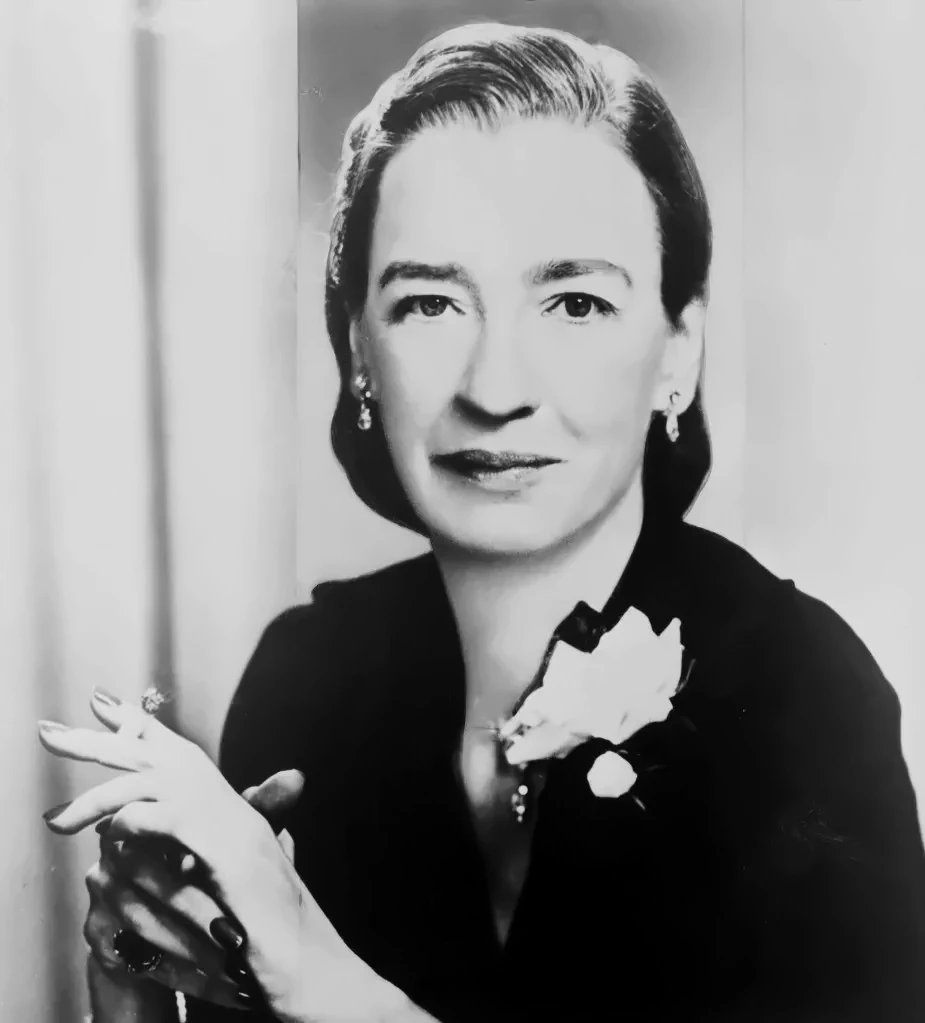
Grace Brewster Murray was born in New York City in 1906. She studied mathematics and physics at Vassar College, then continued into graduate work at Yale University, earning a master’s degree in 1930 and a Ph.D. in mathematics in 1934. At a time when relatively few women earned advanced degrees in mathematics, she built a serious academic career and taught at Vassar before the United States entered World War II.
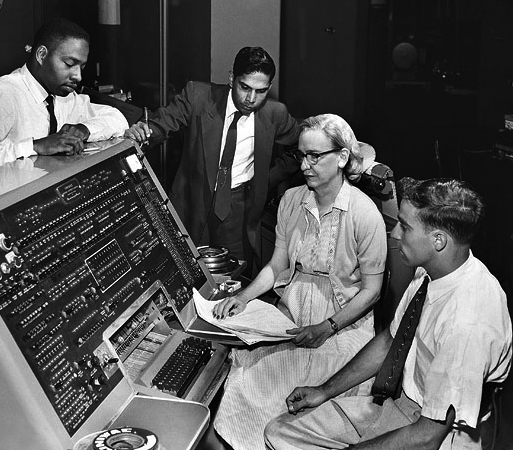
The war changed the direction of her life. Hopper wanted to serve, and after persistence and a waiver, she joined the U.S. Naval Reserve in 1943. The Navy assigned her to Harvard’s Bureau of Ships Computation Project, where Howard Aiken’s team worked on the IBM Automatic Sequence Controlled Calculator, better known as the Harvard Mark I. The machine was one of the first large electromechanical computers in the United States, and it was used for military calculations such as range tables and other technical problems.
Hopper became one of the early programmers of the Mark I. Programming did not yet mean opening an editor and writing neat blocks of code. It meant understanding the machine’s operations deeply enough to plan sequences of instructions, check results, and document how others could use the system. Hopper helped write the Mark I manual, a massive technical guide that forced her to think not just about how a computer worked, but how its operation could be explained to other people.
The Problem With Early Programming
Early computers could calculate quickly, but they were not easy to command. Instructions often had to be written in forms closely tied to a machine’s hardware. A program that worked on one system might not transfer smoothly to another. Even when the logic was clear, the actual instructions could be hard to read, hard to debug, and hard for non-specialists to trust.
Hopper understood the cost of that barrier. Business offices, government agencies, and scientific groups did not need computers merely as mathematical showpieces. They needed machines that could help process payrolls, inventories, records, and reports. If every task required rare specialists who could speak only in machine-level detail, computing would remain narrow and slow to spread.
Her answer was automatic programming. The phrase did not mean the computer would think for itself. It meant that a program could help translate higher-level instructions into the lower-level commands a machine needed. That translation layer became one of the most important ideas in software. Instead of forcing every programmer to write in the machine’s own terms, a compiler could bridge the distance between human intention and machine execution.
Why the Compiler Was Such a Big Idea
In 1952, while working with UNIVAC systems, Hopper developed the A-0 system, often described as one of the first compiler-like tools. A compiler takes instructions written in one form and translates them into another form the computer can run. Today that sounds like a standard part of programming, but in Hopper’s time many people believed computers should be controlled directly with numerical or symbolic instructions. The idea of using words and translation seemed inefficient or even impossible to some of her peers.
Hopper kept pressing the point because she knew that a computer’s value depended on who could use it. If a payroll department, a census office, or a business analyst could express a problem in terms closer to their work, the computer became more than a machine for mathematicians. It became a tool for organized information.
That shift also changed how software could grow. A readable language makes programs easier to check, share, revise, and teach. A compiler makes it possible to separate the logic of a task from the details of one specific machine. The result is not just convenience. It is a change in scale: more people can write programs, more organizations can adopt computers, and more kinds of work can be turned into repeatable digital processes.
FLOW-MATIC, COBOL, and Words in Code
Hopper’s work on compilers led naturally to word-based programming languages. Her team developed FLOW-MATIC, a language designed for business data processing that used English-like commands rather than mathematical notation alone. This mattered because business computing was not mainly about solving equations. It was about files, accounts, names, quantities, dates, totals, and reports.
In 1959, Hopper took part in the Conference on Data Systems Languages, usually shortened to CODASYL. The goal was to create a common business programming language that could work across different machines and organizations. The result was COBOL, short for Common Business-Oriented Language. Many people contributed to COBOL, but Hopper’s earlier work with FLOW-MATIC and her public advocacy for readable programming strongly shaped the effort.
COBOL became one of the most widely used business programming languages of the twentieth century. Its syntax was not elegant in the way some later languages tried to be, but that was not the main point. COBOL was built to make business records and procedures readable. A program could describe actions in words that looked closer to office instructions than to raw machine operations. Banks, insurance companies, government agencies, and large businesses used it for systems that needed reliability, structure, and long service lives.
Hopper’s larger argument was practical and democratic. Computers should not belong only to people who could work comfortably in machine code. If programming languages became more understandable, then more people could express real problems clearly enough for computers to help solve them. That belief has outlasted the specific machines she used.
A Teacher in Uniform
Hopper’s career was not limited to invention. She was also a teacher, lecturer, and relentless explainer. The Computer History Museum notes that she became known for clear and often humorous talks about computing. Yale’s biography emphasizes that she cared deeply about training young people and communicating complex ideas to many audiences. Those qualities were not separate from her technical work; they were part of it.
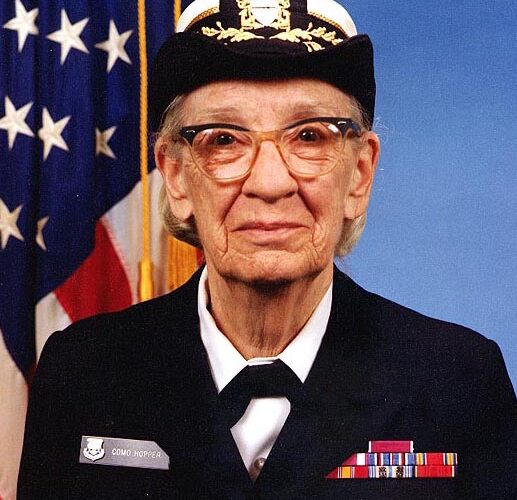
She remained connected to the Navy for decades. After forced retirement because of age rules, she was recalled to active duty to help standardize computer languages and systems. She eventually retired from the Navy in 1986 as a rear admiral. By then she had become a symbol of practical computing: a mathematician who understood machines, a naval officer who understood systems, and a teacher who understood that knowledge becomes stronger when it can be shared.
Her honors reflected that unusually broad impact. In 1991, she received the National Medal of Technology for work that simplified computer technology and opened it to a larger universe of users. After her death in 1992, her name continued to appear on awards, conferences, scholarships, buildings, and computing projects. The honors matter, but the deeper legacy is visible every time a programmer writes in a language designed for humans first and machines second.
Why Hopper’s Legacy Still Matters
Grace Hopper helped make a simple idea believable: computers become more powerful when people can communicate with them more clearly. That idea now sits beneath almost every programming course, business system, app, database, and software tool. A beginner learning a first programming language is not expected to start by memorizing the electrical details of a processor. The language, the compiler, and the surrounding tools create a path from human reasoning to machine action.
Her story also corrects a narrow picture of invention. Hopper did not change computing only by discovering a single isolated technique. She changed it by recognizing a human problem inside a technical one. The problem was not merely that computers needed instructions. The problem was that people needed a better way to give those instructions, revise them, explain them, and trust them.
That is why her work still feels modern. Programming is not only about making machines obey. It is about making ideas precise enough to be carried out, tested, improved, and shared. Hopper spent her career building that bridge, then teaching others how to cross it. The machines around her are museum pieces now, but the bridge remains part of everyday computing.