 Akshay Dinesh
A 250th anniversary sounds at first like a larger version of a birthday: more candles, more ceremonies, more public attention. The United States semiquincentennial is different because it asks a historical question as much as a celebratory one. What does it mean for a country to look back two and a half centuries after declaring independence, especially when the meaning of that independence has been argued over from the beginning?
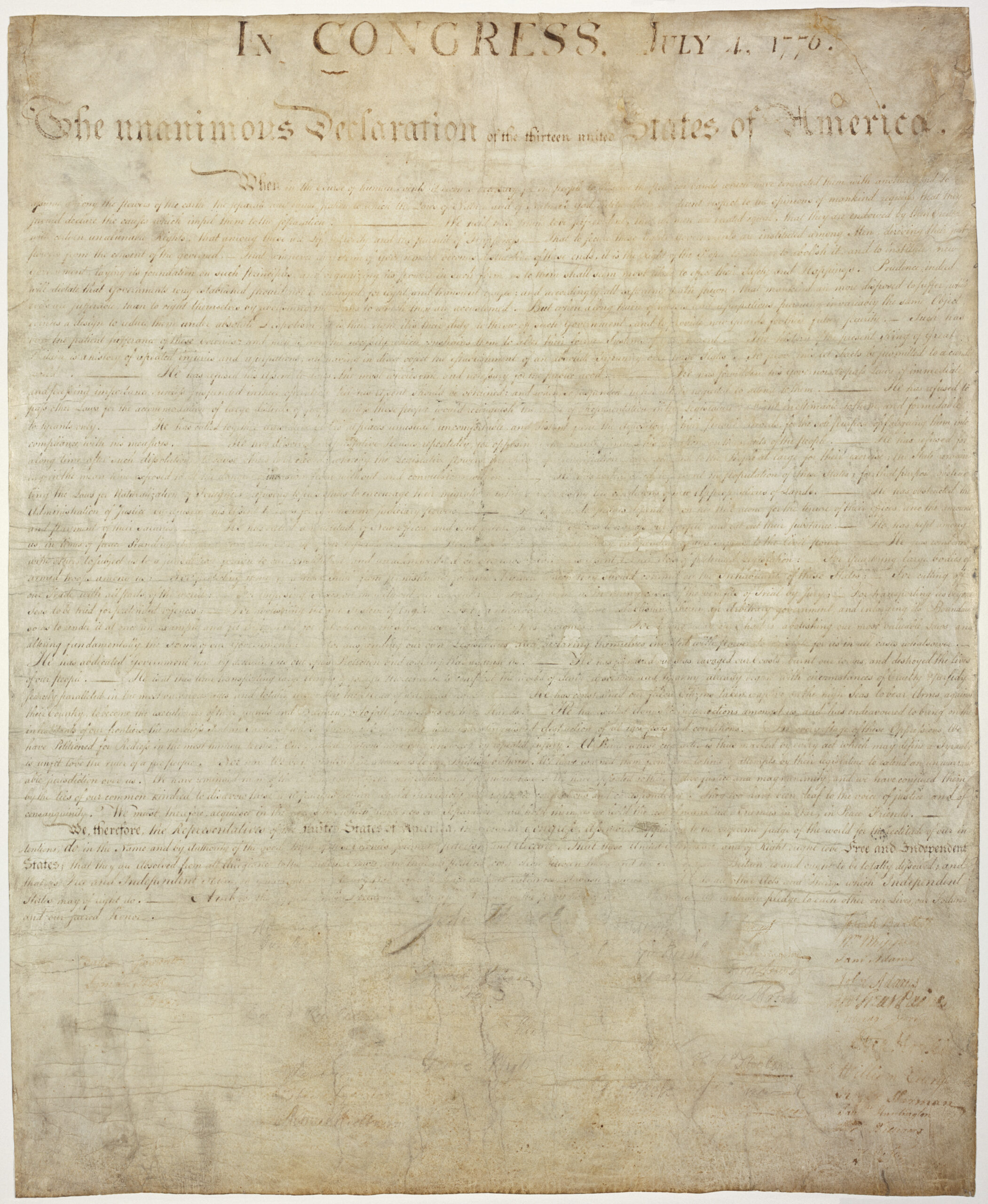
The word semiquincentennial simply means a 250th anniversary. In the American case, it points to July 4, 2026, 250 years after the Continental Congress adopted the Declaration of Independence on July 4, 1776. The National Archives notes that the Declaration was later engrossed on parchment and that delegates began signing it on August 2, a reminder that even iconic dates often sit inside longer chains of debate, revision, printing, reading, and political action.
That is why the anniversary is useful for students of history. It is not only a moment to remember a famous document. It is a chance to see how public memory works, how nations choose symbols, how unfinished ideals create conflict, and why the same founding event can carry different meanings for different people.
What the word actually marks
Anniversary names can feel awkward because they come from older Latin-based counting words. A centennial marks 100 years. A bicentennial marks 200 years. A semiquincentennial marks 250 years: half of a 500-year span. The word is long, but the idea is simple enough. It identifies a major distance in time, long enough that no living witness remains and every memory has passed through documents, monuments, families, schools, museums, and political arguments.
For the United States, the reference point is not the start of European settlement, the first Indigenous nations, the first colonial assemblies, the Constitution, or the first presidential election. The anniversary centers on the Declaration of Independence because July 4 became the public symbol of national birth. That choice matters. It tells people which moment has been given the role of origin story, even though the country was created through many events before and after that date.
The Declaration did not instantly create a stable nation. In 1776, the colonies were still fighting a war against Britain, and victory was far from certain. The Articles of Confederation, the Constitution, the Bill of Rights, westward expansion, the Civil War, Reconstruction, immigration, civil rights movements, and many other struggles all shaped what the United States became. A semiquincentennial can honor the Declaration while still making room for the fact that independence was a beginning, not a completed project.
Why anniversaries shape public memory
Large anniversaries do more than point backward. They organize attention. Schools plan units, museums build exhibitions, archives digitize collections, communities hold ceremonies, publishers release books, and governments choose what to emphasize. America250 describes the national commemoration as a broad effort to engage Americans in the 250th anniversary, while institutions such as the National Archives and the Museum of the American Revolution have built programs around the Declaration and the revolutionary era.
That makes the semiquincentennial a lesson in public memory. Public memory is not the same thing as history. History is the disciplined study of evidence, context, cause, and change over time. Public memory is the way people collectively remember the past through holidays, monuments, museums, school traditions, speeches, family stories, and civic rituals. The two overlap, but they are not identical.
A parade, for example, may make people feel connected to a shared past. A classroom discussion may ask harder questions about who was included in that shared past, who was excluded, and what later generations changed. Both can happen during the same anniversary. The danger comes when commemoration becomes too smooth, as if the past were only a set of heroic scenes with no conflict, contradiction, or unfinished work.
The American Revolution is especially vulnerable to that flattening. It produced some of the world’s most influential language about rights and self-government, yet the society that declared those ideals also contained slavery, limited voting rights, Indigenous dispossession, property restrictions, and deep inequalities between men and women. A serious anniversary does not have to choose between pride and criticism. It can ask why the founding language proved powerful enough to inspire later movements, even when the founding generation failed to live up to it fully.
The difference between celebration and historical thinking
Celebration tends to simplify. It needs symbols that people can gather around: flags, songs, speeches, ceremonies, and landmarks. Historical thinking moves more slowly. It asks what evidence survives, whose voices are missing, what changed, what stayed the same, and how people at the time understood their choices.
The semiquincentennial becomes more valuable when these two habits are allowed to sit side by side. A community can celebrate the endurance of constitutional government while also studying the conflicts that tested it. A museum can display a founding document while also explaining how ordinary people, enslaved people, women, Native nations, soldiers, printers, merchants, and immigrants experienced the revolutionary era differently. A family can enjoy July Fourth traditions while also asking why the promises of liberty had to be expanded through later struggle.
This is not a modern problem imposed on the past. The meaning of the Revolution was contested almost immediately. Loyalists rejected independence. Patriots disagreed about how much democracy was safe. Enslaved people heard language about liberty while being denied it. Free Black communities, Native nations, women writers, and religious minorities all had reasons to read the founding language differently from wealthy white male leaders. The same Declaration that announced separation from Britain became, over time, a text later reformers could quote back to the country.
What 1776 can teach without becoming a myth
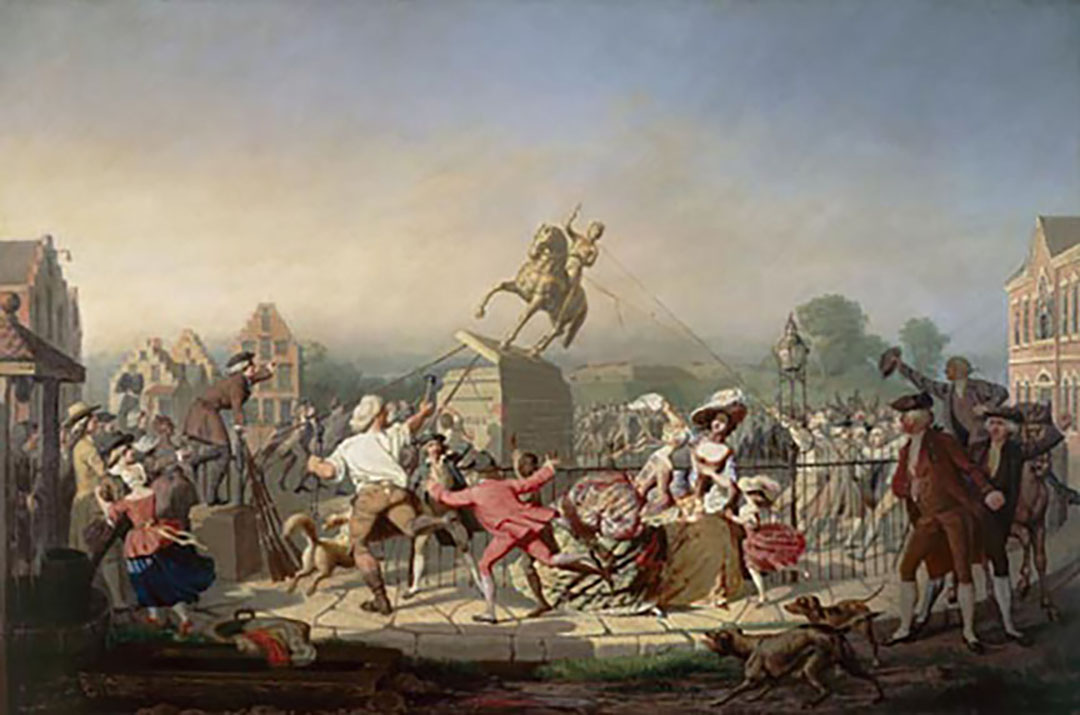
One useful way to study 1776 is to separate the Declaration’s claims from the world in which those claims were made. The document argued that governments derive their just powers from the consent of the governed. That was a radical statement against monarchy and empire. At the same time, consent was not equally recognized in practice. Many people living in the new states had no formal political voice.
That gap between principle and reality is one reason the Declaration lasted. If it had only been a list of complaints against King George III, it might have remained a revolutionary document of its own moment. Because it also made broader claims about equality, rights, and government by consent, later generations could use it as a standard for judging the nation itself. Frederick Douglass, Abraham Lincoln, suffragists, civil rights leaders, labor organizers, and many others drew on founding language while challenging the country to widen its meaning.
The 250th anniversary therefore belongs not only to 1776 but also to the long argument over what 1776 should mean. That is a stronger frame for learning than treating the founding as a finished golden age. It shows students how ideas move through time. A sentence written for one political crisis can become evidence in another. A national holiday can preserve memory while also hiding uncomfortable details. A founding document can be both historically specific and repeatedly reinterpreted.
Even official commemorations show this mix of memory and material culture. The U.S. Mint’s 2026 semiquincentennial coins and medals, including special Declaration of Independence quarters, turn the anniversary into objects people may handle in everyday life. Museum exhibitions and archive programs turn it into public education. Local events turn it into community memory. None of these forms replaces careful history, but each shows how a society marks time and decides what deserves attention.
How to read the 250th anniversary well
A thoughtful reader can approach the semiquincentennial with a few habits that make the anniversary richer. The first is to ask what date is being remembered and what dates are being left in the background. July 4 matters, but so do the debates before it, the war after it, the signing process in August, the ratification of the Constitution more than a decade later, and the later amendments that changed citizenship and rights.
The second habit is to notice whose story is being centered. A celebration focused only on famous founders will miss printers, soldiers, farmers, sailors, artisans, women, enslaved people, free Black communities, Native nations, and ordinary townspeople who shaped or resisted the Revolution in different ways. The broader the evidence, the less likely the anniversary becomes a polished myth.
The third habit is to compare ideals with institutions. Words such as liberty, equality, consent, and rights are powerful, but history asks how those words were built into laws, courts, voting systems, schools, labor rules, property rights, and citizenship. The story of the United States is partly the story of people trying to force institutions to match promises.

The fourth habit is to resist the idea that history must produce one emotional response. A mature understanding of the past can hold gratitude, grief, admiration, anger, curiosity, and responsibility at the same time. The founding era contains courage and contradiction. Later American history contains expansion of rights and repeated failures to protect them. That complexity is not a weakness in historical learning. It is the reason the anniversary is worth studying.
The semiquincentennial is more than a large number because 250 years is enough time for a country to become layered with memory. The Declaration of Independence still matters, but it matters most when read as part of a longer story: the break from empire, the creation of republican government, the exclusions built into the early nation, the struggles that challenged those exclusions, and the continuing argument over what self-government requires. A good anniversary does not freeze the past in marble. It gives people a reason to look again, more carefully, at how the past is still being used in the present.